

IBJJF weight classes: gi, no-gi, and the correct chart
Quick answer: IBJJF weight classes depend on gi or no-gi, sex, and age category. The listed limit includes the required competition uniform. Use the chart linked by the actual event and its official scale unit, rather than rounding a converted result-page label or assuming a weigh-in allowance.
A division name can stay the same while its weight limit changes between gi and no-gi. Lightweight is not one universal number. The adult men’s column is also not the juvenile or women’s column, even when the category name appears in the same row.
The practical task is to identify the complete entry before choosing a limit. Event, clothing, sex, age, and category all belong in that decision. The chart then gives a maximum, while the event page explains when and how the official weigh-in occurs.
Start with the actual event chart
IBJJF’s first-championship guidance tells athletes to use the weight chart linked on the event page. It states that the listed weights are the highest allowed weights for the division, with the uniform on.
That is the starting point for registration. A result page may display an equivalent division in pounds, while the event’s scale uses kilograms. A rounded conversion in an article should not replace the official chart or create an extra allowance.
Read the heading across the top as well as the category name down the side. Charts can place juvenile, adult, masters, male, and female columns beside one another. Following the correct row into the wrong column produces a plausible-looking number for the wrong entry.
A useful registration note records the event link, category, exact limit, scale unit, and correction deadline. That is enough to make a later check specific, rather than relying on a memory of being a featherweight somewhere else.
Adult men’s gi categories
The 2026 European gi result categories use the familiar men’s adult limits below. They are a reference for reading the categories, while a future entry still needs the event’s current chart.
Rooster: 57.5 kg; light feather: 64 kg; feather: 70 kg.
Light: 76 kg; middle: 82.3 kg; medium heavy: 88.3 kg.
Heavy: 94.3 kg; super heavy: 100.5 kg; ultra heavy: no upper limit.
The ordinary weight category and open class are different assignments. Ultra heavyweight is the heaviest ordinary men’s division; it should not be renamed absolute simply because it has no upper limit. Open class has its own event eligibility and registration conditions.
The values include the gi competition uniform under the official guidance. A number measured without it is not the same measurement. That difference should be checked in advance rather than treated as a last-minute surprise at the venue.
Adult women’s gi categories
The same gi result record identifies women’s adult rooster at 48.5 kg, light feather at 53.5 kg, feather at 58.5 kg, and light at 64 kg. Middle is 69 kg, medium heavy 74 kg, heavy 79.3 kg, and super heavy has no upper limit.
These are eight ordinary weight categories, not the men’s nine-category structure copied at different numbers. The heaviest women’s category is super heavyweight. Open class is a separate bracket, with its own entry conditions at the event.
An athlete’s familiar competition name is not a substitute for the chart. A person may enter a different weight at another event, and a commentator may use a broad label. Registration needs the exact category offered for that athlete.
The practical check remains the same: verify the correct column, weigh with the required uniform, and use the event’s scale unit. This is a registration guide, not a recommendation to pursue a particular body weight or a rapid change before competition.
The no-gi limits are different
The official no-gi kilogram chart lists adult and masters men at 55.5, 61.5, 67.5, 73.5, 79.5, 85.5, 91.5, and 97.5 kg, followed by ultra heavyweight without an upper limit. Those correspond to rooster through super heavyweight before the heaviest category.
The adult and masters women’s limits are 46.5, 51.5, 56.5, 61.5, 66.5, 71.5, and 76.5 kg, followed by super heavyweight without an upper limit. The chart explicitly identifies the measurement as the athlete wearing the no-gi uniform.
The difference from gi is not an invitation to subtract an estimated amount of fabric from any personal measurement. It is a separate official chart. The correct category comes from that chart and the actual required uniform, not a homemade conversion rule.
The same PDF contains distinct juvenile columns. Adult numbers should not be used for those entries. A parent or athlete should read the event’s age-and-belt table and the matching chart column together before selecting the category.
The uniform is part of the measurement
IBJJF’s uniform requirements define gi and no-gi clothing, including fit and permitted materials or colors. Passing a scale check and passing a uniform inspection are related preparation tasks, but they are not the same check.
A uniform can fit the weight calculation and still fail a separate clothing requirement. Conversely, a compliant uniform still contributes to the athlete’s measured weight. Both questions need attention before the day of competition.
The gi requirements guide covers that inspection topic in more detail. For a weight decision, use the actual clean competition clothing rather than a different training outfit whose weight or fit may vary.
Do not assume a tolerance because a home scale and an event scale differ. The official guidance states that an athlete above the registered limit is disqualified. Any event-specific procedure should come from the organizer rather than an anecdote from another tournament.
Corrections have their own deadlines
The first-championship page distinguishes the athlete correction deadline, the professor correction period, and registration checkday. Those are separate stages, not three interchangeable chances to make any change at any time.
An athlete can edit the entry within the stated athlete period. The professor period provides another defined process. Checkday is primarily a verification stage, with specific rules for staff errors and single-athlete brackets, rather than an unrestricted late registration editor.
This matters if a selected weight is no longer appropriate. Raise the issue while the relevant correction route is open, then verify that the official athlete list reflects the change. Sending a request and seeing the corrected entry are different steps.
Save the deadline in the event’s local time. A date displayed on a registration page may expire in the host location, not in the time zone where the athlete is reading it. The event’s relevant-dates section is the reference for the actual cutoff.
Plan around the weigh-in procedure, not a guess
The exact event page should explain the official weigh-in timing, permitted attempt count, scale unit, and any special procedures. Do not assume a day-before weigh-in because another organization used one, or assume every black-belt event has identical arrangements.
A sensible preparation check is factual: confirm the entry, the chart, the uniform, the event procedure, and the correction status. It does not require a universal strategy for changing weight, and this article does not prescribe one.
If a number or category remains unclear, ask the organizer before the deadline with the exact event and entry. A clear answer is more useful than debating a rounded screenshot at the venue. Keep the response with the registration information.
For anyone following results rather than entering, retain the category name and event. A pound figure on a result page can be a display label for the official division. It is not evidence of the athlete’s exact body weight or a basis for calculating an unsourced size difference in a match.
For a mixed gi-and-no-gi weekend, save two separate category notes rather than one shared weight label. The clothing and limits differ, and a correct entry in one event does not confirm the other. Check both official confirmations and any correction deadlines independently. This small administrative step avoids carrying a familiar category name into a different chart without noticing the change.
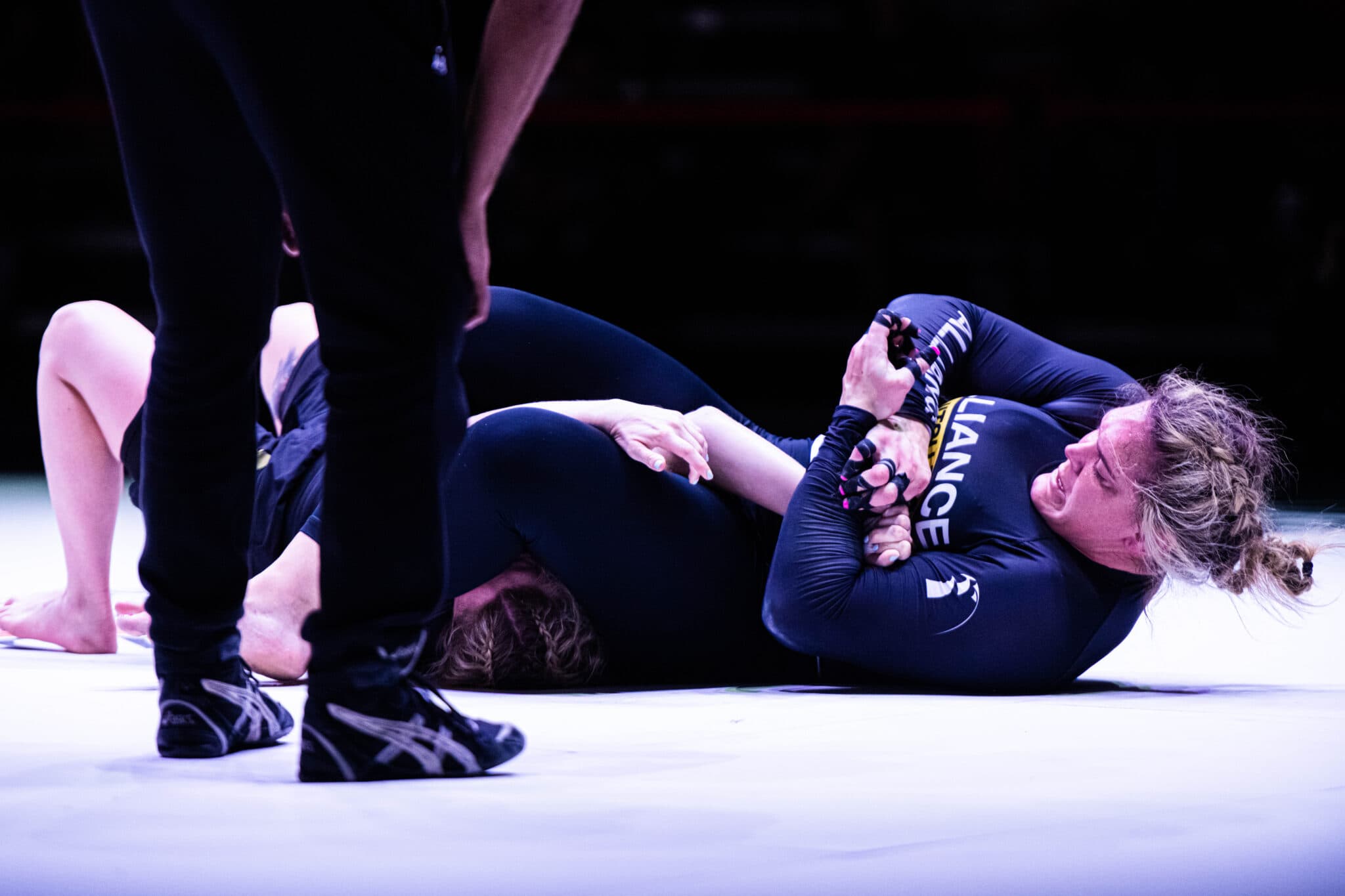
Main photo: Archive: Ana Lima at the 2026 Pans — IBJJF; photographer not identified on source page.
The takeaway
An IBJJF weight class is a complete category, not just a familiar name. Gi and no-gi charts differ, sex and age columns differ, and the required uniform is included in the measurement.
Use the event’s current chart and procedure, then verify the entry before the correction process closes. That is more reliable than rounding a conversion, borrowing another organization’s allowance, or assuming that the category used at a previous event still fits this one.
Find an event and its official details
Use the tournament directory to locate a competition, then confirm its current chart, schedule, and registration conditions on the organizer’s page.
FAQ
Does IBJJF weigh me with the gi on? The official guidance says the listed division limit includes the required uniform. Use the actual event’s weigh-in instructions for the procedure.
Are gi and no-gi lightweight the same limit? No. For example, the adult men’s reference limits are 76 kg in gi and 73.5 kg in the official no-gi kilogram chart.
Can I round up a pounds conversion? Do not use a rounded conversion to change an official limit. Follow the event’s chart and official scale unit.
Can I change weight on registration checkday without restriction? No. The correction stages have different rules and deadlines. Check the event’s relevant dates and the official guidance for the available process.

Maya Corbett
Maya Corbett answers the questions you have before walking into an unfamiliar academy — what to book, what to bring, who to ask. Every detail in her guides traces back to something the gym published itself.
Related Posts
ADCC scoring: points, penalties, and the two match phases
Understand ADCC scoring phases, positional points, negative points, guard pulling, boundary restarts, and overtime.

UFC BJJ 2 results: Tackett’s defense and Fowler’s first belt
Full UFC BJJ 2 results: Andrew Tackett’s first defense, Mason Fowler’s inaugural title, and all six submission wins.

UFC BJJ explained: the Bowl, the rules, and the money
The UFC runs its own grappling promotion now. The ruleset, the champions, where it streams free, and what those exclusive contracts are doing to the sport.
Comments (0)
Loading comments...