
IBJJF gi requirements: check your uniform before tournament day
Quick answer: Check your IBJJF gi against the federation’s current uniform page and linked manual, then assess the actual washed garment you intend to wear. Color, fabric specifications, measurements, and condition all matter. A manufacturer’s competition label does not replace inspection, so resolve doubtful details before traveling.
Two centimeters can become a very large problem when you discover them at a tournament. Sleeves that seemed fine during class may leave a different impression when an official checks their length.
The useful preparation happens earlier, with the gi on your body and the official requirements open beside you. This guide separates the published specifications from practical planning advice. It is a pre-event checking process, not a substitute for the federation’s complete rules or the inspector’s decision.
Start with the official documents, including the attachment
The IBJJF uniform page includes a link to its detailed uniform manual. Open both. The page identifies the attached requirements as taking effect after the 2024 Gi World Championships, which is why an older shopping guide should not be your only reference.
Check which part applies to your division and format. The manual’s gi section is headed for juvenile, adult, and master competitors. Do not carry a no-gi instruction into a gi event, or assume that every rule summary online uses the same scope.
Save the official link with your tournament notes. If a seller’s description is unclear, ask about the exact model and current specification. Include a photograph of the label or the relevant product link rather than asking whether the brand, in general, is approved.
This also gives you a sensible way to handle conflicting advice. A teammate may accurately remember what happened at an earlier event while the published requirements you need are different. Refer the specific question to the organizer instead of trying to settle it through increasingly confident recollections.
Check the colors before considering the details
The uniform page permits white, royal blue, or black gis, with matching jacket and trousers. A differently colored collar is not permitted. That is a quick check you can make before becoming interested in a particular product’s features.
Keep color descriptions precise. If the product page uses an unusual marketing name, ask the manufacturer what it means in relation to the official requirement. A photograph viewed on a phone screen is a poor tool for resolving a questionable shade.
Consider the whole uniform, including any modifications. Do not assume adding an academy patch, replacing trousers, or swapping a jacket leaves every requirement unchanged. A set assembled from pieces you already own still needs to be checked together.
The practical buying advice is simple: remove uncertainty before spending money. Send your question while the seller can still help you choose another model or color. Once a tournament trip is booked, an unanswered uniform question has more opportunities to become inconvenient.
Fabric weight is not the weight of the whole gi
The linked manual specifies jacket fabric at 380–650 grams per square meter and trouser fabric at 220–300 grams per square meter. It also sets fabric-composition and construction requirements. Those figures describe material specifications; they are not the weight you will see when you put the complete uniform on a scale.
Ask the manufacturer for the relevant information if it is missing from the product description. A claim that a gi is light does not tell you its jacket GSM. Nor does knowing the jacket specification settle the trousers, lining, or other construction details.
For a purchase intended specifically for competition, save the product information with your receipt. That will make later questions about the exact model easier to answer. It does not guarantee that a garment passes an on-body inspection.
Avoid trying to infer fabric composition by feel. The better route is a clear specification from the manufacturer, followed by comparison with the current official document. You should not need a tournament official to explain the product you bought to you for the first time.
Measure the washed garment on your body
The manual sets sleeve and trouser length limits within 2 centimeters of the specified wrist and ankle reference points. Its inspection measurements include collar thickness of 1–1.3 centimeters, collar width of 4.5–5 centimeters, and at least 7 centimeters of sleeve space along its length. It also specifies trouser looseness from the knee down.
Use the manual’s diagrams when checking these details with your coach. Measurement position matters. A casual glance while your arms hang at your sides is different from checking in the posture shown in the official guidance.
Do this after caring for the gi according to its instructions, with enough time to replace it if necessary. A uniform that was comfortably long on delivery may fit differently after washing. Your competition bag needs the garment you have, not the measurements it used to have.
A useful preparation session is brief and specific:
Put on the complete intended uniform and tie it normally.
Open the current official diagrams and check the relevant points.
Identify any borderline measurement instead of rounding it optimistically.
Resolve questions with the organizer before the event.
This home check cannot certify a uniform. Its purpose is to expose obvious problems while you still have practical options.
Treat patches and alterations as their own decision
The manual illustrates authorized patch and embroidery areas. Compare the actual placement with that diagram before having new work sewn on. A patch being meaningful to your academy does not establish where it is permitted on a competition uniform.
Give a tailor or embroidery service the relevant official information, rather than a vague request to make the gi tournament ready. Ask what will change, including any effect on hems, reinforcement, or labels. If you cannot determine whether the planned alteration complies, pause it and ask the organizer.
Inspect existing work too. Look at the garment you will pack instead of relying on the condition it was in when you last competed. Ordinary wear can leave you with details worth checking before another event.
Do not leave a doubtful alteration until the evening before you travel. There may be no useful way to reverse it quickly. A plain, suitable uniform that fits you is a more straightforward starting point than a complicated customization whose status nobody has confirmed.
Include the belt and required underlayers
The federation’s uniform page specifies a belt 4–5 centimeters wide, with ends hanging 20–30 centimeters after it is tied. It also gives different underlayer requirements for male and female gi divisions. Check the section that applies to you rather than copying your training partner’s outfit.
Lay out everything together before packing. A replacement belt should be checked while tied over the actual jacket; holding it next to the old belt does not show how the ends will hang on you.
Uniform condition is part of the official requirements as well: the gi must not be wet, dirty, torn, mended, or carrying an unpleasant odor. Allow enough drying time before closing the bag. Packing late should not become a reason to bring a damp uniform.
If you bring a spare, check that complete set too. An unchecked backup can reproduce the same problem you were trying to solve. Labeling a bag as the spare does not tell you whether its trousers still fit or its belt is inside.
The gi belongs in your weigh-in planning
The IBJJF weigh-in guidance says gi competitors weigh in wearing the gi before their first match and have one opportunity to make weight. Missing the registered limit results in disqualification; the guidance does not offer an event-day division change as a rescue.
Use that information while selecting your division, not as a prompt for a last-minute weight-cutting experiment. Check the event’s own weight chart and discuss an appropriate division with your coach. This article is about equipment preparation, not instructions for changing your body weight.
A different gi may weigh differently from the one you used when planning. If you switch uniforms, reassess the complete setup. Keep the exact event page bookmarked alongside your entry details so you do not accidentally refer to another format’s chart.
When comparing upcoming tournaments, separate the shopping question from the registration question. You need equipment that meets the rules and an entry that fits your circumstances. A lighter uniform is not permission to ignore either one.
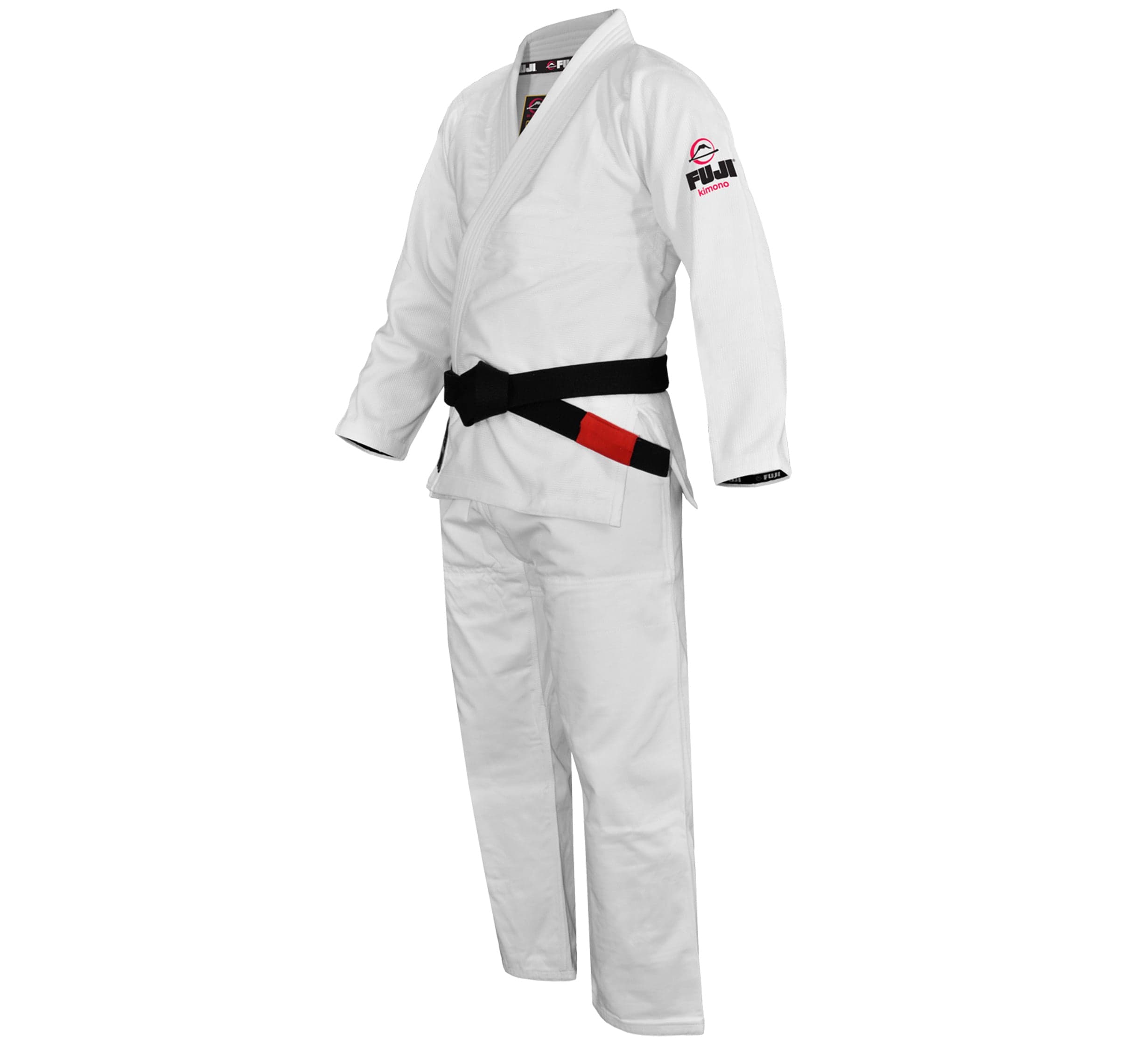
Main photo: FUJI Sports; product illustration, not an inspection endorsement.
The takeaway
Read the current IBJJF documents, then check the actual uniform you will wear. Resolve fabric questions with the manufacturer and competition-rule questions with the organizer. Leave enough time for those answers to change your plan.
Fit, construction, condition, and weigh-in preparation belong on the same checklist. A clean spare that has also been checked is useful; assuming your familiar training gi will pass because it feels comfortable is a weaker plan.
Get a second set of eyes on your preparation
Find your academy through Let’s Roll’s gym directory, and ask your coach to review your uniform and event requirements before competition week.
FAQ
Does an IBJJF-approved product description guarantee that my gi passes? No product label can settle how your individual garment fits after washing, wear, or alteration. Check the current rules and expect the event inspection to assess the uniform you actually bring.
Can I wear different-colored gi trousers and jacket? The uniform page requires matching colors. Read the complete color and construction requirements before combining pieces from different sets.
Should I check a new gi before or after washing? Check it before washing while an exchange may still be possible, then reassess after following the care instructions. Your final competition check should reflect the garment’s actual condition and fit.
Should my spare gi be checked too? Yes. Prepare it as a complete alternative, including a suitable belt and required underlayers, rather than assuming any second set will solve a problem at the venue.

Tess Hanley
Tess Hanley reads the rulebooks, the entry fees and the fine print. When a federation or a gym changes something, her first question is who ends up paying for it.
Related Posts
Choosing a BJJ seminar worth your time and travel
Choose a BJJ seminar by the subject, teaching format, access, and total cost. Know what to ask the host before buying a ticket.

IBJJF membership: finish the paperwork before the deadline
IBJJF membership and tournament entry are separate steps. Plan documents, professor approval, renewals, and junior accounts before registration closes.
The turtle position needs an exit plan
Turtle can interrupt a pass, but staying there creates another problem. Learn to identify the threat, control a connection, and choose an exit.
Comments (0)
Loading comments...