

IBJJF Pans 2026 women’s results: Galvão’s double gold
Quick answer: Sarah Galvão won lightweight and open-class gold at the 2026 IBJJF Pans. Gabrieli Pessanha won super heavyweight and finished second in open class. The women’s adult black belt results include eight weight categories, with the official report describing several distinct routes to gold.
The women’s open final turned on a late four-point back take. That moment gave Galvão a second gold, while Pessanha’s earlier super-heavyweight title remained a separate result. The two brackets produced different winners without changing one another’s records.
Elsewhere, Ana Lima won a narrow final after early submissions, Ciccarelli finished a varied run by referee decision, and Marchand won her final with an armbar from the back. The official details make the event more specific than a single label such as dominant performance.
The weight titles and the double-gold winner
The official Pans podiums and women’s championship report identify eight weight champions and a separate open-class winner. Sarah Galvão won lightweight and open, so nine first-place entries represent eight distinct athletes.
Rooster: Ana Lima.
Light feather: Mayssa Bastos.
Feather: Margot Ciccarelli.
Light: Sarah Galvão.
Middle: Lillian Marchand.
Medium heavy: Elizabeth Mitrovic.
Heavy: Larissa Dias.
Super heavy: Gabrieli Pessanha.
Open class: Sarah Galvão.
The final event record is dated March 29. The official report, published in April, supplies the match details below. Those details belong to this gi event rather than a later no-gi championship.
Ana Lima and Bastos in the lighter categories
Rooster. Ana Carolina de Andrade Lima Soares da Silva of Fight Sports took gold. The silver medal went to Mariana Cabral Rolszt of Gracie Humaita. The bronze medalists were Diana Thais de Souza Teixeira (Atos Jiu-Jitsu) and Jessica Caroline Coelho Dantas (Pax Jiu-Jitsu Academy).
Ana Lima’s report includes triangle-armbar finishes against Mara Kelly and Jessica Caroline before a one-advantage final against Mariana Rolszt. Her full registered name is longer than the competition name used in commentary, which makes the official category a useful identity check.
Light Feather. Mayssa Caldas Pereira Bastos of AOJ took gold. The silver medal went to Ashlee Funegra of AOJ. The bronze medalists were Andressa Nogueira Tolentino Guirau (Barreto) and Brenda Larissa Alves da Silva (Alliance).
Bastos and Ashlee Funegra occupied the first two places at light featherweight. The report describes Bastos’ lapel-choke semifinal against Andressa Guirau and Funegra’s earlier two-point wins. It identifies Bastos’ fifth Pans title, but does not justify inventing a final method from the podium alone.
Ciccarelli and Galvão reached gold by different routes
Feather. Margot Ciccarelli of AOJ took gold. The silver medal went to Larissa Campos Carvalho of Lebre Jiu-Jitsu Academy. The bronze medalists were Eonju Im (Tri-Force Jiu-Jitsu Academy) and Keanna Carolyn Klay (Gracie Barra).
Margot Ciccarelli’s reported run included armbar finishes and a rear-triangle finish before a referee-decision final against Larissa Campos. That is a specific tie-breaking result, not a claim that every match decided without a submission is a referee decision.
Light. Sarah C. Firme Galvao of Atos Jiu-Jitsu took gold. The silver medal went to Janaina Lebre of Lebre Jiu-Jitsu Academy. The bronze medalists were Sabrina Rogéria Ataide B. Gondim (Fight Sports) and Tamara Toros (Atos Jiu-Jitsu).
Galvão’s lightweight route included a quick quarterfinal kneebar and a six-point semifinal win against Sabrina Gondim. The final against Janaina Lebre was decided by the referee. Her open-class result came later through a separate bracket and should not be used as the method of the lightweight final.
Marchand and Mitrovic in the middle categories
Middle. Lillian Jane Marchand of Atos Jiu-Jitsu took gold. The silver medal went to Elisabeth Ann Clay of Six Blades Jiu-Jitsu. The bronze medalists were Aghata Adriane Rabelo Fernandes (CheckMat) and Vitoria Gabriella Nogueira dos Reis (Castro Team).
IBJJF describes Marchand entering as the lowest seed in her division. Her route included a referee decision against Giselle Menezes, a rear-naked choke, a lapel-choke semifinal against Aghata Rabelo, and an armbar from the back against Elisabeth Clay in the final. The seed belongs to this draw, not to a permanent judgment about her level.
Medium Heavy. Elizabeth Katherine Mitrovic of Alliance took gold. The silver medal went to Maria Carolina Barón Vicentini of AOJ. The bronze medalists were Denise Krahn (Hilti BJJ Berlin) and Olivia Evelyn Schauer (Tony Passos Jiu-Jitsu).
Mitrovic’s medium-heavyweight run included a four-point win against Denise Krahn and the final win against Maca Vicentini. The report identifies the title as her first major championship. Where it does not give a final method, the result should remain a win without an added technique name.
Dias and Pessanha in the heaviest categories
Heavy. Larissa Dias de Almeida of Elementum Jiu-Jitsu took gold. The silver medal went to Maria Malgorzata Malyjasiak of Abmar Barbosa Association. The bronze medalists were Letícia Teixeira dos Santos (Atos Jiu-Jitsu) and Simone de Abreu Pinheiro (CheckMat).
Larissa Dias’ report includes a toehold finish and a three-point guard-pass victory over Maria Malyjasiak in the final. That distinction matters: a submission earlier in the run does not make the final a submission too.
Super Heavy. Gabrieli Pessanha de Souza Marinho of Infight Jiu-Jitsu took gold. The silver medal went to Maria Raniele Alencar Lima of Atos Jiu-Jitsu. The bronze medalists were Bridgett G Brumbaugh (Active Jiu-Jitsu) and Rosary Mary Walsh (Essential Jiu-Jitsu).
Pessanha’s super-heavyweight route included a quick pressure finish against Rose Walsh and a head-and-arm finish against Raniele Alencar. IBJJF identifies the result as her tenth Pans title. The later open final was another contest, and it ended differently from this weight-category run.
The late back take that settled open class
Open Class. Sarah C. Firme Galvao of Atos Jiu-Jitsu took gold. The silver medal went to Gabrieli Pessanha de Souza Marinho of Infight Jiu-Jitsu. The bronze medalists were Beatrice Z Jin (Kogaion Academy) and Elisabeth Ann Clay (Six Blades Jiu-Jitsu).
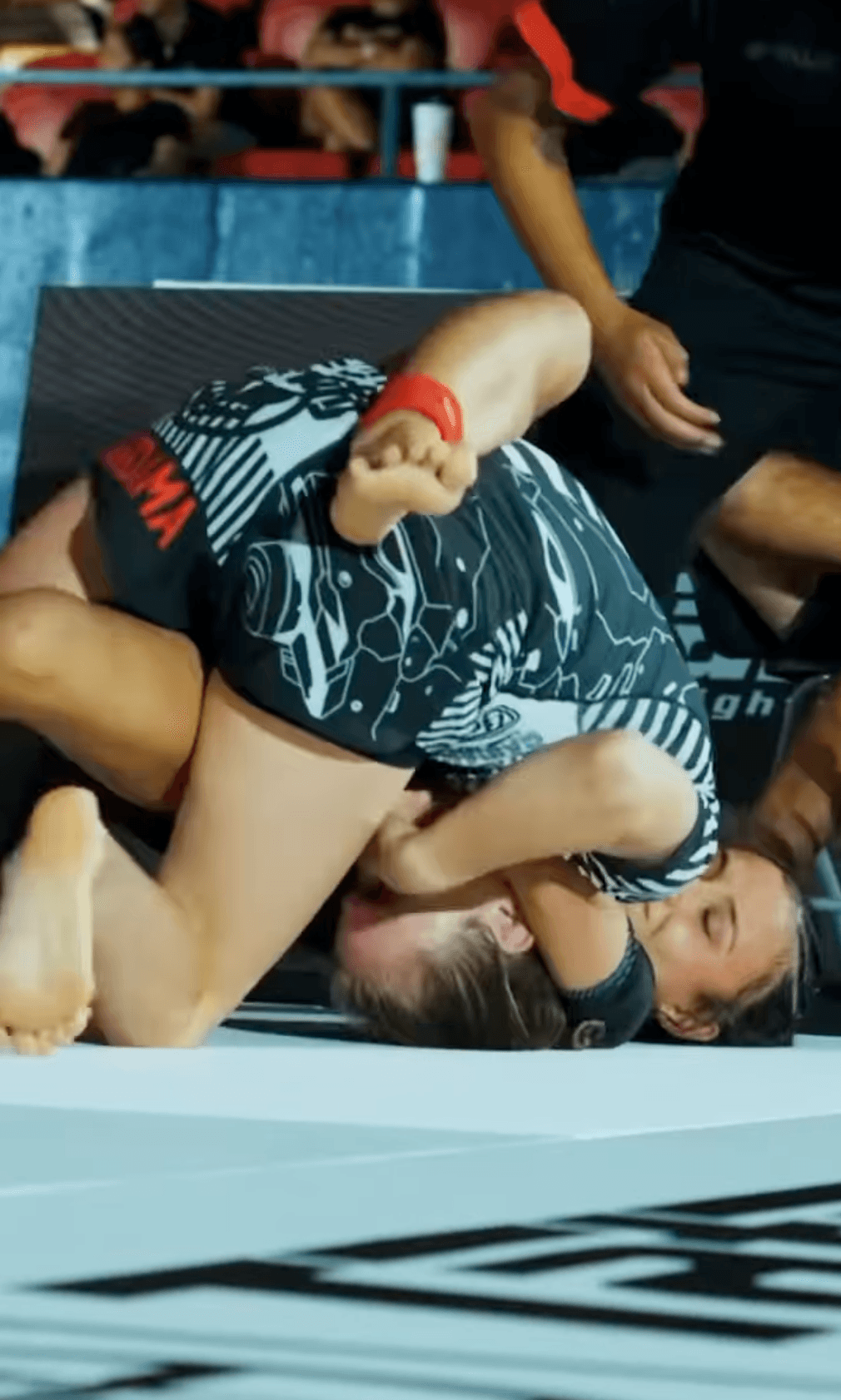
The official report gives the open final a concrete sequence. Pessanha led by three advantages with about a minute remaining. Galvão took the back for four points in the last thirty seconds, changing the result’s decisive scoring field before time ran out.
Galvão’s earlier open route included an Americana from a triangle against Maria Fragoso and a semifinal decision against Clay. Pessanha reached the final through Lillian Marchand and Beatrice Jin. These are reported matches from the open bracket, separate from both finalists’ weight-category work.
The final illustrates why advantages and points should not be added together as one number. A lead on advantages resolves equal points; a later points score can change that relationship. The full replay remains the best place to inspect the surrounding control and timing.
Keep each achievement the right size
Galvão’s double gold records two category wins, while Pessanha’s super-heavyweight gold remains a title even though she finished second in open class. The two facts do not cancel one another. They describe different brackets.
The World Championship guide explains the larger gi season. When comparing later results, retain the event and category beside each athlete. A Pans open final should not become an explanation for a Worlds weight result simply because familiar names appear in both.
The report supplies enough detail to make the event interesting without inventing private thoughts or training-room scenes. The final’s clock, scoring action, and recorded outcome are the evidence. A story about what an athlete privately believed would require another source.
For a replay session, compare the lightweight and open finals as two different assignments. Establish the round, score, and remaining time before focusing on a technique. Galvão’s open back take is especially useful for seeing how a late points score interacts with an earlier advantage lead, while the lightweight final needs its own recorded tie-break explanation.
The distinction also helps a competitor’s notes remain accurate. Write the event, year, category, athletes, and round beside a timestamp. That small amount of context prevents a familiar athlete’s movement from being attached to the wrong title when the clip is revisited later in the season.
Main photo: Sarah Galvão at the 2026 Pans — IBJJF; photographer not identified on source page.
The takeaway
Galvão’s lightweight-and-open double gold leads the Pans women’s results, with eight weight categories supplying their own champions and full podiums. The late open-final back take is a reported scoring sequence, rather than a detail inferred from a medal graphic.
Keep the distinct routes and outcomes attached to their categories. They show how submissions, points, advantages, and referee decisions contributed to the same event without pretending every title was earned in the same way.
Find a competition
Browse the tournament directory, then check the organizer’s official page for the current schedule, categories, and registration conditions.
FAQ
Who won double gold at the women’s Pans? Sarah Galvão won lightweight and open class. Those are separate brackets in the adult black belt gi competition.
How did the open final change late? IBJJF reports that Galvão scored four points for a back take in the last thirty seconds after Pessanha had led on advantages.
Did Pessanha win a title too? Yes. She won super heavyweight and finished second in open class. The open result does not remove her weight-category gold.
Does the podium identify every final method? No. This article uses IBJJF’s match report where it supplies a method or sequence and avoids filling gaps from the medal order alone.

Rafael Moura
Rafael Moura profiles competitors as people with lives outside the bracket. Some of those stories are comebacks. Most are not, and he does not force them.
Related Posts

ADCC 2026 preview: Kraków, a vacant belt, and a thinner field
ADCC hits Kraków on September 12-13 with doubled purses, a superfight belt nobody has vacated in 17 years, and a roster missing several of its biggest names.

ADCC weight classes: Worlds limits and Open divisions
ADCC Worlds and Trials use different weight categories from other ADCC tournaments. Read the exact limits, experience divisions, and event chart.
ADCC Youth Worlds 2026: Austin, AOJ, and the kids question
AOJ took the team title at the second ADCC Youth World Championship in Austin. What happened, how the kids ruleset works, and the downside worth naming.
Comments (0)
Loading comments...