
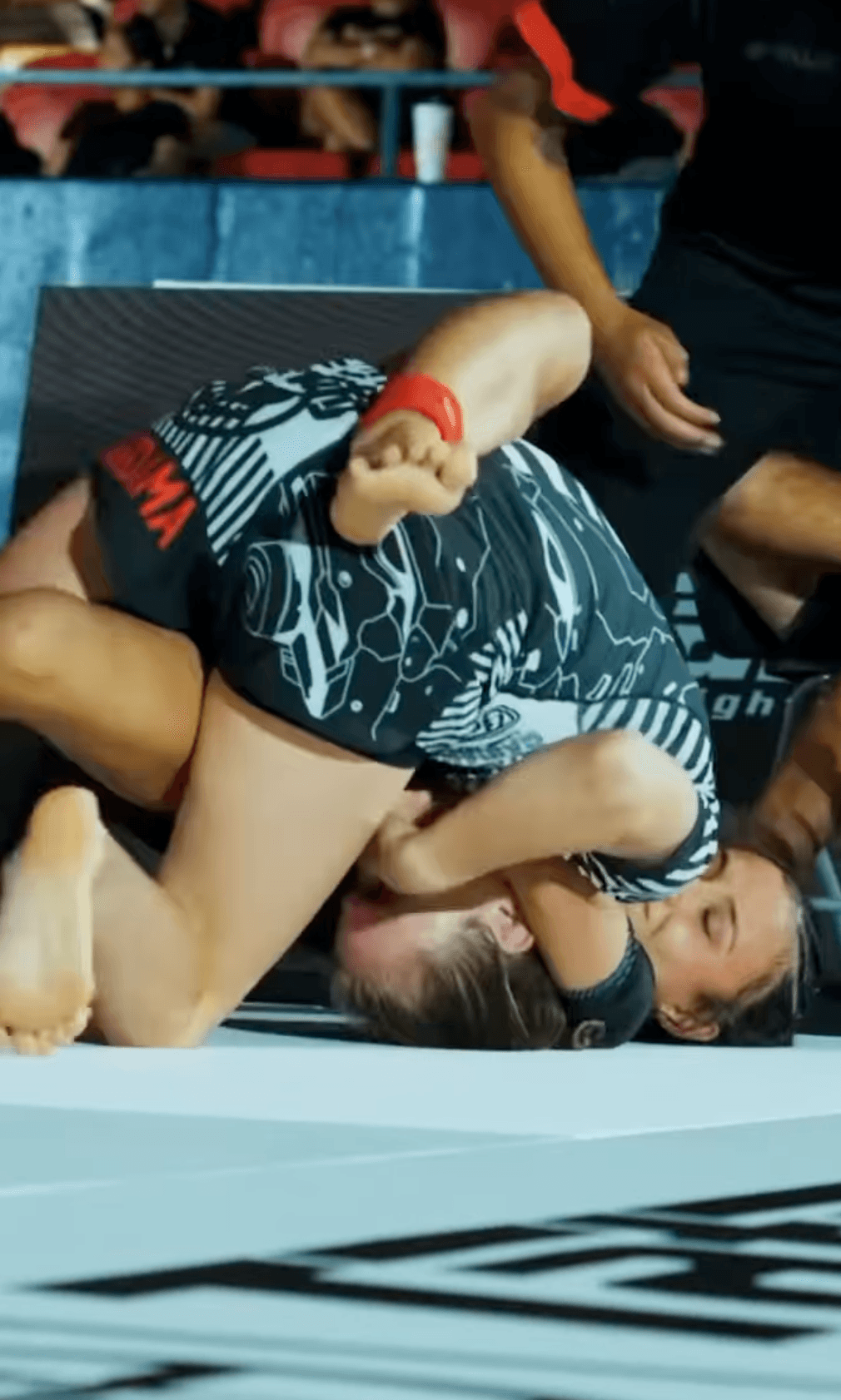
ADCC Youth Worlds 2026: Austin, AOJ, and the kids question
Quick answer: The second ADCC Youth World Championship ran on Sunday, August 9, 2026, at the Luedecke Arena in Austin, Texas, with invited competitors aged 7 to 17 in dozens of boys' and girls' divisions. Art of Jiu-Jitsu took the overall team title, weeks after winning the IBJJF Kids Pans team race. The youth event runs a modified ruleset with shorter matches, no heel hooks, no neck cranks, no slams, and referees empowered to stop a match on safety grounds.
Sunday in Austin, a seven-year-old won a world championship. So did a seventeen-year-old who will be in adult brackets within a couple of years. That range, on the same mats on the same day, is roughly the whole argument about youth grappling in one room.
The 2026 ADCC Youth World Championship was only the second edition of the event, and the first one that stood on its own. The inaugural edition in 2024 was tacked onto the build-up to ADCC Worlds and ran at T-Mobile Arena in Las Vegas the day before the adults competed. This one was held a full month before the senior tournament, in a different country from it. ADCC 2026 is scheduled for Poland in September.
What happened on the mats
Champions were crowned across five age groups per gender, from under-8 through under-17, plus absolute divisions from under-10 upward. The under-12 girls got two absolute brackets rather than one.
Per Jits Magazine's full results and Jiu-Jitsu Magazine's recap, a handful of names carried the day. Icaro Moreno won the boys' under-14 58 kg title and then took the under-14 absolute. Alana Garcia did the same on the girls' side, winning 54 kg and the under-14 absolute. Makorogo Mugabi doubled up at under-12, taking 61 kg and the absolute.
In the oldest group, the one that matters most for projection, James Ortiz submitted Matthew Velez to win the boys' 15-to-17 65 kg division. Carlos "Chingy" Sainz won at 71.5 kg and Sidney Katz at 75.5 kg. Kaloni Brown and Zoe Freeman were among the girls' 15-to-17 champions who finished their brackets by submission. The under-17 absolute titles went to Isaque Lima and Charley Caballero.
FloGrappling's coverage flagged Moreno, Ortiz, Sainz, Freeman, and Daniel "220" Barbosa as the standout performers of the day.
What we could not confirm
Full division-by-division detail was still thin in the days after the event. Champion lists were published, but match methods, times, and team affiliations for most of the brackets were not broadly available at the time of writing, and the medal tallies behind the team title were reported without a complete published breakdown. Where this piece names a result, it names one that a published source recorded. Where it does not, the detail was not there to record.
AOJ ran the team race
Art of Jiu-Jitsu took the overall kids team title. That is the same academy whose adult roster won five gi world titles at the IBJJF Worlds in May, and the same one that had already taken the IBJJF Kids Pans team title earlier this summer.
Whatever you think about youth competition, this is what a functioning talent pipeline looks like from the outside. AOJ has been building one for over a decade in Costa Mesa, and the results at the top of the adult brackets now arrive with a matching set at the bottom. If you want to see how that translates into senior team standings, our Power Index tracks it.
The youth ruleset is not the adult ruleset
This matters more than the medal table, so it is worth spelling out.
The adult ADCC ruleset is famously unforgiving. Qualifying matches run 10 minutes with no points at all for the first five, then points in the second five, with a five-minute overtime. Finals and superfights go 20 minutes, with only negative points available in the first ten. Guard pulling costs you a point. Passivity costs you a point. Heel hooks are legal, the twister is legal, and the can opener is legal. If you have not read the specifics, our ADCC explainer walks through it.
The youth version strips most of that out:
Kids up to 12 compete for four minutes, teens for five.
Heel hooks, neck cranks, and slams are banned outright across the youth divisions.
Legal technique lists vary by age group and by skill tier, set by belt: white belts beginner, grey belts intermediate, yellow and above advanced.
Referees are empowered to stop a youth match at any time if they think a submission is too tight or a score is running away.
That last provision is the one people should notice. It is a referee override on a submission-grappling ruleset for minors, and it is the sort of rule that only exists when an organization has thought about what could go wrong.
You do not enter this tournament, you qualify for it
The ADCC youth event is invitational, and the qualifying path for 2026 was built out of the ADCC Open circuit. Competitors accumulated points by medaling in the youth advanced divisions at ADCC Opens in the United States and Brazil, counted from January 2025 through April 2026. On top of the points path, ADCC added its first youth trials for this cycle, giving kids a second door in.
There is a real design decision buried in that. A pay-to-enter kids world championship is a marketing exercise. A points-and-trials qualifier means the brackets are small, the kids in them have already beaten people, and a family cannot simply buy a "world championship" line for a fourteen-year-old's highlight reel. The weight classes themselves reflect it: the published divisions include 24.4 kg, 27.2 kg, 37.6 kg, 43.5 kg and 50.8 kg, which read like brackets built around the athletes who qualified rather than a fixed ladder they had to cut into.
Why a youth world championship under this banner is a big deal
Youth jiu-jitsu is not new. Kids Pans and Kids Worlds have existed for years, and every decent academy in the country has a competition team full of nine-year-olds.
What is new is that no-gi grappling now has a credentialed, professionally produced junior pathway attached to the sport's most prestigious brand, with a broadcast, a qualification system, and a name that adults recognize. The inaugural 2024 event already produced athletes who broke through fast, with Jett Thompson, Joslyn Molina, and Taylor Hishaw among the champions who moved on to higher levels quickly.
For a sport that has struggled to build a legible ladder from white belt to professional, that matters. A parent, a coach, or a kid can now point at a sequence: local ADCC Open, youth trials, Youth Worlds, adult trials, ADCC. Every established combat sport has that ladder. Grappling mostly has not.
Burnout, weight cutting, and the parents
Now the counterweight, because a recap that leaves it out isn't worth much.
Professionalizing children's sport has a well-documented cost, and grappling is not exempt. Burnout is the big one. Kids who compete on an adult-style calendar from age eight often quit somewhere between fifteen and eighteen, right at the point where their training would begin to compound, and the ones who leave rarely come back. The sport does not have good data on this. Ask any longtime kids coach and you will get the same anecdote anyway.
Weight cutting in minors is the more concerning one. Adult grapplers cut weight badly and it is their choice. A twelve-year-old choosing to skip dinner for three days is not really making a choice, and there is no acceptable version of a growing child dehydrating to make 37.6 kg. The 2026 divisions being built around invited athletes' actual weights helps, but the pressure lives in the qualification season, not the world championship weigh-in.
Then there is the parent problem, which everyone in the sport has watched at a tournament and would rather not discuss. Organizations cannot rule their way out of it. The only real check is the academy: coaches who tell a father to sit down, who pull a kid from a bracket when the kid clearly does not want to be there, and who treat a loss as information rather than a referendum. If you are weighing this for your own child, our guide to BJJ for kids goes through what to look for and what to avoid.
None of this is an argument against holding the event. It is an argument for holding it the way ADCC appears to be holding it: short matches, restricted submissions, referees with authority to stop things, and a qualification path that keeps the fields small.
The takeaway
The second ADCC Youth World Championship did what a good junior event should do. It was small, hard to get into, ruled conservatively, and it produced a short list of names worth remembering. AOJ took the team title on the back of an academy system that has already proven it works at the adult level.
The open question is not whether kids should compete. Kids have always competed. It is whether the sport can build a professional junior pathway without importing the worst habits of the sports that already have one, the ones where twelve-year-olds have specialized coaches and nutrition plans and a five-year competitive plan. Grappling gets to decide this now, while the structure is still being built, and the youth ruleset in Austin suggests at least somebody in the room is thinking about it.
Check back in three years. The under-17 champions will be in adult brackets by then, and we will find out how many of the under-10 champions are still training at all. That second number is the one that tells you whether this worked.
Find your own bracket
You do not need a world championship to learn what competing teaches you. One local tournament will do it, at any age. Browse upcoming BJJ tournaments on Let's Roll and give yourself eight weeks to get ready for one.
FAQ
When and where was the 2026 ADCC Youth World Championship? Sunday, August 9, 2026, at the Luedecke Arena in Austin, Texas. It was the second edition of the event, after the inaugural 2024 championship in Las Vegas, and the first held separately from the adult ADCC World Championship, which takes place in Poland in September 2026.
Who won the ADCC Youth Worlds team title? Art of Jiu-Jitsu took the overall kids team title, adding it to the IBJJF Kids Pans team title the academy had won earlier in the summer. Individual champions were crowned across five age groups per gender, from under-8 through under-17, plus absolute divisions.
Are heel hooks legal at ADCC Youth Worlds? No. Heel hooks, neck cranks, and slams are banned in the ADCC youth divisions, and the list of legal submissions varies further by age group and by skill tier, which is set by belt rank. Referees can also stop a youth match at any point on safety grounds, which is not a power they hold in the adult event.
How do kids qualify for ADCC Youth Worlds? By invitation, earned through points. Athletes accumulate points by medaling in youth advanced divisions at ADCC Open events in the United States and Brazil over the qualifying window, which ran from January 2025 to April 2026 for this edition. ADCC also introduced youth trials for the first time in this cycle as a second qualifying route.
Related Posts
Mikey Musumeci gives up the belt to make room for MMA
Musumeci is vacating his UFC BJJ title to focus on MMA training. What he is leaving, what continues, and why the transition matters.
IBJJF membership: finish the paperwork before the deadline
IBJJF membership and tournament entry are separate steps. Plan documents, professor approval, renewals, and junior accounts before registration closes.
Choosing a BJJ seminar worth your time and travel
Choose a BJJ seminar by the subject, teaching format, access, and total cost. Know what to ask the host before buying a ticket.
Comments (0)
Loading comments...