

How to Find No-Gi BJJ in Los Angeles
Los Angeles is where modern American no-gi BJJ was invented. Eddie Bravo developed the 10th Planet system here. The Gracies established their first US schools here. The earliest American MMA crossover happened in LA gyms. If you want to train no-gi, this is the deepest market in the country.
It's also a city where every coffee shop has a BJJ practitioner in it and every coffee shop is 45 minutes from every other coffee shop. Finding the right gym in Los Angeles is partly a technique problem and mostly a traffic problem.
What "no-gi BJJ" actually means in LA
Three different things, all sometimes called "no-gi" by gyms:
A pure no-gi school — never trains in the gi. Curriculum built around grappling shorts and rashguards. 10th Planet is the famous example.
A gi-and-no-gi school with serious no-gi programming — runs no-gi classes most days of the week, has a no-gi competition team, treats it as primary not secondary.
A gi school with a no-gi class — once or twice a week, often Friday, mostly as a "let's do something different" session.
If you're a beginner trying to learn no-gi specifically, schools 1 and 2 are valid; school 3 is not really a no-gi program no matter what the website says.
Geography first
LA is large. The serious BJJ density is concentrated in:
West LA / Santa Monica / Culver City: high concentration of mid-tier and elite gyms. Heavy 10th Planet presence. Lots of MMA crossover.
South Bay (Torrance, Long Beach, Hawthorne): original strongholds. Some of the longest-running BJJ schools in California.
Hollywood / West Hollywood / Beverly Hills: smaller footprint, more boutique, more expensive.
San Fernando Valley (Van Nuys, Studio City, Burbank, North Hollywood): surprisingly strong, often overlooked. Some of the best no-gi programs in the city are over the hill.
Pasadena / San Gabriel Valley: deep traditional BJJ presence, often gi-focused but with serious no-gi options.
If you live in West LA, your usable gym set is 20+ schools. If you live in the Valley, it's another 15. South Bay is its own ecosystem with another 15. Pick where you live first, then filter.
The 10th Planet question
10th Planet is the dominant no-gi-only brand in LA. There are multiple 10th Planet schools across the city — Downtown LA, West LA, Burbank, Long Beach, Whittier, and others.
What 10th Planet does well:
Cohesive system from white belt up. You won't be drilling random techniques — there's a curriculum.
Strong competition pedigree at the elite level. EBI, ADCC, Submission Hunter Pro — many top-level grapplers come from this system.
Specific positions that are deeply developed: rubber guard, lockdown, twister, the truck. You won't see these explored as deeply anywhere else.
What it does less well:
Some 10th Planet schools lean heavily on Eddie Bravo terminology that doesn't translate cleanly to non-10th-Planet practitioners. If you drop in elsewhere, your "stoner control" doesn't have a vocabulary cousin.
The system de-emphasizes traditional pin escapes from side control and mount in favor of the rubber guard system. Some practitioners find that limiting later.
If you might also want to train in the gi, you can't at a pure 10th Planet school.
For someone who specifically wants serious no-gi from day one and isn't worried about cross-training, 10th Planet in LA is one of the best beginner experiences available. For someone who wants format flexibility, the gi-and-no-gi mixed schools below are better.
Schools that do no-gi seriously alongside gi
A few categories of LA gym that run strong no-gi programming as part of a broader curriculum:
MMA-crossover gyms: schools that historically grew alongside the MMA scene. No-gi is core, not a bolt-on. Often have ex-fighters as coaches.
Modern competition-team gyms: Atos affiliates, Cobrinha Jiu-Jitsu (Beverly Hills) and adjacent schools, Mendes Bros affiliates. These schools take no-gi seriously alongside gi because their athletes compete in both.
University of Jiu-Jitsu (Saulo Ribeiro's school) type traditional programs that have updated their no-gi to modern leg-lock-aware curriculum.
How to tell from a schedule: count the no-gi classes per week. Anything under three is a "we have it on the schedule but it's not the focus." Three to five is solid. Six or more is a no-gi-serious school.
How to evaluate quality at a drop-in
When you visit a no-gi school for the first time, watch for:
Are people drilling leg-lock defense? If leg locks never come up at any belt level, the curriculum is out of date for modern no-gi.
Is there active rolling, or is it 90% drilling? No-gi develops through volume of live training. A class that's 45 minutes of drilling and 15 minutes of rolling isn't producing competitors.
Are higher belts visibly using the modern no-gi game? Look for guard retention based on framing rather than gripping, scrambles ending in back takes or leg entries, modern half-guard systems.
How are the upper-belt rolls? Slick, fast, technical — that's healthy. Stalemate-y, low-action, "wait for the mistake" — that's a stylistic dead end at higher levels.
A 30-minute visit to one full class window will tell you more than a year of researching online reviews.
Pricing in LA
LA no-gi tuition tracks the citywide BJJ average: typical unlimited monthly is $180–$240, drop-ins are $30–$40.
Premium gyms (Beverly Hills boutique, downtown high-end) can push $250–$280 monthly. Valley and South Bay schools tend to be 15–20% cheaper than West LA for equivalent quality. If you can train in the Valley or south of LAX, you'll save real money over a year.
For specifics on year-one BJJ cost, read how much does BJJ cost.
What about kids no-gi or women's no-gi?
Kids BJJ in LA is mostly gi-based by default — kids classes typically run in the gi for hygiene and grip-development reasons. A small number of LA gyms (some 10th Planet schools, some MMA-crossover gyms) run no-gi kids programs. Worth asking specifically when you call.
Women's no-gi classes are more common in LA than in most cities. Several gyms have specifically branded women's no-gi programs — both at 10th Planet schools and at mixed-curriculum academies. Check the gym profile or call to confirm.
A note on traffic
In a non-driving city, you'd visit five gyms in a weekend. In LA, you might visit two. Plan accordingly.
If you're new to LA, my honest advice: don't start "looking for the best gym in LA." Start by looking for the best gym within 20 minutes of where you'll be commuting from on training days. Drive time consistently exceeds gym quality as a predictor of whether you'll stick. A great gym 45 minutes away with bad traffic is a gym you'll go to four times before quitting.
What to do this week
Open the Los Angeles BJJ gyms page and filter to your area.
If you specifically want no-gi-only, look at the 10th Planet lineage hub for the LA-area schools.
Pick three gyms. Email each about dropping in.
Show up to one open mat at each over two weekends — LA Saturday open mats is a good starting point.
Sign month-to-month at the room that fits your schedule and your commute.
If you're earlier in the decision — still figuring out whether to start gi or no-gi at all — read gi vs no-gi first. LA has both in abundance; you can pick either with confidence.
Related Posts
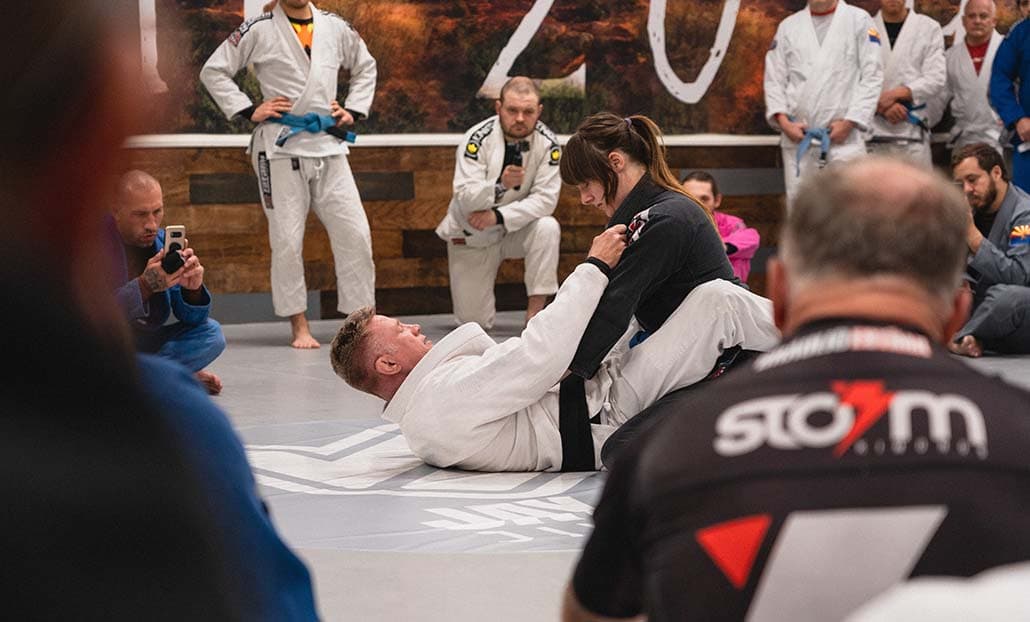
Choosing a BJJ seminar worth your time and travel
Choose a BJJ seminar by the subject, teaching format, access, and total cost. Know what to ask the host before buying a ticket.
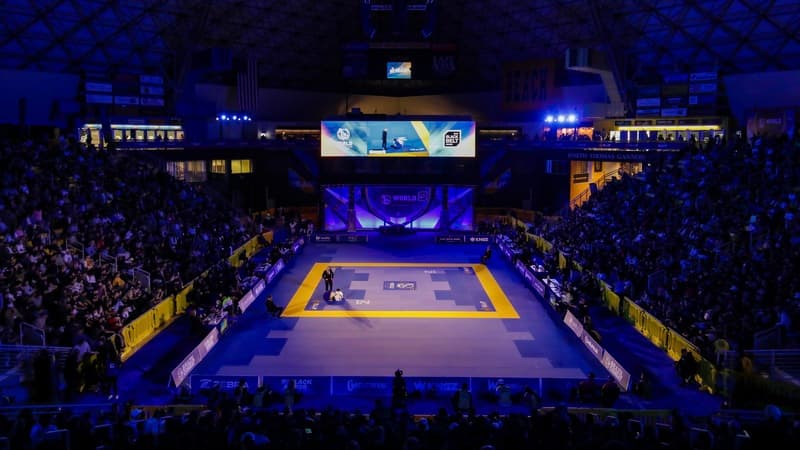
IBJJF membership: finish the paperwork before the deadline
IBJJF membership and tournament entry are separate steps. Plan documents, professor approval, renewals, and junior accounts before registration closes.
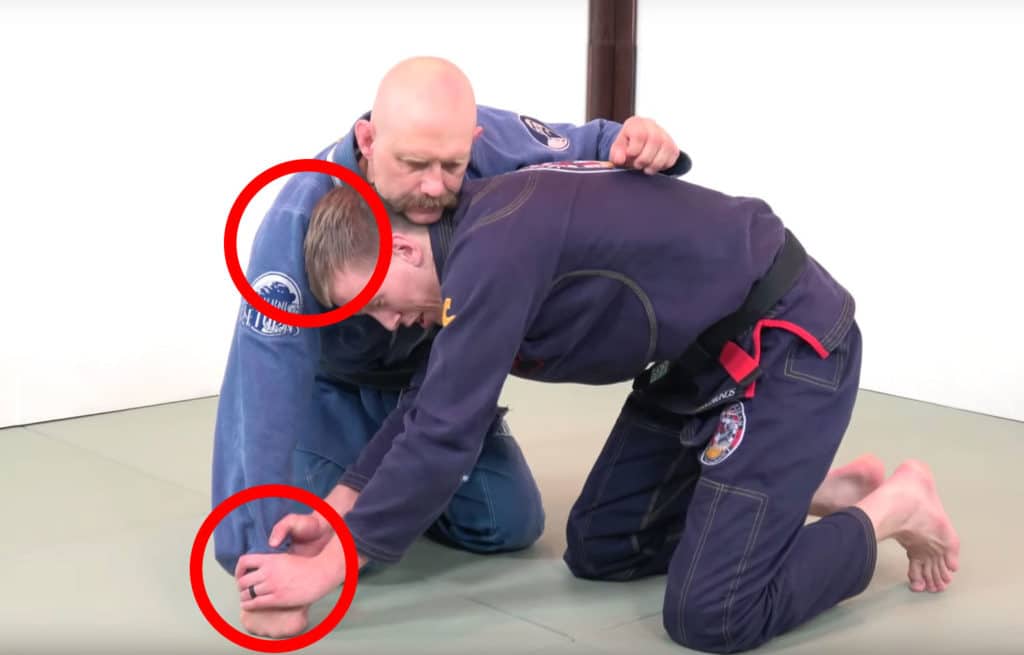
The turtle position needs an exit plan
Turtle can interrupt a pass, but staying there creates another problem. Learn to identify the threat, control a connection, and choose an exit.
Comments (0)
Loading comments...