

How Much Does BJJ Cost? (2026 Pricing Breakdown)
BJJ isn't expensive compared to most strength sports, but the first-month numbers can still surprise you. Here's what you'll actually spend in 2026.
Monthly tuition
Unlimited monthly memberships at most US BJJ gyms run between $150 and $220. The variance is mostly geographic.
Major coastal metros (Los Angeles, New York City, Miami, Bay Area): typically $180–$250. Some premium gyms run higher.
Mid-tier metros (Austin, Denver, Atlanta, Las Vegas): $150–$200.
Smaller cities and suburbs: $120–$180.
Affiliate / hobbyist gyms in small towns: sometimes as low as $90–$120.
A few clarifying notes:
The "unlimited" classes label is real. You can usually train as many times as you want, including kids and adults if you have a family membership.
Premium tiers ($200+) at the same gym sometimes include extras: private locker, gi included, seminars, no-gi access, etc. Worth reading what's actually bundled before paying the higher number.
Half-time / once-a-week memberships exist but are usually only ~25% cheaper than unlimited. Skip them — train more, get more.
Annual contracts vs month-to-month
Most gyms offer both. Annual contracts shave 10–20% off the monthly rate.
For a beginner, sign month-to-month even at the price premium. You don't yet know whether this is the gym (or the sport) for you. The flexibility is worth the small markup.
After your first six months, an annual contract at your home gym makes sense — especially if your gym does promotion seminars or has a competition team you'd join. Anyone pushing a contract on day one is selling something other than jiu-jitsu.
Drop-in fees
Drop-in (one-time visit) fees at US BJJ gyms run $25–$40 in 2026. A few realities:
$25 is the typical fee at a non-premium gym
$30–$35 is the going rate at most established gyms in major metros
$40+ usually indicates a "destination" gym — black-belt-level instructor, championship pedigree, premium location
Beyond $40, you're paying a brand premium. Sometimes worth it for the instructor (Marcelo Garcia Academy in NYC, Atos HQ in San Diego, etc.). Usually not.
Some gyms waive drop-in fees for higher belts visiting from out of town, or for reciprocal training partners. Don't ask for the waiver — let it be offered. Always bring cash for the fee just in case.
Gear, year one
Year one budget for gear is more or less constant regardless of which gym you join:
One gi (if you train in the gi): $80–$140. Don't buy a $300 competition gi as a white belt. A mid-tier brand like Tatami, Origin, or 93 Brand at the $100 mark is the sweet spot.
One pair of rashguards + shorts (for no-gi or recovery days): $40–$80 total.
Mouthguard: $20–$30. Don't skip this. Get the boil-and-bite kind, replace yearly.
A second gi, after month three: $80–$140. Necessary because you can't wash and dry one fast enough if you train 4+ times a week.
Total year-one gear: $250–$400. Don't buy a bigger inventory than this in year one. People who buy six gis and ten rashguards in month two are signaling something about themselves, but it's not jiu-jitsu commitment.
Seminars
Seminars are how visiting black belts make money outside their home gym. Pricing varies wildly:
Local seminars with a regional black belt: $40–$80
Touring world-champion seminars: $100–$150 typical, $200+ for the biggest names (Gordon Ryan, Roger Gracie, Marcelo Garcia)
Multi-day camps: $300–$800
Are they worth it? Sometimes. The best seminars are the ones where the instructor teaches their actual game — you walk out with three or four specific things you can drill the next week. The worst are roving best-of demos that fly past your head.
If you've trained less than a year, skip seminars except those at your home gym (which are usually free or low-fee for members). Foundational skills you don't yet have don't get unlocked at a Gordon Ryan seminar.
Competition entry fees
If you decide to compete:
Local competition (NAGA, F2W, local tournaments): $80–$150 entry, gi and no-gi combined
IBJJF regional Opens: $120–$180 per division
IBJJF Worlds, Pan Ams: $250+
Submission-only tournaments (EBI, FloGrappling, etc.): variable, usually $100–$200
Hidden cost: travel + lodging. A weekend competition trip easily clears $400 if you're flying. Local-only competition is the cheapest entry into the sport.
What you don't need to pay for
A few categories of spend that newer practitioners are sometimes nudged toward but don't need:
Online instructionals (BJJ Fanatics, Submeta, etc.): these are great after 18+ months of training. Before then, they're noise. Skip until you have foundation.
Private lessons as a beginner: a private with a black belt runs $80–$200/hour. For a white belt, that hour is better spent in two regular classes.
Multi-vitamin "BJJ recovery" supplements: scams. Real food, real sleep, real water. Done.
Tournament team uniforms when you're not on the competition team: optional. Buy gear because you'll use it, not because it has a logo.
Total year-one cost, realistic
Add it up. Roughly:
Tuition: $1,800–$2,500
Gear: $250–$400
2–3 drop-ins traveling: $60–$120
One local seminar: $60–$100
Mouthguard, tape, water bottle: $50
Total year-one all-in: $2,200 to $3,200.
For context: that's less than a gym membership at a boutique fitness studio, and you'll learn a martial art that lasts your whole life.
A few ways to save
Train at a school that owns the building, not one paying premium retail rent. Their cost basis is lower, so are their fees.
Family memberships are usually 30–50% off the second person.
Off-peak hours sometimes get a discount at the same gym.
University clubs — if you're affiliated with a college, the school's BJJ club is often free or near-free. Quality varies, but the price is right.
Drop into open mats at other gyms when traveling instead of paying for a second monthly membership. Some open mats are free for visitors.
What's worth paying for
When in doubt, pay for:
A gym with the right schedule and culture (not the cheapest one)
A second gi so laundry doesn't bottleneck your training
A real mouthguard
One in-person seminar a year with a coach whose game you actually study
Skip everything else until you've trained a full year. The sport rewards consistency more than it rewards equipment.
Related Posts
Mikey Musumeci gives up the belt to make room for MMA
Musumeci is vacating his UFC BJJ title to focus on MMA training. What he is leaving, what continues, and why the transition matters.
IBJJF membership: finish the paperwork before the deadline
IBJJF membership and tournament entry are separate steps. Plan documents, professor approval, renewals, and junior accounts before registration closes.
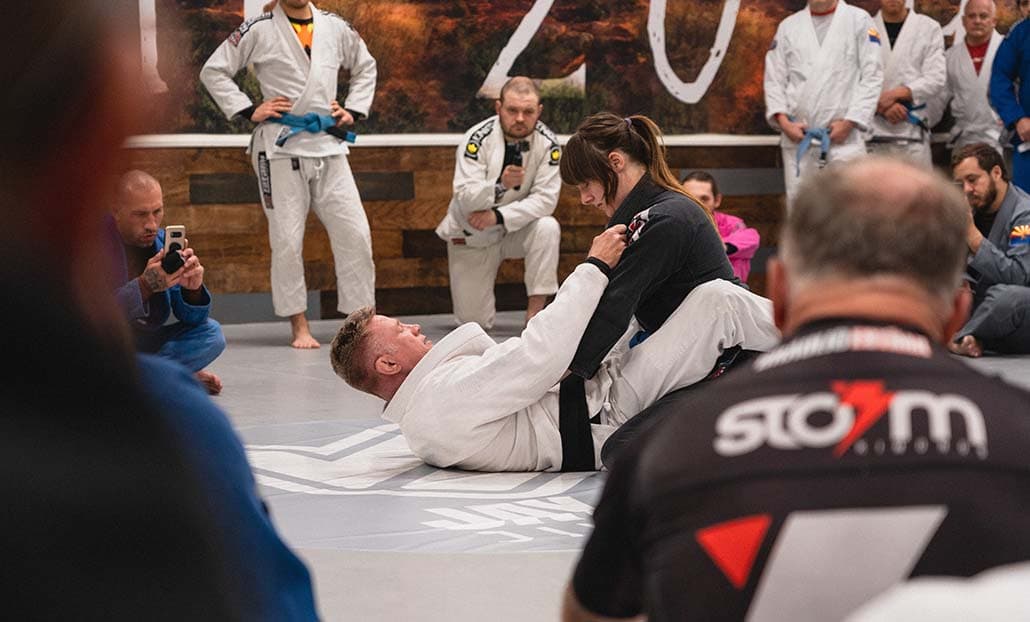
Choosing a BJJ seminar worth your time and travel
Choose a BJJ seminar by the subject, teaching format, access, and total cost. Know what to ask the host before buying a ticket.
Comments (0)
Loading comments...