

Hosting a BJJ seminar: the lesson starts with the arrangements
Quick answer: Before advertising a BJJ seminar, agree on the teaching scope, total costs, capacity, booking terms, and who handles the practical work. A coach’s fee is only one part of the event; travel, accommodation, registration, and participant information need named owners as well.
A sold-out seminar can still have a badly designed budget. It can also leave students unsure what they booked if the poster announces a famous name but says little about the class. Both problems begin before anyone arrives at the gym.
A useful host plan connects the lesson with the arrangements around it. The instructor needs to know who will attend and what they are being asked to teach. Participants need the format, price, and terms. The host needs a complete account of the work and cost between those two promises.
Agree on the lesson before designing the poster
Start with the subject, expected experience level, format, and duration. A gi guard seminar, a no-gi positional workshop, and a general question session are different events. The description should identify the one being offered.
Ask the visiting instructor what they recommend for the intended group. A topic chosen for its popularity may be too broad for the time available or poorly suited to the students who can attend. Let the teaching plan constrain the promotion rather than expecting the instructor to fulfill every exciting phrase added later.
Clarify whether the session includes drilling, positional work, open questions, or live rounds. If a component is not agreed, do not imply it on the sales page. Participants can make a better decision when the format is described plainly.
Our article on choosing a BJJ gym offers useful questions about matching instruction to a student’s needs. The same principle applies to a one-off event: the instructor’s reputation is relevant, but it does not replace a clear explanation of what the attendee will actually do.
Ask for the whole cost, not just the teaching fee
An instructor’s public seminar offer may separate teaching from travel and accommodation. For example, Robson Moura’s academy program page explicitly says travel and accommodation are additional to the seminar cost. That is a concrete reason to confirm the complete arrangement rather than infer an all-inclusive fee.
The page also describes assistance with promotion, sign-ups, travel, and other coordination. That is the academy’s public offer, checked on October 22, 2026, not a quote for your event. Confirm exactly which services are included in any proposal you receive.
Ask which party books and pays for travel, which expenses require prior approval, and what happens if the itinerary changes. Keep the answer in the event agreement. A casual message that travel is covered can leave several different interpretations unresolved.
Then identify your own costs: payment processing, venue arrangements, staffing, and any materials you choose to provide. Do not assume a successful poster removes those expenses. They belong in the plan before the first ticket is sold.
Test the budget with a labeled example
Here is a hypothetical arithmetic example, not a market-rate estimate. Twenty places at $60 produce $1,200 in gross ticket revenue. If the agreed teaching and event costs total $1,100, only $100 remains before any expenses not yet included.
The example is useful because it makes the missing inputs visible. A forgotten travel cost can change the result. So can a complimentary place, a refund, or a payment fee. Count what you will actually collect rather than multiplying capacity by a price that not everyone pays.
Use a simple planning sheet with the agreed costs and a conservative attendance scenario. Ask how many paid places are required to cover those costs, and whether that number is comfortably below the safe teaching capacity. If it is not, revise the plan before promotion.
Do not solve a weak budget by quietly increasing mat capacity after tickets sell. Capacity should be agreed around the lesson, supervision, and available space. The financial plan needs to fit the event you can responsibly host, not an imaginary larger room.
Put responsibilities beside actual names
Every practical job needs an owner. The host, visiting instructor, and any coordinator should understand who confirms the teaching plan, publishes updates, processes registrations, and answers participant questions.
A short responsibility list can prevent several avoidable gaps:
One person approves the final event description with the instructor.
One person owns the registration list, payments, and attendee messages.
One person confirms travel, arrival, and venue access.
One person manages check-in and day-of-event questions.
One person may hold several roles. The point is to make ownership visible rather than assume that whoever notices a problem will handle it. If the instructor offers full-service assistance, identify which of these tasks transfers and which remains with the gym.
Also establish a contact route for changes. A canceled flight or delayed opening should not require searching several social media conversations to find the person authorized to decide what happens next. Keep the current plan somewhere the relevant organizers can access without exposing participant information unnecessarily.
Make the booking terms readable before payment
Attendees should see the date, location, format, total price, and cancellation or transfer process before they pay. Explain any restrictions that materially affect participation. Do not hide the practical answer behind a general instruction to message the gym after purchase.
If the event changes, use the agreed contact route to explain what changed and what options apply. The terms should address organizer cancellation as well as an attendee deciding not to come. For legal questions or jurisdiction-specific requirements, obtain appropriate professional advice rather than copying another gym’s policy.
Keep private lessons, merchandise, and certificates separate from the core seminar unless they are explicitly included. A photograph of a shirt on a poster can create an expectation that the ticket supplies it. Plain text is an inexpensive way to avoid that confusion.
For children or teens, arrange the relevant permissions, supervision, and age-appropriate format with the academy and instructor. An adult event description should not be assumed to cover younger attendees simply because a parent is willing to buy a place.
Decide how cameras fit the lesson
Ask the instructor what recording is permitted and communicate that policy before the event. Attendees may want a reference clip, while the instructor may have conditions about recording or distribution. Settle the arrangement instead of leaving every pair to make a different assumption.
Participant images need their own care. A person agreeing to attend does not necessarily agree to appear in promotional footage. Provide a practical way to communicate photo preferences and make sure the event team understands how to respect them.
Do not promise a complete recording unless the instructor has approved it and someone is responsible for producing and delivering it. A phone placed near the mat is not a delivery plan. Sound, framing, file access, and the agreed audience all require attention.
If you intend to publish a recap, distinguish the lesson’s factual details from any participant account. Do not invent testimonials or attach a private story to a photograph because it would make the post more engaging. The event can be documented through the instructor, subject, and actual activities.
Walk through the day before the doors open
Build a practical sequence from instructor arrival to the final attendee leaving. Check venue access, registration, changing arrangements, and the place where questions will be handled. Let the instructor see the space and equipment before the teaching time begins.
Confirm who introduces the session and explains the room’s procedures. Visitors need to know how pairing works, what resistance is intended, and how to stop or ask for help. A seminar can contain people from several schools, so shared assumptions may be weaker than in an ordinary class.
Leave enough transition time between components. A demonstration, partner change, and question session do not happen instantaneously because a poster allocates a neat block of minutes. The instructor should be able to teach the agreed material without every logistical delay consuming the final section.
Keep an accurate attendance record and a route for urgent event communication. Limit access to personal contact information to the people who need it. A useful check-in process should help the class begin, not turn participant details into a broadly shared marketing list.
Give the seminar an appropriate follow-up
Afterward, send only the materials and information promised through the approved route. If a recording, reference notes, or another resource was included, identify who will deliver it and when. Avoid replacing a missing promised resource with an unrelated sales message.
Ask for specific feedback about the event’s description and arrangements as well as the teaching. Did the level match the advertisement? Were booking and arrival clear? Those answers can improve the next seminar without demanding that every attendee produce a glowing testimonial.
The regular coaching team can decide how the material fits later classes. One seminar does not require an immediate overhaul of the academy’s curriculum. A modest follow-up might revisit a relevant position with the instructor’s permission and the coach’s own plan.
Close the budget using actual figures. Compare paid attendance and final costs with the original assumptions. That gives the next event a better starting point than remembering only that the room looked full.
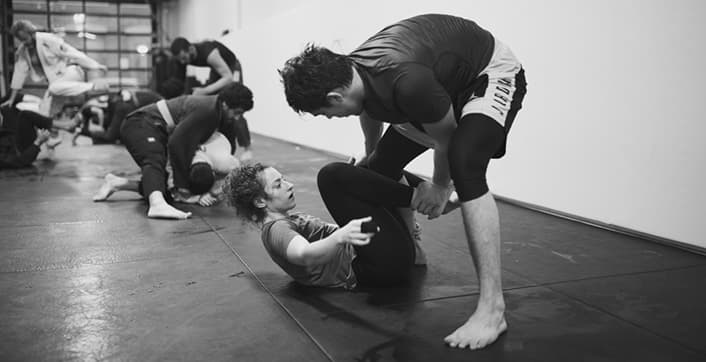
Main photo: BJJ Globetrotters.
The takeaway
A well-hosted BJJ seminar connects a clear lesson with a complete practical agreement. Teaching scope, total costs, capacity, responsibilities, booking terms, and recording permissions should be settled before promotion creates promises.
Use the actual attendance and final costs to review the event afterward. A full room is one piece of information; a class that matched its description and a plan that accounted for the work give the host much more to build on.
Compare the event information attendees see
Use Let’s Roll’s seminar directory to explore seminar listings and consider which practical details someone needs before deciding to book.
FAQ
Does an instructor’s fee normally include travel? Do not assume it does. Ask for the complete arrangement in writing. The linked Robson Moura academy page explicitly lists travel and accommodation as additional, illustrating why a host needs a specific quote.
How many seminar tickets should a gym sell? Agree capacity around the lesson, instructor, supervision, and available space. Then make the budget fit that capacity rather than increasing attendance to cover costs after promotion has begun.
Can attendees record the instruction? Follow the policy agreed with the instructor and communicated before booking. Also respect participant image preferences. Permission to attend is not a blanket agreement to appear in public promotional footage.
What should the host review afterward? Compare the advertised and delivered format, participant feedback, actual paid attendance, and final costs. Record any logistical gap and whether promised materials were delivered, so the next event begins with specific information.

Tess Hanley
Tess Hanley reads the rulebooks, the entry fees and the fine print. When a federation or a gym changes something, her first question is who ends up paying for it.
Related Posts
Jiu-jitsu in Montreal: build the visit around a real class
Plan BJJ training in Montreal around confirmed classes, language arrangements, winter travel, visitor policies, and equipment that is ready to use.

Jiu-jitsu in Paris: leave room for the part after class
Plan a Paris BJJ visit around the right class, a real travel route, visitor etiquette, and the part of the evening after training.

Jiu-jitsu in London: a famous address is only the beginning
Make a London BJJ visit work: choose the right session, confirm visitor terms, plan both journeys, and arrive ready to join the room.
Comments (0)
Loading comments...