
Jiu-jitsu in Montreal: build the visit around a real class
Quick answer: Plan a Montreal BJJ visit around a confirmed class, its exact address, and the language and equipment arrangements you need. Compare the complete trip rather than the gym's name alone, especially when winter clothing, work commitments, or several training sessions complicate the day.
A Montreal training bag in February may contain more street clothing than training clothing. The gi is only part of the job. You still need to arrive with dry equipment, find the correct entrance, change without blocking reception, and leave with enough time for the rest of the evening.
None of that makes a visit difficult by definition. It makes the useful unit of planning a real class on a real day. A list of famous academies can provide a starting point, but it cannot tell you whether Tuesday's session fits the trip you are actually taking.
Begin with the class you can attend
Write down your available windows before contacting academies. Include where you will be beforehand and where you must go afterward. A traveler staying downtown but spending the day elsewhere should not automatically calculate every route from the hotel.
Decide whether you want gi, no-gi, or either format. If you can bring only one outfit, that choice matters before you select a timetable entry. A class described as grappling does not remove the need to ask which clothing and experience level it requires.
Be specific about your background when booking. A belt rank, approximate training experience, and the kind of session you are seeking give the host enough context to recommend a class. Do not assume a visitor slot is suitable simply because the academy offers beginner instruction somewhere on its schedule.
Choose one dependable session before adding more. It is easy to fill a short trip with training ambitions that leave no time to wash equipment or meet the people you came to see. A confirmed class with a workable route is worth more than several tentative plans competing for the same evening.
Use named academies as research starting points
Mizu Studio identifies itself with Montreal's Saint-Henri neighborhood and presents both gi and no-gi training among its programs. That gives you a concrete location and a program range to investigate. Confirm the actual session, visitor arrangement, and any equipment needs directly with the studio.
Tristar's contact page provides its Ferrier Street address. It is another specific starting point for a Montreal search, but a well-known academy name does not tell you which class a short-term BJJ visitor should join. Ask about that class rather than assuming the training associated with famous athletes is the timetable available to everyone.
These examples should not be read as a ranking or a claim that two schools represent the whole city. They illustrate how quickly the search becomes practical once a name is attached to an address and an appropriate session. Other academies may fit your route, format, or schedule better.
Avoid comparing promotional promises as though they were observations from a visit. A website can establish what a school advertises and how to contact it. The fit for your training depends on the class you attend, the instruction you receive, and the arrangements you confirm.
Ask about language before the demonstration begins
Montreal visitors may encounter French, English, or a mixture in and around a class. Ask which language the particular instructor uses and whether they can clarify an unfamiliar instruction for you. Do not assume that a city's bilingual character guarantees every session will operate in your preferred language.
Explain your comfort level plainly. You might understand French well but struggle with technical vocabulary, or speak English while recognizing familiar Portuguese technique names. The host can respond more usefully to that description than to a broad question about whether foreigners are welcome.
During class, choose a viewing position that lets you see the demonstration without obstructing others. If an instruction is unclear, ask at an appropriate pause and show the part you understood. Physical familiarity can help, but it should not become a reason to guess at a submission or a stopping signal.
The guide to training BJJ in another language offers practical ways to prepare. Keep the goal modest: understand the task, communicate with the partner, and know how to ask for a reset. You do not need a flawless conversation to have a useful session.
Plan the route with the bag and the season included
Check the route using current local transit information, including the return journey. The STM website is a primary place to begin checking Montreal transit. Use the actual date and time, and allow for the walking portions rather than considering only the train or bus segment.
A route that looks comfortable on a map can feel different with a gi, boots, and winter layers. Think about where wet outerwear will go and whether the gym has a clear place for shoes. Ask when necessary; do not carry outdoor moisture onto the training surface while trying to organize the bag.
Avoid attaching a universal number of extra minutes to every visit. Weather, transfers, building access, and your own familiarity with the neighborhood vary. The useful habit is to identify the parts you do not know and leave enough margin to resolve them without rushing into class.
Save the address and entrance instructions somewhere you can access quickly. If the academy occupies a unit inside a larger building, the street address may be only the first step. Finding the correct door should not depend on recognizing a social-media photograph in the dark.
Send a booking message that can be answered
A short, complete message makes it easier for staff to help. Include your dates, experience, desired format, and the class you are considering. Ask about the few details that determine whether the visit is workable rather than sending a list of questions already answered clearly on the school's site.
Before paying, confirm:
Whether the chosen session accepts short-term visitors.
The fee, booking method, and cancellation arrangement.
Gi color, rashguard, and other uniform requirements.
Whether loan equipment must be reserved separately.
The arrival time and correct entrance for the class.
If you need to leave early, ask before booking. Some lesson formats make an early departure easier than others, and the instructor should not discover the constraint midway through an assigned drill. Give a realistic departure time that includes changing afterward.
Keep the response and payment confirmation together. If a different staff member is at reception, those details can resolve the arrangement quickly. You are helping the academy locate the booking, not asking the person at the desk to reconstruct an exchange from another employee's memory.
Solve the used-gi problem before planning session two
Several classes require more than several open slots. You need clean equipment for each session and a practical way to wash and dry it between them. Confirm laundry access at your accommodation before assuming that a sink and an overnight wait will be sufficient.
If you intend to alternate gi and no-gi, count both outfits. Rashguards and shorts still need appropriate care after training. The absence of a heavy jacket does not mean the second session is independent of the first one's laundry and packing decisions.
Ask about loan equipment if it would simplify the trip, including whether the academy handles the washing. Do not assume a borrowed gi can leave the building or remain reserved for the whole week. Equipment availability belongs in the booking conversation, especially if you need a less common size.
The broader BJJ travel guide helps connect sessions with the rest of an itinerary. For Montreal, the same practical question applies: where will the used clothing go between the mat and the next commitment? Answer it while the bag is still being packed.
Evaluate the visit at the level of the class
After training, describe what you actually experienced. Was the class suitable for your level? Could you hear and understand the instruction? Were the booking and equipment arrangements clear? Could you make the return trip without undoing the rest of the day's plan?
Keep those observations separate from sweeping judgments about the entire academy or the city. One session can be useful evidence for your next visit without establishing how every instructor teaches or how every group trains. A busy competition class and a beginner lesson may serve different purposes.
If you want to return, ask which session would be the best next step. You may find that a different time, format, or instructor suits the next part of the trip. That is an ordinary adjustment, not a verdict that the first choice was a mistake.
A good Montreal training plan leaves some room for the city outside the gym. The class should fit alongside the work, people, or places that brought you there. You can take the training seriously without requiring every available hour to become another journey across town with damp clothing.
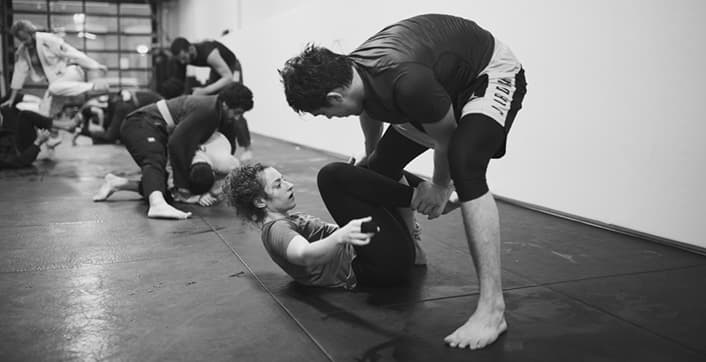
Main photo: Mizu Studio; academy training photograph.
The takeaway
Choose a Montreal BJJ class through its actual location, format, language arrangements, and visitor policy. Confirm the details with the academy and plan the full route, including the return and the clothing you will be carrying.
Start with one session you can attend comfortably. Add others when the timetable, laundry, and rest of the trip support them, rather than letting a long list of academy names make the decisions for you.
Build your Montreal training shortlist
Explore BJJ gyms on Let's Roll, then contact each academy directly to confirm the class and visitor arrangements for your dates.
FAQ
Can an English-speaking visitor train BJJ in Montreal? Ask the specific academy about the language used in the class you want to attend. Explain your comfort level and confirm how to get clarification when an instruction is unfamiliar.
Should I choose a gym based on its famous competitors? Reputation can guide research, but the relevant visitor class, location, format, and instruction still need checking. Choose the session available to you rather than an imagined version of a professional training room.
Can I borrow a gi during a short visit? Availability varies. Reserve a suitable size in advance and confirm charges, belt arrangements, cleaning instructions, and whether the equipment stays at the academy.
How many classes should I plan during a weekend? Begin with the sessions your itinerary and equipment care can support. One confirmed class is preferable to several bookings that depend on rushed travel or unavailable laundry.

Maya Corbett
Maya Corbett answers the questions you have before walking into an unfamiliar academy — what to book, what to bring, who to ask. Every detail in her guides traces back to something the gym published itself.
Related Posts
BJJ gi pants that fit standing up can still fail on the mat
Check BJJ gi pants at the waist, rise, knees, and cuffs so a good-looking size label becomes a uniform you can actually move in.
Competing in gi and no-gi on the same day takes two plans
Prepare for gi and no-gi competition on the same day with separate rule checks, complete outfits, schedule coordination, and a realistic second-bracket plan.
How to ask a BJJ coach a question they can actually answer
Ask better BJJ questions by showing the position, the response that stopped you, and the detail you need to test next.
Comments (0)
Loading comments...