

Jiu-jitsu in Paris: leave room for the part after class
Quick answer: A good jiu-jitsu visit in Paris starts with the class you can actually attend and the route back afterward. Confirm the location, visitor policy, and training format before fitting it around the rest of the day.
Your evening in Paris can look spacious until you put a sweaty gi in it. Class ends, there is a train to catch, someone is waiting for dinner, and the shower you assumed would be available turns out to be a question you never asked.
The useful version of a Paris BJJ plan includes those small, unglamorous details. It also recognizes that a gym described as being in Paris may be outside the city proper. That can work beautifully for your trip. It deserves an actual route, not a hopeful estimate from a hotel lobby.
Read the address before the academy name
Le Cercle Tissier provides a useful example of why geography matters. Its grappling page describes training in the Paris area, while the academy is in Vincennes. A search result and a municipal boundary do different jobs. Neither tells you whether the trip fits between your afternoon plans and the last commitment of your evening.
Put the academy's confirmed entrance into a route planner. Use the place you will actually be leaving from, which may be a museum, a friend's apartment, or a work meeting rather than your accommodation. Then check the return journey separately. A convenient outward trip does not settle the whole evening.
Avoid choosing on the strength of distance alone. A slightly farther academy with a suitable class and a clear visitor arrangement may be a better fit than a nearby session you cannot join. The practical comparison is between complete visits, including the time needed to change and find the door.
This is also where a saved social-media location can mislead. An academy may have more than one training room or post material from a seminar elsewhere. Ask which address applies to the specific class you intend to attend. A recognizable logo is no substitute for that answer.
Ask for one specific class
A message saying you will be in Paris sometime next week gives the academy work to do. A date, preferred session, and short description of your experience lets someone give you a useful answer. Mention whether you are bringing a gi and whether you are seeking an ordinary class or open training.
Keep the first message compact. You do not need to submit your grappling autobiography or explain every trip you have taken. The academy needs enough information to place you appropriately and tell you how visitors register. Let its staff decide which session suits their room.
Before treating the visit as confirmed, settle these points:
The date, start time, and exact training address.
Whether that session accepts visitors at your experience level.
The required clothing, registration process, and total visitor fee.
When to arrive and whom to check in with.
Save the response somewhere available without relying on the same app staying open. If the answer directs you to a booking page, complete that step. A friendly response to an inquiry is not necessarily a place reserved in a class.
Let language be a practical question
Ask what language the session is taught in and whether a visiting student who does not speak French can follow the class. That is more useful than assuming everyone will teach in English or worrying that imperfect French rules out the visit. The academy can describe its own arrangements.
Once there, give demonstrations your attention. If you miss an instruction, ask your partner to show the starting position again before the round begins. A brief clarification is easier to accommodate than discovering halfway through that one person is doing a drill and the other is trying to win a match.
Agree on ordinary training matters plainly: where the round starts, how much resistance is expected, and whether either person wants to avoid a position. Gestures can help, but guessing should not carry the entire conversation. Stop and ask the coach when the instruction remains unclear.
Learning a few polite words is courteous. It does not oblige you to pretend that you understood an explanation you missed. The point of communicating is to reach the same understanding, not to pass a language test while someone is holding your sleeve.
Pack for the hours around training
A small bag that carries clean kit to the academy still needs to carry used kit home. Give that second job some thought before leaving for the day. Bring a separate bag for sweaty clothing and a way to keep it away from whatever else you have been carrying around Paris.
Do not build an evening reservation around an unconfirmed shower. Ask the academy what facilities visitors can use and allow time to use them without rushing the next class. If your plan requires returning to your accommodation to change, include that leg in the schedule from the beginning.
A spare top and ordinary footwear can make the transition out of the gym less awkward. Keep valuables and travel documents manageable, too. Ask where bags belong rather than leaving them beside the mat because that is what happens at home. Every room has its own traffic and storage arrangements.
Laundry is a separate question for a longer stay. Check the care instructions on your gi and the facilities available where you are staying. One clean training session is easy to organize. Several sessions require a workable plan for washing and drying the clothes between them.
Make room for the class you booked
A visitor can arrive with a very specific idea of Paris training: a certain coach, a particular style, or a room seen repeatedly in videos. Those interests are reasonable. The class itself still belongs to the students and instructor who are there that evening.
Join the warm-up and follow the format you have been given. If you were hoping for more rounds or a different subject, ask afterward about another session. Turning a regular class into your private request list puts the burden of your expectations on people who did not make them.
The same applies to choosing partners. Introduce yourself, state your experience honestly, and let the instructor help if the pairing process is unfamiliar. You do not need to prove that your home academy trains hard. A manageable first round gives both people a chance to understand how the other moves.
If you are curious about something the instructor does differently, frame it as a question about that position. Comparing explanations can be useful. Announcing that your usual coach teaches it another way, before understanding this version, rarely gets you the most interesting answer.
Plan the return while you still have time
Use the RATP website to check the services relevant to your route, then recheck close to the visit. An article cannot promise the service you will find on a particular evening. A route saved several weeks ahead is a starting point, not a guarantee.
Leave a margin between the advertised end of class and your next commitment. You may need to change, return borrowed equipment, settle payment, or simply locate the correct exit from a building. The margin should cover ordinary delays without making the academy responsible for your dinner reservation.
If you must leave at a firm time, mention it before class and ask how to do so without disrupting the session. An early departure agreed in advance is easier than vanishing during instruction. It also prevents a coach from looking for a visiting student who has already gone.
Our open-mat directory can help identify other possibilities if your original plan does not fit. Check the host's current details before substituting one session for another. An open mat can have its own experience requirements and visitor arrangements.
Keep the visit in proportion to the trip
One well-planned class can be enough. You do not have to turn every day in Paris into a race between sightseeing and training to justify packing your belt. Decide which sessions matter most, then leave space for the people and commitments that brought you to the city.
If someone is traveling with you, give them a realistic return time that includes the trip and changing afterward. Asking them to improvise another hour because the rounds were good is a different arrangement from the one they agreed to. Sort that out before the afternoon separates you.
Photographs deserve the same attention. Ask the academy before taking pictures, and ask the people who would appear in them. A class you enjoyed is not automatically an audience for travel content. If the room prefers no cameras, keep the memory and the training notes.
Afterward, save whatever would help a future visit: the correct entrance, the booking method, and the class format. Record your own experience without presenting it as a permanent review of every coach or session. A single evening can tell you something useful while remaining a single evening.
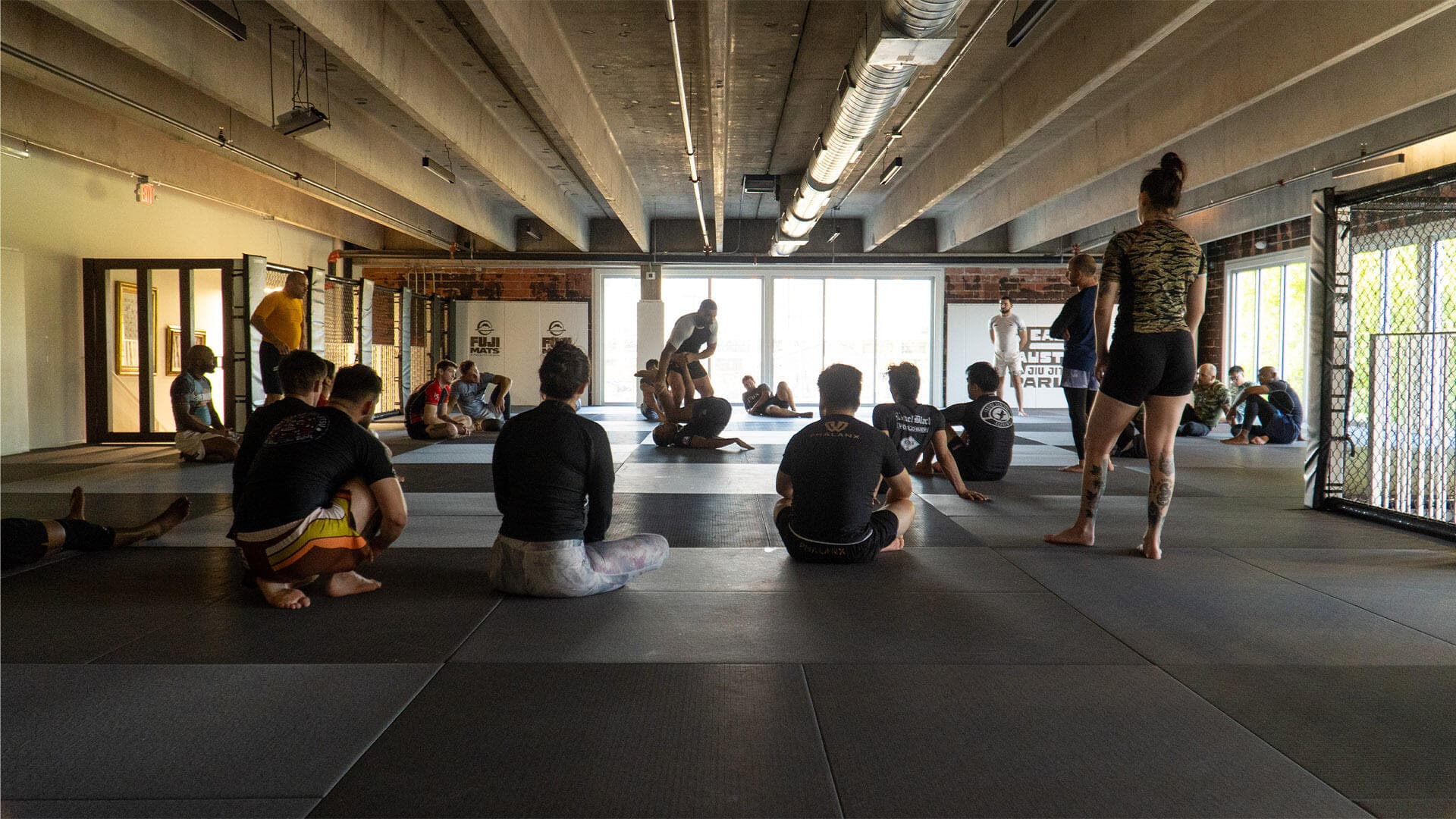
Main photo: Le Cercle Tissier; academy training photograph.
The takeaway
A Paris jiu-jitsu visit works best as a complete appointment: a confirmed class, a realistic route, suitable kit, and enough time afterward. Check whether the academy is in Paris proper or a neighboring municipality, then judge the actual journey rather than the label in a search result.
Leave the academy room to run its class and leave yourself room to enjoy the city. The best plan is the one you can follow without rushing a partner, a coach, or the person waiting for you after training.
Find a room that fits your visit
Explore the gym directory, then confirm the session and visitor arrangements directly with the academy.
FAQ
Can visitors train BJJ in Paris? Some academies accept visitors, but confirm the specific session, experience requirements, booking process, and fee directly before attending.
Is an academy advertised as Paris always inside the city? No. Check its actual address; an academy in a neighboring municipality may suit your trip, but it needs its own travel plan.
Do I need to speak French? Ask the academy about the teaching language and support for visiting students. Do not assume either that English is available or that imperfect French prevents attendance.
Should I bring a gi for one class? Confirm the session format first. Ask about rental or loan arrangements if bringing your own is impractical, and never assume a suitable spare will be available.

Maya Corbett
Maya Corbett answers the questions you have before walking into an unfamiliar academy — what to book, what to bring, who to ask. Every detail in her guides traces back to something the gym published itself.
Related Posts

Jiu-jitsu in London: a famous address is only the beginning
Make a London BJJ visit work: choose the right session, confirm visitor terms, plan both journeys, and arrive ready to join the room.

Jiu-jitsu in Sydney: plan the return trip before the first roll
Plan a Sydney BJJ visit by suburb, session, and the return journey, with practical advice on booking, kit, and joining an unfamiliar room.
Jiu-jitsu in Austin: choose a class beyond the famous names
Plan an Austin BJJ visit around confirmed access, experience requirements, and the class you want, with three official sources to start from.
Comments (0)
Loading comments...