
Your training partner did not sign up for your highlight reel
Quick answer: Ask the gym and your partner before recording, and explain who will see the footage. Give the camera one useful job and place it where the instructor permits. Private review and a public highlight reel need separate agreements, including agreement about the actual edit and caption.
A phone propped against a water bottle can promote an ordinary practice round into a production. Nobody has hired a director. Several people may nevertheless discover that they have been cast.
There are good reasons to record training. You may want to see where a grip disappears or why you keep arriving late to a position. The problem starts when the purpose quietly changes from understanding your own mistake to making someone else's mistake public.
Give the camera a job before giving it a tripod
Start with the question you want the footage to answer. Keep it small enough that you could explain it to your partner before the round. Finding the moment your knee slips out of position is a useful task. Gathering material for an eventual documentary about your blue belt is a less urgent request.
The question determines what you need to film. A specific drill might show the relevant exchange. A full round might be necessary if the setup keeps changing. Neither format is automatically better; choose the one that contains the information you need without recording the entire room's evening.
You might also ask your coach to watch the position directly, if they have time. A camera creates a file, not an answer. Someone who understands the problem may be able to help before you create another video that will spend six months beside screenshots of parking instructions.
Decide when you will review it. If the honest answer is that you probably will not, leave the phone in your bag. Ordinary training is allowed to happen without an accompanying storage problem.
Ask while a refusal is still easy
Check the academy's policy before approaching a partner. Then explain the proposed recording to the person who will be in it. Permission from the gym answers one question; willingness from your partner answers another.
Give enough detail for a useful decision: the practice you want to record, who will see it, whether you intend to keep it, and whether posting is part of the plan. Private review with your coach is a different request from a public clip available to strangers.
Ask before the phone is recording. Starting the camera and then asking if everyone is fine with it turns a simple refusal into an interruption. A person should not need a convincing personal reason to prefer an unrecorded round.
This is not a new complication invented by social media etiquette. A 2018 BJJ Fanatics seminar guide tells attendees to ask the school owner and instructor about filming. The same practical question belongs in ordinary class: what has actually been agreed, by whom, and for what use?
The mat is not a studio floor
Ask where the camera can go. A clear patch beside the mat is not a promise that nobody will need it once people start moving. Keep equipment out of walkways, away from training pairs and clear of the next class waiting to enter.
Take a short test from the approved position. Check whether the action you want to study stays visible. If a shoulder blocks the grip, resolve that before asking a partner to repeat ten attempts for footage that cannot show the detail.
Look at the background too. A tight shot may still include people who declined to be recorded, a changing area, or a doorway people use without expecting a camera. If you cannot make the arrangement work, change the setup or train without filming.
The rest of the room does not owe your video a clean frame. When another pair moves into view, the solution is not to complain that they spoiled the take. Their practice is the activity the room exists for.
Keep the rules of the round attached to the clip
A cooperative drill and a competitive round can look surprisingly similar once you remove the conversation that established the task. That conversation matters. One partner may have agreed to provide a particular reaction or start in a difficult position.
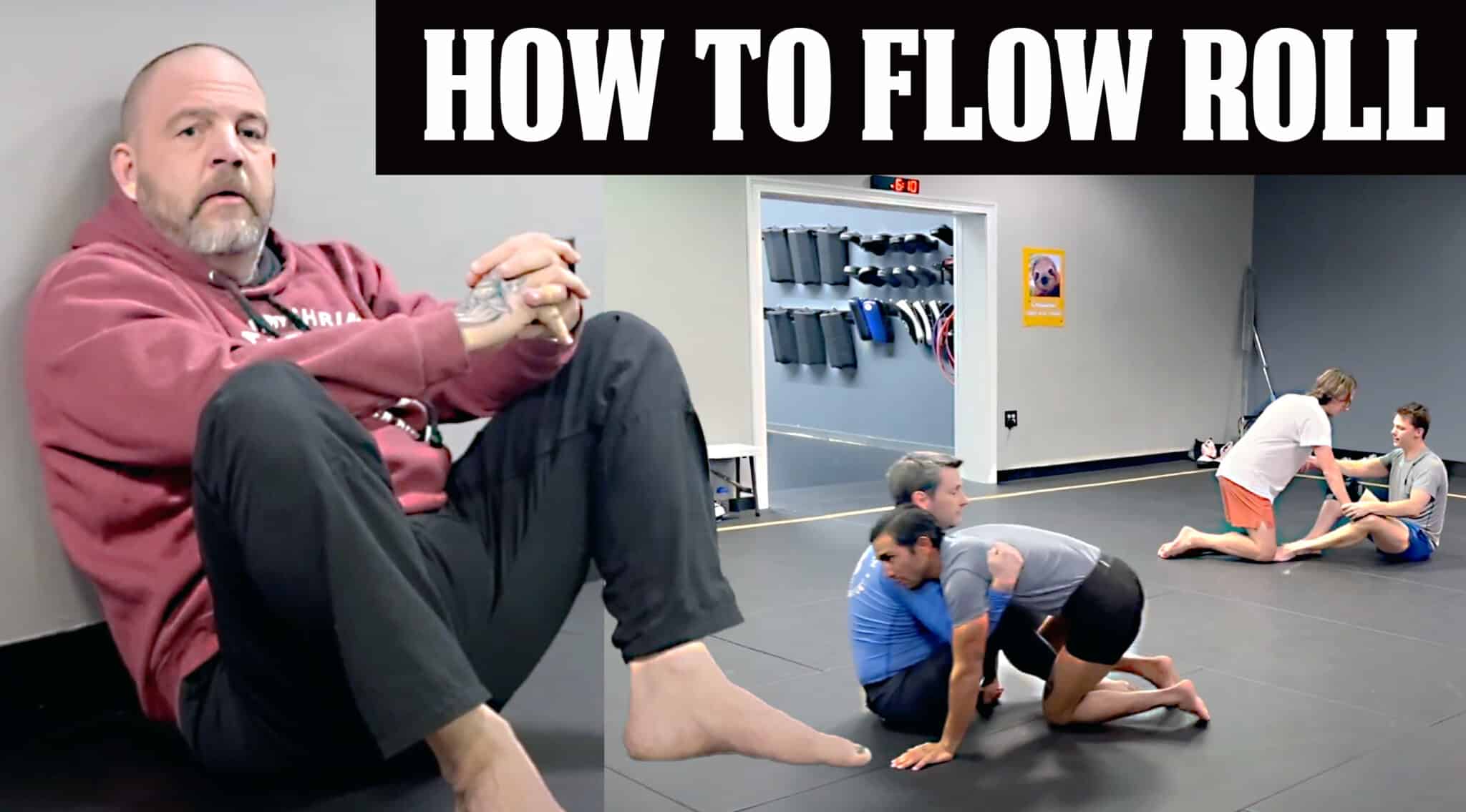
Stephan Kesting's January 2025 flow-rolling demonstration with Jesse Walker publishes constraints for the exercise, including controlled movement and keeping the action moving. Those instructions tell the audience what the partners are practicing. They should not be judged as if they were trying to win an unrestricted match.
Apply the same honesty to your recording. If a partner gave you a starting position, say so. If the task excluded submissions or required a reset, preserve that context. A caption should explain the exchange rather than award you a victory the other person never agreed to contest.
That standard applies even when the misleading version would be funnier. Someone helping you practice has supplied their time and cooperation. Turning that cooperation into evidence against them is a poor way to ask for more of it.
Review the first useful mistake
Watch once at normal speed before scrubbing backward and forward. Find the exchange relevant to your question. The finish may be obvious while the useful information sits several seconds earlier, when you still had a choice about the grip or position.
Keep a small review record:
State the starting position and agreed task.
Mark the first visible change that matters to your question.
Separate what the camera shows from what you are guessing.
Write one question to bring to a willing coach or partner.
A disappearing grip is visible. The intention behind the grip change may not be. Avoid turning a frame-by-frame review into an account of what your partner must have been thinking. You can ask them, and they may not remember either.
Our training-journal guide offers a simple way to keep the resulting question. The note is often the part you will want before your next class. You do not need to replay the entire round at the edge of the mat while everyone waits for you to put your phone away.
Posting needs a new conversation
If the original agreement covered private review, keep that promise. Before sharing publicly, show your partner the particular clip, the proposed caption and the intended audience. Do not replace those details with an assumption that they are generally relaxed about social media.
The edit deserves attention. Removing the opening can conceal the agreed disadvantage. Cutting immediately after a tap can make a routine reset look like the end of a contest. Dramatic music is not the only thing that can change what the audience thinks happened.
A group chat is still an audience. If the arrangement was for you and your coach to review the exchange, sending it to twenty teammates is a change. Explain it and ask instead of relying on the word private to cover every group that is not your public account.
Treat this as respectful practice, not a universal legal rule. Recording and privacy laws depend on the jurisdiction and circumstances. You do not need to settle those questions to choose the straightforward option of leaving an uncertain clip unpublished.
Let a no remain a no
A refusal is not an invitation to offer smaller versions of the same request until your partner gets tired. They may enjoy training with you and dislike cameras. Those preferences can coexist without a story about insecurity or having something to hide.
If a recording arrangement stops working, pause it. The fact that someone agreed before the round does not make continuing the only reasonable response. Ask what needs to change, and be prepared to finish the practice without a file.
The same restraint applies to other people's clips. Before reposting a teammate's training footage, find out whether that wider use is welcome. Their account may serve a different audience from yours, and the people in the video may have agreed to a narrower arrangement.
These conversations are part of being a useful training partner. You are asking someone to help with your learning. Keeping the request easy to accept or refuse makes more sense than treating access to their practice as a benefit included in your membership.
Keep fewer files and clearer promises
Decide where the recording will live and who can access it. Check automatic cloud backups and shared albums before promising that a file will stay on one device. A reassuring sentence is not much use if the phone has already followed different instructions.
Choose a deletion arrangement you can actually carry out. There is no required number of days here. You and your partner might agree to remove the clip after a coach has reviewed it, or to keep a short example for a particular follow-up session.
Keep the useful observation even when the video goes. A sentence describing the question can survive without preserving every frame of a normal Tuesday. If you discover copies were shared beyond the agreed audience, explain what happened and what you can remove; do not promise control over devices you cannot access.
Once the recording has done its job, put the phone away. The next interesting round is not automatically part of your project. A useful filming habit should leave plenty of training that belongs only to the people doing it.
Main photo: Grapplearts / Stephan Kesting; flow-rolling demonstration with Jesse Walker.
The takeaway
A training camera works best when its job is specific and everyone involved understands the arrangement. Ask first, place it out of the action, and preserve the rules that explain the footage. Review a decision you can actually see rather than inventing your partner's motives or a result the round never had.
Sharing can wait for a separate conversation. You may finish with one useful question, a deleted file and nothing to post. That is a perfectly adequate return from a phone that came to class to help you learn.
Give the footage a follow-up
Use the guide to drilling BJJ to plan a focused practice question once your coach has helped you interpret the recording.
FAQ
Does the instructor's permission cover everyone in the video? Ask your partner too, and account for people in the background. Permission to place a camera in the room does not settle each person's willingness to participate in the recording.
Can I share footage that was recorded for private review? Ask about the proposed clip and audience before changing its use. Show the edit and caption where practical, and keep it unpublished if the agreement remains unclear.
What if my partner declines to be filmed? Train without recording, or arrange a separate exercise with a willing partner if the instructor permits it. A refusal does not need to become a debate about whether filming would be useful.
Should I record every round to improve? This article makes no such claim. Film when a particular question justifies it, and consider whether direct feedback from a coach would be simpler. More footage is not itself a training plan.

Kit Langford
Kit Langford covers the louder parts of jiu-jitsu — the marketing claims, the arguments, the gear that promises more than gear can deliver. The jokes are expected to survive a fact-check.
Related Posts
Cobrinha's 2017: five major titles at 37
Cobrinha's 2017 season brought five major titles at age 37. Follow his gi and ADCC results, the Mendes rivalry, and the wrestling work behind that run.
Rafael Mendes: six Worlds titles and a life after competing
Rafael Mendes won six featherweight Worlds titles and retired at 27. Explore his ADCC rivalry with Cobrinha and the academy he helped build.

Training with women in BJJ: listen before you roll
Be a better BJJ training partner with women: agree on intensity, provide honest resistance, ask before coaching or filming, and respect a declined round.
Comments (0)
Loading comments...