
Erich Munis won Worlds, then named what still needed work
Quick answer: Erich Munis won Worlds in 2021 and 2022 before publicly naming takedowns and passing as areas he still wanted to improve. His later results connect guard attacks with more complete routes through top position. The 2024 and 2025 Crown runs show that breadth against opponents who demanded different answers.
Erich Munis swept Julian Stonjek into mount, lost the top position, and had to start again from closed guard. The 2023 Curitiba Summer Open match did not follow a straight line from the first score to the submission.
Munis won it anyway, then finished Vinicius Lessa in the final. The return to guard is the useful detail. A champion with a lead still had to respond when an opponent interrupted the position, and his next sweep created another route toward the finish.
Stonjek made him rebuild the lead
The IBJJF Curitiba Summer Open account follows Munis’s opening match against Stonjek. A sweep into mount produced six points. Stonjek escaped and came on top, but Munis answered from closed guard with another sweep into mount. A later sweep put Munis on top for the toe-hold finish.
That sequence contains more information than the submission percentage. Munis had to establish the position again after the opponent removed it. Guard was both a starting choice and a place from which he could restart meaningful offense.
Mount makes the point difference visible, but the more interesting problem is the connection before it. A sweep that leads immediately to mount leaves the defending athlete with less time to build a separate guard-retention phase. The transition joins two scoring tasks that could otherwise become distinct contests.
Stonjek’s escape keeps the account from becoming a demonstration. It forced another exchange and made the later attacks necessary. Munis’s control was effective because it could be rebuilt, not because the opponent was unable to do anything useful throughout the match.
Lessa encountered another route from guard
The super-heavyweight final against Vinicius Lessa began with Munis pulling guard and sweeping. From top, he used a cross-pant connection in the passing sequence, reached the back, and finished with a triangle during the transition.
The two matches ended with different submissions from different attacking situations. The repeat feature was the movement from guard toward a position that allowed the next attack. Lessa had to defend a passer rather than remain inside the first guard exchange.
That makes Munis difficult to summarize as a heavyweight who prefers bottom position. Choosing guard can be a route toward top. Once the sweep is completed, the athlete must solve the passing problem against a defender who has a fresh set of options.
The positions guide separates those broad arrangements, but Munis’s final illustrates how quickly the jobs can overlap. A passing sequence can expose the back before conventional side control is held for a long time. The attacker’s task is to preserve enough connection to recognize that route, while the defender is trying to turn the change into an escape or a restored guard.
The world titles arrived before the passing project
In his 2023 return interview, Munis discussed working on takedowns and improving his passing. The federation identified him as the 2021 and 2022 super-heavyweight world champion, with the first title won on his black-belt Worlds debut.
The ambition therefore came from a competitor whose game already worked at the highest level. He was trying to expand the ways it could work, including areas he considered less developed. The titles and the unfinished technical task could exist together.
The 2023 Crown introduction places his black-belt promotion in September 2020. It also records super-heavyweight and open-class gold at the 2021 Brasileiros, followed by the first Worlds title later that year. The early black-belt results arrived quickly.
An effective guard can create an unusual development problem. It provides a dependable answer, which can make other answers less urgent in the short term. Munis’s public focus on takedowns and passing suggests a competitor deliberately increasing his options rather than abandoning the parts that first made him successful. Curitiba gives the process a concrete competitive setting.
The second Crown used an ankle lock and an Ezekiel
At the 2024 Crown, Munis submitted Kristof Szucs with a straight ankle lock, beat Pedro Machado 15–6, and finished Marcus Ribeiro with an Ezekiel choke. The run retained his ultra-heavyweight title.
The score against Machado stands out between the two submissions. It points toward an active positional contest rather than an event in which one finishing system answered everything. Ribeiro then presented a different final, and the gold arrived through another part of the attacking repertoire.
An ankle lock and an Ezekiel impose different defensive obligations. One pulls attention toward the leg configuration; the other involves the upper body and neck. A competitor who can credibly threaten both can make it expensive for an opponent to treat the match as a single technical problem.
I like this run as a description of breadth because it does not depend on a vague label. There are three named opponents and three recorded outcomes. Munis needed a score in one match and different submissions in the others. His game had to carry him across the whole bracket, with enough variety to answer the opportunities each opponent provided.
Brazil and the 2025 Crown added more resistance
The 2025 Brasileiros account records Munis taking super-heavyweight and absolute gold. He submitted Nolan Stuart in the weight final and met Marcus Ribeiro again in the open final, where a sweep decided the contest.
At The Crown later in 2025, he opened with a brabo choke against Paulo Lanzillotti and submitted Marcos Carrozzino with a lapel choke. Gustavo Batista reached the other side of the final after moving into the heavier field. Munis won that final 4–0 and secured a third consecutive Crown title.
The two events offer a useful contrast. Brazil included both a weight division and an open class. The Crown brought a compact professional field. Repeated success required meeting the actual resistance in both structures, including a returning opponent in Ribeiro and a different final problem in Batista.
The closing 4–0 score also fits the broader story. Munis did not need the same ending in every match. Submissions cleared the first rounds, and effective scoring completed the final. The ability to finish remained a threat without being the only acceptable method of winning.
The guard is a way into the rest of his game
Across these results, guard repeatedly changes the opponent’s assignment. First the opponent has to prevent a sweep. If that fails, they have to defend a pass. A turn during the pass can expose the back, which creates another obligation before the defender has settled the previous one.
That chain is why the rebuilding against Stonjek belongs near the beginning of the story. The first mount did not remain. Munis still had a usable starting position and an effective way to put the opponent back under pressure.
Several matches make that development visible:
Stonjek at Curitiba, for offense restarted after losing top position.
Lessa at Curitiba, for the transition from sweep to passing and back exposure.
Ribeiro at the 2024 Crown, for a different upper-body finishing route.
Batista at the 2025 Crown, for a final completed through points.
The sweep-versus-reversal article explains the scoring distinction behind the first phase. Munis’s competitive interest lies in what he makes of the next phase. Getting on top is useful because he has continued developing work to do there, leaving opponents more than the original guard problem to solve.
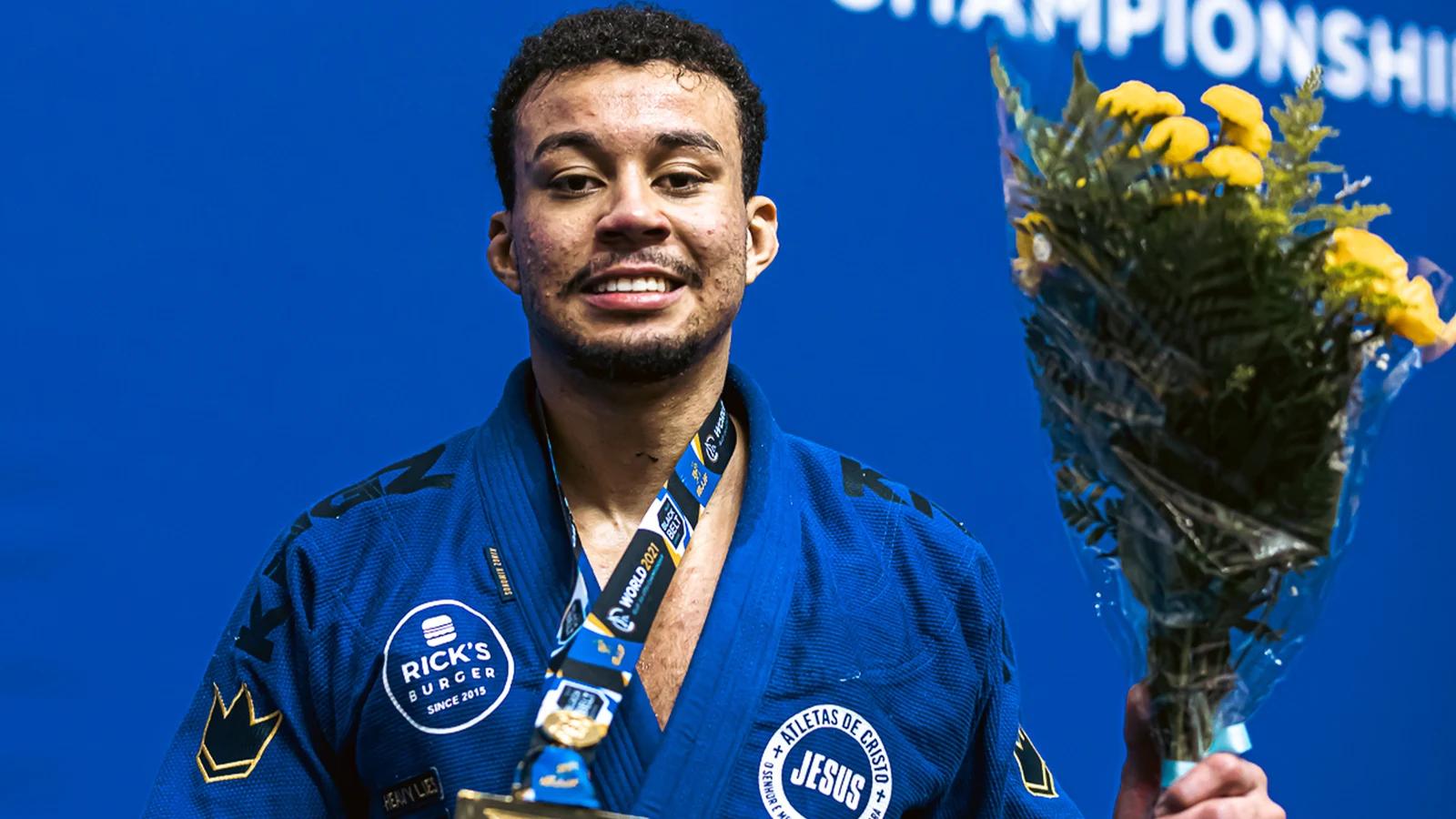
Main photo: ibjjf.com. Archive image published by ibjjf.com. The photograph is not an image of every event discussed in the profile.
The takeaway
Munis’s guard made the early black-belt results possible, but his public passing goals and later match routes show a game with more than one destination. The Curitiba return, two different Ribeiro finals, and the Crown match with Batista all reveal different kinds of resistance.
The most convincing evidence is the sequence after a position changes. Munis can start again from guard, arrive on top, and continue into another attack. The earlier world titles do not make that development unnecessary; they give the later expansion a demanding competitive standard.
Follow the next bracket
Find official event links in the Let’s Roll tournament directory and follow the individual matches behind the results.
FAQ
Which areas did Erich Munis identify for improvement in 2023? He discussed takedowns and guard passing in his IBJJF interview. The comments came after super-heavyweight world titles in 2021 and 2022, so the work expanded an already successful game.
How did he win the Curitiba Summer Open final? The federation’s report describes a guard pull, sweep, passing sequence, and transition toward the back before a triangle finish against Vinicius Lessa. The route connected several positions rather than ending at the sweep.
How did he retain The Crown in 2024? He beat Kristof Szucs by straight ankle lock, Pedro Machado 15–6, and Marcus Ribeiro by Ezekiel choke. Those three results gave him another ultra-heavyweight title at the event.
What happened in his 2025 Crown final? Munis defeated Gustavo Batista 4–0 after submissions in the quarterfinal and semifinal. That completed his third consecutive Crown title, adding a points-based final to a run that began with two finishes.

Rafael Moura
Rafael Moura profiles competitors as people with lives outside the bracket. Some of those stories are comebacks. Most are not, and he does not force them.
Related Posts
Fabricio Andrey’s first Worlds ended with a triangle
Andrey’s 2021 black-belt world title began a featherweight story worth reading beyond the nickname and the finishing clip.
Diogo Reis carried the pressure from ADCC into ONE
Baby Shark’s ADCC titles and ONE championship show different ways to win. Start with the opponent’s recoveries as well as Reis’s attacks.

Adele Fornarino won the small division, then the open one
Fornarino’s 2024 ADCC double gold put two different fields on the same record. Read the separate routes and the support around the result.
Comments (0)
Loading comments...