
Bringing family to watch BJJ? Explain the room first.
Quick answer: Ask the academy before bringing family to watch BJJ, then explain the viewing area, class format, and contact they may see. Give visitors a realistic arrival and departure plan, and keep coaching, photography, and access to the mat within the host's rules.
The person watching from the edge of the room sees something different from the person training. A familiar escape can look like a struggle with no obvious purpose. A tap may happen too quickly to notice. The round ends, both partners smile, and the visitor is still trying to understand why nobody stopped it earlier.
A little explanation before class can make the visit more comfortable. It also helps you avoid trying to teach the entire sport from across the mat while an instructor is already teaching a room full of students.
Ask the academy before making the invitation
A class is not automatically a spectator event. Some rooms have space for visitors, while others have limited seating, shared entrances, or policies that restrict observation. Ask about the particular session rather than assuming that an open door means everyone is welcome to stay.
Explain how many people you want to bring and whether children will be with them. A single adult watching quietly is a different practical arrangement from several relatives arriving with a stroller. The host can give a useful answer when the request describes the actual group.
Confirm where visitors should wait and when they should arrive. If the academy shares its building, the place that looks like an empty viewing area may be another tenant's corridor or an access route that must stay clear. Follow the staff's directions even if another spot seems to offer a better view.
Do not present permission as something already settled before asking. Telling family they are definitely coming can make an ordinary space limitation feel like a personal rejection. Invite them after you know the arrangement the academy can support.
Explain the class they are about to watch
Give visitors a simple outline: there may be instruction, cooperative practice, and rounds with varying levels of resistance. Explain that the exact format depends on the class. They do not need a complete vocabulary lesson to understand that different parts of the session have different purposes.
Describe tapping and the expectation that partners release immediately. Make clear that the person training can stop an exchange. Avoid selling the sport through dramatic claims that everything is harmless or that discomfort never occurs. A calm explanation of the signals and supervision is more useful than a blanket reassurance.
If the class includes submissions, say so before the visitor encounters one without context. Explain that learning and controlled practice should follow the instructor's guidance. Do not demonstrate a choke or joint lock on an unprepared family member in the lobby to make the explanation more memorable.
The introduction to what rolling means in BJJ can provide background before the visit. Keep the conversation focused on what they will see today rather than requiring them to understand every rule and position in the sport.
Give the visitor permission to be interested differently
Your favorite part of training may not be the part a relative enjoys watching. They might be interested in the social atmosphere, the instruction, or simply seeing where you spend several evenings each week. They may also find long stretches of drilling difficult to follow.
Do not treat their attention as a test of support. Someone can care about your hobby without wanting a technical explanation after every repetition. Ask what they would like to understand and accept that the answer may be fairly simple.
Choose the length of the visit accordingly. Watching a portion of class may be enough, if the academy permits arrivals and departures at that time. A visitor does not need to remain through every round to prove that they respect the activity.
If they become worried by something they see, discuss it afterward without mocking the reaction. Familiarity makes movements look ordinary to practitioners that are not ordinary to outsiders. Explain the actual exchange if you can, and acknowledge uncertainty when you did not see what happened either.
Keep the sideline from becoming a second coaching area
Before class, ask visitors to leave instruction to the coach and the training agreement to the partners. Well-meant encouragement can become distracting when it arrives in the middle of a demonstration or sounds like a demand to win a practice round.
This matters even when the visitor knows the sport. The class has an instructor, and a family relationship does not create a separate coaching role. If someone notices a concern, they should use the appropriate channel with staff rather than shouting technical directions across the room.
Do not turn your own rounds into a performance for the guest. You may feel tempted to push harder, attempt an unfamiliar movement, or refuse a sensible stop because someone is watching. Keep the same control and communication you would want from a partner on an ordinary evening.
The visitor is there to see your training, not to receive proof that the membership has made you unbeatable. A normal session, including mistakes and taps, is a more accurate introduction than a special performance that changes the agreement with everyone you touch.
Set the photo expectations before phones come out
Ask about filming and photography separately from permission to watch. A gym may allow spectators while limiting recording. Other students may be comfortable training in front of a guest without agreeing to appear in that person's social-media post.
Keep the boundaries clear:
Follow the academy's rules for cameras and phones.
Ask before photographing identifiable people outside an agreed arrangement.
Do not record changing areas or private conversations.
Check the intended audience before sharing a clip.
Accept a request to stop without debating it during class.
If the host permits a photo afterward, choose a moment and location that do not obstruct the next session. A quick picture with willing participants can be a good record of the visit without turning the training hour into a shoot.
For families with children, be particularly careful about the background of an image and the academy's rules. The guide to sharing kids' BJJ photos discusses that decision in more detail. Watching a child's activity does not automatically authorize posting other children from the same room.
Plan for children who are visiting rather than training
A child who comes to watch is not necessarily enrolled in or supervised by the class. Make sure a responsible adult is available to look after them throughout the visit. The instructor teaching on the mat cannot also become the default childcare arrangement beside it.
Ask about the viewing space and what activities are appropriate there. Bring something quiet if needed, and avoid objects that can roll onto the training surface. Keep food and drinks within the host's rules and away from areas where spills would interrupt class.
Explain the mat boundary in simple terms before the session starts. A child may see adults playing on a soft surface and reasonably think it looks inviting. They need a clear instruction about staying with their supervising adult, not a last-second correction after running into a round.
Be willing to shorten the visit. A tired or restless child has not failed a lesson in supporting family. Leaving calmly can preserve a pleasant experience for them and avoid asking the entire class to accommodate a visit that has become too long.
End the visit without grading the evening
After class, let the first conversation be ordinary. Ask how the visit felt and answer a few questions. You do not need to explain every tap before anyone has asked, and the visitor does not need to deliver a detailed assessment of your progress.
If a partner or instructor has time to say hello, introduce them without holding up the next class. A name and a thank-you are enough. Avoid asking someone to perform another demonstration after they have finished teaching unless that has been arranged.
Talk about another visit only if there is interest. A family member may now understand the setting and feel no need to attend regularly. That can still be a successful outcome: the room has become a real place with recognizable people instead of a mysterious activity on your weekly calendar.
Keep the invitation available without making it an obligation. Training can be part of family life while remaining an activity some members mostly hear about afterward. The goal was to share something you do, not to recruit an audience for every session that follows.
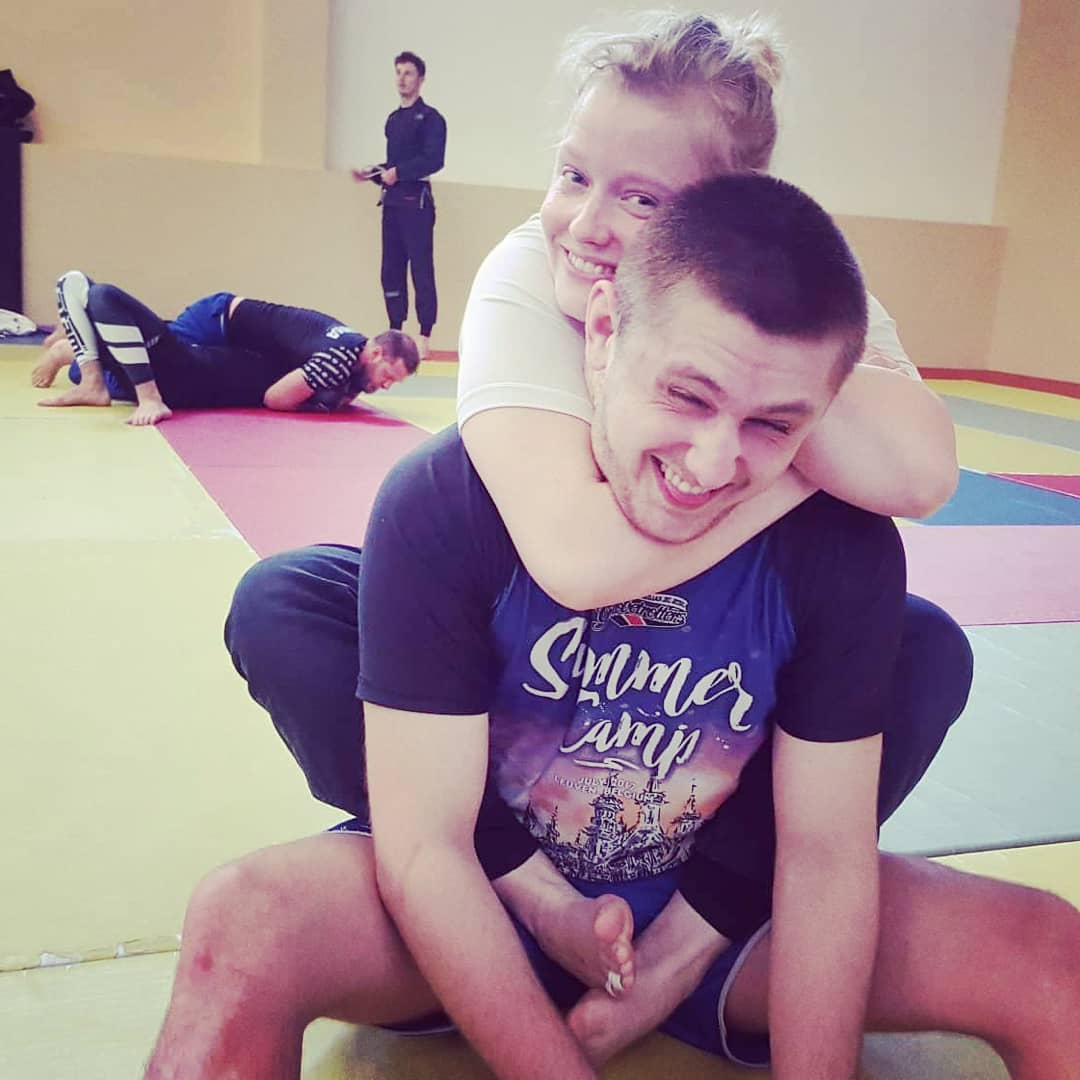
Main photo: BJJ Globetrotters; illustrative archive photograph, not a statement about a family relationship.
The takeaway
A good family visit begins with the academy's permission and a clear explanation of what guests will see. Plan the viewing space, supervision, camera use, and departure before class so the instructor can keep teaching and you can keep training normally.
Let visitors engage at their own level of interest. A short, comfortable introduction can do more to connect them with your training than a long evening they feel required to watch from beginning to end.
Ask about visiting before you bring the group
Use Let's Roll's gym directory to find academy contact details, then confirm the observation arrangements for the specific class you want to share.
FAQ
Can family members watch any BJJ class? Ask the academy first. Space, privacy, and class policies differ, and permission may depend on the session and the number of visitors.
Should I explain submissions before they watch? Give a simple account of the contact, tapping, and instructor supervision they may see. Avoid exaggerated assurances or demonstrating techniques on someone who is not prepared to participate.
Can my family film my rounds? Only within the academy's rules and the permissions of the people involved. Permission to observe does not automatically include permission to record or publish footage.
Who supervises a child who comes only to watch? Arrange a responsible adult who remains with the child. The instructor running the class should not be assumed to provide childcare for spectators.

Owen Bellamy
Owen Bellamy writes for the person training twice a week around a job. Nothing he suggests requires quitting the job.
Related Posts
Jiu-jitsu in Montreal: build the visit around a real class
Plan BJJ training in Montreal around confirmed classes, language arrangements, winter travel, visitor policies, and equipment that is ready to use.

Competing in gi and no-gi on the same day takes two plans
Prepare for gi and no-gi competition on the same day with separate rule checks, complete outfits, schedule coordination, and a realistic second-bracket plan.

BJJ gi pants that fit standing up can still fail on the mat
Check BJJ gi pants at the waist, rise, knees, and cuffs so a good-looking size label becomes a uniform you can actually move in.
Comments (0)
Loading comments...