
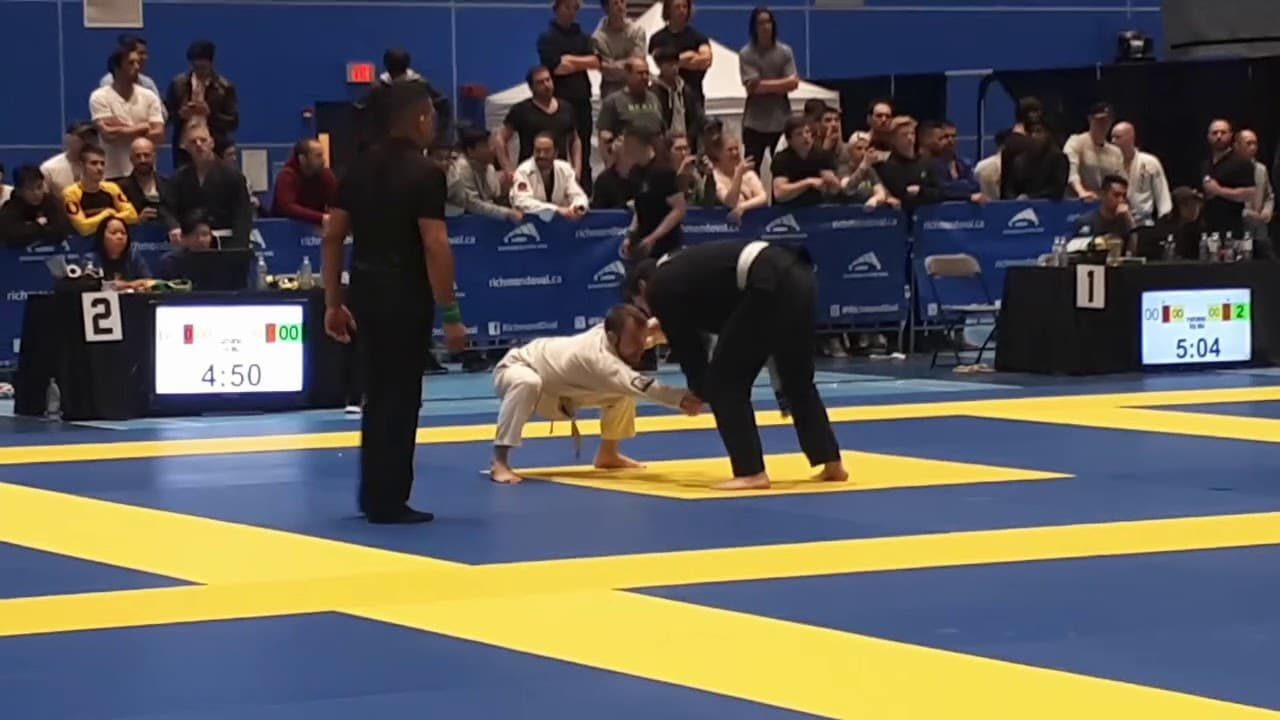
The week before a BJJ tournament: finish the practical work
Quick answer: Use tournament week to confirm your entry and deadlines, check the exact uniform and weigh-in rules, and settle travel and corner arrangements. Follow a training plan agreed with your coach instead of adding punishment rounds because the event feels close. Keep checking the organizer's updates; a saved match time may no longer be current.
A belt left in another gym bag is an oddly effective way to make months of preparation feel less organized. So is discovering on Friday that the correction deadline was Wednesday. Neither problem requires better jiu-jitsu to prevent.
The final week has a different kind of work available. You can finish the decisions that otherwise crowd into the morning of the event. This is a guide to that work, aimed at someone already registered and preparing with a coach. It is not a seven-day promise to fix your guard or your conditioning.
Open the actual registration, not the receipt email
Log in and inspect the entry attached to your name. A payment receipt establishes that money changed hands; it is not a substitute for checking the division you selected. Look at the age category, belt or experience level, weight, and gi or no-gi entry separately.
If you are competing in both formats, inspect both. Do not assume a correction to one entry automatically changes the other. Read the organizer's procedure and keep a confirmation after making any permitted change.
Smoothcomp's event setup documentation lets organizers set separate dates for registration edits and cancellation, along with refund conditions. That is a useful warning against borrowing a teammate's deadline from a different event. The software hosting the registration does not make every tournament's policies identical.
Put the deadlines you need in your own calendar:
The last permitted correction time, including the event's time zone.
Any deadline for cancellation or a refund request.
The expected release of the schedule or brackets, if the organizer has stated one.
If something is unclear, contact the event through its stated support channel while there is time for an answer.
Check weight with the required clothing and the correct units
The IBJJF weigh-in page states that gi competitors weigh in wearing the gi before their first fight. No-gi competitors weigh in wearing the no-gi uniform. It also specifies one opportunity to make the registered weight, with disqualification for failing it.
That is an IBJJF example, not a rule to apply automatically to every organizer. Open your own event's instructions. Check whether the listed limit is in pounds or kilograms, what clothing is required, and when the official weigh-in occurs.
Use a home check as information, not a guarantee that another scale will read identically. Include the clothing required by the event.
If the registered division is unsuitable, explore the organizer's permitted correction process before it closes. Do not turn this article into a last-minute dehydration plan. An entry problem needs a registration decision, and health concerns need qualified advice. Trying to force the number on the morning of competition is not a substitute for either.
Inspect the gi while there is still time to replace it
Take out the actual uniform you intend to wear. Look over the fabric and stitching. Try it on after its normal wash, rather than assuming that the gi you bought months ago still fits the way it did in the store.
For IBJJF events, consult the official uniform requirements, including the linked rules introduced after the 2024 Gi Worlds. A gi being sold as suitable for BJJ does not by itself establish that it meets a particular tournament's inspection requirements.
Check patches and permitted colors as well as fit. For no-gi, check the required rashguard and shorts rules for your event and division. Do this with the organizer's page open, not by asking whether somebody wore a similar item last year.
If you plan to take a spare uniform, inspect that one too. A backup with the same problem is extra luggage. Pack the correct belt with the competition clothing now, and return it there after any remaining training session.
Ask the coach what the remaining sessions are for
A final hard round can become tempting when registration starts feeling real. Before adding one, ask what the session is supposed to accomplish. The answer should come from your preparation plan and current condition, not from the fear that rest looks unserious.
Discuss the remaining classes with your coach. Perhaps the work concerns familiar entries, short positional tasks, or reviewing the plan. There is no universal daily schedule in this article because a healthy experienced competitor and a beginner managing a sore shoulder are not the same case.
Tell partners what you are doing before the round starts. If the agreement is controlled positional practice, a competitive scramble that escapes those limits is a reason to reset.
Keep new material in proportion. You can make a note of an interesting submission without rebuilding your whole match approach around it three days before competing. Bring unresolved rules questions to the coach, especially if an unfamiliar technique has entered the discussion. Curiosity can wait for a suitable practice session; the tournament date does not make an unpracticed move ready.
Give the corner a job they can actually perform
Ask whether your coach or teammate will be available for your division. Do not assume that traveling to the same venue means they can corner every match. They may be competing themselves or helping someone on another mat.
Agree on a simple communication plan. Decide who will watch the score and how you want time information delivered. Tell them if a particular nickname or instruction is likely to confuse you. The useful vocabulary is the one you have already used together in training.
Also discuss recording. Ask whether filming is permitted and who, if anyone, has agreed to do it. The person cornering may not be able to give useful instructions while following the action through a phone. A video is helpful to review later, but it should not become a surprise duty handed over as your name is called.
If nobody can corner you, plan for that honestly. Know where the scoreboard is and how the event communicates calls. You can ask staff a procedural question without expecting them to become your coach. Our tournament guide gives broader context for the day; this week is the time to settle your own arrangements.
Build the trip around the organizer's arrival instructions
Use the venue named on the current event page. Check the address, entrance information, and parking arrangements if published. A tournament associated with a city may take place in a venue outside the part of town you first searched.
Work backward from the organizer's required arrival or check-in time. Include the trip from the parking area to the correct hall, rather than counting only the drive. If you are staying overnight, confirm the booking and the route from the accommodation to the venue.
Discuss the return trip as well. A teammate giving you a ride may have a later division. Do not discover after your last match that you had incompatible plans for leaving.
Prepare familiar food and water appropriate to the day, subject to venue rules. Tournament week is not a useful occasion to discover whether a new supplement or unfamiliar meal agrees with you.
Pack for the waiting as well as the match
A competition bag has to support more than the minutes spent grappling. Think through changing, waiting, walking off the mat, and getting home. Put items where you can find them without tipping everything onto a crowded floor.
A practical final check might cover:
The checked competition uniform, belt where applicable, and any verified spare.
Required identification or membership documentation and the registration information.
Footwear for off-mat areas, a clean change of clothes, and a bag for used training gear.
A charged phone, the relevant event links, and a way to contact your ride or corner.
Adapt the list to the organizer's requirements and your own equipment. A mouthguard, for example, should already be familiar and stored where you can reach it. Do not borrow an unfamiliar piece of gear simply because someone else's checklist includes it.
Pack early enough that a missing item can still be found. Then leave the bag alone except for the things that must be added later.
Compare your packing plan with the first BJJ competition checklist, then follow the requirements of your actual event.
Treat the published match time as something to monitor
Smoothcomp explains that its estimated match times update as the event progresses. Events can move ahead or behind the earlier estimate. A screenshot saved the night before is therefore a reference, not a live schedule.
Learn where your matches appear before arriving. Smoothcomp's My Matches instructions describe accessing assigned matches from the account and following links to the bracket and schedule. Other platforms have their own process. Use the one your event actually uses.
Check updates while following the organizer's arrival and reporting requirements. Do not interpret a late estimated match time as permission to ignore an earlier check-in instruction. If information conflicts, ask event staff through the appropriate channel.
A moving schedule also affects your corner and ride. Share the current division information rather than repeatedly forwarding an old screenshot.
Main photo: BJJ Fanatics.
The takeaway
The final week gives you a chance to remove problems that have nothing to do with beating an opponent. A correct registration, a checked uniform, and a clear plan for getting to the venue are all work you can complete before the first grip.
Keep the remaining training connected to your coach's plan, and keep the practical details connected to the actual organizer's instructions. You cannot guarantee the match result. You can avoid making your opening assignment a search for a belt or an argument about a deadline you did not read.
Keep the event page close
Find the relevant listing in the tournament calendar, then use the organizer's linked registration page for current rules and deadlines. Save the official page where you can reach it during the week and at the venue.
FAQ
Should I train hard the day before a BJJ tournament? Follow the plan agreed with your coach and account for your condition. This article does not prescribe a universal final-day session. Adding hard rounds because you feel nervous is different from completing a planned training task.
Can I change weight divisions on tournament day? Do not assume so. IBJJF states that competitors cannot change divisions after failing their registered weight. Other organizers have their own policies and deadlines. Check before the correction window closes.
Does the time on Smoothcomp stay fixed? No. Its estimated times update as matches progress. Monitor the current information and follow the organizer's reporting instructions, including any requirement to arrive before your estimated match time.
Should I bring a second gi? A compliant spare can be useful if you have one, but inspect it before packing. Verify the event's requirements for both uniforms. A second gi that fails the same check as the first does not solve the problem.
Related Posts
Demian Maia made the route to the back worth watching
Demian Maia won ADCC gold and challenged for two UFC titles. Revisit his routes to the back, major submissions, and the fights that tested his grappling.
ADCC 2026 results: the stories that survived the predictions
ADCC 2026 results from Krakow: Jaworski, Maciel, Crevar, Pena, the women's champions, and the superfight outcome, with official podiums and match context.
Xande Ribeiro: from absolute titles to the masters mat
Explore Xande Ribeiro's absolute Worlds victories, two ADCC titles, Six Blades, and the distinction between his 2022 Worlds farewell and later masters gold.
Comments (0)
Loading comments...