
Your First BJJ Competition: The Complete Day-Of Checklist
Quick answer: For your first BJJ competition, register at your natural walking weight, pack your bag the night before, arrive early, and start warming up three or four matches before yours. Don't cut weight, don't cram new techniques the week of, and don't treat a loss as a verdict. First competitions are for data and experience — results start mattering later, if ever.
Signing up for your first tournament is one of the most nerve-racking clicks in jiu-jitsu. The training side is your coach's job. The logistics side — weigh-ins, bags, timing, etiquette — is what this checklist covers.
If you're still deciding whether to compete at all, we've weighed that question separately in the pros and cons of BJJ competition. This article assumes you're in.
Registration: read the rules twice
Every organization runs things a little differently, and most first-comp disasters are administrative, not athletic. Register early — divisions close or get merged when they're empty, and late fees are real. Confirm your exact division: belt, age bracket, weight class, gi or no-gi.
Then actually read the rulebook for your belt level. White belt divisions ban techniques you may drill weekly (heel hooks almost everywhere, and various slams, twisters, and jumping guard depending on the ruleset). Getting DQ'd for a move you didn't know was illegal is a uniquely bad way to end your first tournament.
Don't cut weight for your first competition
Register at your walking weight. This is the hill we'll die on.
Weigh-in formats vary — IBJJF weighs you minutes before your first match, in your gi, with no time to rehydrate; many local events weigh you the morning of, and some the night before. As a first-timer you won't know how your body handles any of it, and a botched cut means competing drained, dizzy, and weaker than you are in the gym.
The honest math: at white belt, the skill spread inside any division is enormous, and a few pounds of water won't decide your matches. Nerves will. Remove the variables you can.
The bag checklist
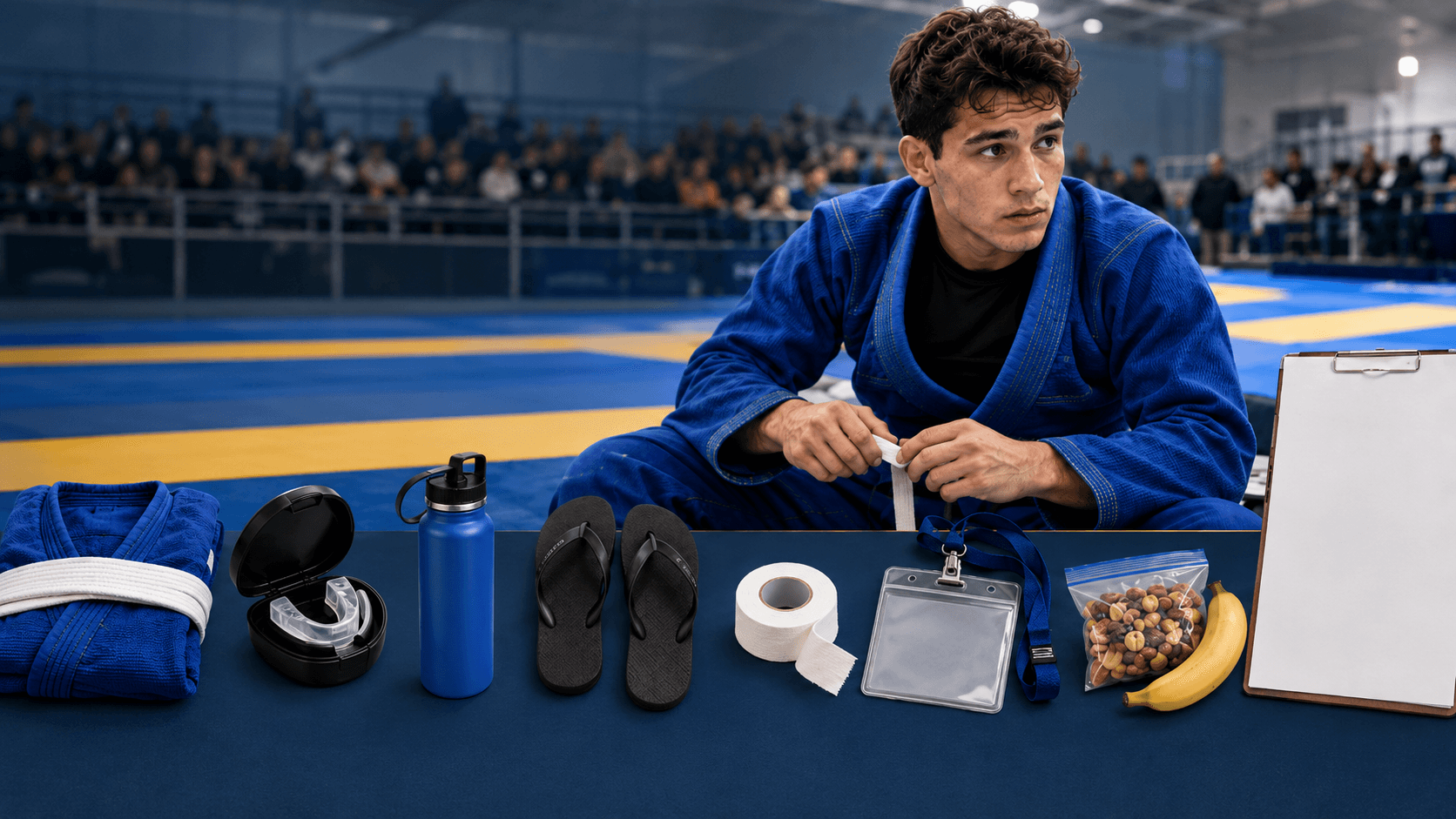
Pack the night before, when you can still fix a problem:
Your competition gi, washed, plus a backup if you own one — some events inspect gis and can fail them
Your belt (forgotten belts are a tournament cliché for a reason)
No-gi kit — rash guard and shorts or spats — if you entered both divisions
Mouthguard
Flip flops, because you'll live in them between mats
Water and electrolytes
Simple snacks: bananas, granola bars, nothing you haven't eaten before
ID and your registration confirmation saved on your phone
A warm layer and a phone charger — venues run cold and days run long
Athletic tape and hair ties if you need them
None of this is exotic. All of it has ruined someone's day by being missing.
Warm-up timing
Tournament schedules are estimates wearing the costume of schedules. Your 11:30 match might run at 12:45 or at 11:05.
So don't warm up by the clock — warm up by the bracket. Find your mat, watch the matches ahead of you, and start moving when you're three or four matches out: light sweat, some drilling movement, a few grip exchanges. The classic first-comp trap is warming up too early, sitting cold for an hour, then stepping on the mat stiff. The second classic trap is not warming up at all and spending your whole match warming up on your opponent.
Corner etiquette
One voice. If your coach is cornering you, teammates and family cheer — they don't shout competing instructions over the person you actually train with.
The rest is simple: listen for your coach's voice and let the rest blur, shake hands with the referee and the other corner, and don't argue calls. Even when a call genuinely goes against you — it happens — a white belt debating a referee never once improved the result.
What losing your first match actually means
Here's the statistic nobody says out loud: in most brackets, half the division loses its first match. It's the most normal outcome in the sport.
What a first loss actually gives you is data. Where the adrenaline dump hit, what happened to your grips under real resistance, which position fell apart — that's your syllabus for the next three months, delivered in six minutes.
There is no losing in jiu-jitsu. You either win or you learn. — Carlos Gracie Jr.
That line gets repeated to the point of wallpaper, but your first competition is the one day it's literally true. You paid for information. Losing delivers more of it than winning does.
The takeaway
First competitions are won in logistics: right division, no weight cut, packed bag, smart warm-up timing, one voice in your corner. The jiu-jitsu you bring is whatever you've already built — the day itself is about removing every other way to lose.
And whatever happens on the scoreboard, you'll walk out knowing things about your own game that no gym round would have told you.
Find your first tournament
Browse upcoming events near you, compare dates and rulesets, and pick the one that gives you time to prepare. Browse BJJ tournaments on Let's Roll →
FAQ
Should I cut weight for my first BJJ competition? No. Register at your walking weight — weigh-in formats vary between organizations, you don't yet know how your body responds, and a few pounds won't decide a white belt match. Nerves and experience will.
What should I bring to my first BJJ tournament? A washed competition gi and belt, backup gear, mouthguard, flip flops, water, electrolytes, familiar snacks, ID and registration confirmation, a warm layer, and a phone charger. Pack the night before.
When should I warm up at a BJJ competition? Watch your bracket, not the clock, and start warming up three or four matches before yours. Aim for a light sweat and loose movement, not fresh hard rolling.
Is it normal to lose your first BJJ match? Completely — in most brackets half the division loses its first match. Treat it as paid-for data about how your game holds up under adrenaline, and bring the findings back to training.
Related Posts

Mikey Musumeci gives up the belt to make room for MMA
Musumeci is vacating his UFC BJJ title to focus on MMA training. What he is leaving, what continues, and why the transition matters.
IBJJF membership: finish the paperwork before the deadline
IBJJF membership and tournament entry are separate steps. Plan documents, professor approval, renewals, and junior accounts before registration closes.
Choosing a BJJ seminar worth your time and travel
Choose a BJJ seminar by the subject, teaching format, access, and total cost. Know what to ask the host before buying a ticket.
Comments (0)
Loading comments...