

Starting BJJ rounds on your knees: agree on the actual task
Quick answer: If a BJJ round starts on the knees, agree on what each partner is trying to do. A defined passer-versus-guard start, a coached positional exercise, or properly supervised standing work gives the round a clearer purpose than an extended kneeling contest with no shared objective.
Two people can spend a surprisingly large part of a round kneeling at arm’s length, each waiting for the other to become the guard player. The timer is running. A collar has been obtained. Very little else has been agreed.
The problem is not that every round must start standing. The problem is that the partners may be practicing different things without knowing it. One wants to wrestle, one wants to pass, and both are waiting for a position that the other person has no intention of providing.
A starting position should create a task
A round needs a beginning that both partners understand. “Start on the knees” describes body placement, but it may leave the actual exercise undefined. Are you trying to establish top position, enter guard, practice a particular transition, or avoid standing because the mat is crowded?
Those purposes lead to different choices. If the aim is guard passing, assign a passer and a guard player. If the aim is an escape, start in the relevant pin. If the instructor wants a particular kneeling exercise, ask what outcomes and movement are included.
Training formats differ between schools. Stephan Kesting’s guide to a first BJJ class is useful background on why a newcomer should ask how the class is organized rather than assuming every room operates identically. The host instructor can explain what the starting position means here.
You do not need a lengthy negotiation before every round. One sentence can settle the question. The benefit is that the first minute becomes part of the intended work instead of a silent disagreement over who will sit down.
Give top and bottom roles a turn each
For a proposed passing exercise, one player begins in the coach’s chosen guard and the other begins in the corresponding top position. Both know the task immediately. After the agreed outcome or time limit, switch roles so the arrangement does not quietly become permanent.
The starting guard should match the lesson. A seated open-guard task is not the same exercise as beginning inside closed guard or top half guard. Let the instructor choose a configuration that suits the students and available space.
Define the reset as well. Does the repetition end after a pass is established, after a sweep, or after the bottom player returns to a specified position? Without that agreement, the partners may recognize different endpoints and stop each other’s work at inconvenient moments.
This is not a way to avoid learning transitions. It is a way to isolate them when that serves the lesson. Once the starting problem is understood, the coach can choose to continue beyond the first outcome. The important thing is that both people know which version they are practicing.
Do not turn kneeling into improvised takedown practice
If you want to work on standing grappling, ask the instructor where and how to do it. Beginning from the knees changes the available movements and does not automatically reproduce the balance, distance, or entries of a standing exchange.
That is a reason to learn the intended exercise, rather than an argument that all kneeling work is useless. A coach may deliberately use a constrained position to teach a particular movement. The constraint should be understood as part of the task.
What does not help is inventing increasingly forceful ways to put a kneeling partner down because neither person has agreed to play guard. The original lack of clarity remains, while the movement becomes harder to supervise. Pause and ask for an appropriate start.
Space also matters. If the instructor has restricted standing work because of the room arrangement, do not evade the restriction by creating an uncontrolled contest at a different height. Follow the class plan and ask when a suitable standing session is available.
A seated start is not a personal concession
In an agreed training exercise, choosing the bottom role is a practical assignment. It does not mean the person has admitted they could not obtain top position. The round is designed to provide work from both sides, not to settle an argument about who would win the opening exchange elsewhere.
That distinction is particularly useful with unfamiliar partners. Someone may sit because they want to practice guard, because the coach assigned it, or because it is the agreed start. You do not need to invent an explanation about confidence or ability.
Likewise, the passer should not treat the role as proof of superior wrestling. The exercise begins after those roles have been assigned. Judge the work by whether the passing and guard tasks are being practiced, rather than attaching a status claim to the starting arrangement.
If you prefer a different role, say so and arrange a switch. Two people who both want to pass can take turns. A few words solve the problem more efficiently than spending half the round trying to persuade the other person to become the bottom player without actually asking.
Use a simple reset agreement
Here is a proposed structure to discuss with your coach. The instructor should choose the guard, permitted movement, and suitable resistance. It is a practice format rather than an official competition rule.
Assign top and bottom roles before starting the timer.
Name the starting position and the outcome that triggers a reset.
Use a short interval, then switch roles for the same amount of time.
Finish with a continuation round if the coach wants the later transitions included.
Keep the reset complete. Return to the agreed position instead of preserving a favorable grip from the previous repetition unless the instructor wants that connection included. Otherwise each new attempt begins with an accidental advantage left over from the last one.
After several attempts, ask what keeps deciding the exchange. Perhaps the guard player cannot establish a first connection, or the passer loses balance during one particular step. That observation gives the next round a useful focus. The point of repeated starts is to see the recurring decision more clearly.
Open rolling can begin with a small agreement
An open round does not need every outcome specified. It still benefits from a clear starting arrangement and pace. You can agree to begin with one person seated and continue through the resulting positions without resets other than the room’s normal procedures.
Tell the partner if you are hoping to work on something specific. They may be happy to accommodate it, or they may have another task. If the two plans do not fit, ask the coach for an appropriate pairing or a different exercise.
Do not make the agreement more complicated than the work requires. A long list of private rules can leave the partner concentrating on remembering exceptions rather than grappling. Choose one main constraint and keep ordinary communication available during the round.
If a situation becomes unclear, pause. A restart is a normal training tool, not evidence that the round has been spoiled. It is better to return to a shared task than continue an exchange in which one person believes they are drilling and the other believes they are competing.
Standing work deserves its own plan
A student who always begins seated may still want to learn standing skills. Bring that goal to the coach explicitly. Ask which classes cover the relevant entries, movement, and controlled practice, and what prerequisites or partner arrangements apply.
That conversation is more useful than relying on the first seconds of open rolling to provide a complete standing lesson. The instructor can organize space, teach the movement, and choose a level of resistance appropriate to the students. Those arrangements are part of learning the skill.
For competition preparation, check the actual event rules and work with the coach on starts that fit them. Our explanation of IBJJF rules is a starting point for understanding one framework, rather than a substitute for the organizer’s current instructions.
Keep technical practice and match simulation distinct in your notes. A constrained seated exercise can be useful even if it does not reproduce an entire tournament match. A match simulation can then test how the standing and ground phases connect under the relevant rules.
Review the first minute, not only the finish
After a round, remember how it began. If the first minute repeatedly disappears into unclear kneeling exchanges, the problem is visible before the submission or pass you usually discuss. Change the starting agreement and see whether the intended work begins sooner.
You might discover that both partners were willing to take the bottom role but neither wanted to impose a format. You might find that the instructor had a purpose for the start that had not been explained clearly enough. Both are reasons for a short conversation, rather than a verdict about anyone’s attitude.
The proposed improvement is modest: fewer ambiguous beginnings and more time spent on the task the round was meant to provide. You still need coaching, partners, and technical work. A clear start simply gives those things a better chance to happen within the time available.
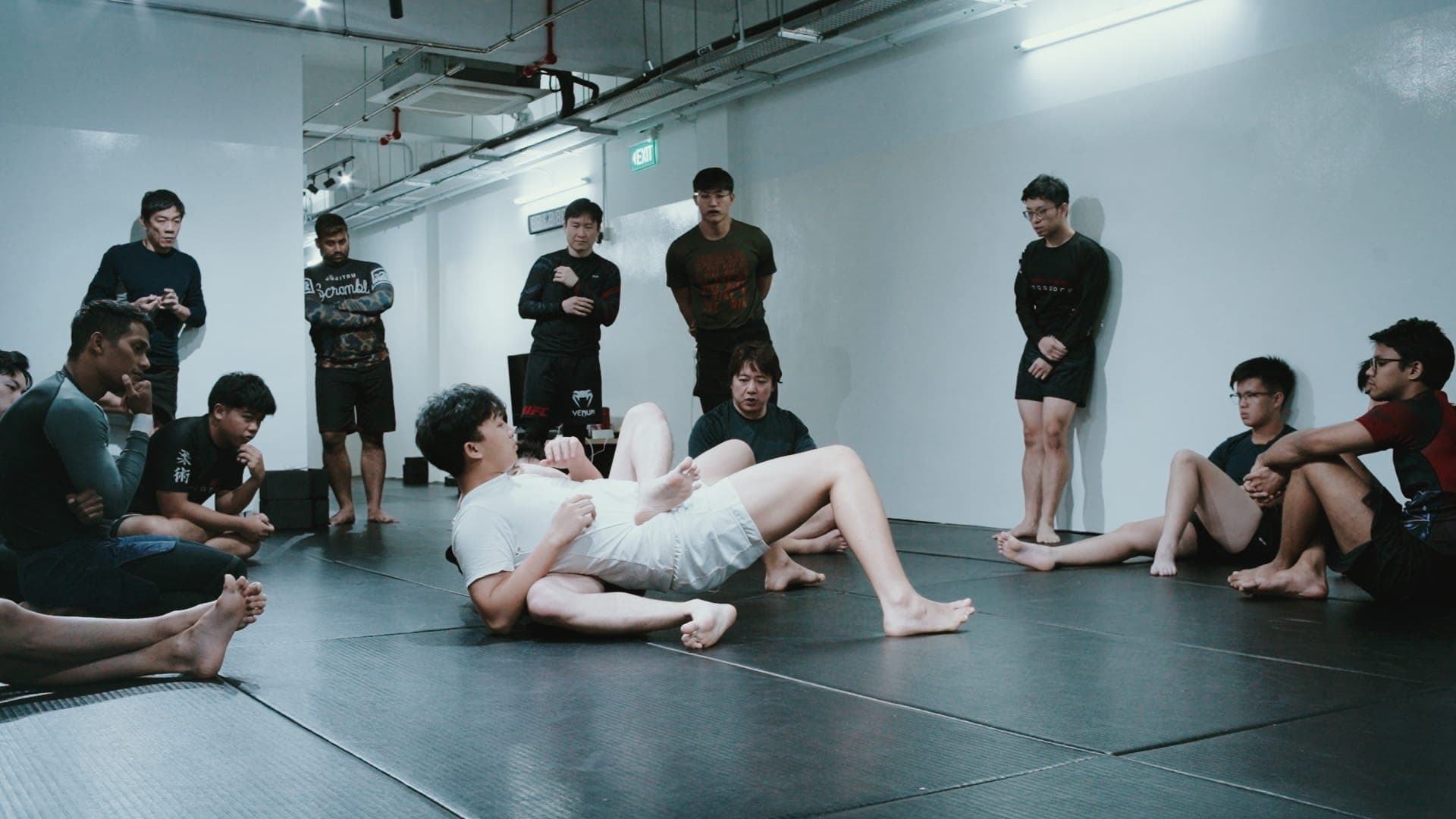
Main photo: Brazilian Jiu Jitsu Singapore; illustrative training archive.
The takeaway
Starting on the knees is an incomplete instruction if the partners do not know the task. Clarify the roles, position, pace, and reset before the round becomes an extended effort to make someone else sit down.
Use constrained starts when they serve a lesson, and arrange standing work with the coach when that is the goal. A few clear words at the beginning can make the rest of the round more useful.
Find a coached practice format
Use Let’s Roll’s gym directory to find classes where an instructor can organize positional work and standing practice for your experience.
FAQ
Is starting a BJJ round on the knees always wrong? No. A coach may use it for a defined exercise or room arrangement. The important question is what task the position is intended to create and whether both partners understand it.
What if both partners want to practice passing? Agree to take turns. Use equal intervals with one person assigned to guard and the other to top, then switch. Ask the instructor to choose a suitable starting guard and reset condition.
Does playing guard first mean conceding the round? In a training exercise, it is an assigned role rather than a competitive judgment. Evaluate the round by the intended task, and keep any tournament scoring question attached to the event’s actual rules.
How should I get more standing practice? Ask the coach which session and partner arrangement are suitable. Learn the movement in an appropriately organized space rather than turning an unclear kneeling start into improvised takedown practice.

Owen Bellamy
Owen Bellamy writes for the person training twice a week around a job. Nothing he suggests requires quitting the job.
Related Posts
Short BJJ rounds and long rounds ask different questions
Choose BJJ round length around the practice task, from repeated positional starts to longer sequences and event-specific preparation.

Moving from kids’ BJJ to adult classes takes more than size
Plan a teenager’s move into adult jiu-jitsu around suitable partners, clear expectations, and the student’s own willingness.

Training both sides in BJJ without doubling every lesson
A strong side is useful. A missing response is a problem. Build options in both directions without relearning your entire game.
Comments (0)
Loading comments...