
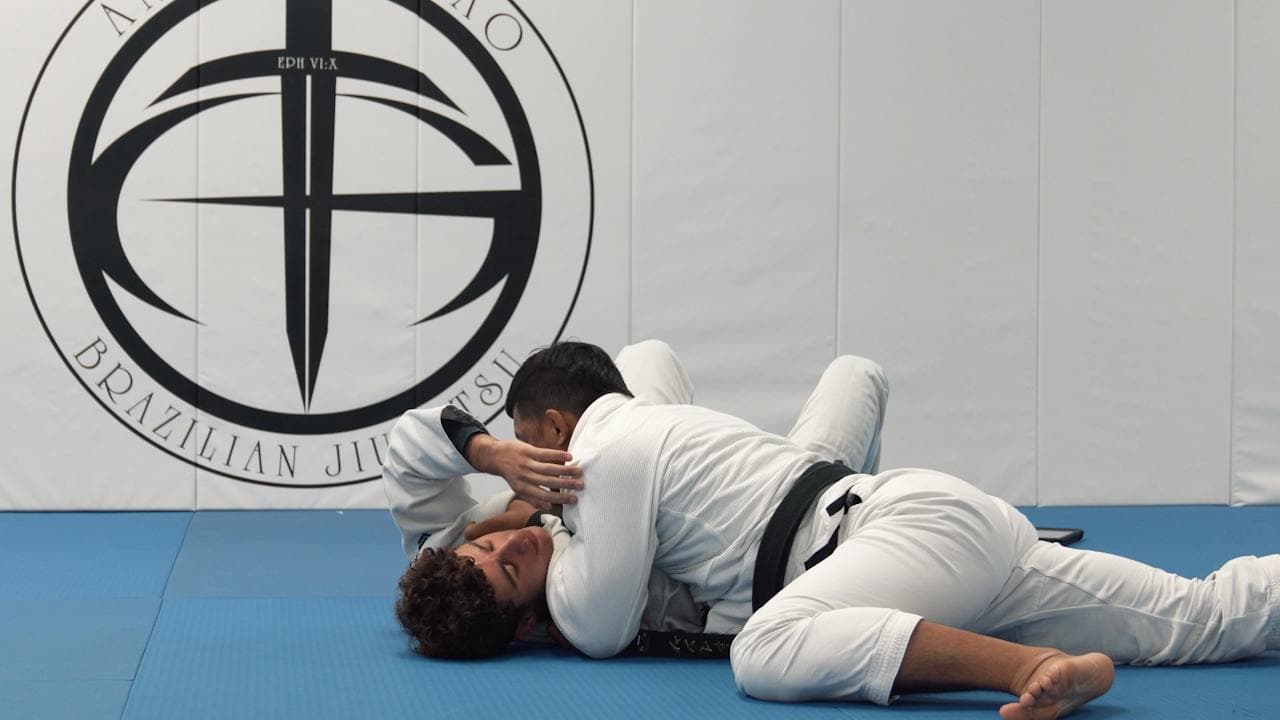
Switching sides in BJJ without giving the escape away
Quick answer: Switching sides from side control works best when the movement preserves useful control instead of abandoning the pin and racing around the head. Learn one route with your coach, identify which connection stays in place during each change, and practice against a specific escape. Arriving on the other side is only useful if you can settle there.
You have passed the guard. Your partner starts building a frame, so you move around the head to the other side. By the time you arrive, a knee is between you and the chest you meant to control.
The missing piece may be the transition itself. Side control is not one stationary shape with empty space between its variations. The path from one hold to another deserves the same attention as either endpoint.
Give the movement a reason
Start by identifying the problem that makes you want to switch. Your partner may be turning toward you, recovering an inside arm position, or building a frame that makes the current hold less effective. The appropriate response depends on the particular position.
Moving simply because you have been still for a few seconds is a different choice. It may provide useful practice, but it can also give away a stable position without addressing anything. Ask what you expect the change to improve.
A coach can help connect a route to a recognizable reaction. That is more useful than collecting several ways to circle around a partner and hoping one appears during rolling. Learn the starting condition alongside the movement.
Side-control teaching commonly includes retention and transitions as separate areas of work. For example, Lachlan Giles’s side-control course outline separates controls and retention from transitions and submissions. That is a helpful distinction when organizing your own questions.
Know what is holding the position before you release it
Before moving, identify the connections you are using. Which arm is controlling the upper body? What is limiting hip movement? Where is your weight supported? If you cannot answer those questions while still, the answers will be harder to find while changing sides.
Do not treat every connection as equally important in every variation. A crossface-and-underhook hold, a different chest-to-chest arrangement, and north-south control ask for different details. Follow one coherent version from your coach rather than combining grips from several demonstrations.
The practical question is what replaces a connection when you remove it. If one hand has to move, what continues to limit the escape it was addressing? If your chest position changes, what prevents the bottom player from following into the space?
This is a way to inspect the technique, not a universal list of mandatory grips. The answer should describe the actual route you are practicing with the actual starting position in front of you.
Treat the space near the head as occupied
Circling around a partner’s head can look simple in a cooperative demonstration. During resistance, the bottom player can move, frame, and follow. Your path has to account for their response rather than imagining the body will remain arranged where you left it.
Move deliberately during early practice. Avoid hopping or dropping weight onto a partner to compensate for an unclear route. Keep limbs clear and follow the coach’s guidance about head, shoulder, and hip positioning. Stop if either partner becomes uncomfortable or trapped awkwardly.
If your route passes through north-south, learn that intermediate position as a position in its own right. It should not be a name attached to the instant you happen to face the other direction.
Ask the coach to pause you midway. Can you explain where your balance and control come from at that point? A transition that only feels coherent when performed quickly may need more slow practice before speed is useful.
Follow the hips as well as the shoulders
A side switch changes your relationship to both ends of the opponent’s torso. Paying attention only to the upper body can leave you surprised when the hips move away and a knee enters the space you intended to occupy.
Watch what the bottom player does during the middle of the transition. Are they remaining flat, turning with you, or using the space to begin recovering guard? Name the response before deciding how to adjust. Different responses may require different answers.
The guide to BJJ frames can help you recognize why an inside forearm or knee changes the available space. Do not try to solve every recovery attempt by applying more pressure to the same place.
If your partner consistently gets a knee inside at one point, return to that point with the coach. The useful diagnosis is the moment the space opens, not simply that you lost side control after switching.
Arrive with a new hold rather than a new location
Reaching the opposite side is not the end of the task. You still need a stable position appropriate to your partner’s response. Otherwise, you have completed the travel while leaving the pin unfinished.
In a cooperative repetition, pause after arriving. Check your base and the position of the partner’s inside limbs. Ask whether the finish matches the version the coach demonstrated. Avoid adding a submission before you have confirmed the hold.
That pause can reveal a habit of landing too far away, reaching with the arms, or leaving an easy route for guard recovery. Your coach can identify which detail matters in your variation. The goal is to make the ending recognizable and repeatable.
During live practice, the pause may become much shorter. The same requirement remains: control has to be established again. A successful transition should give you a usable next position, not only a moment on the other side.
Build a drill around one escape
Ask the coach for a constrained exercise that tests the transition without introducing every possible attack and escape at once. Begin with a clear starting hold and one agreed response from the bottom player.
For example, the exercise might focus on whether the bottom player can recover an inside knee during the switch. The exact setup and permitted movement should come from the coach. The point is to keep the question narrow enough that both partners understand the result.
Agree on the following before starting:
The initial position and grips.
The bottom player’s permitted goal.
The amount of resistance and the stop signal.
What counts as a reset or a completed repetition.
Switch roles so both partners experience the space created during the movement. That can make the top player’s timing easier to understand without relying on a longer verbal explanation.
Add choices only after the first route makes sense
Once the basic route is clear, the bottom player can introduce another agreed reaction. Perhaps they turn a different direction or maintain a different frame. Change the task gradually with the coach’s guidance rather than making every repetition unpredictable at once.
You may discover that the original switch is not the right answer to every response. That is useful information. Returning to a secure hold or choosing a different transition can be better than forcing a movement because it is the day’s topic.
Our article on pinning before submission addresses a related habit: establish what the position gives you before rushing to the next outcome. Here, the next outcome is simply another pin.
Keep a note of the reaction that caused difficulty. A precise description, such as losing contact while the partner turns in, gives the coach something to inspect. Saying the entire technique does not work leaves too much of the exchange unspecified.
Review the transition at normal speed
If filming is permitted by the gym and your partner, a short recording can help locate the loss of control. Review the full movement at normal speed first. Then inspect the brief section where a frame enters or the bottom player begins to turn.
Do not use video as an excuse to make claims about pressure you cannot see. A camera can show a gap or a change in position, but some details still need the partner’s feedback and the coach’s assessment.
Compare the beginning, middle, and end rather than selecting the frame in which your position looks best. A still image of the final side control says little about whether the transition would have held against the agreed resistance.
Then return to a small practice task. Video review should produce something you can test in the next set, not a growing list of unrelated corrections. One well-understood transition is more useful than several movements you can only perform while the partner remains still.
Main photo: Atos BJJ OnDemand; instructional still featuring Rolando Samson.
The takeaway
A side-control switch needs a reason, a controlled route, and a settled ending. Identify what each connection is doing before releasing it, and pay attention to the bottom player’s hips and inside frames throughout the change.
Practice one route against a defined escape with your coach’s help. When it fails, find the moment control was lost rather than assuming the answer is to circle faster. The transition is part of the position you are trying to learn.
Work on the transition with a coach
Find BJJ gyms on Let’s Roll and bring a specific side-control problem to class. A coach who can see the starting grips and the opponent’s response can give you a more useful correction.
FAQ
Should I always switch sides when someone frames in side control? No. The appropriate response depends on the frame, your control, and the opponent’s movement. Learn when a particular switch applies rather than treating it as an automatic answer.
Is north-south just the middle of a side switch? It can be part of a route, but it is also a position with its own control requirements. Ask your coach to teach the intermediate hold instead of rushing through it.
Why does my partner recover guard when I change sides? Look for where control or contact changes and where a knee or forearm enters. A coach can help identify the specific gap; simply moving faster may leave the same problem in place.
Can beginners practice side-control transitions? Yes, in an appropriate class exercise with clear instructions, cooperative starting repetitions, and agreed resistance. Keep the movement controlled and stop if either partner is uncomfortable.

Nina Okada
Nina Okada explains positions the way a good training partner does: one problem at a time, with the limits of the explanation said out loud. She is careful about the difference between what footage shows and what it only suggests.
Related Posts
Jiu-jitsu in Montreal: build the visit around a real class
Plan BJJ training in Montreal around confirmed classes, language arrangements, winter travel, visitor policies, and equipment that is ready to use.
Competing in gi and no-gi on the same day takes two plans
Prepare for gi and no-gi competition on the same day with separate rule checks, complete outfits, schedule coordination, and a realistic second-bracket plan.
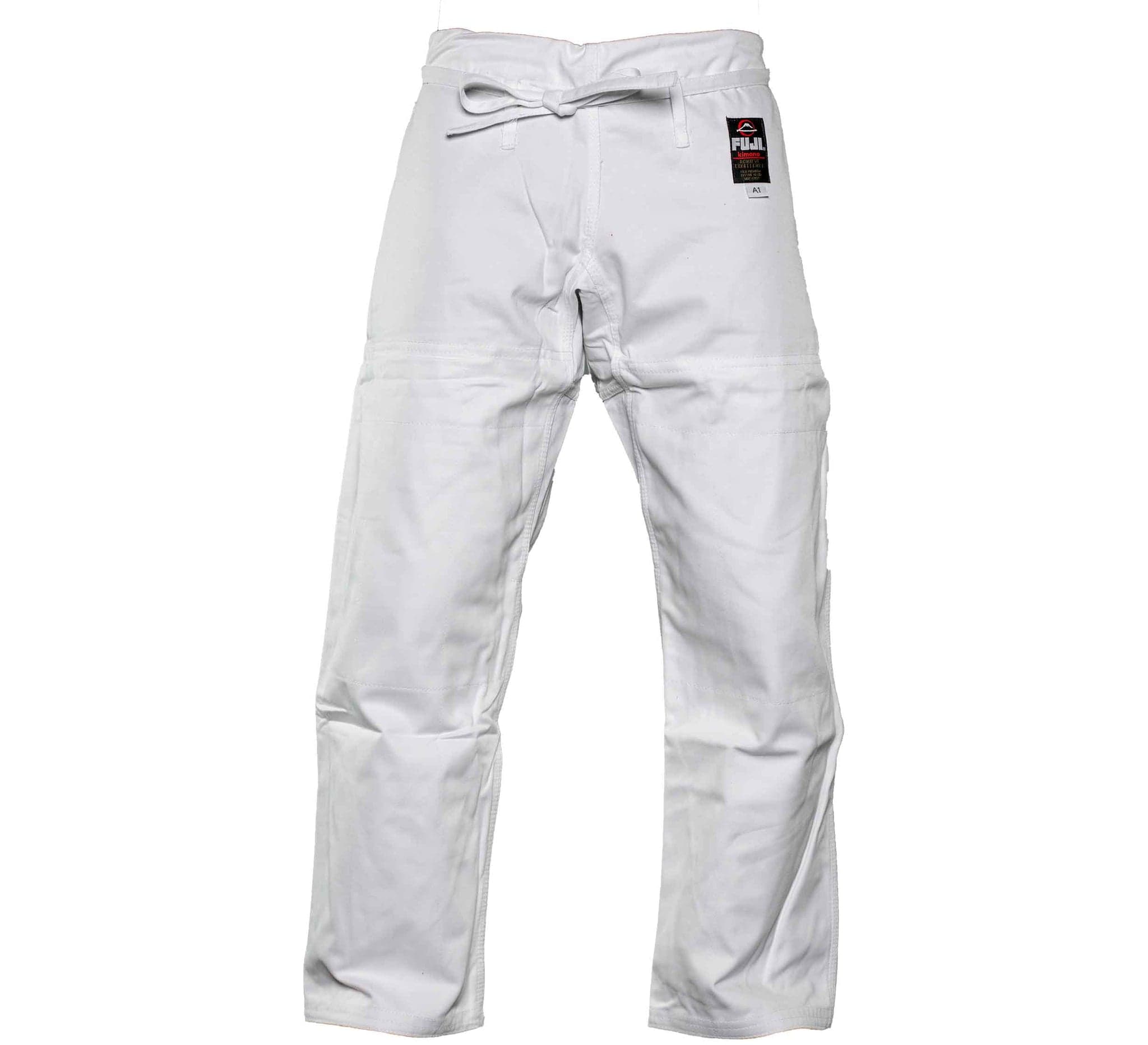
BJJ gi pants that fit standing up can still fail on the mat
Check BJJ gi pants at the waist, rise, knees, and cuffs so a good-looking size label becomes a uniform you can actually move in.
Comments (0)
Loading comments...