
BJJ frames and pushing are different uses of the same arms
Quick answer: A frame helps you manage space and contact while you change position; pushing tries to move the other person through force. The same arm can do either job, so ask what it is accomplishing and practice the distinction with controlled pressure and a coach's feedback.
An arm can be working hard without making a position better. From underneath a pin, you may push until you are tired and still find the other person exactly where they started. The effort is real. The question is whether that effort has a useful direction and a next action.
Framing is often introduced as the answer, but the word alone does not explain the position. A frame needs appropriate placement, support, and a purpose. Learning those details is more useful than deciding that pushing is always wrong or that keeping an arm still automatically makes it a frame.
Name the job before the shape
For this discussion, think of a frame as a structure you use to manage space and contact while you reposition. A push is an effort to move the other person away. In practice, an exchange can include both, and the distinction depends on the task rather than a photograph of a bent arm.
Ask your coach what a particular frame is intended to preserve. It may help stop a shoulder from approaching, keep space for your body to move, or support a transition the instructor is teaching. The answer should connect the arm position to the rest of the escape.
Without that connection, a beginner can memorize where to put a hand and then wait indefinitely. The placement may be useful, but it does not perform the whole escape. You still need to understand what moves next and what the top partner is allowed to do in the exercise.
Avoid treating a frame as an immovable barrier. Partners can change angle, move around contact, or alter the position. A frame that made sense a moment ago may need to be adjusted. Its value depends on the relationship between both bodies, not on remaining rigid at all costs.
Look at what supports the arm
An arm does not operate independently from the shoulder and torso. If the rest of your body is poorly positioned for the task, the arm may be carrying work it cannot comfortably manage. Ask the coach to look at the whole arrangement rather than correcting only your hand.
Start with the specific placement demonstrated in class. Apply light, agreed pressure and notice whether you can maintain the arrangement comfortably while breathing and communicating. If a joint feels strained or the position feels wrong, stop and get help rather than trying to prove that the structure works.
This is not a recommendation to lock out joints against increasing force. Different positions require different details, and an instructor needs to see what is happening. A general article cannot tell whether the pressure in your particular elbow or wrist comes from a sound setup or an awkward angle.
Use the smallest resistance that reveals the problem. The aim is to understand where the support comes from and how it changes. If the top partner immediately overwhelms the position, you may learn only that the drill was too difficult to observe clearly.
Move yourself when the task calls for it
A useful frame can give you something to move in relation to. Instead of trying only to send the top partner away, your next action may involve repositioning your own body through the space the frame helps manage. The exact movement depends on the escape your coach is teaching.
Have the instructor show the relationship slowly. Watch what stays connected and what changes position. If you focus solely on the arms, you may miss the movement that gives their effort a purpose. Ask to see the starting point again rather than guessing from the final escape.
Then practice with a cooperative partner who provides the contact the drill requires. Too little contact can hide the function of the frame, while too much resistance can prevent you from learning the movement. Agree on a level that allows the task to remain recognizable.
Do not assume that every bottom position should be solved by the same motion. A frame in one escape may play a different role elsewhere. Learn the particular problem first, then compare positions with a coach once you can describe what is actually happening in each.
Notice when pushing changes nothing
One sign worth investigating is repeated effort with no meaningful change in the relationship. You push, relax, and find yourself in the same place. That does not prove pushing was inherently wrong; it suggests that the action needs a clearer purpose or a follow-up you have not yet identified.
Ask what you expected the push to create. Was it meant to make space for a movement, prompt a response, or alter the top partner's balance? If you cannot answer, pause the drill. More repetitions of an undefined task are unlikely to make the explanation clearer.
Sometimes a brief push belongs in a coached sequence. The important distinction is between purposeful pressure and a prolonged attempt to move an entire person without changing anything else. Your coach can help identify which one is happening in the position you are practicing.
Keep the conversation specific. Saying you are weak or your partner is too heavy closes the discussion quickly. Describing where the pressure goes and what does not move gives both people a chance to adjust the task and see whether the result changes.
Build a comparison your partner can feel
Use a familiar, coach-approved position and compare two controlled attempts. In the first, identify the effort you normally make. In the second, use the frame and body movement the instructor has demonstrated. Keep the starting conditions similar enough that the comparison means something.
A useful practice agreement includes:
One starting position and a clear objective for the bottom player.
A limited response from the top player at manageable resistance.
No submissions during the initial comparison.
A reset when the position changes beyond the task or either partner needs to stop.
Ask the top partner what felt different, while recognizing that their impression is feedback rather than a final technical verdict. They may notice a change in your angle or find that a route they previously used is no longer available. Bring that observation to the coach.
Swap roles so each person understands the task from both sides. Keep the exercise cooperative enough to study and gradually make it more realistic under supervision. Turning the second attempt into a contest can make the comparison about intensity instead of the adjustment you intended to test.
Follow the contact as the position changes
A frame that works at the beginning of an escape may stop being useful after your body moves. Holding it in place without reassessing can leave you attached to a version of the position that no longer exists. Ask the coach when the contact should change or be released.
Look for the transition, not just the successful starting shape. Where does the hand go next? What replaces the space the original frame was helping manage? Which movement by the top partner changes the answer? These questions connect individual details into an exchange you can recognize.
If you repeatedly lose the position during that transition, begin the drill closer to it. There is no requirement to restart from the earliest possible point every time. A narrower starting point can give you more useful repetitions of the part that is actually uncertain.
Our gym directory can help you find instruction if you need someone to examine the position. Framing is a good subject for in-person feedback because small differences in placement are difficult to describe accurately while you are the person underneath them.
Keep the explanation modest enough to test
Avoid turning a useful cue into a law that forbids every other action. Always frame and never push sounds decisive, but it can obscure the purpose of a particular sequence. Better questions are what the contact does, what changes next, and whether the action fits the position.
Take a brief note after practice. Describe the starting situation, the adjustment, and the result you observed. For example, you might note that changing your body position made a familiar frame easier to maintain. Do not promote one successful repetition into a guarantee against every partner.
In ordinary rounds, notice the same problem without forcing the drill into every exchange. Sometimes the position has already changed too far for that particular answer. Recognizing that limit is part of learning the technique, not evidence that the lesson failed.
When you return to class, ask about one moment you can reconstruct. The coach can work with a specific account of where the frame stopped helping. A broad complaint that frames do not work leaves too many different positions mixed together.
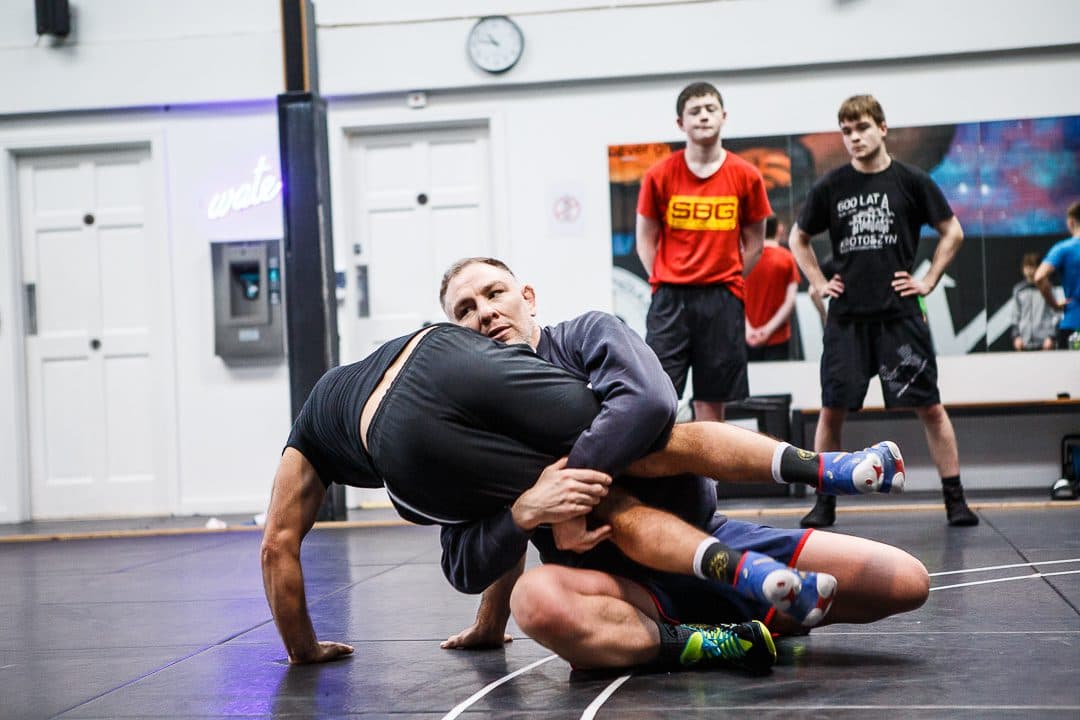
Main photo: BJJ Globetrotters; illustrative archive grappling photograph, not a complete framing demonstration.
The takeaway
A frame has a job within a larger movement. Learn what space it manages, how the rest of your body supports it, and what action follows. Pushing can also have a purpose, but sustained effort without a clear change deserves closer examination.
Practice the difference in a limited, supervised exercise with manageable resistance. Use the result to improve one specific position rather than searching for an arm shape that solves every escape.
Find a partner for focused practice
Check the open-mat directory, confirm the session's rules, and agree on a controlled drill with a suitable partner before beginning.
FAQ
Is framing the same as holding my arms still? No. The frame needs useful placement and a purpose in the position. It may need to change as either person moves.
Is pushing always wrong in BJJ? No. A push can be part of a specific coached sequence. The question is what it creates and how the next action uses that change.
Should a frame hurt my elbow or wrist? Stop if a position causes pain or uncomfortable strain and ask the coach to check it. Do not respond by adding force; seek appropriate professional advice for an injury concern.
How should beginners practice frames? Use a familiar position, light agreed resistance, and one movement task under supervision. Leave submissions out initially so the contact and body movement are easier to study.

Nina Okada
Nina Okada explains positions the way a good training partner does: one problem at a time, with the limits of the explanation said out loud. She is careful about the difference between what footage shows and what it only suggests.
Related Posts
Competing in gi and no-gi on the same day takes two plans
Prepare for gi and no-gi competition on the same day with separate rule checks, complete outfits, schedule coordination, and a realistic second-bracket plan.
Jiu-jitsu in Montreal: build the visit around a real class
Plan BJJ training in Montreal around confirmed classes, language arrangements, winter travel, visitor policies, and equipment that is ready to use.
BJJ gi pants that fit standing up can still fail on the mat
Check BJJ gi pants at the waist, rise, knees, and cuffs so a good-looking size label becomes a uniform you can actually move in.
Comments (0)
Loading comments...