
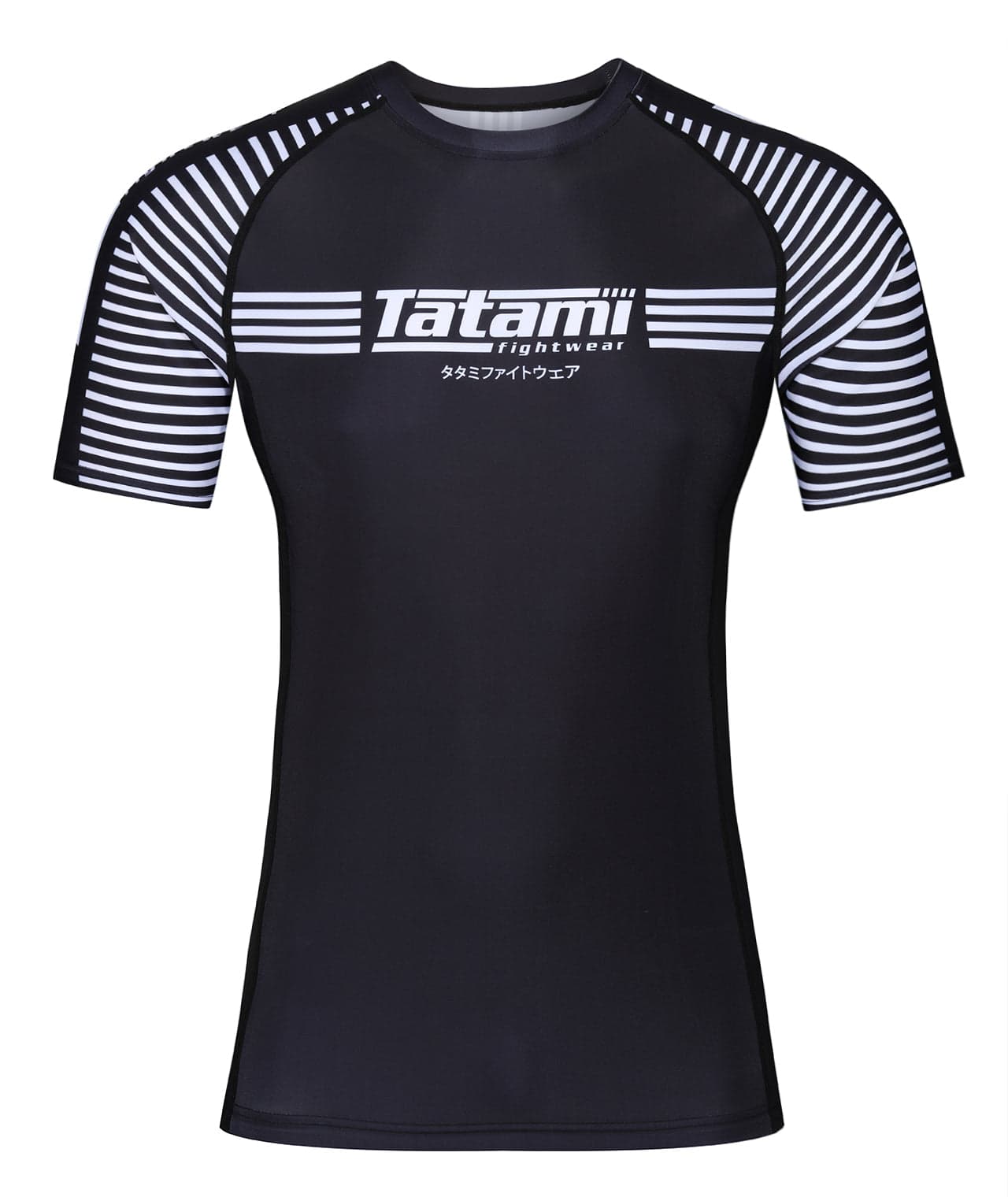
Ranked rashguards: the color means more at some events
Quick answer: A ranked rashguard uses belt-rank colors, but its purpose depends on the setting. A tournament may require a particular design, while a gym sets its own training uniform policy. Check the event rules and the school's instructions before assuming that a product name or a colored panel answers both questions.
A blue panel on a rashguard can be somebody's favorite color or part of a competition uniform. The shirt has no way to explain which. The person wearing it can.
That small ambiguity creates more shopping confusion than it deserves. A beginner sees ranked in a product description and wonders whether they are allowed to buy it. A competitor sees approved and assumes there is nothing left to check. A visitor sees several colors in a gym photograph and assumes the dress policy from the picture.
Start with where the garment will be worn. The useful requirement comes from that setting, and the purchase should follow it.
Rank colors become a rule in a specific setting
For competition, read the organizer's current requirements. The IBJJF uniform page requires a fitted elastic shirt covering the torso to the shorts' waistband, with at least ten percent of the athlete's rank color alongside the permitted black-and-white combinations. It also permits shirts entirely in the rank color.
Those are IBJJF conditions checked on October 12, 2026. They aren't a description of every tournament or every training room. Another organizer can publish different requirements, and the particular event is the one you need to satisfy.
Check the complete uniform section rather than stopping after the color sentence. A correct color doesn't automatically settle fit, length, or the rest of the outfit. If a requirement is unclear, ask through the organizer's support process before ordering around an assumption.
Save the rule you used alongside the product information. That won't replace inspection, but it helps you make a traceable decision instead of relying on a memory that the shirt seemed competition-ready on a shop page.
A product label describes the seller's offering
Ranked is useful shopping language because it points toward a design associated with belt colors. It is still a product description. The organizer decides whether your actual garment meets the event's rules.
Tatami's ranked rashguard listing is an example of that category, rather than a recommendation that one model or color suits every reader. Check the specific variant you would buy and the event where you intend to use it.
Don't assume a photograph of one color represents every option in the selection menu. Product pages can show several variants, and a size choice may sit beside a separate color choice. Confirm both in the basket and the receipt.
If you need clarification, send the seller the actual question. Which rank is this variant designed for? What is the current size chart? Does the garment in the product photograph match the variant selected? Those questions have practical answers; a general claim about premium performance doesn't settle any of them.
The gym decides what belongs in its classes
Ask the school about no-gi clothing before buying a training uniform. It may have a particular team design, a rank-color policy, or a more flexible approach. The useful information is the policy the gym actually uses.
That conversation can be straightforward. Explain that you are choosing equipment for the class and ask which colors or designs are expected. If the school sells required gear, ask about the process, available sizing, and whether a loaner or temporary alternative is possible while an order arrives.
Treat the answer as part of joining the class, not an invitation to debate every uniform system in jiu-jitsu. Schools organize their programs in different ways. A prospective member can ask clear questions and decide whether the arrangement fits their budget and preferences.
For visitors, check before traveling. Your home gym's flexibility doesn't establish another school's policy. A quick message can prevent a perfectly good training shirt from becoming the wrong choice for the particular session you hoped to attend.
Explain your experience instead of relying on the shirt
At an unfamiliar open mat, tell a partner your experience and what kind of round you want. Clothing alone is a poor way to communicate both. A person may be wearing an older garment, a borrowed one, or a design chosen for appearance.
If a ranked color matters under the gym's policy, follow that policy. Beyond it, avoid deciding a stranger's ability from a panel you haven't asked about. A conversation gives you more useful information about pace, permitted techniques, and the practice task.
This applies to the wearer too. Don't use a shirt to imply a credential you don't have when somebody directly asks about rank or experience. An accurate answer is easy and helps the other person choose an appropriate round.
Our guide to being a good training partner covers the wider exchange. A uniform can make a rule visible. It can't replace the practical agreement that two people need before they start grappling.
Fit should be checked while an exchange is still possible
Choose the size from the current chart and the garment's actual measurements or fit guidance. A familiar letter on a shirt you already own isn't a guarantee of the same fit from another brand or model.
Read the seller's return conditions before removing tags, washing, or using the item. If you need to try it on, do so in the way the policy permits. A garment that has already been through training may be treated differently from an unused item.
Check that it stays in place through the movements you can reasonably test while keeping it eligible for return. Don't stretch a new purchase beyond its intended use to prove durability, then expect the shop to regard it as untouched.
The rashguard fit guide looks at that issue more closely. For a ranked shirt, the color requirement and the fit requirement are separate parts of the purchase. You should not have to accept a poorly fitting size merely because it is the only variant you looked at before the deadline.
Buy for the next event you actually plan to enter
A competition purchase becomes easier to justify when it serves a known event. Start with the entry and its rules, then see whether you already own something suitable. The fact that a new design has appeared doesn't create a new uniform requirement.
Use a short buying check:
Confirm the event's current uniform rules and your entered rank.
Inspect the garments you already have for suitability and condition.
Check the exact variant, fit, and delivery timing before ordering.
Keep enough time to exchange an unsuitable purchase if the seller allows it.
These are proposed consumer steps, not an endorsement of a particular retailer. The cheapest-looking shirt may be an expensive choice if it arrives after the event or doesn't fit the rule you needed it to satisfy.
If a promotion changes your competition rank, revisit the garment choice. Don't automatically assume an earlier ranked purchase remains appropriate for the new entry. The event's current conditions and your current rank need to match, regardless of how recently the shirt came out of its packaging.
Care for the garment as clothing
Follow the actual care label. Rank colors don't change the instructions for the fabric, seams, or print. A shirt used for training still needs appropriate washing and a sensible place in the equipment rotation.
Check its condition before an event, rather than noticing a problem at the uniform check. The issue may be fit, a tear, or something that no longer meets the applicable rules. Ask the organizer about uncertainty while there is still time to choose another item.
Keep a training option and a competition option distinct if that makes your routine easier, but don't treat a separate wardrobe as a requirement everyone must adopt. The arrangement should fit the sessions and events you actually attend.
Most of the decision is ordinary clothing administration: choose the right item, confirm the variant, read the rules, and take care of it. The rank label has a job in certain settings. It does not need to become a theory of what kind of grappler you are.
Main photo: Tatami Fightwear, product photograph.
The takeaway
A ranked rashguard answers a uniform question in the setting that defines it. Start with the tournament or gym, then compare the actual garment against those requirements. The seller's description helps you find an option; it doesn't finish the decision on the organizer's behalf.
Choose a fit and delivery window that work, and state your experience plainly to new partners. The shirt can satisfy a rule without carrying the whole burden of introducing you. Once the practical details are settled, it can go back to being a piece of training clothing.
Check the session before packing
Find open mats through Let's Roll, then confirm visitor access, the training format, and any uniform requirements directly with the host.
FAQ
Does every BJJ gym require ranked rashguards? Ask the particular school. Training uniform policies vary, and a tournament requirement doesn't automatically apply to ordinary classes elsewhere.
Can a product description guarantee tournament acceptance? The event's rules and inspection process govern the actual garment. Check the current requirements, the selected color variant, and fit rather than relying only on a seller's label.
Does a colored shirt establish someone's belt rank? Follow any applicable gym rule, but ask the person about their experience before a round. Clothing alone may not explain the context in which it was chosen or worn.
Should I order a new shirt after a promotion? Check the rules for your next event and the garments you already own. A rank change may affect the suitable design, but the actual requirement should guide the purchase.

Kit Langford
Kit Langford covers the louder parts of jiu-jitsu — the marketing claims, the arguments, the gear that promises more than gear can deliver. The jokes are expected to survive a fact-check.
Related Posts
Lucas “Hulk” Barbosa’s best work is in the details
Lucas Barbosa’s nickname explains the first impression. His gi world title, no-gi record, and 2022 ADCC final give viewers more to study.

João Miyao’s record deserves its own first name
João Miyao’s adult world title and 2026 Master1 results tell a distinct story, even when his brother appears beside him on the podium.
Jena Bishop made time for a second sporting life
Jena Bishop’s 2026 PFL title followed a deliberate move from championship jiu-jitsu into learning a different sport.
Comments (0)
Loading comments...