
Being a BJJ Parent on the Sideline Without Taking Over
Quick answer: Agree with your child's coach on the parent's role before tournament day. Offer the support your child wants, leave technical direction to the agreed coach, and handle questions through the event's proper channels. After the match, make room for your child's reaction before asking for an explanation of every exchange.
A child is trying to pass guard. One adult calls for standing up, another calls for staying low, and somebody behind the barrier is counting points that may or may not have appeared on the scoreboard.
That imagined scene doesn't need a villain. The adults may all care about the child and believe they are helping. The problem is that the child now has an opponent and several competing instructions to sort out.
A parent's useful role begins before the first match. It includes preparation and practical support, but also knowing when to stop talking. You can be engaged in your child's jiu-jitsu without becoming an extra corner coach by accident.
Agree on the corner before the tournament
Ask who will coach your child and how the academy handles overlapping matches. Do this before the tournament morning, when the instructor may already be managing several competitors on different mats.
Find out where you should stand, whether the event has a designated coaching area, and how to reach the coach if a mat assignment changes. Read the organizer's actual instructions. Do not assume the arrangement from the last local event applies here.
In TrueSport's September 2026 guide to coach-parent relationships, Keith Barnett recommends establishing communication early and asking about the coach's preferred processes. For a jiu-jitsu tournament, that can be as practical as knowing whether schedule updates go into an academy group chat or directly to one designated adult.
If the coach cannot cover the match, agree on an alternative. A familiar assistant, another approved coach, or a parent with a clearly defined role may be possible. Avoid discovering the gap while the child is walking onto the mat and then appointing the loudest spectator.
Ask what your child wants to hear
Have a short conversation on an ordinary day about tournament support. Some children like hearing their name and encouragement. Others prefer the coach's voice alone while the match is running.
Treat the answer as information, not a referendum on your importance. A child who asks you to stay quiet may still want you close by before and afterward. They are allowed to want different kinds of support at different moments.
Keep any agreed encouragement simple and separate from technical instructions. If the coach is directing a guard recovery, you don't need to supply a competing escape because you recently watched it online. A parent who trains can have useful knowledge and still respect the role assigned for this match.
After the event, ask whether the arrangement worked. Don't lead with an argument about how much you sacrificed to attend. The question is whether the child could use the support you offered, not whether your enthusiasm was sincere. Both can be true while the plan still needs adjusting.
Give yourself a job that doesn't involve calling moves
Practical help is real help. Know where the child's belongings are, keep track of the official schedule, and confirm the meeting point after a match. Follow the coach's plan rather than creating a separate warm-up routine at the last minute.
Choose a few responsibilities in advance:
Confirm the official mat assignment and tell the agreed coach about changes.
Keep the child's necessary belongings accessible without blocking event walkways.
Handle family messages so the child isn't answering result requests between matches.
Know where to go afterward, whether the child wins or loses.
If the child is old enough to handle parts of this independently, help them do that instead of taking over everything. The arrangement should fit their age and the event's procedures.
Our tournament guide covers more of the preparation. On the day, stick to the job you agreed to do. You don't need to make technical noise to prove you are participating in the experience.
Use the first BJJ competition checklist to agree on the practical jobs early, instead of inventing a new role beside the mat.
Keep the scoreboard separate from your reaction
A close score can make every movement feel decisive. Before reacting to an apparent mistake, check whether you actually understand the situation and let the designated coach handle any permitted question.
You may have missed an earlier penalty or misunderstood the scoring sequence. Even if an error occurred, shouting from behind the barrier does not explain it clearly. Ask the coach about the proper process rather than trying to conduct a rules hearing across the mat.
For a genuine safety concern, promptly alert the appropriate official. Respecting roles does not mean ignoring a child who needs help. The distinction is between immediate welfare and a disagreement over a competitive decision.
Afterward, keep the language precise. You can say you didn't understand a call without telling the child that an entire academy or referee was against them. If the coach can explain it later, listen. If nobody can verify what happened, leave the uncertainty intact instead of making a family certainty out of a partial view.
A tap should never become a parenting failure
Make clear before competition that your child can tap or verbally stop when they need to. Don't attach a promise to endure a submission to the money spent on entry or the drive to the venue.
If they lose by submission, the first interaction should not be an interrogation about why they stopped. Check that they are okay and get appropriate help if needed. Technical review can wait for the coach and a suitable time.
The same applies when your child wins. Respect the other child's space and the officials' instructions. Avoid celebrating distress or describing the opponent as weak because they tapped. The other family came to a children's sporting event too.
These are recommendations about adult behavior, not a prediction about how any child will respond to a loss. Some want to talk immediately. Others want a little quiet. You can support either response without changing the message that stopping a submission was available to them throughout the match.
Let the first conversation belong to the child
When the child leaves the mat, resist opening with the sequence you think would have won. They may be thinking about something entirely different: a grip they finally reached, a confusing restart, or how loud the room felt.
Ask a simple question and allow the answer to be short. Offer ordinary care before analysis. If they want a hug, give one; if they prefer space, respect that while staying available and responsible for them.
TrueSport's 2022 sideline sportsmanship guidance encourages adults to recognize effort rather than directing all attention to the result. In a BJJ setting, you can acknowledge a specific attempt the child chose to make without pretending every exchange went perfectly.
Don't force a positive speech over disappointment. Losing can be upsetting, and the child doesn't need to produce a lesson before being allowed to leave the venue. If they ask what happened, help them bring that question to the coach instead of launching an unsolicited technical review in the parking lot.
Review video when there is a reason to review it
A recording can help answer a clear question later. It can also keep a disappointing match playing indefinitely at the dinner table. Agree on the purpose before opening the clip.
If your child wants to review with the coach, identify one exchange. Perhaps they want to understand why the guard pass didn't score, or where they lost a grip they had practiced. Let the coach assess the relevant footage without turning the session into a critique of every movement.
Follow event rules for recording and sharing. A clip that includes other children deserves care, and the child in your own household should have a say about public posting. Don't upload a tearful aftermath to make a point about resilience.
Our guide to competition nerves addresses another part of tournament preparation. A replay is useful when it serves a question the child is ready to discuss. It does not need to become the mandatory final activity of every tournament day.
Raise concerns without turning the sideline into a dispute
If you have a concern about coaching, write down the specific incident and request a suitable conversation. Separate what you saw from what you inferred. A missed mat call and a disagreement over a pass are different issues and deserve different questions.
For ordinary coaching disagreements, allow time for the coach to finish the event and talk privately. Urgent safety concerns or inappropriate conduct should go promptly to the responsible people through the appropriate reporting route.
TrueSport's 2023 article on difficult sideline behavior notes that confronting another adult in the moment can worsen a situation and suggests involving coaches when needed. You do not have to personally police every spectator to support your child.
If your own behavior was the problem, address it directly. Tell the child and coach what you will change next time. A practical commitment to stop calling technical instructions is more useful than defending your intentions for ten minutes. Then follow the arrangement at the next event.
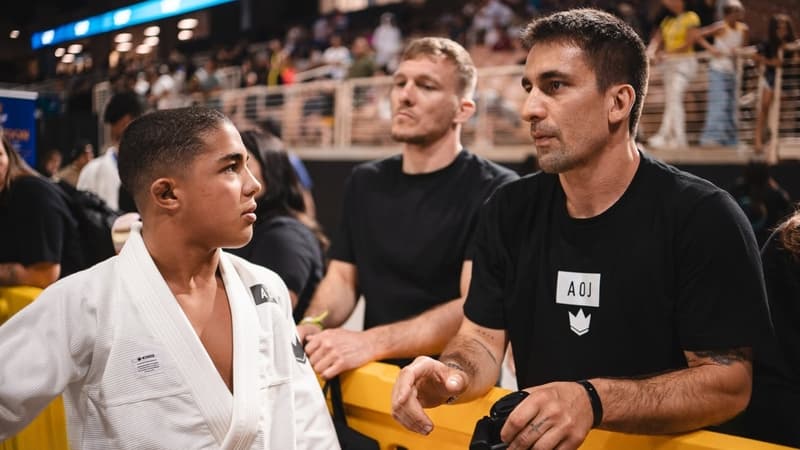
Main photo: IBJJF; archive image from its July 2026 Pan Kids coverage.
The takeaway
A parent can make a tournament easier by handling the agreed practical work and keeping technical direction clear. Talk with the coach before the event, ask what support your child wants, and treat tapping and stopping as available choices throughout competition.
Afterward, let the child have a reaction before turning the match into a lesson. Questions about scoring or coaching can be addressed properly without giving the entire sideline a role in the discussion. The next tournament is a chance to use a better arrangement, not to replay the last argument.
Check the event details together
Browse the tournament directory, then read the organizer's current procedures with your child's coach before registering or planning who will be in the corner.
FAQ
Can a parent who trains BJJ coach their child? Possibly, if that is the agreed role and the event permits it. Coordinate with the academy and child beforehand so the match does not acquire several competing coaches.
Should I challenge a referee's call from the stands? Ask the designated coach about the event's proper process. Alert an official promptly to an immediate safety concern, but avoid turning a scoring disagreement into a shouting exchange.
What should I say after my child loses? Start by checking how they are and listening. Technical analysis can happen later if they want it and the coach is available; the child does not owe you an immediate explanation.
Should we watch the match video on the drive home? Only if it serves a useful purpose and your child wants to discuss it. There is no requirement to review immediately, and you can save a specific question for the next conversation with the coach.
Related Posts

A family BJJ calendar should count who covers the evening
The class time leaves out travel, supervision and somebody else's plans. Build the family training week around the whole commitment.
Before you post your child's jiu-jitsu tournament photos
Before sharing your child's BJJ tournament photos, ask about their preferences, other children in frame, and the event's policy. Keep difficult moments private.
When your jiu-jitsu kid says they want to quit
Before arguing about commitment, find out why your child wants to quit BJJ. Separate the sport from the schedule, partner concerns, and adult pressure.
Comments (0)
Loading comments...