
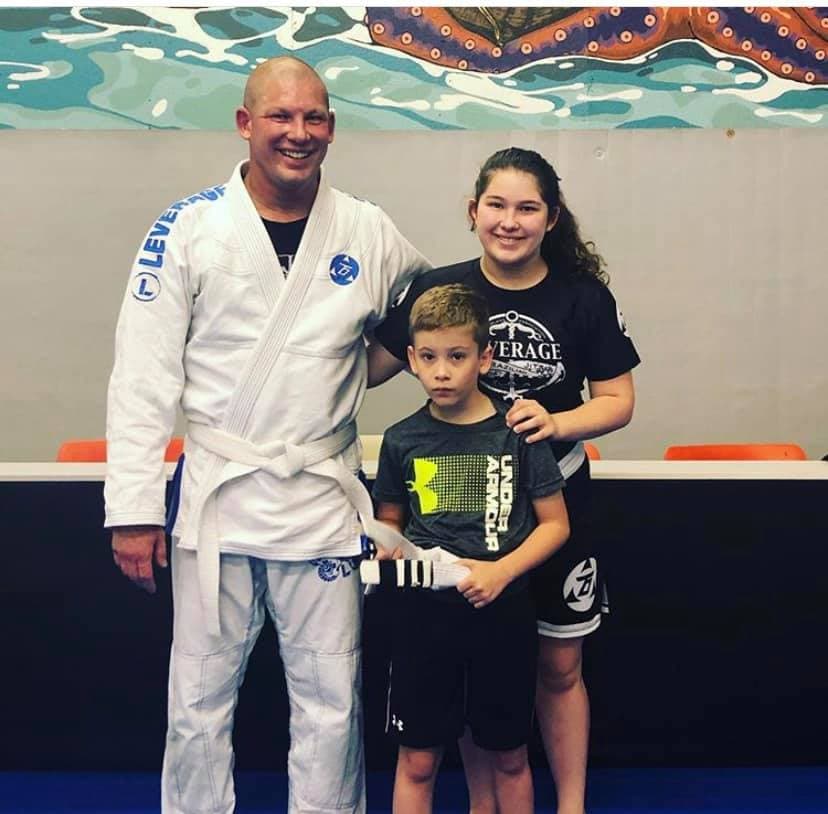
When your jiu-jitsu kid says they want to quit
Quick answer: Find out what your child means by wanting to quit before deciding what happens next. Take safety concerns seriously, separate a difficult class from a persistent dislike of training, and consider a specific change or a defined break together. Another stripe is not a good bargaining chip for keeping a child on the mat.
The gi is clean. The bag is by the door. Your child is on the sofa saying they are not going, and you have twelve minutes before the drive becomes a late arrival. This is a poor setting for a serious conversation about perseverance.
For a parent who trains, the refusal can feel personal. You wanted something to share, perhaps a Saturday open mat together someday. For a parent who does not train, it may feel like another expensive activity being abandoned. Both reactions belong to the adult. Neither tells you what is happening in the kids' class.
Start with what happened, not a speech about commitment
Ask about the last class they attended. Which part did they like? Was there a moment they wanted to leave? A child who struggles to explain a broad feeling may be able to describe a particular partner, game, or instruction.
Listen without immediately answering every complaint. If the warmup is boring, you can acknowledge that without promising to redesign it. If rolling feels frightening, you need more information before offering reassurance. Ask the child to describe what they mean rather than supplying the explanation you hope is true.
TrueSport's 2021 discussion of quitting a team, with social worker Nadia Kyba, recommends looking beneath the stated decision to understand the concern driving it. Applied to BJJ, quitting might mean leaving the academy, dropping a competition class, or escaping an unpleasant pairing. Those require different responses.
If class is about to start, agree to discuss it when neither person is rushing. Missing a session while you understand the problem is preferable to trying to settle the child's whole relationship with jiu-jitsu in the parking lot.
Safety concerns do not need a trial period
A report of bullying, inappropriate behavior, or a partner ignoring a tap deserves immediate attention. Do not require another month of attendance to prove the child is serious. Keep them away from the concerning situation while you establish what happened and seek appropriate help.
TrueSport's same guidance places safety problems ahead of an ordinary discussion about finishing a commitment. That distinction matters in a contact sport. A child describing fear of being hurt is not automatically describing a healthy challenge that needs more persistence.
Ask calm, open questions. Avoid rehearsing a story for them or pressing them to make a public accusation in front of the class. Write down what they tell you in their own words, and speak privately with the responsible adults. The next step depends on the concern; an ordinary partner mismatch and alleged abuse should not be handled as the same problem.
Pain also needs attention rather than a character lesson. Stop the activity causing it and seek qualified help when needed. This article cannot determine whether a child is injured, and a belt deadline should not decide that question.
Find out whether the schedule is the thing they hate
Imagine a child who enjoys Saturday morning class but resists Tuesday evenings. That pattern suggests a useful question about Tuesday, not proof that the child has become lazy. Look at the actual hours between school ending and the gi going on.
Maybe there is no time to eat comfortably before leaving. Maybe the child spends the afternoon waiting through a sibling's activity and reaches BJJ tired of being transported. These are possibilities to investigate, not diagnoses to attach to every reluctant student.
Try drawing the day together. Include the driving and waiting, which disappear when adults describe training as only an hour. Ask the child which part they would change first. A different class time may be a more honest experiment than a promise to try harder.
Keep this conversation separate from tournament ambitions. A child may like two recreational classes and dislike the extra sessions attached to competition. You can reconsider the tournament without requiring them to abandon the sport or accept the whole competition schedule.
Our guide to BJJ training frequency offers a starting point for discussing attendance, rather than treating the busiest timetable as the default.
Talk with the coach about one observable problem
A private conversation is more useful than announcing at the front desk that your child wants to quit. Describe what the child has said, with their knowledge, and ask what the coach has noticed. Do not begin by asking the coach to persuade them to stay.
You might learn that your child has moved into an older group and misses familiar partners. Or the coach might not have noticed a problem. Either answer leaves room for a concrete next step: observing a class, trying a different group if appropriate, or arranging a supervised pairing.
If you do not understand the class vocabulary, our BJJ terminology guide can help you follow the conversation. Knowing what rolling means is useful. It does not qualify you to overrule your child's account because the technique sounded normal on paper.
Agree on what the coach will do and when you will revisit it. Avoid vague arrangements where everyone promises to keep an eye on things and no one knows what should change. Your child should understand the plan in language they can use.
Offer a small experiment with a real ending
When there is no unresolved safety concern and the child is willing, try a limited change. The important part is that the endpoint means something. A two-week experiment cannot become another two weeks indefinitely because the parent dislikes the answer.
Possible agreements include:
Attend one suitable class a week for a short period, then decide together whether the reduced schedule helped.
Pause competition preparation while keeping the recreational class the child enjoys.
Take a defined break and have one conversation afterward about returning or choosing something else.
Try a different age-appropriate group with the coach's agreement, without treating the move as a demotion.
Write down the arrangement simply enough that both of you could explain it. Do not attach a secret condition that the child must appear cheerful at every class. You are trying to learn whether a change makes training workable, not grading their gratitude.
A break also needs a practical membership conversation with the academy. Ask about its actual pause or cancellation terms. Do not promise your child an arrangement that you have not checked, then blame them when the billing works differently.
Keep belts and adult disappointment out of the bargain
Promising a new gi for the next stripe may get a child into the car, but it does not answer why they wanted to stop. Neither does suggesting that leaving will disappoint the professor. Those arguments move attention toward satisfying adults.
In a 2022 TrueSport article about stepping back, Kyba addresses athletes whose motivation has become pleasing parents or coaches. The useful question at home is what the child still wants from the activity when the adult approval is removed.
You can be honest about your own disappointment without making the child responsible for fixing it. Perhaps you enjoyed watching class or hoped to train together. Say that briefly, then leave room for their answer. A family membership is a financial arrangement, not an obligation for everyone to develop the same hobby.
Avoid predicting that they will regret leaving forever. Nobody knows. They may return later, prefer another sport, or enjoy BJJ again under different circumstances. You do not need to settle their adult identity while discussing next month's classes.
Leaving can include a polite ending
If the decision is to stop, handle the administrative work yourself. Follow the membership terms, return borrowed gear, and let the coach know. A child can say goodbye if they want to, but should not have to give a speech defending the decision.
Keep their belt and gi if that suits the family. There is no need for a dramatic disposal ceremony or a promise never to quit anything again. The clothes can simply go in a drawer. Training already completed does not become wasted because it was not followed by a black belt.
Be careful with the story you tell other parents. Your child's private frustration is not material for a group chat about weak commitment. A brief explanation that you are changing activities is enough unless a concern needs to be reported through an appropriate channel.
If another activity appeals to them, discuss it on its own terms. Do not make the new sport compete with BJJ for the title of best thing you ever paid for. Let the child try it without carrying a running comparison of attendance and enthusiasm.
Main photo: BJJ Fanatics.
The takeaway
Wanting to quit is a statement to understand before it becomes a decision to contest. Sometimes the problem is specific and fixable. Sometimes a child simply does not want to keep doing jiu-jitsu. A useful conversation leaves room for both answers.
Your next step should match what you learned: address a safety concern, change an impractical arrangement, or help the child leave respectfully. The aim is not to win an argument about the word quitting. It is to make a decision about this child and this class with enough information to explain it honestly.
Compare programs only if your child wants another option
The gym directory can help you identify other local kids' programs. Before arranging trials, ask whether a different class is something your child wants to explore. A new address should not become a way to avoid hearing the original answer.
FAQ
Should I make my child finish the month of BJJ? Consider the reason for leaving before the calendar. A safe, agreed endpoint may suit an ordinary change of interest, but unresolved safety concerns take priority. Check membership terms separately from deciding whether your child should attend.
What if my child enjoys class once they arrive? Ask about both parts of the day. Enjoying class does not make the resistance beforehand imaginary. The difficulty may involve the transition, the schedule, or something within training. Look for a specific adjustment you can try together.
Should I ask the coach to promise a stripe? No. A promotion should not be used as a retention bargain. Tell the coach what your child is experiencing and discuss the class itself. An anticipated reward does not resolve a pairing problem or a schedule that no longer works.
Does taking a break mean they will never return? Nobody can promise either outcome. Set a time to revisit the decision without treating return as compulsory. If your child wants to come back, ask the academy about an appropriate class and current membership arrangements before restarting.
Related Posts
Being a BJJ Parent on the Sideline Without Taking Over
Help your child at a BJJ tournament without adding competing instructions. Agree on parent and coach roles, respect tapping, and handle the practical work.

A family BJJ calendar should count who covers the evening
The class time leaves out travel, supervision and somebody else's plans. Build the family training week around the whole commitment.
Before you post your child's jiu-jitsu tournament photos
Before sharing your child's BJJ tournament photos, ask about their preferences, other children in frame, and the event's policy. Keep difficult moments private.
Comments (0)
Loading comments...