

Morning BJJ works better when the night before is boring
Quick answer: Morning BJJ is easier to organize when your kit, route, and post-class obligations are settled the night before. Try a manageable schedule, confirm the academy's early-entry routine, and judge the arrangement by whether it fits your life rather than whether it looks disciplined online.
The alarm is only one part of morning training. The missing belt, unwashed rashguard, and meeting that starts too soon after class are separate problems, and getting out of bed does not solve them. Most can be dealt with before you go to sleep.
An early session can suit a week that leaves little room later in the day. It can also be the wrong appointment for your circumstances. The useful question is whether you can attend consistently and arrive prepared, without making the rest of the morning an argument with the clock.
Confirm how the early class actually works
Ask the academy about the session rather than assuming it is an earlier version of the evening timetable. Confirm its format, experience requirements, start and finish times, and how students enter the building. An early class may use an access arrangement that is not obvious from the main website.
Find out when to arrive. Turning up far ahead of the instructor may leave you waiting outside, while arriving at the listed start time with several registration tasks unfinished can delay your own participation. A short question beforehand can settle both problems.
If you are trying the academy for the first time, complete the requested visitor or trial process in advance. The person opening the room may also be preparing to teach. Give them the information they need before the morning rather than expecting a lengthy introduction while everyone is lining up.
Ask how cancellations are announced and check the approved channel before traveling. This is particularly useful for an occasional early session with a small group. A timetable tells you the normal arrangement; it does not guarantee that nothing can change on a specific day.
Remove the decisions that do not need daylight
Pack clean kit the night before and check the bag rather than relying on a memory of what usually lives in it. Include the clothing you will need afterward. A belt left on a chair can turn a simple departure into several minutes of searching at exactly the wrong time.
Keep the bag somewhere that does not obstruct other people, and arrange keys, transport cards, or work items through whatever routine already suits your household. The point is to reduce avoidable tasks, not to create a complicated ceremony around going to class.
Useful evening checks include:
Confirming the next morning's class and travel plan.
Packing clean training clothing and separate space for used kit.
Preparing whatever you need for work or other commitments afterward.
Checking that the planned return time works for the people who share your morning.
Do not leave cleaning equipment or finding suitable clothing as a reward for waking up early. Those are prerequisites. If the kit is not ready, make another appropriate plan rather than bringing dirty clothing because the alarm went off on time.
Plan the hour after class as carefully as the hour before
The class finish is not the moment you appear at work. Include changing, travel, and any other ordinary tasks between the mat and the next appointment. Ask about shower arrangements if your plan depends on them, and allow a margin rather than assuming immediate access.
A work call taken from a parked car may be possible, but it should not be the hidden foundation of every morning. Decide what the next commitment actually requires: a quiet space, suitable clothing, equipment, or simply enough time to arrive without rushing.
If you must leave training at a firm time, tell the instructor in advance and ask how to do so with minimal disruption. Then follow the agreed plan. Remaining for one more round and blaming the timetable afterward is not a scheduling problem the academy created.
The same care applies to family responsibilities. Agree on the arrangement with the people affected instead of treating an early class as time that belongs to nobody else. Breakfast, transport, and household tasks still exist while you are at the gym.
Start with a schedule you can examine
Try a limited number of mornings before redesigning the whole week. That gives you a chance to learn how the route, class, and subsequent commitments fit together. You can add another session later if the arrangement works, rather than announcing a routine that immediately needs exceptions.
Keep the experiment practical. Note whether you arrived on time, had the required kit, and reached the next commitment without a scramble. Those observations tell you more about the schedule than a photograph of an early clock or an ambitious streak counter.
Do not interpret a difficult first week as proof of a character flaw. There may be a simple issue to solve, such as a poorly chosen class day or an unrealistic travel margin. There may also be a genuine conflict that makes a later session the better choice.
Questions about sleep, nutrition, or individual health belong with appropriately qualified professionals when they require more than ordinary planning. This article is about organizing the appointment, not prescribing how little rest you can tolerate to keep it.
Join the class without trying to wake the room by force
Follow the instructor's warm-up and the session's intended intensity. An early start does not create a reason to rush into hard rounds, and a quiet room does not need one visitor to prove that everyone should be more serious. Ask about the format if it differs from what you expected.
Tell your partner what you need to communicate, just as you would at any other session. Relevant limitations and an agreed pace remain relevant before sunrise. Nobody should have to guess whether a light opening exchange is a warm-up or the beginning of a competitive round.
If you feel unready for the planned activity, speak with the coach rather than disguising it with extra effort. There may be an appropriate adjustment, or sitting out may make sense. The fact that you traveled to the academy does not oblige you to participate in every part regardless of circumstances.
Keep technical goals modest enough to notice. One question about a familiar position can make a morning useful. You do not need to compensate for the early alarm by learning an entirely new game before the workday begins.
Give the kit a plan after the session
Used clothing needs somewhere to go after training, especially if you will not return home immediately. Keep it separate from clean work items and follow a practical washing routine when you can. Do not leave the bag forgotten until the next evening because the early session already feels finished.
If you use a shared changing area, allow others the space to complete their own morning. Pack in a way that makes your belongings easy to manage and follow the academy's rules about equipment and footwear. A small room becomes less convenient when every person's bag occupies the floor.
Check that you have your belongings before leaving, particularly if you changed into work clothing. Missing keys and a forgotten laptop are not technical training problems, but they can make an otherwise good session difficult to repeat. A short exit check is enough.
For alternative sessions, the open-mat directory can help you investigate what fits your week. Confirm the host's actual times and visitor rules. An early open mat may have a different structure from a taught class, so compare the whole arrangement.
Keep the routine only if it earns its place
After a few attempts, look at what the morning schedule is doing for your week. Are you attending sessions you otherwise would miss? Is the class useful? Does the route fit? Those are better reasons to continue than feeling committed to an identity as someone who always trains early.
If the arrangement is nearly right, change one practical detail and try again. Choose a different day, pack more completely, or allow more time afterward. Changing several things at once can make it difficult to see which adjustment actually helped.
If it does not fit, use another class without treating the decision as a defeat. A good training schedule is one you can maintain within the rest of your responsibilities. The clock time does not make an ordinary session more authentic or a later session less valuable.
When the morning routine does work, let it become ordinary. You can arrive, train, clean your kit, and continue the day without making each attendance a public declaration. Reliability is useful precisely because it stops requiring a new decision every time.
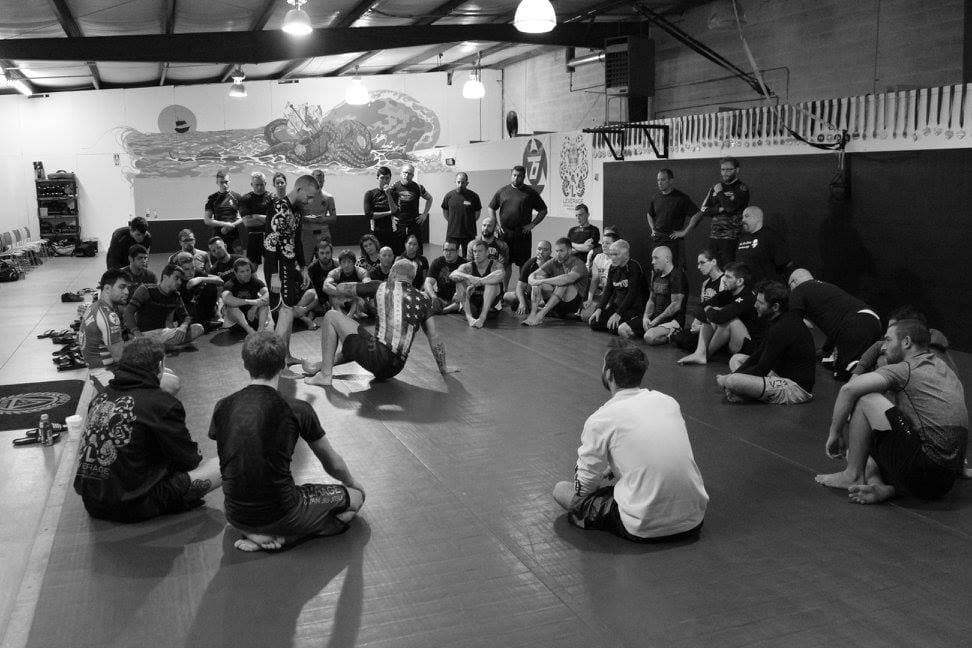
Main photo: BJJ Globetrotters; illustrative archive class photograph, not evidence of its time of day.
The takeaway
Morning BJJ begins with the class arrangement and the evening preparation, then continues through the commitments after training. Confirm access, pack clean kit, and leave a realistic margin for changing and travel. Try the schedule before expanding it.
Keep the routine if it produces useful training without repeatedly disrupting the rest of your day. Adjust it or choose another session if it does not. An early alarm is a tool for attending class, not a separate achievement you must defend.
Find a timetable that fits
Explore the gym directory, then ask academies directly about their morning class format and current attendance arrangements.
FAQ
Is morning BJJ better than evening BJJ? There is no universal answer for scheduling. Compare the class, travel, and your other responsibilities, then choose the arrangement you can use consistently.
What should I prepare the night before? Confirm the class, pack clean kit and post-training clothing, and settle the route and next commitment. Remove tasks that would otherwise delay departure.
Can I leave an early class before it finishes? Ask the instructor beforehand and follow the agreed process. Do not assume a quiet departure during instruction will be acceptable in every room.
How many mornings should I train each week? Begin with a manageable trial that fits your circumstances and discuss the training load with your coach. Increase only when the overall arrangement works for you.

Owen Bellamy
Owen Bellamy writes for the person training twice a week around a job. Nothing he suggests requires quitting the job.
Related Posts
Covering Your First BJJ Class Without Overteaching
Cover an adult BJJ class with a plan agreed by the head coach. Keep the lesson focused, supervise partners, and leave clear handover notes afterward.

Give your next eight weeks of BJJ a question to answer
Build an eight-week BJJ project around one useful question, realistic practice, and observations that tell you what to work on next.

What to Do After a BJJ Seminar: A One-Week Follow-Up
Turn a BJJ seminar into a useful week of practice. Organize your notes, mark missing details, choose one task, and follow the host's recording rules.
Comments (0)
Loading comments...