

Give your next eight weeks of BJJ a question to answer
Quick answer: Give an eight-week BJJ block one specific question you can practice and review, such as recognizing an escape opening or maintaining a useful guard connection. Agree on the work with your coach, keep brief observations, and judge the block by what you understand better rather than by a promised belt or win total.
Eight weeks is long enough to collect useful observations and short enough to keep a question in view. It is not a guarantee that a technique will become automatic or that a belt promotion will arrive. Used well, it gives ordinary training a subject you can return to without redesigning your entire game.
The first step is making that subject small enough. Get better at jiu-jitsu describes a wish. Find out why one familiar position keeps disappearing gives you something to show a coach and a reason to pay attention during the next class.
Choose a question that appears in your rounds
Start with a position you encounter often enough to study. If you rarely reach a particular advanced sequence, building the whole block around it may leave you waiting for an opportunity that never comes. A familiar escape, guard connection, or transition can provide more useful repetitions.
Describe the problem without judging yourself. Instead of saying you have no guard, identify when the connection breaks. Instead of saying you are bad at escaping, name the position and the action you cannot yet recognize. The narrower description makes it easier for a coach to help.
Ask whether the question suits your current experience and the academy's training. The coach may suggest a simpler starting point or a related detail that needs attention first. That adjustment is part of making the plan workable, not evidence that your original interest was foolish.
Keep the question visible in a short note. You should be able to explain it to a partner without reciting a page of ambitions. If the explanation needs several unrelated positions, divide it and choose one to begin with.
Establish what you can actually observe
A useful starting record does not require a spreadsheet full of scores. Note what happens in a few ordinary attempts under comparable conditions. Identify the starting position, the partner's response, and where your understanding becomes uncertain. Avoid turning every round into an exam.
Be careful with numbers that look precise but mean little. A success count changes when partners, resistance, or starting conditions change. You can record those differences, but do not compare them as though every repetition were the same test.
A descriptive observation may be more helpful: you recognize a turn late, lose a particular connection, or cannot explain the next action after a frame. These statements can be checked in a drill and discussed with the coach. They tell you what to investigate next.
Keep the baseline modest. Its job is to give the later review something real to compare, not to prove how poor your starting point was. You are gathering information about a position, not writing a case against your own ability.
Fit the work inside the class you attend
Your project does not replace the instructor's lesson plan. Participate in the class being taught and look for relevant connections without demanding that every session serve your chosen topic. There may be a suitable moment for a question or a short positional drill afterward, with permission.
Ask the coach where focused practice belongs in the academy's routine. Some sessions provide time for it; others do not. Agree on the arrangement before recruiting partners or changing the task during a regular drill. Your interest does not cancel their opportunity to practice the assigned material.
Choose a realistic amount of additional work. A few attentive repetitions with a clear purpose can be easier to maintain than a large homework plan. If the schedule becomes cumbersome, reduce the administrative burden before abandoning the technical question.
Use available partners considerately. Explain the task and offer to swap roles or help with their own practice. A project is more likely to remain useful when it works for both people instead of turning one teammate into a permanent assistant.
Divide the eight weeks by questions, not promises
The dates can provide review points without pretending that learning follows an exact calendar. Early sessions may clarify the starting position; later ones may introduce another response. If a stage needs more time, adjust the plan with the coach rather than forcing a progression because the week number changed.
One possible structure is:
Begin by identifying the problem and learning the coached movement.
Practice it with a cooperative partner and limited responses.
Add appropriate choices or resistance as the task becomes clearer.
Review the observations and decide what question comes next.
This is a planning example, not a validated formula or a promise of a particular result. The coach and your actual training determine the pace. Missing a class does not break the entire block, and completing the calendar does not mean the position has been mastered.
Keep the intended question steady long enough to learn something. Constantly replacing it with the latest attractive technique makes the eight weeks a collection of starts. You can save other interests in a separate note without making each one the new central project.
Use feedback to change one part of the task
When a repetition fails, ask what information it offers. Did the partner do something outside the agreed exercise, or did the same known response still cause trouble? The first may require clarifying the drill; the second may reveal the exact detail worth revisiting.
Bring one specific observation to the coach. A short demonstration can be more useful than a long account of an entire round. Let the instructor see the starting position and the point where the task stops making sense, then try the suggested adjustment with your partner.
Change one major variable at a time when practical. If you alter the starting position, resistance, and intended finish together, it becomes harder to tell what helped. A focused comparison does not need laboratory conditions, but it benefits from some consistency.
Record the result plainly. You might understand the problem better while still failing to complete the movement against resistance. That is a meaningful distinction. Do not hide it by writing either total success or total failure in a note that should describe what happened.
Let ordinary rounds provide context
A limited drill can make a detail visible; an ordinary round shows whether you recognize it among other possibilities. Both forms of practice can contribute, under the academy's guidance. Do not assume that a cooperative success should immediately reproduce itself against every partner.
Notice when the chosen situation appears naturally. If it does not, ask whether the project needs a different starting exercise rather than forcing every round into your preferred position. Your partner is also training, and the round should remain within its agreed format.
You may discover that the original question was partly wrong. Perhaps the difficulty begins earlier than you thought, or a missing connection changes the position before the movement you were studying. Revise the question with the coach and keep the observation that led to the change.
For extra opportunities, the open-mat directory can help you find suitable sessions. Confirm the host's rules and arrange focused practice openly with a partner. An open mat offers time, not automatic consent for someone to participate in your project.
Finish with a review that suggests a next step
At the end of the block, return to the original note and compare what you can now explain or recognize. Use similar starting conditions where practical. Ask the coach for an assessment that includes remaining limitations rather than looking only for a congratulatory verdict.
Look for concrete changes: earlier recognition, a clearer setup, fewer uncertain steps, or a better understanding of which response defeats the action. A win total alone may hide those differences because rounds involve too many other variables. Your review should stay close to the question you chose.
Then decide whether to continue, narrow, or move on. Continuing is sensible if the question still produces useful work. Moving on can also make sense when the next uncertainty lies elsewhere. The calendar provides a moment to choose; it does not demand novelty.
Keep the final note brief enough to use later. State what you worked on, what changed, and what remains unresolved. That gives a future training block a real starting point and prevents the last eight weeks from disappearing into a vague impression that you trained quite a lot.
Main photo: BJJ Globetrotters; illustrative archive training photograph, not evidence of a specific training program.
The takeaway
An eight-week BJJ goal works best as a specific question supported by appropriate practice and coaching. Choose a situation you encounter, establish a small baseline, and fit the work into the academy's actual sessions without taking over your partners' training.
Review what you can recognize and explain at the end, including what remains difficult. The useful outcome is a clearer next decision, supported by observations from the mat rather than a promise tied to a date.
Find coaching for a focused question
Explore the gym directory, and ask how an academy supports students who want to work on a specific position alongside regular classes.
FAQ
What is a good eight-week BJJ goal? Choose a specific question from a position you encounter regularly, such as recognizing an escape opening. Ask your coach to help make it appropriate and observable.
Should I count every successful repetition? Counts can help if the conditions are comparable, but brief descriptions may be more informative. Record changes in partners, resistance, or starting positions when they matter.
What if I miss sessions during the eight weeks? Adjust the plan to the training you actually complete. The calendar is a review framework, not a guarantee that learning will follow a fixed weekly pace.
Does the goal need to end with mastering a technique? No. A useful result can be better recognition, a clearer setup, or understanding the next problem. Review those changes with your coach before choosing another block.

Owen Bellamy
Owen Bellamy writes for the person training twice a week around a job. Nothing he suggests requires quitting the job.
Related Posts
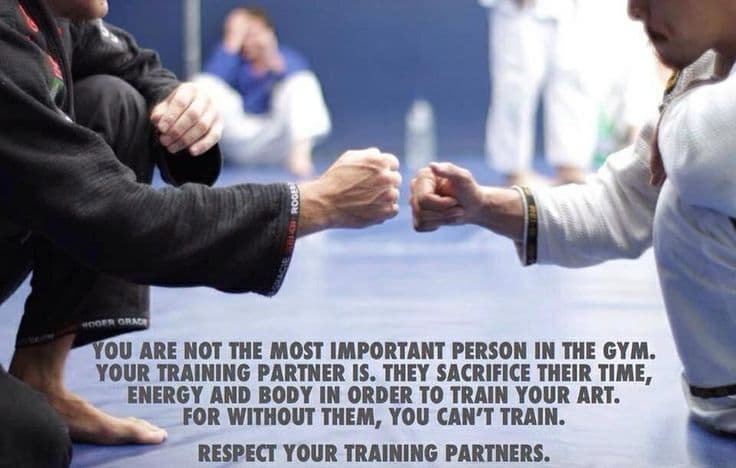
Better BJJ Rounds When Your Partner Is a Different Size
A weight gap changes a BJJ round. Use clear starting positions, agreed tasks, and controlled resets so training partners of different sizes get useful work.
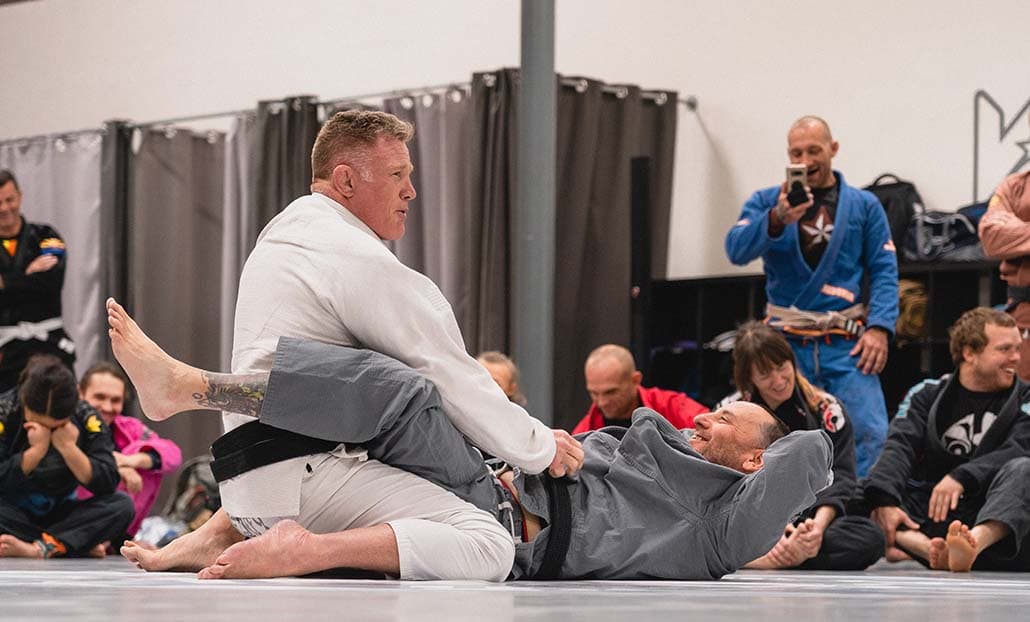
Missed BJJ classes: catch up without cramming
Find the missing piece in your gym's current material, ask a precise question, and return to practice without building a second curriculum.
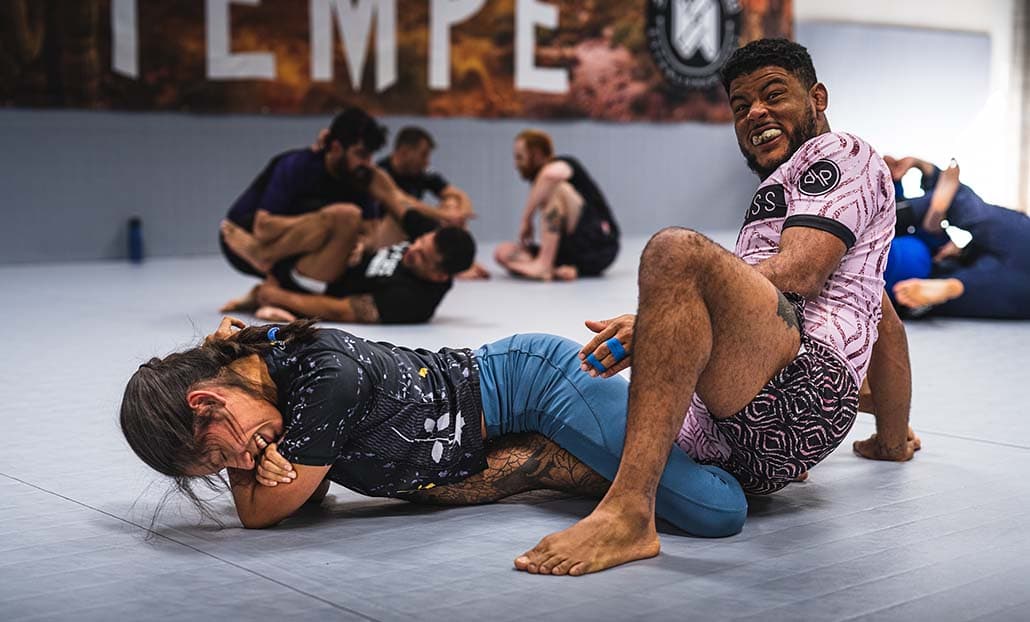
Returning to BJJ after a long break, without the audition
Plan your first month back around the life you have now, with clear expectations, manageable rounds, and a membership that fits.
Comments (0)
Loading comments...