

Borrowing a gi for BJJ: settle the small details first
Quick answer: Arrange a loaner gi before class and confirm the size, cost, permitted use, and return instructions. Check the actual fit when you arrive, then follow the owner's cleaning policy rather than assuming that taking it home to wash is helpful.
A borrowed gi can turn a visit into a training session. It can also leave you at reception holding trousers that will not stay up, five minutes after everyone else has begun the warm-up. The difference is often a short conversation that should have happened before you left home.
Loan equipment sounds like a small detail because it is rarely the reason for the trip. It still determines whether you can participate. Treat the arrangement as part of booking the class, with an actual garment and an actual return plan.
Reserve a gi rather than a general possibility
A website saying that loan equipment is available does not necessarily mean a suitable gi will be waiting for every visitor. Sizes can be limited, items may be in the wash, and several newcomers may need the same set. Ask about the specific day and class you intend to attend.
Give the host useful sizing information. Your usual brand and size can be a starting point, but include height and approximate weight if requested. Gi labels do not provide enough information to promise a fit across every manufacturer. If trousers are usually the difficult part, mention that before the reservation is made.
Confirm whether the arrangement includes a belt. A traveler who packs a favorite belt but forgets everything else has one problem; a first-time student may not own any part of the uniform. Let the host know which situation applies rather than assuming a complete set is understood.
Keep the reply with the class information. You are not preparing for a dispute. You are making it easy to find the agreed size, collection point, and staff contact when you arrive tired, late, or without the person who handled the original message.
Separate the loan from the class booking
Permission to borrow a gi is not necessarily permission to join any session on the timetable. Confirm that the class suits your experience and that visitors are accepted. A uniform solves an equipment problem; it does not establish that the lesson is appropriate for a first-time student.
Ask how the equipment charge relates to the drop-in fee. It may be included, charged separately, or handled as a deposit. Confirm what is refundable and when, without assuming that one academy's arrangement is standard elsewhere. The answer should be clear before you commit to the visit.
Check whether the gi may leave the building. A loan for one class is different from borrowing equipment for a week of travel. If you intend to attend several sessions, ask whether the same set can be reserved again or whether each visit needs its own arrangement.
If plans change, notify the host through the agreed channel. Reserved equipment may be useful to another visitor. A brief cancellation helps the person managing the stock, even when the class itself has plenty of room and no cancellation fee applies.
Allow time for the fitting-room version of reality
Arrive early enough to try the gi before instruction begins. Fasten the trousers, tie the jacket and belt, and make a few ordinary movements within the available space. Bend the knees, lift the arms, and check whether you can move without fabric becoming painfully restrictive.
Notice what the trousers do when you squat or kneel. A waistband that feels secure while standing may shift during movement. Ask a staff member how the particular drawstring is meant to be tied if the construction is unfamiliar. Guessing at the knot can create repeated interruptions later.
The jacket should allow the movements the class requires without leaving you to manage excessive loose fabric. If it clearly does not fit, say so before stepping onto the mat. Courtesy does not require accepting equipment that makes normal participation impractical.
Inspect the garment for an existing tear or loose seam and point it out calmly. That gives the host a chance to replace it and avoids uncertainty afterward. The inspection is practical, not an accusation about the academy's standards or an invitation to negotiate the fee after arrival.
Ask about the clothes underneath
Bring clean, suitable clothing for under the gi, and ask about the academy's policy before the visit. Requirements can differ between classes and organizations. A rashguard that is normal in your own room may not answer every uniform question at the host school.
If this is your first class, explain that directly. The staff can tell you which items you need to supply and which they provide. Do not rely on an outfit shown in a promotional photograph; the image may depict a different session, instructor, or competition setting.
Avoid borrowing personal items merely because the main uniform is available. Underwear and other close-fitting essentials should be your own clean clothing. Pack a change for afterward so you are not relying on wearing damp training clothes for the rest of the day.
The guide to what to wear to BJJ class covers the wider outfit. For a loaner visit, the important extra step is agreeing on the division of responsibility. Everyone should know which pieces arrive with you and which pieces are waiting at the gym.
Follow the owner's cleaning instructions
Do not assume that washing the gi at your hotel is a favor. The host may have a laundry process, a particular detergent requirement, or a preference that all equipment stays on site. A well-intended hot wash or improvised dryer cycle can alter a borrowed garment.
Ask where the used gi should go immediately after class. It may belong in a marked container rather than back on the clean shelf or inside the bag it came from. Return the complete set, including any borrowed belt, and check that your own items have not been mixed into it.
If you have permission to take the gi away, follow the supplied care instructions and agreed return time. Keep it separate from clean clothes while transporting it, then handle washing and drying as directed. A sealed bag is temporary transport storage, not a substitute for the required care.
Tell the owner if something spills, tears, or otherwise changes during the loan. Prompt information is more useful than an ambitious repair performed without permission. The person responsible for the equipment should decide how to handle it before the next student needs the set.
Have a fallback that does not pressure the host
A reserved gi can still become unavailable. The previous user may return it late, a seam may fail, or the size may prove unsuitable. Ask in advance what the host recommends if the equipment does not work out. There may be another suitable class or a different day to visit.
Keep the fallback simple:
Bring your own belt if the host requests it.
Carry the clean underlayers the class requires.
Know whether an alternative size is actually available.
Confirm any no-gi option separately rather than assuming it.
Accept that observing or rescheduling may be the sensible choice.
Avoid pressuring another student to lend a personal gi because you have traveled far. They may need it, may not want to share it, or may simply prefer not to. The inconvenience belongs to the plan, not to the nearest person wearing the right size.
If you regularly depend on borrowed equipment, consider whether a travel uniform would make future visits simpler. That is a personal packing decision, not a criticism of the host. The carry-on packing guide can help you assess the space before buying another gi for an occasional trip.
Return the arrangement as carefully as the garment
Before leaving, confirm that the equipment has been received and any deposit is being handled as agreed. Staff may be busy with the next class, so follow the process they gave you rather than leaving the gi somewhere convenient and hoping the right person notices.
Check pockets in your own clothes and the bag you used to carry the set. Belts and rashguards are easy to mix up when everyone changes at once. A quick check at the gym is easier than mailing a borrowed item home after discovering it at the airport.
Thank the person who arranged the loan. If you plan to return, ask how to book equipment next time rather than assuming the first arrangement remains open indefinitely. A repeat visitor still needs a usable size on a particular date.
The best loaner experience is usually uneventful. The clothing fits, the terms are clear, and the equipment returns to the correct place. Nobody has to remember a long explanation about which pair of trousers was yours, which belt belonged to reception, and why the jacket is still in a hotel bathroom.
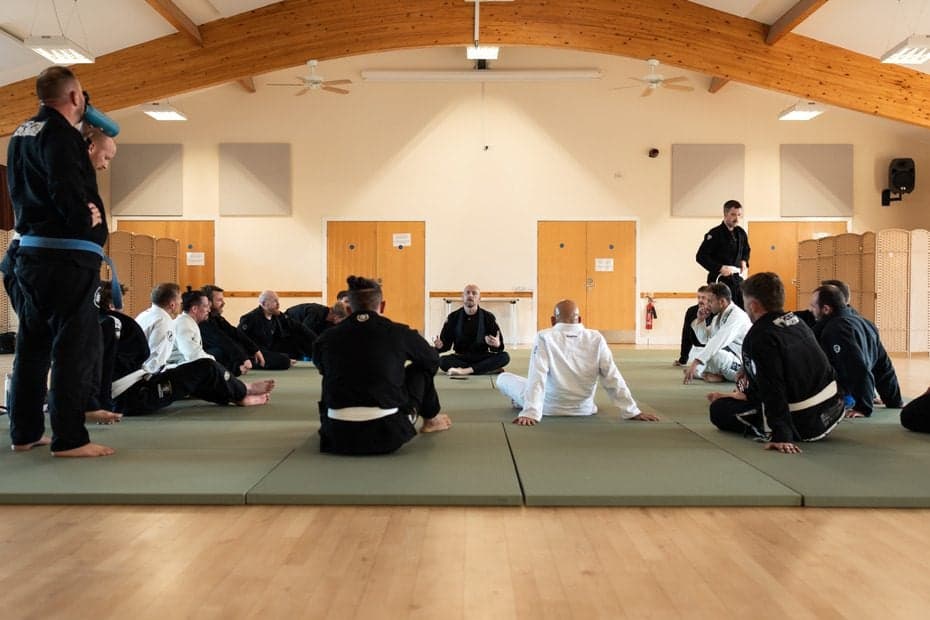
Main photo: BJJ Globetrotters; illustrative archive photograph, not a claim that their gis are borrowed.
The takeaway
Borrowing a gi works best when you reserve the actual equipment, confirm the class and charges, and allow time to check the fit. Ask what you need to bring underneath and how the host wants the used set returned.
Treat the cleaning and return instructions as part of the loan. A clear arrangement lets you focus on the class without leaving the academy to solve an avoidable equipment mystery afterward.
Confirm equipment before your next visit
Browse BJJ gyms on Let's Roll, then contact the academy directly about suitable classes and loaner availability for your dates.
FAQ
Do all BJJ gyms lend gis to visitors? No. Availability, sizes, fees, and conditions vary. Ask the specific academy before booking a class that depends on borrowed equipment.
Should I wash a borrowed gi before returning it? Only if the owner asks you to and provides care instructions. Many hosts handle their own laundry and want used equipment returned immediately after class.
Can I borrow a gi for a tournament? Ask the owner and check the event's uniform requirements separately. A gi suitable for a regular class is not automatically approved for competition or for use outside the academy.
What if the reserved size does not fit? Tell staff before class and ask about a suitable alternative. If none is available, use the agreed fallback rather than training in clothing that prevents normal movement.

Kit Langford
Kit Langford covers the louder parts of jiu-jitsu — the marketing claims, the arguments, the gear that promises more than gear can deliver. The jokes are expected to survive a fact-check.
Related Posts
Be the teammate a beginner is glad to see again
A useful welcome is mostly small things: an introduction, a clear drill, and a second class where somebody remembers your name.

Can you repair a BJJ gi? Start with what the tear changes.
A practical guide to assessing a gi tear, asking about repairs, checking the finished surface, and deciding when replacement makes more sense.
A0 BJJ gi sizing: the label is only a starting point
A0 does not mean the same fit across brands. Compare two official charts, understand long cuts, and check the garment before your first wash.
Comments (0)
Loading comments...