
A0 BJJ gi sizing: the label is only a starting point
Quick answer: An A0 BJJ gi is a size within a brand’s own system, not a universal set of measurements. Check the exact manufacturer’s chart before ordering, especially when changing brands. Compare the jacket and trousers with a gi that already fits, and ask about cut differences before washing away your exchange options.
Two gis can both say A0 and be aimed at quite different people. The label is wonderfully brief. Unfortunately, the explanation takes longer.
That matters most when you buy a replacement with the confidence of someone who has already solved this problem. Your old A0 fits. The new one is an A0. Then the parcel arrives and introduces a disagreement that neither product photograph mentioned.
Two official charts tell the story
FUJI’s men’s BJJ chart places A0 at 4 feet 10 inches to 5 feet 1 inch and 110–120 pounds. The men’s chart linked from Tatami’s size guide places A0 at 5 feet 4 inches to 5 feet 6 inches and 132–155 pounds.
Those are examples from the brands’ published guides, not a claim that every model will fit every person in those ranges. They are enough to show why transferring a label between brands can go wrong. Both manufacturers can be using their own sizing system consistently while giving you different answers.
Before comparing prices, open the chart for the specific item and the region you are ordering from. Check whether the page uses inches, centimeters, pounds, or kilograms. An old screenshot in a forum is less useful than the chart attached to the product you can actually buy.
A body range is different from a garment measurement
Height and weight charts help place you in a general range. They do not describe arm length, shoulder width, or how a particular trouser cut sits. Two people of the same height and weight can have different practical problems in the same uniform.
Garment measurements answer another question: how much fabric is there between two specified points? That sounds straightforward until one chart measures a sleeve from the shoulder seam and another uses the whole wingspan. Read the diagram before comparing the numbers.
Use a clean, flat surface and avoid stretching the garment while measuring it. Write down your method. A note that says “sleeve, 61” becomes nearly useless after you forget where you started, which unit you used, and whether you measured one arm or both.
If customer service requests photographs or measurements, follow its instructions precisely. You are trying to give the person enough information to distinguish a length problem from a width problem. A description of your favorite gi is helpful only if the comparison is clear.
A0L is not simply the next size up
Additional letters can identify a different cut within a manufacturer’s range. Their meaning should come from that manufacturer. Do not treat every suffix as an industry standard, or assume every model comes in every variation.
Tatami’s chart, for example, lists A0L alongside A0 and describes the long version as having trousers 4 centimeters longer and wingspan 5 centimeters longer. Its listed weight range remains the same. That is a specific adjustment, rather than an instruction to buy a generally larger garment.
The practical distinction is useful even when you choose another brand. If the width feels right and the length does not, ask about a longer cut. If length is right but the garment is too tight, ask about room through the relevant area. Moving blindly up a number can exchange one problem for two.
Availability also matters. An ideal chart entry is no help if the particular gi is not produced in that cut. Confirm the actual selectable size before spending half an evening comparing colors.
Borrow a reference before buying a theory
A gi that already fits you is the strongest starting point you have. Record its exact model and size, then note what has happened to it since purchase. A much-washed training gi and an unwashed shop sample are not automatically equivalent references.
If you do not own one, ask your academy whether it has a suitable sample or loaner you can try under its policy. Use the gym directory to locate a school if you are starting from scratch. Confirm any uniform requirements before choosing your first set.
A teammate wearing A0 can offer a lead, but their recommendation needs context. Ask which model they mean and what they like about the fit. “The trousers work for shorter legs” gives you something to investigate. “Best gi ever” is pleasant conversation and rather weak measurement data.
Do not buy several identical sets before trying the first. Finding the wrong fit in three colors is still finding the wrong fit, only with a more demanding returns process.
Check the unwashed gi while the decision is reversible
Read the retailer’s try-on and returns policy before opening the packaging. Keep tags and packaging as required. Do not wear the gi to practice and then assume the shop will accept it as an ordinary fitting.
A clean fitting can answer a few direct questions:
Does the jacket close comfortably over your normal clean training layer?
Can you reach forward without an obvious pull across the shoulders?
Do the trousers allow a comfortable seated position and a slow knee bend?
Does the drawstring hold the waistband without extreme gathering?
Are the sleeves and trouser legs obviously too long or short?
This is a shopping check, not a technical certification. If something feels wrong, write down where it happens. The seller can respond more usefully to “the seat pulls when I sit” than to a photograph of you standing still and looking disappointed.
Check both pieces. It is easy to become so relieved that the jacket fits that you forgive trousers you will spend the next year adjusting.
Washing should preserve the fit you chose
Use the instructions for the exact garment. FUJI’s chart recommends a cold wash and hanging to dry, and warns that preshrunk fabric can still shrink. That guidance belongs to its products; another manufacturer may specify its own care routine.
Do not count on heat to remove fabric only where you want it removed. If the trousers are wide but already short, deliberate shrinking is an especially unconvincing plan. Ask about an exchange or a different cut while those options remain available.
Once the gi is yours to keep, make a note of how it fits after normal washing and drying. Save the order confirmation and model name too. Brands sell more than one gi, and “the black one” is not a remarkably precise reference when you return to the website next year.
For secondhand purchases, ask whether the measurements are of the actual used garment. The original size chart cannot tell you how that individual gi was cared for. Photos of cuffs, seams, and the label also make the conversation more concrete.
Keep comfort, school policy, and event rules in view
A0 is a size label, not a competition approval. If you intend to compete, check the organizer’s current uniform requirements and have your coach look at the washed garment before tournament day. A product description cannot account for how the gi fits on you after use.
Avoid buying right at a questionable measurement boundary with a plan to settle it at inspection. Build time into the purchase for delivery, a fitting, an exchange if necessary, and the recommended wash. Last-minute certainty is expensive when it requires overnight shipping.
For ordinary classes, the academy’s policy is another separate question. Ask about permitted colors and any school-specific requirements before placing the order. This is a straightforward administrative detail, not a reason to guess from what happened at your previous gym.
The aim is to buy once with enough information. That may mean choosing another size, another cut, or another brand entirely. None of those outcomes is a defeat for your original search term. You wanted a gi, not lifelong membership in the A0 category.
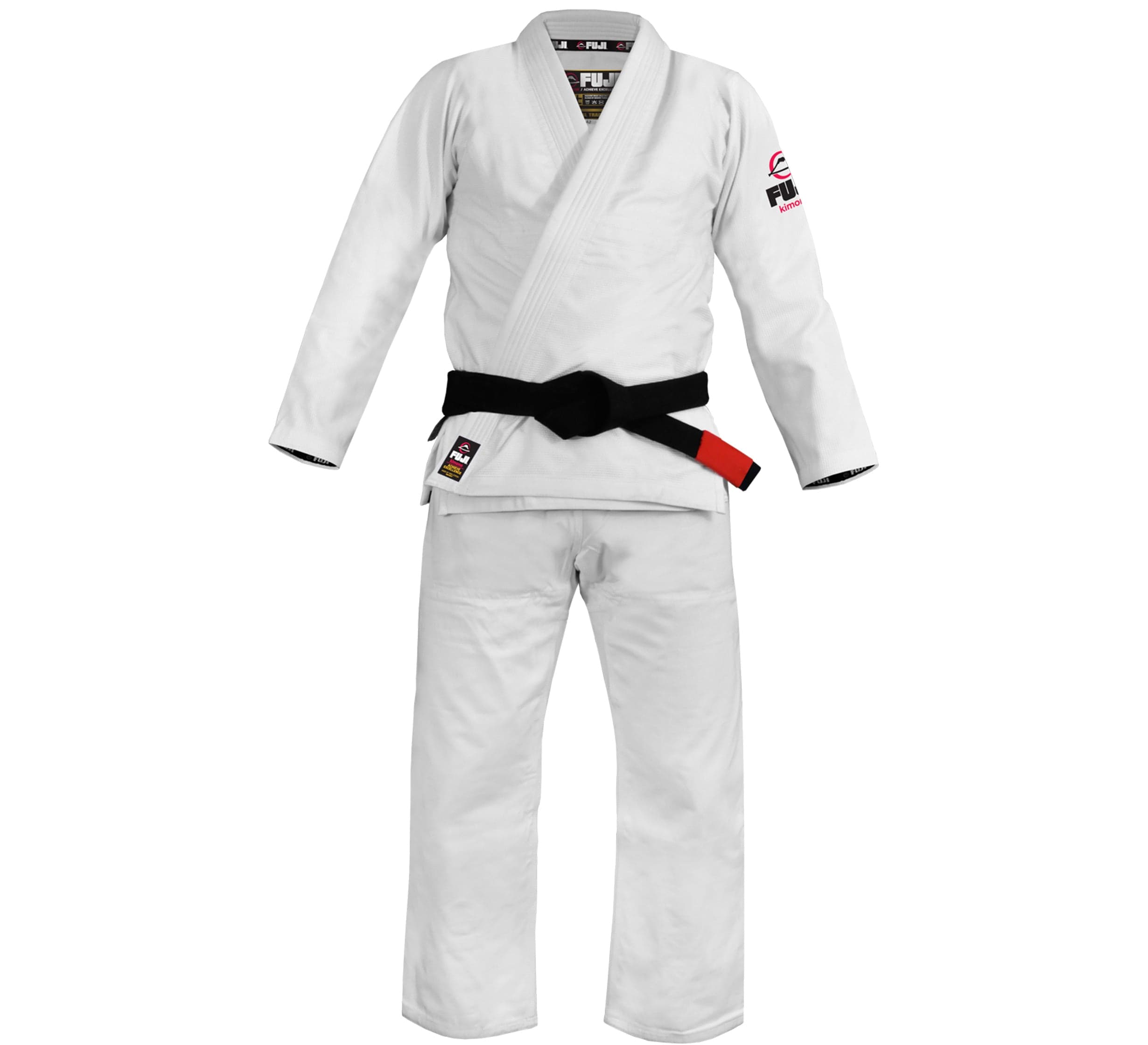
Main photo: FUJI Sports.
The takeaway
A0 makes sense inside the chart that defines it. Outside that chart, it is a hint. Compare the exact product, use consistent measurements, and separate length from width before deciding what to order.
Keep the first fitting clean and reversible, then care for the garment as directed. Once you find a fit that works, record the details. Your next purchase should begin with better evidence than a faded label and optimism.
Find somewhere to train
Browse Let’s Roll open mats, and check the host’s visitor and uniform requirements before bringing your new gi.
FAQ
What height and weight is an A0 BJJ gi for? It depends on the manufacturer and model. The official FUJI and Tatami charts give different A0 ranges, so use the chart attached to the product rather than a universal size estimate.
Is A0L just a bigger A0? A long cut can add length without the same change in width that comes with another size. Read the manufacturer’s measurements and suffix explanation instead of assuming how the cut changes.
Can an adult wear a children’s gi instead of A0? Compare the actual proportions and intended use rather than relying on the label. Confirm fit, academy policy, and any competition requirements before choosing a garment from another size range.
Should I order the same size as my current gi? Only after comparing the exact models and charts. Note how your current gi fits after washing, and give the seller that information if you are changing brands or cuts.

Kit Langford
Kit Langford covers the louder parts of jiu-jitsu — the marketing claims, the arguments, the gear that promises more than gear can deliver. The jokes are expected to survive a fact-check.
Related Posts

Mikey Musumeci gives up the belt to make room for MMA
Musumeci is vacating his UFC BJJ title to focus on MMA training. What he is leaving, what continues, and why the transition matters.
IBJJF membership: finish the paperwork before the deadline
IBJJF membership and tournament entry are separate steps. Plan documents, professor approval, renewals, and junior accounts before registration closes.
Choosing a BJJ seminar worth your time and travel
Choose a BJJ seminar by the subject, teaching format, access, and total cost. Know what to ask the host before buying a ticket.
Comments (0)
Loading comments...