
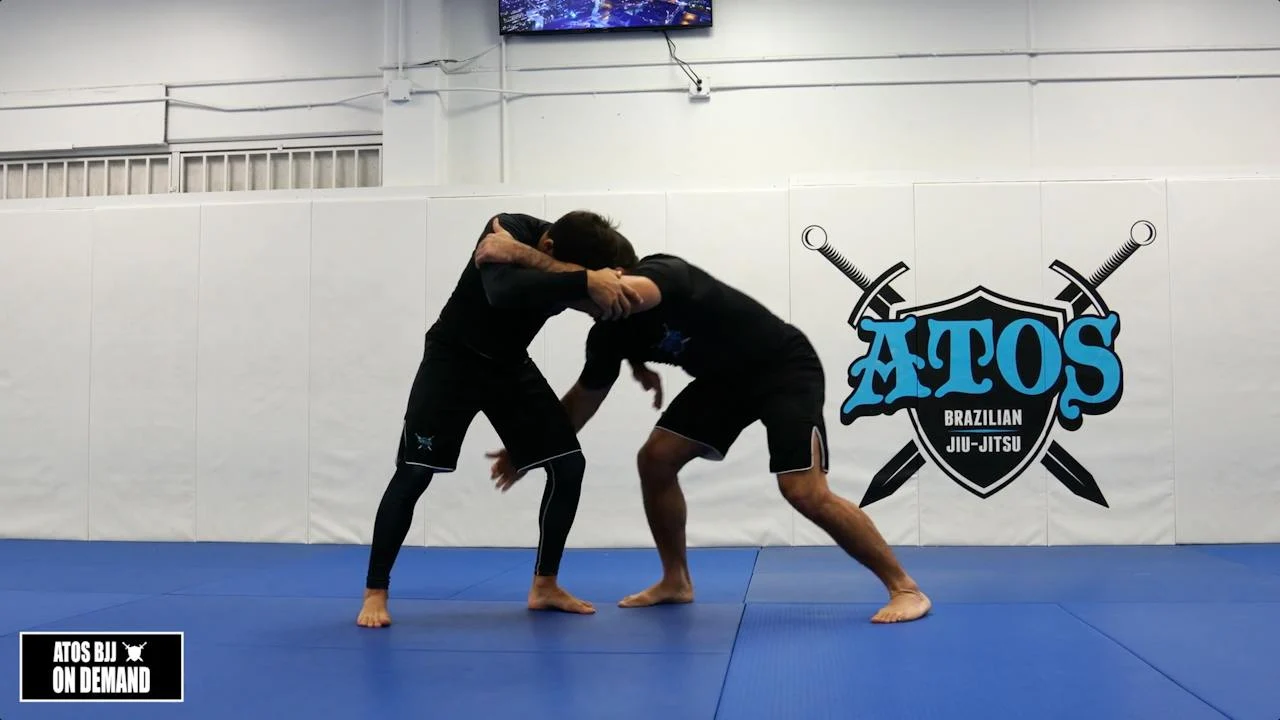
A knee tap needs an upper body that is already moving
Quick answer: A knee tap connects control or movement of the upper body with an attack on the opponent's base. Standing, front-headlock, and half-guard dogfight versions can present different starting relationships. Learn the specific entry and controlled finish with an instructor rather than treating the knee contact as a strike or a complete technique.
A hand touches the knee and nothing happens. The opponent remains balanced, and the attacker begins wondering whether the move needs a harder slap. The visible target has distracted from the less visible setup.
The knee tap makes more sense when the upper body is included in the explanation. Where is the opponent being directed? Which support are they relying on at that moment? Can they move it freely? The hand matters because of those relationships, not because the name says tap.
Begin by naming the starting position
A knee tap from a standing tie-up is not the same complete situation as one from a front headlock on the floor. A half-guard dogfight produces another arrangement again. The shared lower-body target does not erase differences in balance, grips, and the available follow-up.
USA Wrestling's Folkstyle Level 3 curriculum lists a knee tap within front-headlock counter offence. Rob Biernacki's academy lists a dogfight knee-tap lesson involving an opponent on both knees. Those references show why the starting context belongs in the name of your practice task.
Ask the instructor to identify which version is being taught. Your partner should know whether they begin standing, kneeling, or in the specific half-guard relationship. A vague agreement to practise knee taps leaves too much unspecified before anybody moves.
The upper-body control supplies the reason
A lower target can be reachable while the opponent's torso remains free to choose a different direction. Touching the knee then changes little. In the taught entry, inspect what your upper-body connection makes the opponent do before deciding how the lower hand contributes.
This does not require turning practice into a contest of shoving. Ask the receiver to move cooperatively through the demonstrated setup and identify the moment their balance changes. The coach can then show which step or post would allow them to recover.
A useful counterexample is a partner who can withdraw the target leg without changing anything above it. The original opportunity has disappeared, even if your hand remains close enough to touch the knee. Recognizing that absence is part of learning the technique. It tells you when another setup or a return to a stable position is needed.
A tap is a limiting contact rather than an impact goal
The technique's name should not encourage striking the joint. Learn the hand placement and direction your instructor demonstrates, with controlled movement and a receiving partner who knows the intended result. If the configuration is unclear, stop before trying to force the leg to move.
This is particularly relevant when students try to recreate a fast competition clip. The camera may show a brief hand movement followed by a fall, while the upper-body setup happened outside the frame or before the edit. Making the visible hand action more forceful cannot reconstruct that missing sequence.
If the receiver reports discomfort, release and ask the coach to inspect the alignment. Their stop does not require an argument about whether the action was technically a tap, a block, or another label. Practice ends when either partner signals. The next repetition begins only after the configuration and task are understood.
Learn what the other leg can do
A person balances with more than the knee you are targeting. Their other leg, hands, and torso may still support a recovery. The relevant setup has to account for the support available in that particular version.
In a kneeling dogfight example, the opponent's relationship to the mat differs from an upright standing exchange. Importing the same body movement without adjusting the rest of the position may produce a completely different result. Let the coach show the difference instead of asking the partner to fall in the expected direction.
Our half-guard dogfight article explains why coming onto the knees is an intermediate position. A knee tap can be one action available from a specific configuration there. It is not evidence that every dogfight should end the same way or that the opponent's free support has stopped mattering.
Include the landing and the next position
The receiving partner needs a taught way to follow the balance change. The attacker needs to know where to arrive. Agree on both before practising a finish, especially if the lesson begins standing.
A controlled repetition can stop before the full landing while the pair learns the setup. Another can include the descent and a stable checkpoint afterward. The instructor should decide which progression fits the partners and the space. A modest-looking takedown still moves two bodies toward the mat.
The positions guide can help name the resulting arrangement. It cannot tell you where a particular knee tap must finish. Ask your coach which connection should remain during the move and what the receiver is permitted to do once the new position appears. Otherwise the repetition may become a scramble with no shared ending.
Test one defensive step rather than every possible counter
A narrow drill can make the knee-tap decision readable. Begin in the exact configuration from the lesson and give the defender one agreed recovery. The attacker may recognize the opening, complete the coached movement, or abandon the attempt when the setup is gone.
Here is an editorial practice outline to adapt with the instructor.
Name the upper-body connection and the lower target.
Give the receiver one permitted step or post.
Stop at the taught arrival, a lost setup, or either person's signal.
This prevents the receiver becoming a falling mannequin and prevents the attacker having to solve every possible response at once. Add another defence when the first exchange can be described clearly. There is no useful universal repetition count hidden in the technique name.
Review the moment before the hand arrives
If the attempt fails, watch the upper body first. Did the setup actually move the receiver? Was the target still part of the supporting base when the hand arrived? Did the attacker release a controlling grip to reach down before another connection took over?
Those observations lead to different corrections. The hand can miss because the setup never existed, because it changed, or because the attacker selected the wrong target. Describing all three as bad timing makes the next lesson harder to focus.
For a brief practice note, name one visible change and one question for the coach. For example, the receiver could post with the near hand while you reached for the knee. You do not yet know whether the correction is a different setup or a different response to that post. Keeping the uncertainty visible gives the instructor room to answer the actual problem.
Do not use the name as a cue to hurry the receiving partner. Their understanding of the intended direction is part of the exercise. If the setup changes and you want to attack another leg or turn the exchange elsewhere, stop and agree on that variation first. A familiar lower-body target can still produce a new landing.
Main photo: live.atosbjjondemand.com (source publisher; photographer not identified). Atos instructional still from its Knee Tap Takedown class, recorded January2022.
The takeaway
Study the knee tap through the upper-body action and the supporting base it changes. The low hand is part of that relationship. Identify the version, understand the receiver's available recovery, and learn the controlled arrival before adding speed or resistance.
At the next suitable class, ask to compare an available knee-tap opening with a nearly identical position in which the opponent can freely step or post. Learning the difference gives you a decision you can use. It is more informative than asking a partner to absorb a harder hand movement until something falls.
Find a suitable supervised class
Use Find gyms to locate an academy, then ask which session fits your experience and the standing or positional skill you want to learn. Confirm visitor access and the actual class arrangements directly with the host.
FAQ
Is a knee tap the same move from standing and half guard? The techniques share a lower-body target, but their starting base and upper-body connections can differ substantially. Identify the exact version before combining instructions. A dogfight lesson and a standing entry do not supply interchangeable details automatically.
Should I slap the knee harder if the technique fails? No. The upper-body setup, direction, or available support may be the unresolved problem. Ask the instructor to inspect the position and use the controlled hand placement being taught. Increasing impact cannot replace the missing balance change.
Can we practise without completing the takedown? Yes, if the instructor agrees on an appropriate checkpoint. A setup exercise can end when the intended off-balance is clear. The landing and arrival can then be taught separately before the partners join the full movement at the agreed pace.
What should I write down after an unsuccessful attempt? Record the upper-body connection, the defender's recovery, and the moment the low hand moved. One specific observation gives the coach something to inspect. A note that the knee tap never works leaves the important sequence out.

Nina Okada
Nina Okada explains positions the way a good training partner does: one problem at a time, with the limits of the explanation said out loud. She is careful about the difference between what footage shows and what it only suggests.
Related Posts
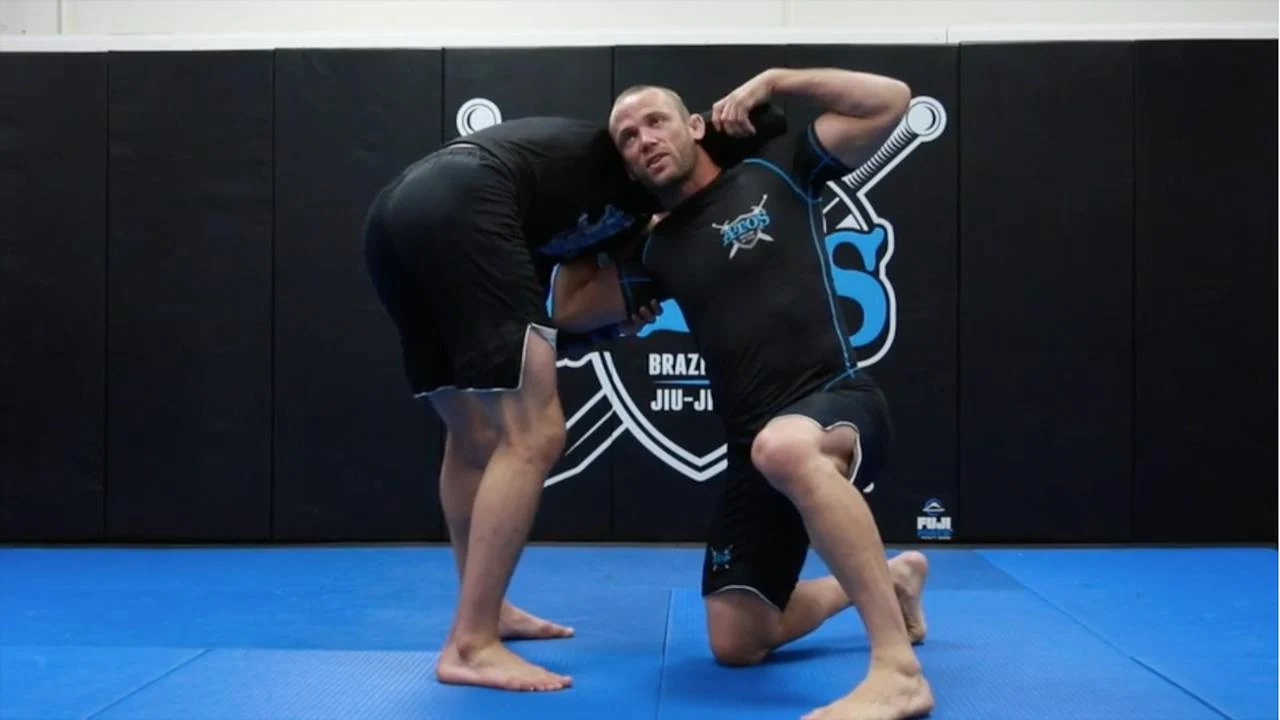
A duck under needs you to arrive somewhere useful
Getting your head beneath an arm is only part of a standing duck under. Study the setup, the angle, and the connection you need on the other side.
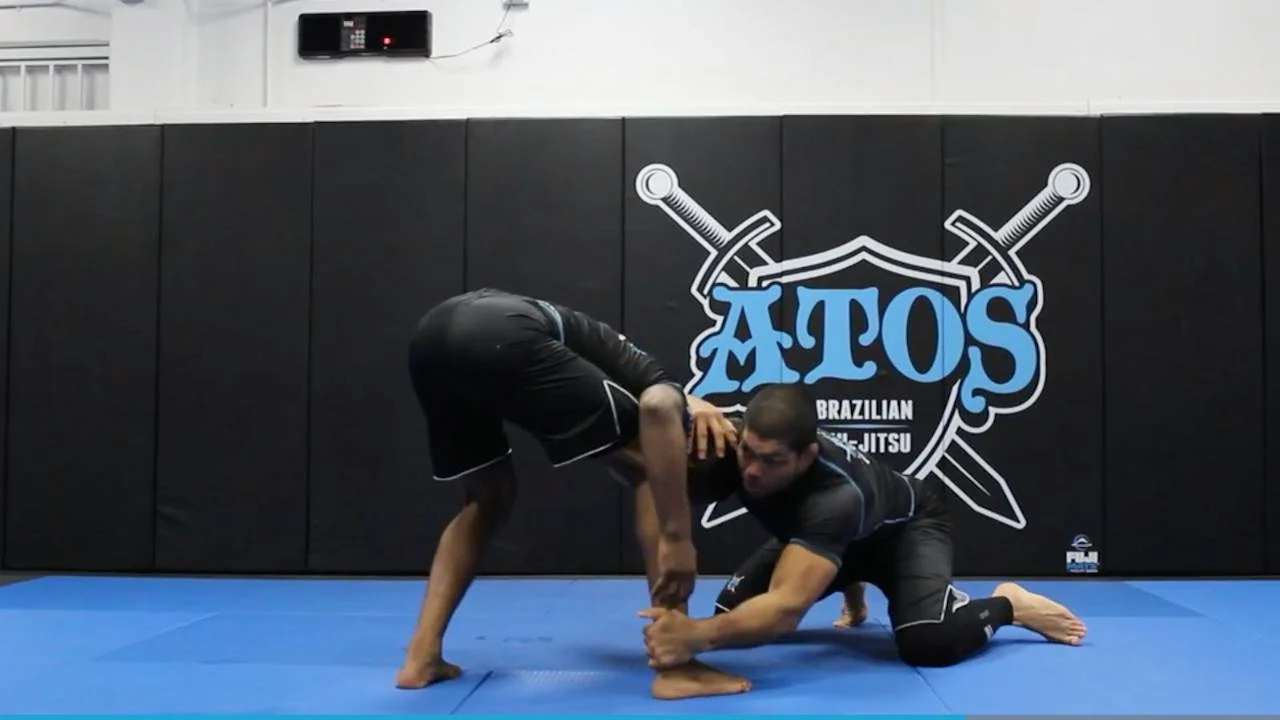
The ankle pick starts above the ankle
An ankle pick is a balance problem before a low reach. Study the upper-body connection, the available step, and the controlled arrival on the mat.
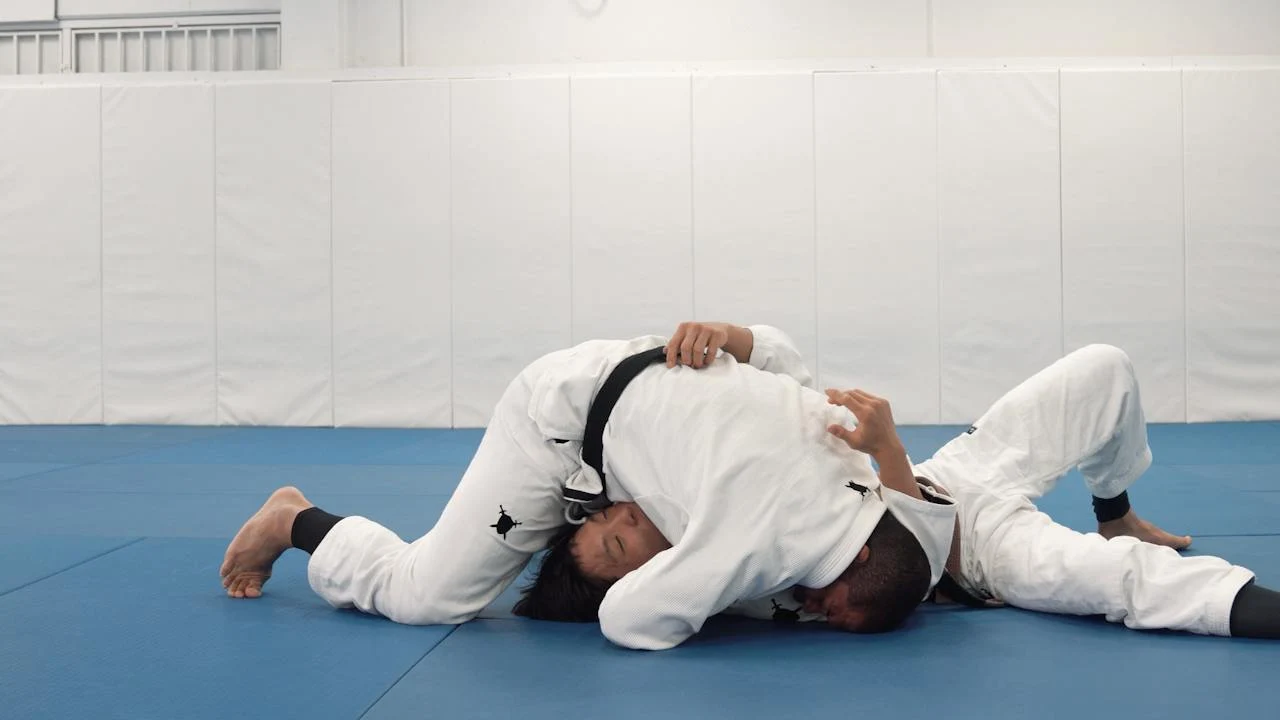
The paper-cutter choke starts with the arm beneath the pin
Study the paper-cutter choke by following the controlling arm, the collar connection, and the defender's frame before the finishing pressure.
Comments (0)
Loading comments...