
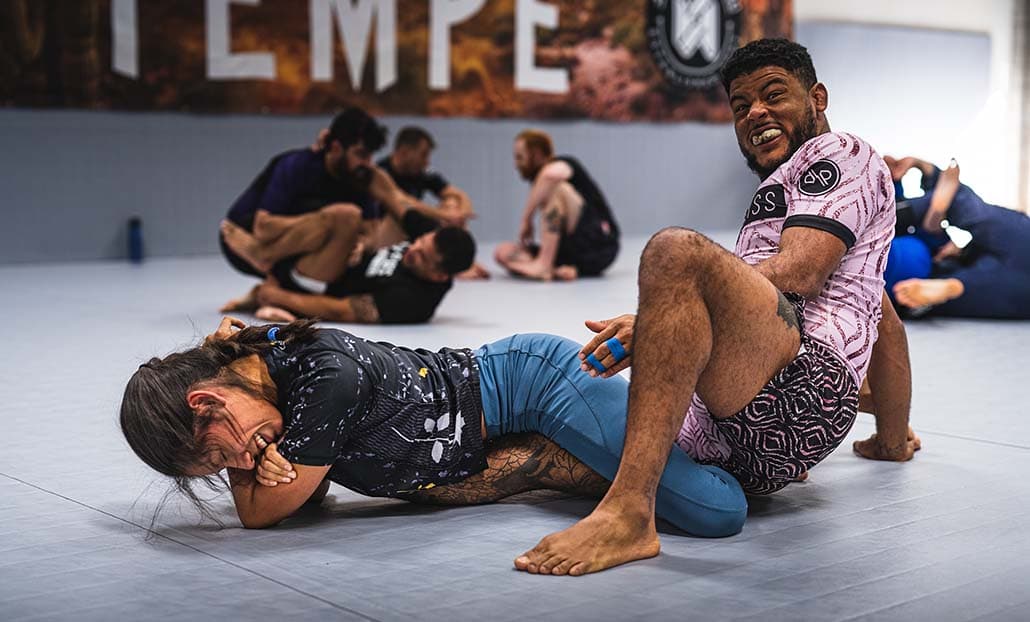
Returning to BJJ after a long break, without the audition
Quick answer: Returning to BJJ after a long break starts with choosing a workable class and telling the instructor how long you have been away. Keep the first sessions manageable and agree on the pace with your partners. Your belt records previous progress; it does not require you to reproduce your old training schedule immediately.
Your old gi can be hanging in the same cupboard while almost everything around it has changed. Different working hours. A child who needs collecting. A gym timetable that no longer matches the one you remember. The first problem to solve is getting through the door on an ordinary week.
There is no need to make your return a public event. A message to the academy and a clean set of training clothes are enough to begin. The useful question is what would let you attend again next week, after the excitement of being back has worn off.
Contact the academy before packing your bag
Tell the instructor roughly when you last trained, your previous rank, and which class you hope to attend. Ask whether that session suits someone returning after time away. A fundamentals class may be useful even if its name sounds below your old level. The point is to get appropriate instruction, not to defend a position on the timetable.
If you are returning to your previous school, check that your membership actually covers the visit. An old direct debit, a frozen account, and an expired agreement are different arrangements. The Atos headquarters FAQ directs members back to their membership agreements for policy details. That is a useful reminder to ask your own school about its terms rather than assuming a former arrangement still applies.
If you are joining somewhere new, explain your training history plainly. You do not need to arrive with a speech about why you left. Give the coach the information needed to place you in class and help you find suitable partners.
Build the schedule from your current week
Choose the sessions you can attend without borrowing time you do not really have. Two attractive classes that clash with a regular work obligation are less useful than one dependable evening. Write down the travel time as well as the class time. Include changing and the journey home.
For a hypothetical first month, you might choose one fixed class each week and leave a second as optional. That is a planning example, not a training prescription. Someone with a different background or more available time may choose differently. What matters is knowing which commitment is firm and which depends on the week cooperating.
Do not make up for the absence by promising attendance every day. You have already lived through the reasons training became difficult. Use that information. If evening meetings repeatedly interfered before, look at the morning timetable before buying a membership around the same evenings again.
A realistic training routine gives the return somewhere to settle. It also makes a missed optional session feel like a normal scheduling decision instead of the collapse of an ambitious comeback.
Give your partners information they can use
A partner cannot infer your recent training history from the color of your belt. Before a round, explain that you are returning after a break and would like a controlled pace. Be specific about what you want to do. Asking to work from a familiar position is clearer than assuming you share the same meaning of going light.
You can also ask the instructor to suggest a partner. This is particularly useful in a room where you know nobody or where the regular group has changed. The coach can help organize a sensible session without requiring you to negotiate every pairing alone.
If the round becomes more intense than agreed, stop and reset the agreement. You are allowed to end it. Neither politeness nor rank requires you to finish a round that no longer suits the session you came to do. Discuss any injury, symptoms, or medical restrictions with an appropriate clinician; a training partner cannot provide clearance.
Try to be an equally useful partner in return. Communicate early, release submissions promptly, and follow the instructor's directions. Returning cautiously does not mean expecting somebody else to read your mind.
Separate remembered knowledge from current execution
You may recognize a position before you can move through it smoothly. That gap can be irritating. It is also useful information: you know what you are trying to do, and you can identify the part that now needs practice. Ask about that part instead of treating the whole round as a verdict on your ability.
For example, you might remember the intended finish of a guard pass but keep arriving with your weight in the wrong place. Tell the coach where the sequence breaks down. A short adjustment to the entry may be more useful than collecting three alternative finishes because the original one feels rusty.
Keep the first questions narrow. Where should your head be? Which grip needs to change? What should make you stop trying that movement? Work on the answer during cooperative practice before deciding whether you can use it against resistance.
An old competition result cannot answer those questions for you. Neither can a difficult round erase the work behind that result. The practical task is to find your present starting point and choose something you can work on from there.
Inspect the equipment you kept
Put the gi on at home before you need it for class. Tie the belt. Move your arms and sit down. Check the seams and closures rather than relying on the fact that everything fitted when it went into storage. If the fit has changed, buy for your current size without turning the label into a personal assessment.
Pack a small bag you can actually keep ready:
Clean training clothes that fit the class format.
A belt, if the session requires one, and any academy-specific kit.
Water, footwear for off the mat, and a bag for used clothing.
What you need to change afterward and get to your next commitment.
Check the school's uniform rules before buying replacements. Some academies accept a broad range of gear; others have particular requirements. A short question can prevent an unnecessary purchase.
Leave the equipment overhaul until you know what is missing. Your return does not require a new bag, three rashguards, and a subscription to a program you have not opened. Replace the item that stops you training comfortably. The rest can wait until you have a reason to use it.
Judge the first month by a small set of observations
After each session, make a brief note of what worked logistically and what you want to ask next time. Did the class fit your evening? Could you follow the instruction? Did the agreed round pace remain workable? These observations help you adjust the plan without needing to compare yourself with a former version of you.
If one class repeatedly causes a rushed departure, try another before concluding that the whole return is impractical. If the instruction feels too advanced, ask about a different session. If partner selection is difficult, speak to the coach. Those are specific problems with possible changes attached.
Give yourself permission to enjoy familiar parts of the room too. You may remember a training partner, a sequence, or simply the relief of putting your phone away for class. You do not need to convert every pleasant session into a progress report.
At the end of the month, decide whether the schedule is sustainable. Add attendance because the existing arrangement works and you want more of it. Avoid adding sessions merely because your old routine contained them. You are building a training week that belongs to the present.
Let the social return happen gradually
People may ask where you have been. A short answer is enough. Work became busy, family needed the time, or you took a break. You can share more if you want, but a training room is not entitled to the private details behind an absence.
At the same time, expect some relationships to need a little rebuilding. New members will not know your old routine. Familiar teammates may attend different classes. Introduce yourself, ask names, and take the room as it is now rather than checking every difference against your memory.
If you have changed academies, resist the temptation to explain each drill through the methods of your previous school. Ask how the new instructor wants the movement practiced. You can discuss differences at a useful moment without making every lesson a comparison.
The first session may feel awkward and still be worth repeating. Give it enough space to become an ordinary activity again. That usually requires less announcement and more attention to the next available class.
Main photo: BJJ Globetrotters; archive training-camp photograph.
The takeaway
Arrange a suitable session, check the membership and equipment details, and tell the instructor what has changed. Choose a pace you can discuss clearly with your partners. Those steps make returning to BJJ a practical appointment rather than an audition for the rank you already hold.
After a few visits, review the schedule and the training questions separately. Fix the journey or the class choice where needed, then work on the specific positions that need attention. There is no requirement to solve both parts in your first hour back.
Find a class that fits now
Use the gym directory to find nearby academies, then contact the school about an appropriate class for your return.
FAQ
Should I wear my old belt when I return to BJJ? Tell the instructor your established rank and training history before attending. Follow the academy's guidance; time away alone is not a reason to invent a different rank for yourself.
Do I need to get fit before going back? Ask the instructor about a manageable first session. If you have health concerns, symptoms, or restrictions, discuss them with a clinician rather than using this article as medical clearance.
Should I start with the advanced class? Choose the class that gives you useful instruction and appropriate practice. Your previous rank does not make a fundamentals session unhelpful.
What if my first class goes badly? Identify what went wrong specifically: timing, partner pace, unfamiliar material, or something else. Discuss a change with the instructor before treating one session as a reason to abandon the return.

Owen Bellamy
Owen Bellamy writes for the person training twice a week around a job. Nothing he suggests requires quitting the job.
Related Posts

Mikey Musumeci gives up the belt to make room for MMA
Musumeci is vacating his UFC BJJ title to focus on MMA training. What he is leaving, what continues, and why the transition matters.
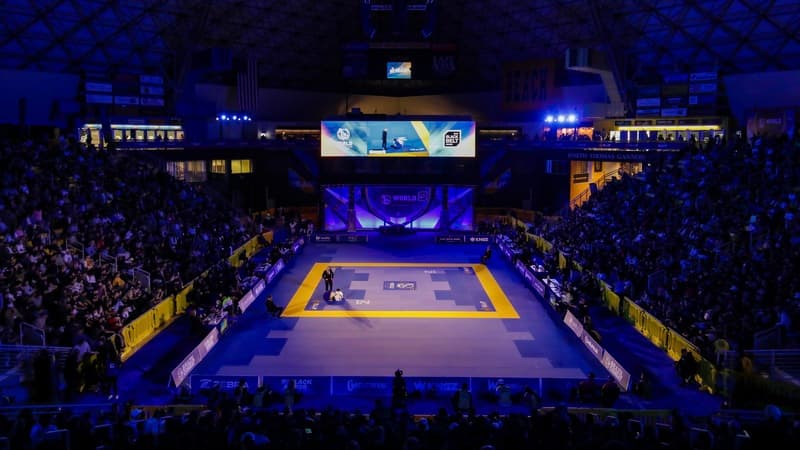
IBJJF membership: finish the paperwork before the deadline
IBJJF membership and tournament entry are separate steps. Plan documents, professor approval, renewals, and junior accounts before registration closes.
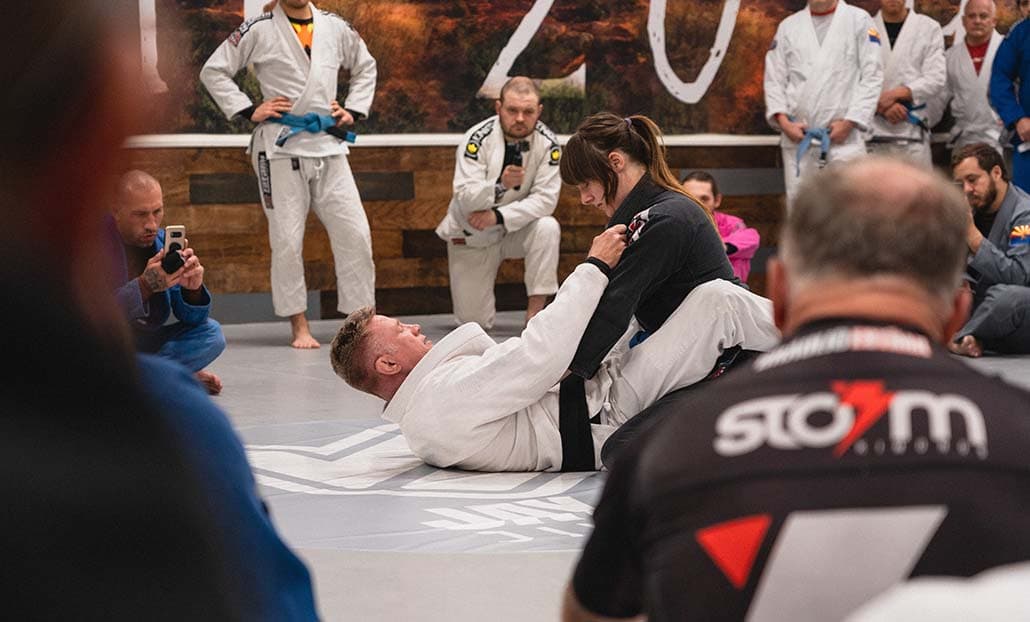
Choosing a BJJ seminar worth your time and travel
Choose a BJJ seminar by the subject, teaching format, access, and total cost. Know what to ask the host before buying a ticket.
Comments (0)
Loading comments...