

Sharing a room at BJJ camp: agree on these things first
Quick answer: Choose a BJJ camp roommate by comparing sleep habits, room costs, and expectations for shared space before booking. Confirm whether accommodation is included in the camp ticket and who is responsible for the reservation. Sharing a room can work well without requiring you to share every class, meal, or evening plan.
Two people can want the same BJJ camp and very different versions of midnight. One wants the lights off. The other has just found a group going out for food. Neither preference is unusual, but a shared room makes the difference everybody's business.
The useful conversation happens before a deposit changes hands. You are choosing somebody to share a small living space during a training trip, not just somebody whose guard you enjoy passing. A good training partner may still have a completely incompatible alarm clock.
Start with the room itself, then discuss the week you each hope to have. Most of the awkward details are easier to settle while another booking remains possible.
Establish what the camp ticket actually buys
Don't assume that a residential-looking camp advertisement includes a bed. Check the booking terms for that specific event. BJJ Globetrotters' camp directory, for example, distinguishes camps where accommodation and meals are included from formats where arrangements differ. That is a reason to read the individual listing, rather than carry an assumption from one camp to another.
If the organizer assigns shared rooms, ask how roommate requests work and whether they are guaranteed. If accommodation is separate, the hotel or host controls its own booking. A confirmed training place doesn't necessarily reserve a room, and a room reservation doesn't enroll you in the camp.
Write down the exact arrangement you are considering. Two separate beds is more specific than a room for two. Check bathroom access, occupancy limits, and whether the advertised rate applies to the entire room or each person.
These details belong in your camp budget before comparing prices. A cheaper-looking option stops being a useful comparison if it includes fewer nights or requires a separate booking you haven't counted.
Talk about the hours when you won't be training
A roommate conversation can begin with ordinary habits. When do you expect to go to sleep? Do you want an early alarm? Will either person need to take work calls in the room? You don't need a complete autobiography, but you do need information that affects shared space.
Be direct about the things you already know. If you plan to work remotely every morning, say so before somebody imagines using the room for quiet recovery. If you want to spend most evenings socializing, explain how you would return without waking the other person.
Ask about comfort with temperature, light, and background noise. Avoid promising that you'll suddenly become an easy sleeper or stop needing a morning routine for the duration of the trip. A booking should fit recognizable habits, rather than a more convenient version of yourself invented during planning.
You can like someone and decide not to room together. That decision is easier to make before arrival, and it needn't affect whether you train or have dinner together. Compatibility for a week of lodging is a specific question.
Put the payment arrangement in writing
One person often makes the reservation because it is simpler than coordinating two separate bookings. That convenience should not leave the financial arrangement vague. Agree on what each person pays and when, then save the message alongside the confirmation.
Use a short checklist before anyone commits money:
Total accommodation cost, including any known taxes or mandatory fees.
Each person's share and the currency used for payment.
Who holds the reservation and communicates with the property.
What you agree to do if one person cancels or leaves early.
The last point deserves care. Your private agreement doesn't change the property's cancellation terms. Read those separately. A replacement roommate may also require the host's approval, and a camp ticket transfer may follow another process entirely.
For a hypothetical example, splitting a room equally means each person initially budgets half the agreed room cost. It does not automatically mean the remaining traveler owes the whole bill if the other withdraws. Decide how you want to handle that situation while both people can still choose whether to book. Avoid discovering two different interpretations when a flight has already been cancelled.
Give wet equipment a plan of its own
Two grapplers can produce a substantial amount of laundry in a small room. Ask the property about washing and drying facilities rather than assuming a bathroom can serve as an equipment room. Check where damp items may be placed and what the room rules permit.
Keep used training clothing separate from clean belongings. Don't spread it across your roommate's chair, bed, or suitcase while deciding what to do. Agree on the space available to each person, and make the laundry plan before the first late session leaves both of you with wet gear.
If you intend to use a laundry service, confirm opening hours and turnaround directly. A service that returns clothes after checkout won't solve tomorrow morning's gi problem. Our guide to hotel laundry for BJJ trips covers those timing questions in more detail.
Consider the return trip too. Pack a way to separate used equipment from other belongings. Your roommate's extra bag isn't automatically shared storage, and the room's furniture isn't a drying rack unless the property says it can be used that way. Small arrangements prevent a practical problem from becoming a personal complaint.
Sharing a room doesn't merge your schedules
You may choose different classes. One person may skip an afternoon session, while the other stays for open mat. BJJ Globetrotters' description of its camp format explicitly presents participation as a choice; the broader point is to check your own camp's structure and make your plan accordingly.
Agree on access to the room so separate schedules are possible. Confirm the available keys or access method with the property. Don't leave someone waiting outside because the only key went to a restaurant across town.
Meals deserve the same flexibility. You can arrange a dinner together without requiring every meal to be a joint decision. If one person wants a quieter evening, they shouldn't need to invent an excuse to avoid joining the group.
A little separation can also make coordination simpler. Decide which plans require a message and which don't. You might want a heads-up about returning late, while having no need to report every change of class. Shared accommodation requires consideration; it doesn't require a minute-by-minute account of the other person's holiday.
Agree on guests and photographs before either arrives
A shared room is a private space for both occupants. Ask before inviting somebody else in, even if they are a friendly person from camp. The other roommate may be changing, working, or simply expecting the room to stay quiet.
Follow the property's guest rules as well. Your roommate's agreement doesn't override occupancy limits or access policies. Keep social plans in common areas when that is the simpler option.
The same courtesy applies to photographs and video calls. A room full of travel gear can reveal documents, belongings, or someone in the background who didn't agree to be shown. Ask before recording or posting. Don't turn a roommate's ordinary downtime into content for the camp group chat.
These conversations don't need an accusatory tone. Treat them as practical planning, like deciding who has the booking confirmation. The goal is to avoid making one person negotiate privacy after the situation has already been created. An agreed boundary is much easier to follow than a boundary nobody knew existed.
Fix the first small problem while it is still small
If something isn't working, describe the specific issue and propose a workable adjustment. An alarm waking you repeatedly is easier to discuss than an accusation that your roommate is inconsiderate. A crowded drying area can be reorganized without reviewing every annoyance from the previous three days.
Choose a reasonable moment. Trying to settle room arrangements while one person is rushing to class can produce an answer neither has considered. A short conversation after training may be enough: this arrangement is waking me; can we change where the phone sits or how the alarm is used?
Some differences won't be solved by better wording. If sharing is clearly unworkable, check other accommodation options and the cost before promising a move. Contact the organizer or property about problems within their responsibility. Don't assume they can produce an extra room immediately or refund a privately arranged booking.
Keep the financial agreement visible if plans change. A calm, written update is more useful than leaving both people to remember an uncomfortable conversation differently. You can revise the arrangement without treating the whole trip as a mistake.
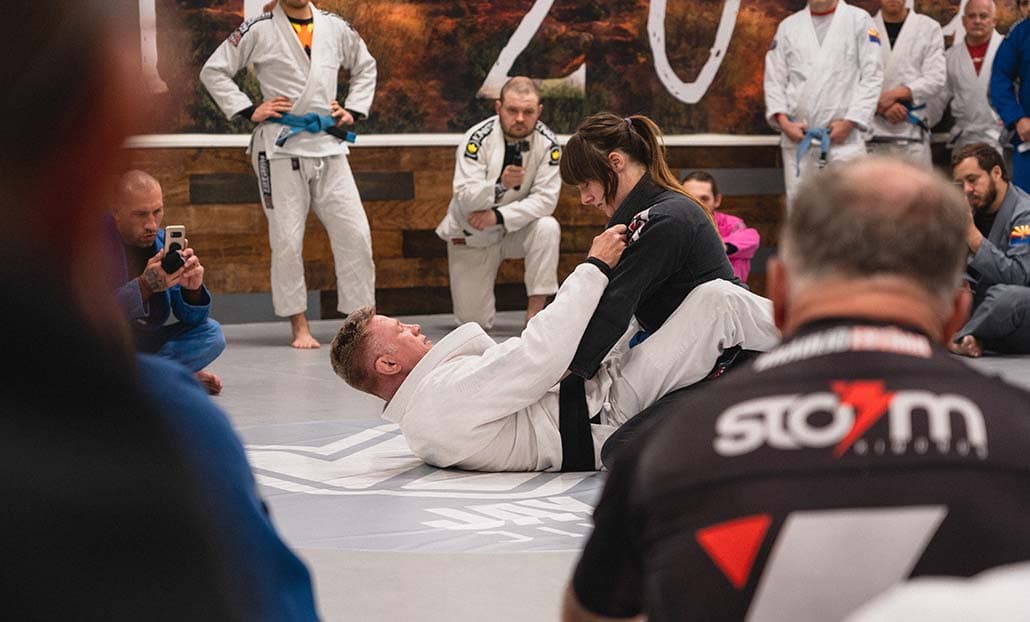
Main photo: BJJ Globetrotters; illustrative archive photograph.
The takeaway
Choose the roommate and the room together. Check what the ticket includes, confirm the beds and access, then agree on sleep, payment, and equipment. Those details will affect the week more directly than a shared enthusiasm for the same seminar instructor.
Leave room for separate plans. A successful room share can mean training together some days, eating separately on others, and returning to a space both people can comfortably use. The agreement only needs to support that week, not prove that you travel identically.
Plan the training around the trip
Browse open mats on Let's Roll for sessions before or after camp, then confirm visitor access and timing directly with each host.
FAQ
Should I share with someone I haven't met? That is a personal choice. Have a direct conversation about the booking, daily habits, and shared-space expectations first. Use the organizer's official process where available, and avoid committing money on the strength of a vague group-chat introduction.
Does a BJJ camp ticket include accommodation? Sometimes. Check the individual event's booking details rather than assuming all camps from the same organizer use the same arrangement. Confirm the number of nights and room type before paying.
Do roommates need to attend the same sessions? Usually a shared room doesn't require identical training plans, but check the camp's structure. Arrange room access so either person can return independently and agree when schedule changes need a message.
What happens if one roommate cancels? The property or organizer's terms govern the reservation, while your private payment agreement governs what you have agreed between yourselves. Discuss that possibility before booking and get approval for any replacement occupant where required.

Maya Corbett
Maya Corbett answers the questions you have before walking into an unfamiliar academy — what to book, what to bring, who to ask. Every detail in her guides traces back to something the gym published itself.
Related Posts
Choosing a BJJ seminar worth your time and travel
Choose a BJJ seminar by the subject, teaching format, access, and total cost. Know what to ask the host before buying a ticket.

Claudio Calasans and the second bracket of ADCC 2015
Claudio Calasans won gi Worlds and ADCC absolute gold in 2015. The separate brackets tell a better story than a simple comeback slogan.

A university BJJ club needs a plan for after graduation
Keep a university BJJ club running after graduation with clear coaching arrangements, newcomer information, and a practical committee handover.
Comments (0)
Loading comments...