
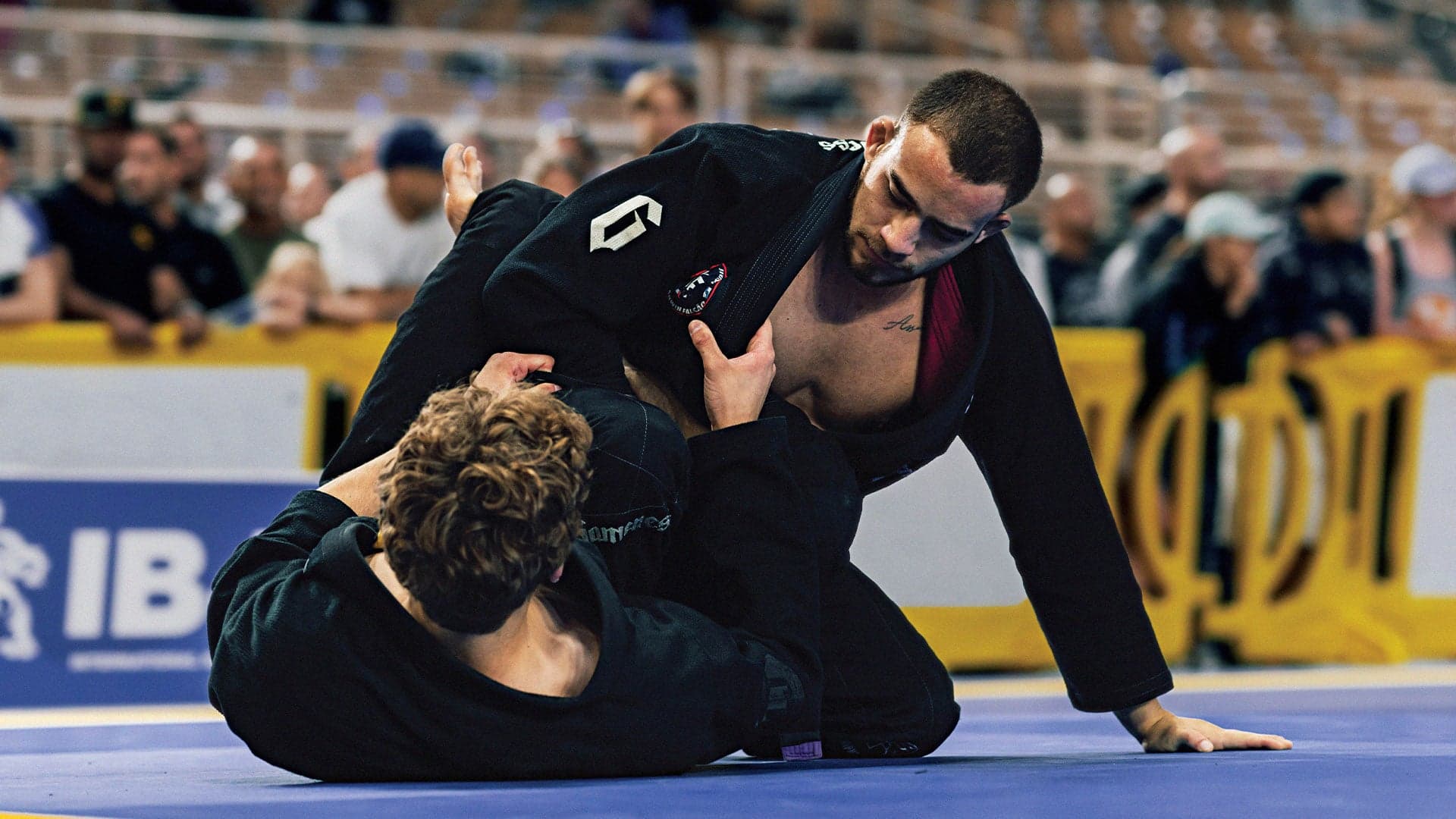
Starting BJJ as a wrestler: keep your skills, learn the rules
Quick answer: A wrestler starting BJJ should keep useful standing and top-control skills while learning the new rules, guard relationships, and submission threats. Tell the instructor your background, begin with controlled tasks, and treat unfamiliar bottom positions as material to learn rather than evidence that earlier training was wrong.
Being good at one grappling sport can make the first week of another surprisingly confusing. You recognize movement, balance, and pressure. Then a partner chooses to sit down, offers a position you would normally avoid, and appears pleased with how the exchange is developing.
The answer is not to forget how to wrestle. It is to learn what the new environment asks you to do with those skills. A useful introduction makes room for both: the ability you bring and the unfamiliar decisions that BJJ adds.
Tell the coach what your background actually includes
Give the instructor a concise account of your wrestling experience. Years, recent training, and the format you practiced are more useful than saying you used to wrestle and leaving everything else to interpretation. A long gap since competing also belongs in the conversation.
Then say clearly that you are new to BJJ. Strong movement in one area can make a beginner look more familiar with the whole class than they are. The coach needs to know which techniques, terms, and submission procedures still require an introduction.
This is not an application for a belt or an invitation to prove yourself in the first round. It is information that helps the instructor choose partners and tasks. A student can have substantial grappling experience while needing basic instruction in a different ruleset.
Ask how the academy introduces live work and what is permitted at your present level. Follow that answer rather than importing the conventions of a previous wrestling room. The most useful first impression is being easy to teach and communicate with, not appearing to know a position you have never studied.
Read the new rules before judging a decision
A movement can make sense under one set of rules and require adjustment under another. Learn what the event or class recognizes as a useful outcome, what submissions are included, and which actions are restricted for your division or experience.
Our guide to IBJJF rules provides a starting point for one competition framework. It does not replace the host’s instructions or establish the rules of every BJJ promotion. If competition is your goal, identify the actual organizer before building a match plan.
For ordinary class, ask the coach what the exercise is intended to teach. A positional drill may deliberately begin in a situation that would never be your preferred competitive choice. Its purpose can be to develop an escape or control skill, rather than reward the best opening decision.
Avoid declaring a position good or bad before understanding the task. A seated guard player may be practicing a valid part of the lesson. A partner accepting bottom position may be following an assignment. Learn the local question before evaluating the answer through a different sport’s scoreboard.
Top position still requires a plan
Wrestling experience may provide useful balance, pressure, and movement on top. In BJJ, those skills need to operate alongside awareness of the guard and submissions. Arriving above the other person is not the end of the technical problem.
Ask the instructor to identify the guard positions you encounter most often in beginner classes. Learn where the bottom player’s useful connections are and what the passing task is intended to remove. This gives your existing top movement a clearer destination.
Do not attempt to solve every unfamiliar connection by increasing pace or force. A partner’s sleeve grip, leg position, or frame may require an explanation you have not received yet. Pausing to ask can save several rounds of repeating the wrong response more energetically.
A good early goal is to recognize the position before trying to win it. Name the guard, identify the coach’s starting control, and practice the assigned pass cooperatively. Familiar physical skills then have a specific technical job instead of being used to search blindly for one.
Learn bottom positions without arguing with your instincts
A wrestler may find some BJJ bottom positions unfamiliar or uncomfortable. That is a reason for structured instruction, not a reason to reject every movement that differs from previous training. Begin with the position and purpose the coach explains.
In a cooperative lesson, separate maintaining a guard relationship from escaping a pin. They are different tasks. The bottom player may need to create connections in one exercise and remove control in another. Treating every moment underneath as the same problem can obscure that distinction.
Ask for a limited practice task with a suitable partner. You might work on establishing the taught guard connection before the top player adds a specific passing action. Let the coach choose the configuration and resistance rather than deciding that a hard open round will teach everything at once.
The aim is to add choices. Learning to work from bottom does not require becoming indifferent to top position, nor does retaining a preference for top remove the need to understand guard. A broader set of responses gives the instructor more material to develop with you.
Submission awareness changes familiar exchanges
Learn tapping and immediate release as class procedures before treating them as details that will become obvious during a round. Use the instructor’s approved signals, stop when needed, and release at once when a partner taps or asks you to stop.
Tell partners that you are new to submissions even if your movement is experienced. That information can prevent them from assuming you recognize a developing position. A controlled partner and clear task are more useful than silently hoping previous grappling experience will reveal every unfamiliar threat.
Do not use resistance as the first way to investigate a joint lock or choke. Learn the configuration cooperatively with the coach, including when the exercise ends. If a position feels wrong or unclear, stop and ask. You do not need to demonstrate how long you can remain in it.
The same restraint applies when attacking. A familiar head-and-arm relationship from wrestling is not permission to improvise pressure around the neck. Learn the BJJ technique being taught and keep it distinct from a general effort to control the person’s head.
Adapt standing work through the actual format
Augusto Mendes offered a useful example of transfer in his 2019 Graciemag interview after winning ADCC. He credited wrestling developed through MMA training as a contribution to his standing grappling, while also saying not everything from MMA transferred directly.
That is a specific athlete’s account, rather than a promise about every wrestler’s transition. Its useful principle is adaptation. Keep the skill, then examine what the new rules and available connections change about its use.
Ask the coach to choose an appropriate standing exercise and partner. Space, skill differences, and the class plan all matter. Do not turn a crowded open round into unscheduled takedown practice because standing is the part you already enjoy.
For gi training, learn the relevant clothing connections in the supervised lesson. For no-gi, learn how the academy wants entries linked to the ground phase. The destination after the takedown matters alongside the entry itself, particularly when the opponent can begin a guard or submission exchange.
Give the first month a small set of questions
A proposed introduction can focus on a few recurring tasks instead of trying to compare your entire wrestling background with every BJJ position. Discuss the plan with the instructor and let them choose the material.
Identify the guard or pin before attempting the assigned response.
Learn the room’s tapping, release, and partner-work procedures.
Connect one familiar top-position skill to a coached passing sequence.
Practice one unfamiliar bottom-position task without turning it into open competition.
Keep a short record after class. Write the name of the position and one correction the instructor made. Avoid grading the whole session by whether you were tapped, passed, or able to hold someone down. Those outcomes may not measure the lesson you were assigned.
Review the notes with the coach after several sessions. The questions should become more specific as the positions become recognizable. That is a useful sign of learning even before you can apply everything during an open round.
Choose partners for learning rather than a verdict
A suitable partner can help translate the class into work you understand. Ask the instructor to pair you appropriately, particularly for submissions and unfamiliar positions. Do not assume another athletic beginner is automatically the best match because the pace looks familiar.
Tell the partner what the task is and ask about the agreed resistance. If either person starts doing something different, pause and reset. A clear exercise can become an unclear contest quickly when both participants are trying to be helpful in incompatible ways.
Avoid treating the room as a referendum on wrestling or BJJ. One round between two people with particular experience does not settle the value of an entire sport. It can reveal a useful technical question, which is a much better thing to bring into the next class.
Main photo: Gameness; illustrative training photograph.
The takeaway
Keep the skills that make you an experienced grappler, and give the unfamiliar parts of BJJ a proper introduction. Rules, guard, submissions, and clothing connections each deserve their own coaching rather than being inferred from athletic familiarity.
Start with controlled tasks and partners who understand your background. The goal is to add decisions you can recognize and use, not to erase earlier training or defend it in every round.
Find a room that can teach the transition
Use Let’s Roll’s gym directory to find an academy, then explain your wrestling background and ask how the coach introduces experienced grapplers to BJJ.
FAQ
Should wrestlers stop using wrestling when they start BJJ? No. Useful movement and control can remain valuable, but the rules, guard relationships, and submission threats require new instruction. Work with a coach to adapt specific skills rather than assuming everything transfers unchanged.
Am I still a beginner if I have years of wrestling experience? You can be experienced in grappling and new to BJJ at the same time. Tell the instructor both parts so they can choose appropriate explanations, partners, and training tasks.
Should I avoid bottom positions completely? Learn the positions the coach assigns, including the distinction between working from guard and escaping a pin. Understanding bottom options adds choices even if you prefer obtaining and maintaining top position.
What should I tell a new training partner? Explain that you have wrestling experience but are new to BJJ submissions and procedures. Agree on the task and pace, follow the instructor’s restrictions, and keep stopping and immediate release available throughout the round.

Owen Bellamy
Owen Bellamy writes for the person training twice a week around a job. Nothing he suggests requires quitting the job.
Related Posts
Lucas “Hulk” Barbosa’s best work is in the details
Lucas Barbosa’s nickname explains the first impression. His gi world title, no-gi record, and 2022 ADCC final give viewers more to study.
João Miyao’s record deserves its own first name
João Miyao’s adult world title and 2026 Master1 results tell a distinct story, even when his brother appears beside him on the podium.

Jena Bishop made time for a second sporting life
Jena Bishop’s 2026 PFL title followed a deliberate move from championship jiu-jitsu into learning a different sport.
Comments (0)
Loading comments...