

ADCC 2026 women’s −55 kg: Jasmine Rocha’s title route
Quick answer: Jasmine Rocha won the ADCC 2026 women’s −55 kg title. Ana Rodrigues took silver, and Ana Mayordomo won bronze. Rocha’s championship route ran through Kanae Ikeda, Mayordomo, and Rodrigues.
The last match in Jasmine Rocha’s title run was against Ana Rodrigues. The match before it was against Ana Mayordomo. By the end of the division, all three occupied the podium, but each had reached her final place through a different assignment.
That is a more useful account of women’s −55 kg than a single gold-medal photograph. It preserves the opening round, the semifinal, and the third-place match, while keeping the 2026 result separate from earlier ADCC editions that used different women’s weight categories.
The three medalists
The official championship brackets identify Rocha as the −55 kg champion at the September 12–13 event in Kraków. The Worlds venue was TAURON Arena.
Gold: Jasmine Rocha.
Silver: Ana Rodrigues.
Bronze: Ana Mayordomo.
The result belongs to the lightest of the three women’s weight divisions at ADCC 2026. It is a no-gi title in that specific bracket, rather than an IBJJF roosterweight, a gi championship, or a result from a different professional promotion.
The names on the podium are only the final layer of the draw. Rocha won the title match, Rodrigues reached that match from the opposite half, and Mayordomo won the contest for bronze. The official graphic establishes the advancement used here, but does not give a complete method, score, and time for every match.
Rocha’s route began with Ikeda
Rocha’s opening opponent was Kanae Ikeda. The next contest was the semifinal against Mayordomo. Rodrigues followed in the final. Three wins completed the championship route in this women’s bracket.
That count matters when comparing divisions. The men’s championship routes often require four wins from a larger starting draw. A women’s three-win title run is the sequence required by its own bracket; it should not be described as a four-match run simply because that number appears in a men’s result.
The semifinal is the immediate link between Rocha’s gold and Mayordomo’s bronze. Rocha advanced to the title match, while Mayordomo’s tournament continued in the third-place contest. Keeping both outcomes in view gives credit for what happened after the semifinal as well as what happened in it.
A result sheet cannot explain the technical pattern of all three wins. It cannot establish which position Rocha preferred, how her preparation worked, or what she thought between matches. Those are separate reporting questions. The opponent sequence is already specific enough to make a useful replay list.
Rodrigues advanced through the other half
Rodrigues reached the final through Janette Gloger and Mayssa Bastos. The Bastos match was the semifinal that put her opposite Rocha for gold. Silver records those two earlier wins and the final defeat.
It is worth treating that route as a story in its own right. A runner-up did not materialize when the champion needed a final opponent. The first two contests determined who would reach the title match, and they remain part of Rodrigues’ championship record after the last result.
The official materials use slightly different spellings of Rodrigues’ given name across the graphic and summary. This article uses Ana Rodrigues, the competition name used in the medal summary, rather than treating a spelling variation as a second athlete. When finding a replay, adding the event, year, and opponent is more reliable than searching a given name alone.
The final pairing is clear: Rocha against Rodrigues. It should not be replaced by Rocha against Bastos simply because Bastos is a familiar name or appears elsewhere in the same draw. The semifinal and final were different matches.
Mayordomo’s bronze came against Bastos
After losing the semifinal to Rocha, Mayordomo defeated Bastos for third place. Bastos had lost the other semifinal to Rodrigues. The bronze match joined those two athletes and decided the final medal.
This is an important difference from tournaments that award two bronze medals without a third-place contest. Here third was settled by a match. A viewer who watches only the semifinals and final misses the result that placed Mayordomo on the podium.
It also limits what can be inferred from the standings. Bronze does not establish how Mayordomo would have performed against Rodrigues in an unplayed final, and silver does not mean Rodrigues faced every other medalist. The bracket records the pairings required to decide the competition, not every possible head-to-head comparison.
For a compact viewing set, take both semifinals, the bronze match, and the final. That sequence gives four distinct competitive assignments: reaching the title match from each half, securing third, and winning gold. Each has its own result and should keep its own label in any notes.
The category’s recent history needs its actual limits
ADCC’s historical statistics list Adele Fornarino as the 2024 women’s −55 kg champion. Rocha’s 2026 gold changes the titleholder in that category between those two editions.
The earlier women’s structure was different. The 2022 record uses −60 kg and +60 kg, with Ffion Davies and Amy Campo as the respective champions. A direct list that puts a 2022 −60 kg title under the modern −55 kg heading would quietly change the category those athletes actually won.
That is why dates and weight limits belong together in a historical comparison. A tournament can expand its divisions, and an athlete can compete at a different weight later. Neither change makes the older result disappear; it simply requires a more accurate label.
The ADCC overview gives the broader event background. For this division, the immediate comparison is the 2024 −55 kg title and the 2026 −55 kg title, with the older two-division era described separately.
The final is a different clock
Under the championship rules, Worlds qualifying matches have ten minutes of regulation, while finals have twenty. Their scoring phases also differ. A final replay should therefore be identified as a final before its pacing is compared with an earlier round.
The clock is not decorative information. An exchange before positive points become active can have a different immediate scoreboard consequence from a similar exchange later. Negative-point provisions also need to be read for the correct match phase rather than assumed from a short clip.
This does not reveal any athlete’s private strategy. It gives the viewer the public conditions in which a decision occurred. The position, score, time remaining, and referee’s signals are stronger evidence than a broad claim that someone was simply more aggressive.
A local amateur division may impose further restrictions and shorter matches. An elite Worlds replay can suggest a position to study, but it should not be used as a substitute for a beginner or youth division’s actual rules. The event entry information determines what is legal for that competitor.
A useful way to follow the result
Begin with Rocha’s opening match if the aim is to see the full championship run. For a shorter session, start with the Mayordomo semifinal and Rodrigues final, then return to the other semifinal and bronze match. This is a viewing order, not a ranking of the matches’ importance.
Pick a question small enough to answer from the footage. Note the first established ground position, the scoreboard when the points phase begins, or the response to a reset. Three clear observations make a better training conversation than a claim that an entire title came from one general quality.
If a movement looks relevant to practice, bring the position to a coach and agree on the applicable rules with a partner. Studying a competitive exchange and recreating a finish under resistance are different activities. The result itself supplies no evidence about a suitable training intensity for a particular person.
Keep the source details with the clip as well. ADCC 2026, women’s −55 kg, the two athletes, and the round are enough to preserve what the footage represents. A surname and a medal emoji are much easier to confuse with another event months later.
Keeping the complete bracket beside the medal list also makes later corrections easier to spot. An opponent, round, or result can be checked directly, rather than repeated from an abbreviated caption that no longer carries its original context.
The takeaway
Rocha’s gold came through Ikeda, Mayordomo, and Rodrigues. Rodrigues’ silver came from the other half of the draw, and Mayordomo settled bronze against Bastos after the semifinals.
Those routes make the podium more informative without adding unverified scores or imagined motives. They also place Rocha’s title in the correct women’s division, with a recent history that should retain the weight limits used in each championship edition.
Keep the event rules attached
Find competitions in the tournament directory, then confirm the organizer’s own categories, schedule, and registration conditions before entering.
FAQ
Who won ADCC 2026 women’s −55 kg? Jasmine Rocha won gold. Ana Rodrigues earned silver, and Ana Mayordomo earned bronze.
Who did Rocha face in the final? She faced Ana Rodrigues, after earlier wins over Kanae Ikeda and Ana Mayordomo.
Who won the bronze match? Ana Mayordomo defeated Mayssa Bastos. Both had lost in the semifinals before meeting for third place.
Was the women’s light division always −55 kg? No. The 2022 championship used −60 kg and +60 kg for women. Historical results should keep their original category limits.

Rafael Moura
Rafael Moura profiles competitors as people with lives outside the bracket. Some of those stories are comebacks. Most are not, and he does not force them.
Related Posts
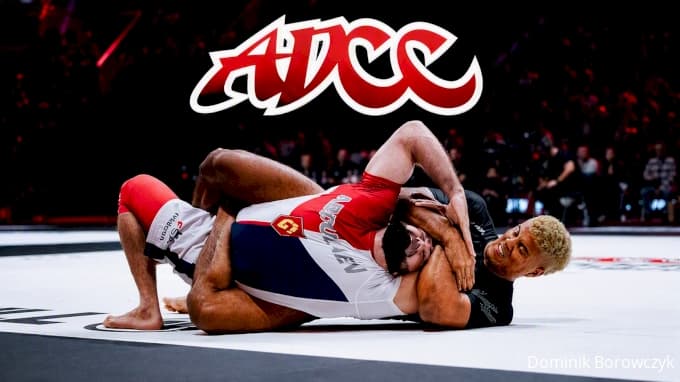
ADCC 2026 results: the stories that survived the predictions
ADCC 2026 results from Krakow: Jaworski, Maciel, Crevar, Pena, the women's champions, and the superfight outcome, with official podiums and match context.
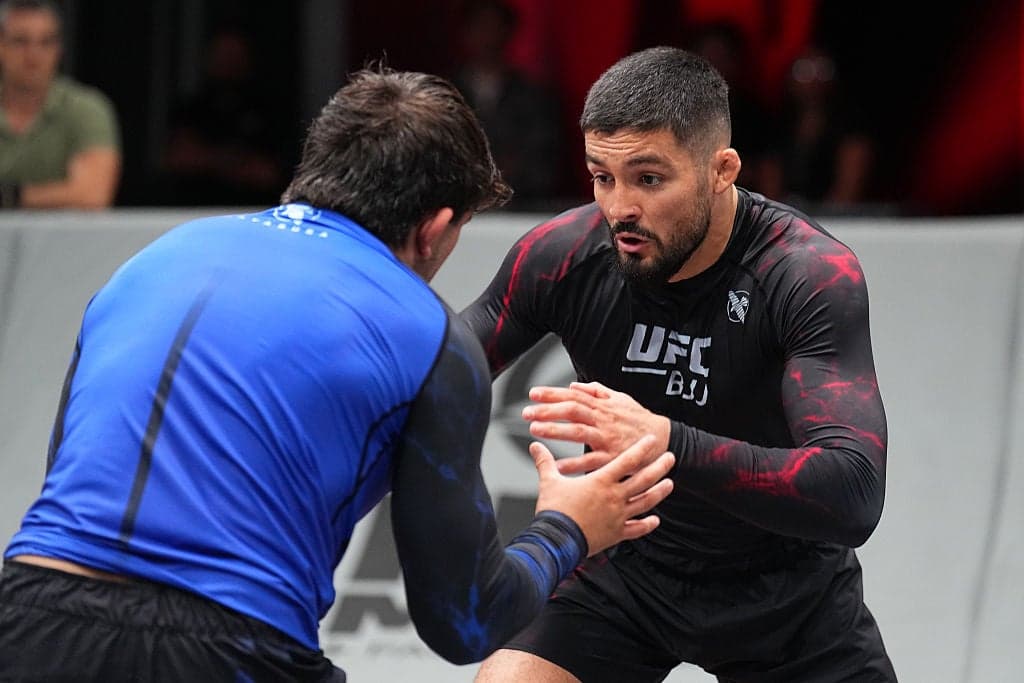
UFC BJJ vs ADCC: the rules that change the match
Compare UFC BJJ and ADCC clocks, scoring phases, guard pulling, boundaries, and overtime without mixing their formats.

Round robin or elimination: read the BJJ bracket first
Understand how round-robin groups, elimination brackets, and tiebreakers change your competition day before comparing entry fees.
Comments (0)
Loading comments...