

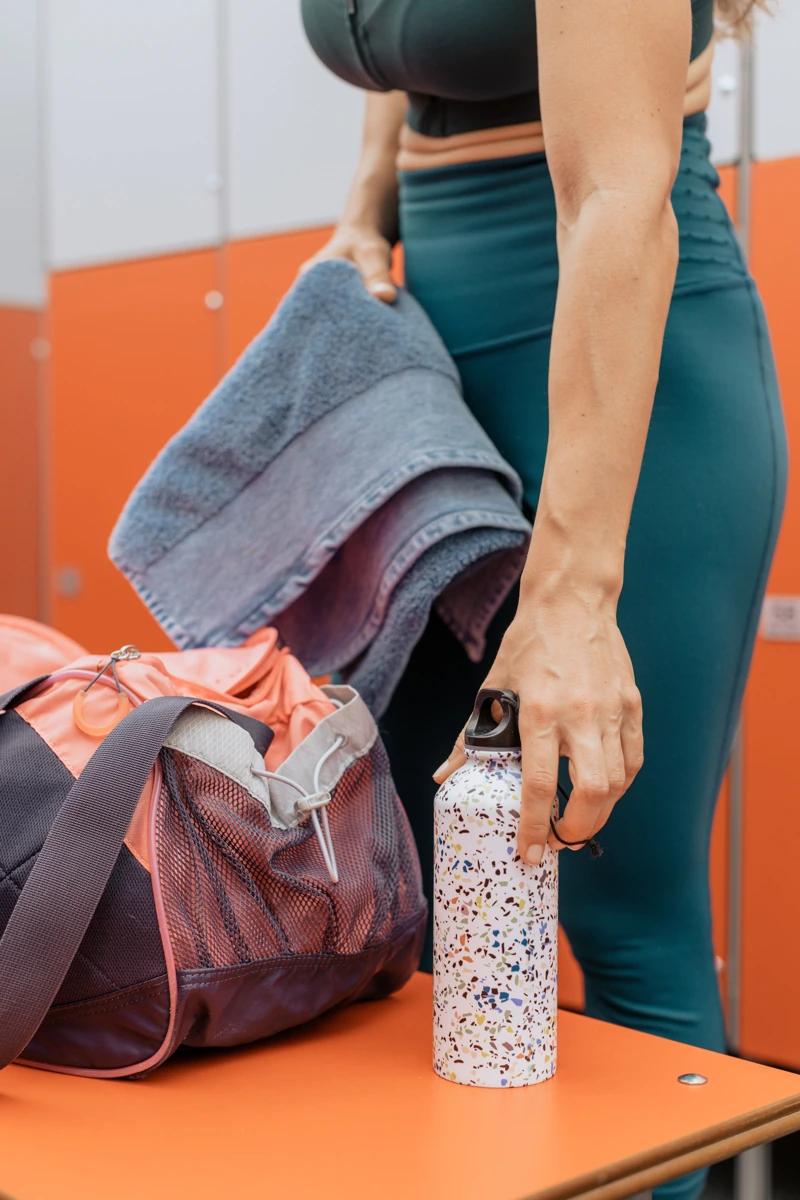
A bag can look packed and still contain nothing you should bring to class. A wet rashguard has slipped under a clean shirt, a towel is rolled around yesterday’s shorts, and the separate pocket bought for dirty kit is still zipped shut. A reset is a way to make sure tomorrow starts with a genuinely ready set.
Begin with three questions. What got used? What touched the used gear? When do you need the bag again? Answer those before choosing a cleaning product or buying a second bag.
Plan your post-class bag reset
Pick the condition of the bag, the state of your kit and the time you have. The result organizes your next actions.
Your reset order
- Used kit. Unload the used uniform, towel and any reusable wet carrier. Wash the items according to their care directions and allow time for them to dry completely.
- Bag. Empty all compartments and inspect the wet pocket, lining and seams. Keep it open while you take care of the used kit.
- Next class. Put the kit back once both the set and its compartment are ready. Check the list for the class you booked.
Three worked gear resets
No-gi at lunch and another class tonight
- Used kit. Unload the used uniform, towel and any reusable wet carrier. Wash the items according to their care directions and allow time for them to dry completely.
- Bag. Empty all compartments and inspect the wet pocket, lining and seams. Keep it open while you take care of the used kit.
- Next class. Set a backup now. Use a clean spare and a dry carry option, ask the academy about clean loan gear, or choose a later class.
Clean spare, damp zipper pocket
- Used kit. Keep that set outside the bag while you check the lining. If used gear is still in the bag, unload it and handle it separately.
- Bag. Empty the bag and consult the bag maker’s instructions before cleaning the affected lining. Wait until it is completely dry before putting clean gear back.
- Next class. Set a backup now. Use a clean spare and a dry carry option, ask the academy about clean loan gear, or choose a later class.
Gi on the drying rack, class tomorrow
- Used kit. Leave the kit out until all layers are dry. Check thick parts like the gi collar and the towel fold before you pack.
- Bag. Check the bottom, seams and wet pocket before repacking. Find the label or the bag maker’s care instructions before applying a cleaner or putting the bag in a washer.
- Next class. Put the kit back once both the set and its compartment are ready. Check the list for the class you booked.
The plan stays on this page. Check the exact instructions for your bag and garments.
Set up a route from mat to laundry
Before class, put the clean uniform and the trip-home carrier in different places. A washable sack or the bag’s separate compartment can keep the used clothing from mixing with an unused set on the way home. Make the exit easy to remember. Put the used carrier on top of the bag when you unload so you have to move it before packing again.
Unpack the gi, belt, rashguard, shorts and towel you actually used. Empty the carrier too. Check pockets that might hold tape or a small accessory. Then take out the bottle and any case that needs its own care. A complete empty bag makes a much better starting point for finding a damp lining.
For the next class, start again from the jiu-jitsu class kit list. The purpose of this reset is to make the kit you already own ready to bring.
Read the bag’s care instructions before cleaning it
Check the bottom, zipper seams and any removable liner. Then look for a label or the maker’s care page. Coated fabric, foam panels and detachable inserts can require different care from a fabric tote. Decide how to clean the actual bag before adding water or detergent.
Osprey’s GearKit owner manual gives one example. For this series, Osprey calls for hand washing with mild detergent and warm water, followed by rinsing and hanging the pack to dry away from direct sunlight. Use a different maker’s published directions for that product.
Open the pockets as appropriate for your bag’s drying instructions and check the places that dry last. A dry exterior tells you very little about the corner under an insert. Put clean clothing somewhere else until the bag is dry inside.
Give the garments their own care check
The CDC guidance for athletes calls for laundering uniforms, towels and training clothes after each use and drying them fully. Its MRSA advice specifically calls for a dryer and also tells readers to follow the garment label. Check the compatibility of the kit you actually use.
Some garments have a different care direction. The Venum First black gi specifies cool washing and hang drying. If a label conflicts with public-health or academy guidance, ask about compatible care or choose a set whose care instructions meet what you need. The gi care guide compares several maker instructions.
Treat the bag, the garment and its drying space as three separate things. You may have a clean shirt waiting while the bag is still damp. Put it somewhere dry and keep the used gear in the wash queue. Once both the garment and bag are ready, bring them back together.
Decide on a backup before the next class
Work backward from when you actually leave. If a kit will still be drying then, choose a clean spare, confirm the academy’s clean loan kit, or shift your training time. If only the bag is still damp, a dry carrier for the ready set can solve that one problem.
A reset can happen in stages. Empty and separate the kit first, deal with the laundry and bag second, and restock only after both are ready. Households with several people training can make one spot for each clean set and a shared place for used gear. You should be able to tell which step is unfinished by looking.
Common questions
Can I put my BJJ gym bag in the washing machine?
Check the bag maker and model before washing. For example, the Osprey GearKit manual specifies hand washing for that series. A removable liner may have its own instructions.
Where should used no-gi gear go for the ride home?
Put it in a dedicated pocket or washable carrier away from any unused clothes. Unload and handle the used clothing and carrier after you arrive.
What if the bag is still damp and my kit is clean?
Leave the bag to finish drying according to its instructions. Take the clean set in another dry carrier if class comes first.
Sources & accuracy notes
Sources checked . Follow the actual bag and garment care labels. The planner organizes your next steps from your selections. It cannot tell whether gear is dry or establish how clean it is.
- CDC: MRSA prevention for athletesThe athlete page specifies after-use laundering, complete drying and garment label instructions.
- Osprey: GearKit owner manualThe GearKit care instructions specify hand washing, rinsing and hanging the pack to dry.
- Venum: First BJJ Gi, blackThe exact product listing specifies cool washing and hanging to dry.
Found a factual error or a rule that has changed? Send a correction to support@letsroll.co.