
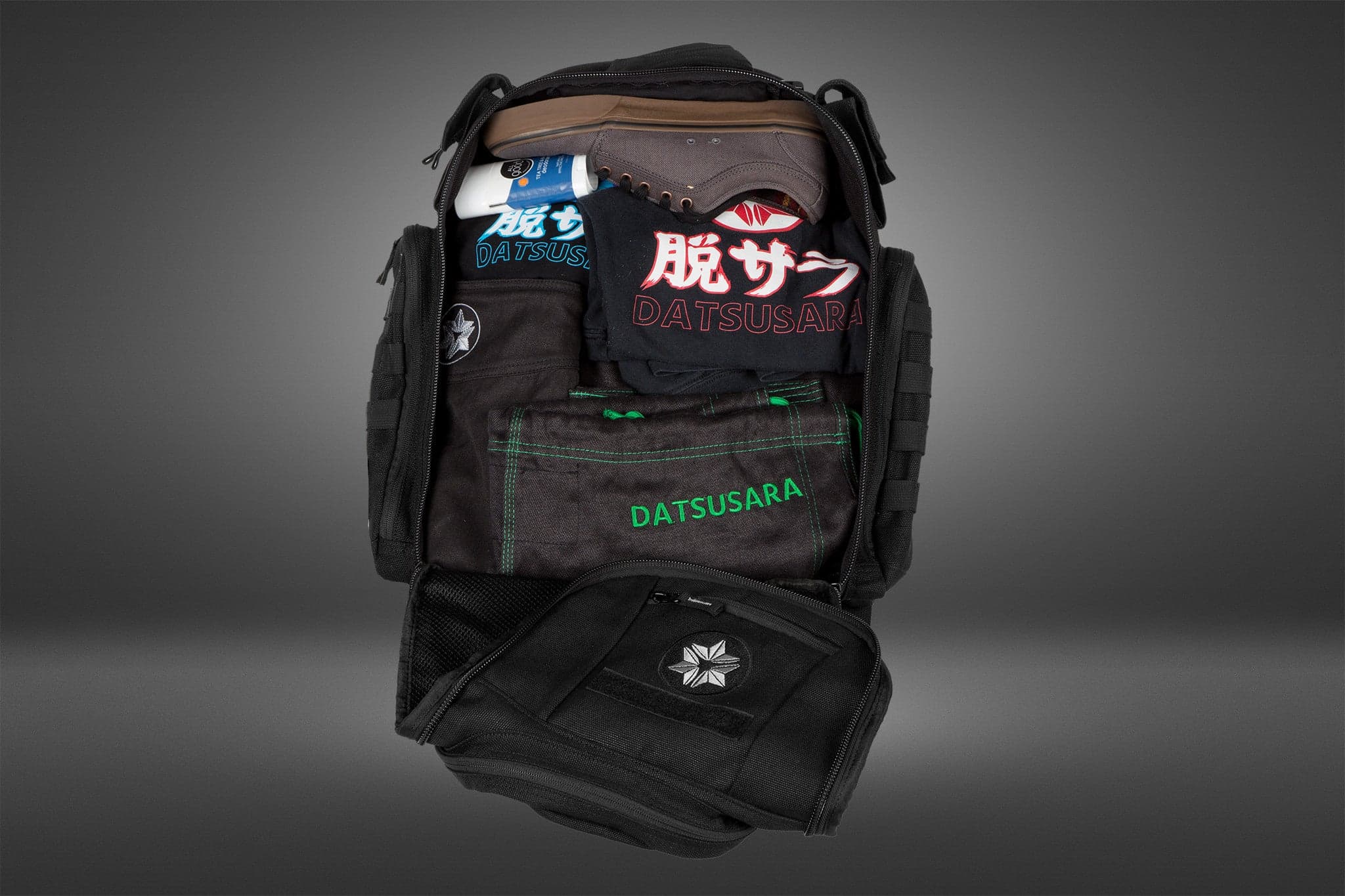
The BJJ gym bag reset: what to do after every class
Quick answer: Empty your BJJ bag after class, separate used clothing from clean supplies, and clean equipment according to its care instructions. Repack only when the bag and gear are ready for use. A repeatable unloading routine is more useful than buying a larger bag to hold the things you keep forgetting to remove.
There is a roll of tape in the side pocket, but the cardboard center is empty. The clean rashguard is somewhere under yesterday's towel. Your mouthguard case is in the car. None of this is a reason to quit jiu-jitsu, though it can make leaving for class unnecessarily irritating.
A gym bag has two jobs that pull in opposite directions. It carries clean equipment to the academy and used equipment home. The trouble starts when the homeward trip never properly ends. The bag sits by the door, and the next training session begins with the same contents still inside.
Give used gear a destination before leaving the gym
Choose where the gi, rashguard, and towel will go after class. A washable separate carrier or a dedicated compartment can keep them apart from the clothes and supplies you have not used. That is an organizational choice, not a promise that a divider makes anything sterile.
Make the arrangement easy to follow while tired. If packing the used gi requires a careful folding routine and three zippers, simplify it. You should be able to tell which items are used without opening every pocket and smelling each one.
The next step matters more than the compartment: remove those items when you get home. A wet-gear section is transport space, not a storage plan for the next two days. If you train after work, decide where you will unload it before you settle down for the evening.
For a household with several grapplers, give each person's used kit a clear place. Otherwise, a parent may wash one child's jacket while another child's rashguard remains inside an identical black backpack until the next class.
Laundry belongs to the session you just finished
CDC's guidance for athletes recommends washing uniforms, towels, and training clothing after each use, following care instructions, and drying items completely. Its MRSA guidance specifically recommends a dryer. It also advises showering after exercise, washing hands after handling dirty clothing, and not sharing personal items such as towels.
Treat the laundry as part of finishing class. If you cannot wash immediately, take the used kit out of the closed bag and put it in the household's designated laundry area. Do not quietly reclassify it as clean because the next class is tomorrow morning.
Garment care can require attention. FUJI's care guidance, for example, warns that tumble drying can shrink its uniforms and excessive drying heat can wrinkle a collar. Read the instructions for your own equipment; ask the manufacturer about compatible care if you are unsure. Do not use a shrinkage concern as a reason to skip cleaning.
If the time between classes never allows your only uniform to be cleaned and dried, the schedule needs a practical adjustment. That might mean another set or a different training slot. It should not mean hoping nobody notices.
Empty pockets before deciding the bag is clean
Remove everything, including the objects that are supposed to live in the bag. Loose tape ends, old wristbands, and the snack wrapper from the last tournament can hide beneath items you use every day. The forgotten pocket is usually the one that never gets checked because nothing useful is supposed to be in it.
Inspect the bag's care label before cleaning it. A structured backpack, a coated duffel, and a simple fabric sack may need different treatment. Follow the maker's instructions rather than assuming that any bag can go through the same wash cycle as a gi.
Let it dry as directed before packing clean equipment. If a compartment remains damp, leaving it closed and filling it with tomorrow's kit defeats the purpose of having separate spaces.
Keep the process proportionate. You do not need to turn an ordinary bag into a laboratory project. You need to be able to see what is inside, remove used material, and clean the surfaces according to the product's instructions. A mystery smell calls for inspection, not another layer of fragrance.
Small equipment needs a place in the routine
A mouthguard is easy to forget because it is much smaller than a gi. Take it out of the case and clean both according to their instructions. Inspect the case before returning it to the bag. A clean guard put straight back into a neglected case is an unfinished task.
Do the same check for reusable bottles and any protective equipment you bring. Follow the manufacturer's care directions, including instructions for lids, valves, or parts that separate. Avoid inventing a chemical soak because somebody in the changing room recommended one.
Choose one moment for this work. For example, small equipment can go to its cleaning place as soon as the clothing goes to the laundry. That keeps it from remaining on the kitchen counter until somebody mistakes it for an item that is already ready to pack.
If you use several bags, keep the location predictable. A mouthguard case moved between a work backpack and a BJJ bag is easy to leave behind. A short packing check is cheaper than repeatedly replacing equipment you eventually find under a car seat.
Restock from a short list, not from memory
Your bag does not need to contain a solution to every problem that could happen in an academy. It needs the items your class requires and the small supplies you actually use. Our beginner gear guide covers the broader equipment question; the reset is about keeping that equipment available.
A useful check can stay brief:
A clean, dry uniform appropriate to the next class.
Your cleaned mouthguard and case, if you use one.
Water and the personal items required for your routine.
Enough of any regularly used consumable, such as tape.
A way to carry used kit home separately.
Replace an empty tape roll when you notice it. Do not put it back as a reminder unless you want the reminder to appear two minutes before class. Keep spare supplies somewhere visible at home so restocking does not require a search through a second bag.
Review what you have carried untouched for months. An overloaded bag can make the useful items harder to locate. Remove unnecessary duplicates while keeping anything your coach or circumstances require.
The car should be a route, not the storage cupboard
If you go directly from work to jiu-jitsu, the bag may spend part of the day in the car. Plan the return trip as carefully as the outward one. Put the used bag somewhere you will remember to bring it inside, without leaving valuables exposed or obstructing the driver.
A simple cue helps: take the bag in with the keys rather than promising to collect it after dinner. If you need to make another stop after training, make unloading the first task when you finally arrive home.
For morning training, prepare the clean kit the evening before and leave space for the return. A beautifully packed work outfit is less useful if it must share a compartment with the gi you have just worn through several rounds.
Travel requires the same planning on a larger scale. Before booking several sessions into a trip, work out how you will clean and dry the equipment between them. The hotel room and the class schedule have to work together. A second uniform helps only if there is also a plan for the first one.
Make the routine possible for the whole household
A child who trains can help with age-appropriate parts of the reset. Start with taking the bag to the agreed place and removing the uniform. An adult can check that the task is complete and handle anything the child is not ready to do independently.
Give a concrete instruction rather than a general complaint about responsibility. Put the gi in this laundry basket. Bring the bottle to this sink. Place the empty bag here. Those tasks have visible endpoints.
If two people share laundry duties, settle who checks that the equipment will be ready for the next session. Otherwise, one person may assume the bag is packed while the other assumes the gi is still drying. A small note on the family calendar can prevent the argument without turning every class into an administrative meeting.
Do not make a lost piece of gear into a judgment about whether the child cares about jiu-jitsu. Fix the system first. If the same item disappears repeatedly, change where it lives or add it to the check before leaving home.
A tidy bag does not clear a health concern
Cleaning equipment is ordinary preparation. It is not a way to diagnose a suspicious patch of skin or make an existing health concern disappear. If you think you may have a skin infection, CDC advises prompt evaluation by a healthcare provider and reporting the concern to the appropriate coach or responsible adult.
Do not use a fresh rashguard or an improvised covering as proof that training is fine. Ask for appropriate medical guidance and follow the academy's participation rules. You do not need to identify the exact cause yourself before taking the concern seriously.
Keep basic supplies in their intended packaging and discard used dressings and tape appropriately. The gym bag should not become a collection of partly used products whose contents or expiry dates you cannot identify.
This is also a good reason to keep personal items personal. A teammate forgetting a towel does not require you to lend the one you just used. Help them find a sensible alternative through the academy rather than treating sharing everything as a test of friendliness.
Main photo: BJJ Fanatics; illustrative training-bag photograph.
The takeaway
The bag reset starts when class ends and finishes when the next clean kit is ready. Separate the used clothing, empty the pockets, and give the small equipment the same attention as the gi. Keep the sequence simple enough to repeat after an ordinary tiring session.
If the routine keeps failing, change one practical part: where the bag is unloaded, who handles the laundry, or how tomorrow's equipment is checked. A larger backpack cannot finish those jobs for you.
Build the routine around the class you attend
Use the gym directory to explore local training and confirm the academy's equipment and hygiene expectations before your first session.
FAQ
Should I leave my used gi in the bag overnight? Make unloading used equipment part of arriving home. Send it to the designated laundry area and clean it before the next use rather than treating a closed bag as long-term storage.
Can I wash the bag with my gi? Check both care labels. Materials, coatings, and structural parts can require different cleaning methods, so do not assume the same cycle is appropriate for both products.
Is a separate wet compartment enough? It can organize the trip home, but it does not replace unloading and cleaning. The compartment itself also needs care according to the bag manufacturer's instructions.
What should I do if I notice a possible skin infection? Seek medical advice promptly and tell the appropriate coach or responsible adult. Clean equipment does not determine whether a skin condition is safe for contact training.
Related Posts
When to Replace Your BJJ Gi, and When to Repair It
Decide when to replace your BJJ gi by checking fabric, seams, fit, and tournament rules. Separate a useful repair from a garment ready for retirement.

BJJ Gear for Beginners — What You Actually Need
A no-affiliate-link guide to what a new BJJ practitioner actually needs in year one. Skip the marketing, buy four things, train.

Mikey Musumeci gives up the belt to make room for MMA
Musumeci is vacating his UFC BJJ title to focus on MMA training. What he is leaving, what continues, and why the transition matters.
Comments (0)
Loading comments...