
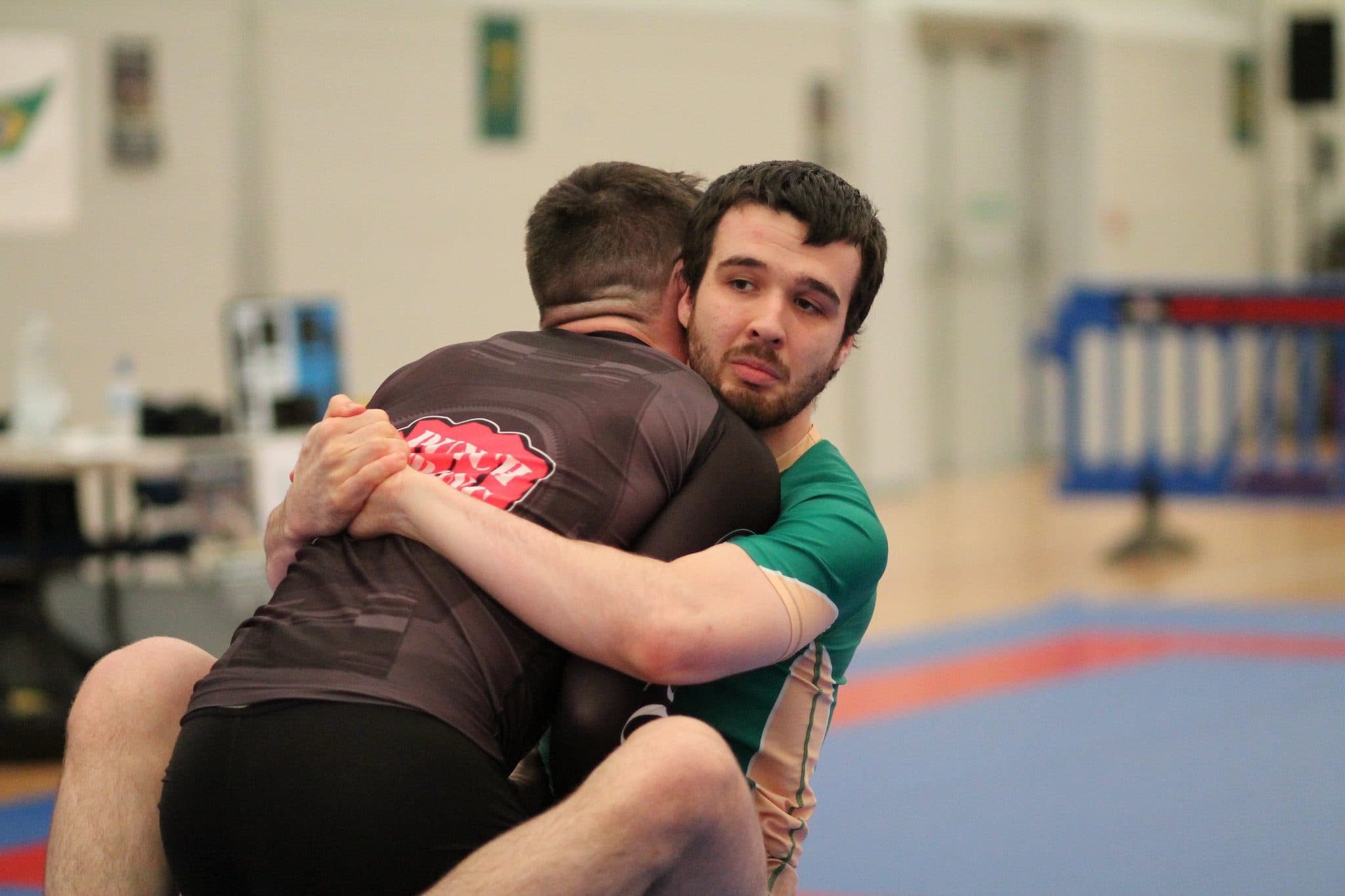
Is wrestling taking over BJJ, or giving it more options?
Quick answer: Wrestling can expand a BJJ athlete's options from standing, during scrambles, and while coming up from guard. Its value depends on the rules and on what happens after the initial attack. Learn the transitions with a qualified coach instead of treating a takedown as the end of the exchange.
A takedown clip ends at exactly the moment a jiu-jitsu coach may want to keep watching. The athletes hit the mat. One is on top. Then the bottom player begins making decisions.
That unfinished exchange is a better subject than a broad claim that wrestling has taken over BJJ. Without a defined set of matches and comparable data, takeover is a headline, not a measured conclusion. The practical question is which additional choices wrestling gives a grappler, and what must be adapted when submissions remain available. Rule references below were checked on October 10, 2026, as an update to this article's April publication date.
Standing work needs a destination
A useful takedown lesson should include the position you are trying to reach after the landing. Getting somebody off their feet is one task. Staying in a position where you can continue safely and effectively is another. In BJJ, the opponent's next guard or submission attempt is part of that continuation.
Ask the instructor to show the intended finish and the likely immediate responses. Where should your weight be? What contact needs to remain? What should make you stop and reset during the drill? Those questions are more useful than asking only whether the entry looked explosive.
Practice the movement in the format the coach sets, with a suitable partner and enough space. Do not improvise high-amplitude throws or uncontrolled finishes because a competition clip made the motion look simple. Learning how to receive the movement is part of the session, too.
The destination also determines what to study next. If you consistently arrive inside guard, the following problem differs from a finish that leaves you outside the legs. Your training should connect the entry to that actual position.
Different scoring systems reward different endings
The IBJJF rulebook identifies takedowns as two-point actions and specifies the conditions for scoring, including stabilization. The details matter: a fall, scramble, or brief moment on top is not automatically a completed scoring action. Read the full provision with the situations it describes.
Under the published ADCC championship rules, a takedown ending in guard or half guard can score two points, while a qualifying clean takedown outside guard can score four. The rules require control and freedom from a submission threat. Positive scoring also depends on the phase of the match; it is not active throughout every minute of every round.
That difference gives a concrete reason to discuss the finish, rather than saying takedowns are valuable in the abstract. The same general intention to get on top can lead to different rewards under different conditions.
Use the rules for your event and division, including any modified beginner format. A training idea can transfer between competitions, but its exact scoring value should never be carried over by assumption.
Coming up from guard is part of the conversation
Wrestling-related choices are not limited to two athletes beginning upright. A guard player may create an opportunity to come up, connect to a leg, and pursue top position. That changes the question facing the passer: they must account for an opponent who can rise as well as attack from underneath.
Treat this as a coached transition, not a direction to stand whenever space appears. The useful moment depends on the position, grips, and threats. Ask your instructor to identify the conditions that make the entry available and the conditions that should make you choose something else.
A narrow practice task can help. Begin from the relevant guard configuration, give the partner a defined response, and follow the exchange until one athlete establishes the agreed outcome. Then reset. You are examining a decision and its continuation, rather than racing through a movement in isolation.
The guard still matters in this exercise. It provides the starting relationship and may remain your next option if the attempt does not produce top position. Standing up is one branch of the exchange, not a declaration that groundwork has become obsolete.
A scramble is not permission to abandon position
Fast movement can conceal the moment an exchange changed. An athlete may feel close to finishing an attack while giving the opponent a usable grip or an exposed back. Reviewing the first loss of position is usually more informative than praising the amount of effort involved.
When studying a scramble with your coach, slow the discussion down. Identify who controlled the relevant contact before the direction changed. Then look at the response that became available. The aim is to find a decision you can practice, not to assign a personality trait to the person who ended underneath.
Training the exchange at a manageable pace lets both partners understand the task. Increase freedom as the coach considers appropriate. If neither person can explain what made the position change, adding speed may simply make the same confusion harder to see.
Stop when the agreed boundary or a safety issue requires it. The guide to resetting rounds covers how to restart with a shared understanding of the position. A scramble does not become more educational because it continues into another pair.
Build a small set of connected answers
You do not need to collect every wrestling technique before it can help your BJJ. A limited sequence with understood responses gives you something you can revisit. Ask your coach to help choose a starting point that fits the class, your experience, and the rules you train under.
A useful practice sequence should answer a few specific questions:
How do you establish the contact needed to begin?
What reaction makes the intended attack available?
Where should the exchange finish, and what threat remains there?
What is the coached alternative when the first route closes?
When do you stop and reset rather than force the attempt?
Keep those questions connected to one situation. A session that jumps between unrelated entries may leave you recognizing several movements without knowing when to choose any of them.
The alternative is particularly important. If an opponent's ordinary defensive response ends your entire plan, the missing lesson may be what comes next. That is a coaching question, not evidence that the original movement never works.
Evaluate the exchange instead of the label
Calling a movement wrestling, judo, or jiu-jitsu can be useful when discussing its source or training context. It does not, by itself, tell you whether the movement fits the current position. Look at the task it solves and the conditions under which you are trying it.
For example, an entry that works in one practice format may need adjustment when a different grip is available or a submission changes the risk. The appropriate response is to study that difference with the instructor. Declaring the entire style effective or ineffective skips the technical question.
The judo cross-training guide approaches a related problem: another grappling class has its own methods and expectations. Learning from it is more productive when you arrive ready to be taught, rather than treating every lesson as material to copy unchanged into a BJJ round.
This also keeps the discussion respectful. A wrestling coach does not need to defend every BJJ adaptation of a technique. A jiu-jitsu coach does not need to dismiss another sport to explain a submission-specific concern. The exchange has enough detail to discuss on its own.
Give the experiment a fair test
If you decide to spend more time on standing work or coming up from guard, define what you want to learn. Choose a small number of starting positions and ask for feedback over several sessions. Keep notes on the response that stopped you, especially if it repeats.
Do not judge the whole project from one successful takedown or one failed round. A partner's experience and the starting conditions affect what happened. Try the same task with appropriate variation, under the coach's guidance, before drawing a broad conclusion.
Success can mean recognizing the opening sooner or reaching a more controlled finish, even before the movement becomes reliable in unrestricted rolling. Be precise about that progress. You do not have to call every partial improvement a complete competition-ready answer.
For a competitor, eventually test the sequence in the relevant rules and match conditions. For a recreational student, the goal may simply be a better understanding of transitions. Both are legitimate reasons to study wrestling without announcing that the rest of jiu-jitsu has been replaced.
Main photo: BJJ Globetrotters; illustrative archive photograph.
The takeaway
Wrestling gives BJJ students additional ways to enter, rise, and continue an exchange. Its usefulness depends on the position that follows and on the rules governing the match. A takedown is an opening to further work.
Choose a connected sequence with your coach, practice the responses, and evaluate where you actually arrive. That produces a clearer training plan than arguing over which grappling style is taking over the room.
Find instruction near you
Use Let’s Roll to find gyms, then ask about the academy's standing-work classes, prerequisites, and approach to beginners.
FAQ
Is wrestling replacing guard in BJJ? That is too broad a conclusion without defined evidence. Wrestling-related transitions can add options to guard play, including coming up to pursue top position. They do not remove the need to understand the starting guard or the opponent's responses.
Does every takedown score the same points? No. Rules and scoring conditions differ. IBJJF lists a two-point takedown, while ADCC distinguishes certain finishes inside and outside guard and uses match phases with different scoring conditions.
Should a beginner learn takedowns immediately? Ask the coach how standing work fits the beginner curriculum. Learn the receiving skills, practice boundaries, and controlled finish as part of the lesson rather than copying a high-speed clip independently.
What should I study after a takedown entry? Study the expected landing position, the opponent's immediate responses, and your continuation. The first successful contact is only part of the exchange you need to understand.

Nina Okada
Nina Okada explains positions the way a good training partner does: one problem at a time, with the limits of the explanation said out loud. She is careful about the difference between what footage shows and what it only suggests.
Related Posts
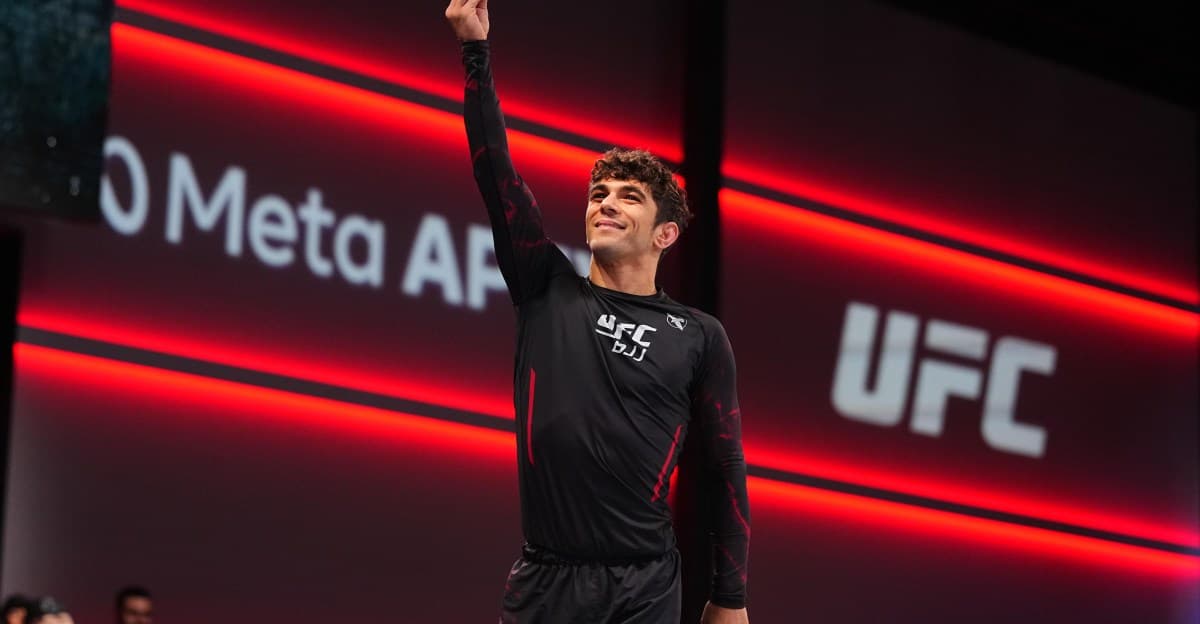
Mikey Musumeci gives up the belt to make room for MMA
Musumeci is vacating his UFC BJJ title to focus on MMA training. What he is leaving, what continues, and why the transition matters.
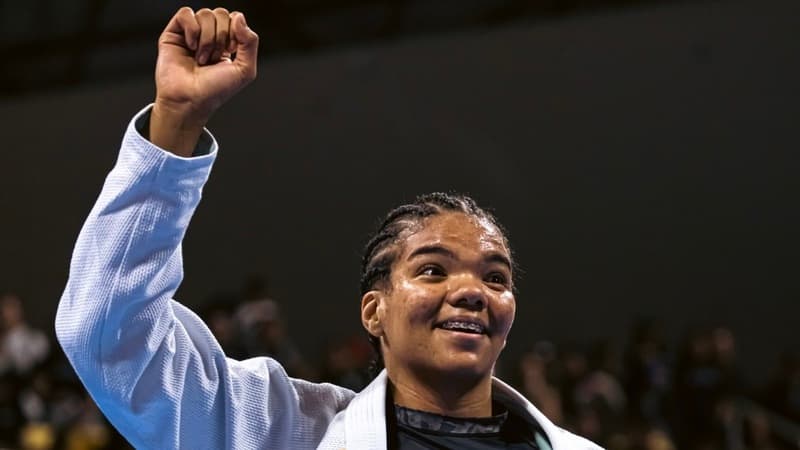
IBJJF membership: finish the paperwork before the deadline
IBJJF membership and tournament entry are separate steps. Plan documents, professor approval, renewals, and junior accounts before registration closes.
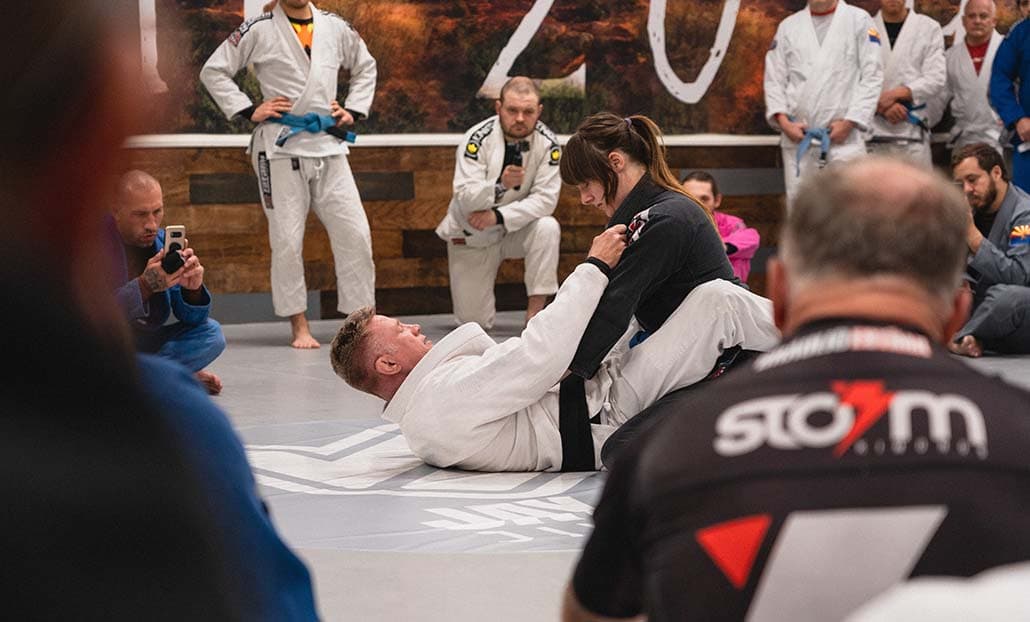
Choosing a BJJ seminar worth your time and travel
Choose a BJJ seminar by the subject, teaching format, access, and total cost. Know what to ask the host before buying a ticket.
Comments (0)
Loading comments...