
Adding judo to BJJ without skipping the first lesson
Quick answer: Judo can give a BJJ practitioner structured practice in gripping, movement, throwing, and falling. Join an appropriate class, tell the coach about your actual standing experience, and learn the club's rules before live practice. Bring selected material back to BJJ with your instructor's help rather than assuming every judo habit transfers unchanged.
A colored BJJ belt can make a first judo class unexpectedly awkward. You may know exactly what to do once a round reaches the floor and have very little experience receiving a committed throw. Both facts can be true at the same time.
The useful starting point is an accurate introduction. Explain how long you have trained, how much standing practice you have done, and whether you have learned breakfalls under supervision. That gives the coach something better to work with than a belt color and an assumption.
Give the judo coach your actual experience
BJJ experience is relevant information, but it does not describe every skill the judo class will ask of you. A person who usually begins seated may have a different starting point from somebody whose academy includes substantial stand-up practice. Say which situation resembles yours.
Ask how the club introduces newcomers with prior grappling experience. There may be an introductory group, a particular session, or a progression before live standing practice. Follow that process even if parts of the ground instruction feel familiar.
Also ask what to wear and which membership or visitor requirements apply. A gi you already own may or may not be appropriate for the club's training expectations. Get that answer before buying a new uniform or arriving with equipment that creates an avoidable problem.
The goal of the first visit is not to establish which sport taught you more. It is to find the right place in this class. A clear account of your experience lets the instructor preserve what you already know while teaching the parts you have not practiced.
Treat learning to land as real technical work
The United States Judo Federation's basics resources give ukemi, or breakfall practice, a defined place in its educational material. That is a useful signal for a crossover student: receiving a throw is part of the skill being learned, rather than empty time before the interesting technique.
Follow the coach's progression and ask for correction when the movement is unfamiliar. Do not use a video as permission to attempt bigger falls on unsuitable flooring. The person supervising the class can assess the surface, partner arrangement, and drill in a way an online explanation cannot.
Being the receiver also teaches you about the quality of the practice. Can you and your partner coordinate the task? Do you both know when the repetition begins? Is the pace appropriate? If those questions are unresolved, increasing speed does not make the exercise more advanced.
A first session may spend more time here than you expected. That is still a session spent learning judo. There is no need to hurry past the part that allows two people to keep practicing together.
Separate learning an entry from completing a throw
A coach may divide a technique into positioning, repeated entries, and completed throws. Each task asks for different cooperation from the partner. Learn what the particular drill requires before turning it into a contest.
During an entry drill, an unannounced defense can prevent the assigned repetition. During a more resistant task, giving away every position can remove the problem the learner is supposed to solve. Ask which reaction is wanted and provide it consistently enough for your partner to learn.
This should feel familiar to a BJJ practitioner who has drilled a pass with someone alternately collapsing and resisting at full force. The issue is not that resistance is bad. It is that the partners need to know what kind of practice they are doing.
Keep the first technical objective narrow. You might be working on reaching a grip and position the coach has shown, rather than completing an entire attacking sequence. Ask what success should look like in that exercise. The answer prevents you from measuring every repetition by whether somebody lands on the mat.
Learn the rules of the room before randori
Live practice should begin with a shared understanding of what is allowed. Do not assume that because a grip, takedown, or submission is familiar in BJJ, it belongs in this judo session. Tell the coach when you are unsure and let the club's rules govern its mat.
Competition rules also shape training habits. The IJF's explanation of its 2025 changes distinguishes permitted jacket grips below the belt from prohibited leg-grabbing actions. The distinction illustrates why remembering a slogan about all grips below the belt being illegal is inadequate. For an actual competition, check the rules adopted by that event.
A crossover student does not need to settle every rules debate before attending a class. The immediate questions are simpler: what does the instructor permit here, what does the drill require, and what should you do when the position becomes unfamiliar?
Ask those questions before the round. Surprising a partner with an action they reasonably believed was excluded is a poor way to discover a difference between sports.
Bring back a problem your BJJ coach can recognize
After a few judo sessions, resist the urge to introduce an entire new standing game at your BJJ academy. Choose a small problem and discuss it with your coach. Perhaps you struggle to obtain a workable first grip or lose your balance while moving with a partner.
That gives the two training environments a useful connection. The judo class can develop a skill in its own context. Your BJJ coach can help examine what changes when the opponent has different legal options or wants to pull guard rather than engage in the same standing exchange.
For example, a successful throw does not automatically finish a BJJ match. You still need to understand the landing position and what happens next under the applicable rules. A familiar entry may also need adjustment when the available grips or the opponent's posture differ.
These are reasons to adapt carefully, not reasons to dismiss the borrowed material. Our guide to building a BJJ game offers a useful approach: connect a new option to a situation you actually encounter, then practice the connection rather than collecting the technique in isolation.
Add a class without pretending it adds free time
Cross-training changes the week. It may replace a BJJ session, use a previously free evening, or require a different commute. Decide which of those is happening instead of quietly adding another obligation to an already full schedule.
A modest initial experiment could be attending an introductory judo class regularly enough to understand its progression, then reviewing the arrangement with both coaches. That is a suggested way to organize the choice, not a prescribed training frequency.
Before committing, check:
The class level and whether its schedule can be repeated.
The full cost, including required equipment and membership.
Which existing session or other commitment makes room for it.
How you will tell whether the experience is meeting your goal.
The final question matters. If you wanted coached standing practice and are receiving it, the experiment can be useful before any technique works in a BJJ round. Do not demand an immediate tournament highlight as proof that the new class deserves a place in the week.
Keep both partners out of the comparison argument
Cross-training can become a running debate about which sport has the better answer. That debate is usually less useful to the person trying to complete a drill. Your partner needs a clear task, a suitable pace, and someone who listens when the coach changes the instruction.
In the judo room, participate in the judo lesson. Back at BJJ, follow the local class rather than replacing the day's material with an unsolicited demonstration. If another student is interested, ask the coach how and when the new material can be practiced appropriately.
This also keeps your own observations precise. Struggling with an unfamiliar partner does not prove a whole sport is deficient. Successfully using a movement once does not establish that it works in every rule set. Record the situation and the reaction that mattered.
A useful training note might identify the grip you could not secure or the moment your posture changed. That is something a coach can help examine. A broad verdict about judo versus BJJ gives the next session much less to work with.
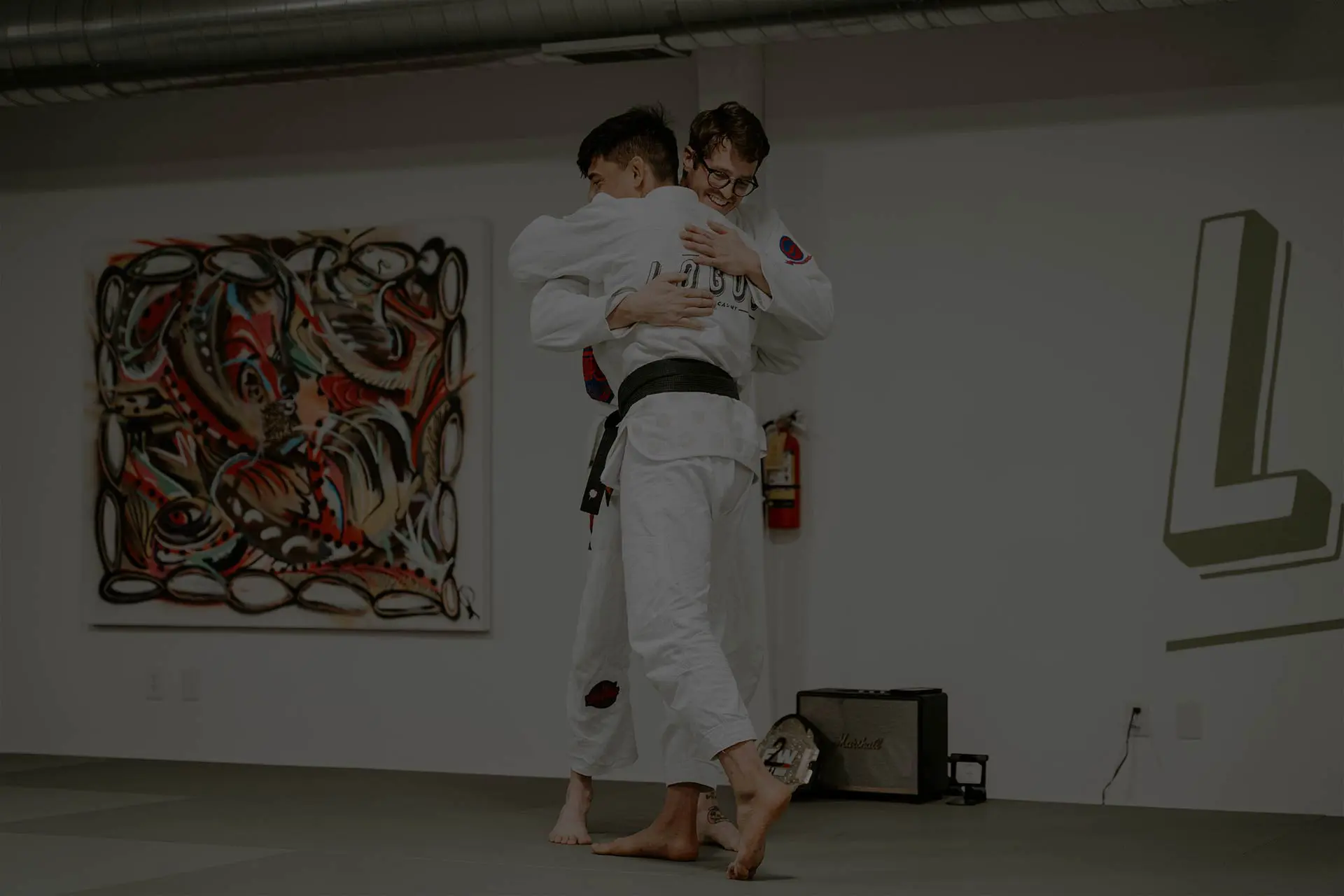
Main photo: Lōgōs Jiu Jitsu; academy website photograph.
The takeaway
Begin judo as a student with relevant grappling experience and specific gaps to learn. Give the coach an accurate introduction, take receiving practice seriously, and understand the room's rules before live rounds. The first useful improvement may be a clearer position or better cooperation during a drill.
Bring selected questions back to BJJ and let your instructor help with the transition. Cross-training becomes more useful when it connects two forms of practice without pretending their rules and objectives are identical.
Find coached practice close to home
Use Let's Roll's gym directory to explore training options, then ask the school directly about standing instruction and suitable cross-training classes.
FAQ
Will judo improve my BJJ takedowns? It can provide coached practice in relevant standing skills. How you apply those skills in BJJ depends on the positions you train, your opponents' options, and the rules. Discuss the transfer with your instructor.
Can I skip beginner judo classes because I have a BJJ belt? Let the judo coach place you according to your actual experience. Ground grappling familiarity does not automatically establish competence in receiving throws or live standing practice.
Are BJJ grips and submissions all allowed in judo? No. The rules and the club's training instructions differ. Ask before live practice, particularly about unfamiliar grips and actions rather than assuming your usual BJJ permissions apply.
Should judo replace a BJJ class? That depends on your goals and available time. Start with a manageable schedule and evaluate what the class provides. Adding training without making room for it is not the only way to cross-train.

Nina Okada
Nina Okada explains positions the way a good training partner does: one problem at a time, with the limits of the explanation said out loud. She is careful about the difference between what footage shows and what it only suggests.
Related Posts

Mikey Musumeci gives up the belt to make room for MMA
Musumeci is vacating his UFC BJJ title to focus on MMA training. What he is leaving, what continues, and why the transition matters.
IBJJF membership: finish the paperwork before the deadline
IBJJF membership and tournament entry are separate steps. Plan documents, professor approval, renewals, and junior accounts before registration closes.
Choosing a BJJ seminar worth your time and travel
Choose a BJJ seminar by the subject, teaching format, access, and total cost. Know what to ask the host before buying a ticket.
Comments (0)
Loading comments...