

When a BJJ round needs a reset, agree on what restarts
Quick answer: Pause a training round when space, equipment, or a partner's request requires it, then agree on the restart before moving again. Decide whether you are restoring the position, returning to the drill's start, or beginning a new exchange. In competition, follow the referee's directions rather than applying your gym's informal reset habits.
A round can lose its purpose in the few seconds between stopping and starting again. One partner thinks they are restoring side control. The other thinks both people are returning to their knees. The timer keeps running while the disagreement develops through movement.
A clear reset prevents that confusion. It also keeps a pause for space or comfort from becoming an opportunity to improve the position while the other person has stopped participating.
The procedure does not need to be elaborate. Recognize the stop, make room, name the restart, and wait until both partners are ready. The details depend on whether you are drilling, rolling, or competing.
A stop should be clear enough to stop both people
If you need to pause, communicate directly. Do not rely on a subtle reduction in effort that the partner may interpret as a tactical change. A spoken request or a tap should lead to release and a clear pause.
Space is one reason to stop. So are loose equipment, contact with another pair, or a problem one partner needs to address. You do not have to decide whether the interruption is prestigious enough to justify losing ten seconds of the round.
Once the pause is recognized, stop advancing the position. A partner who has released a grip to move away from the wall should not return to find that the temporary lack of resistance has been treated as an opening.
If something feels wrong physically, end the exchange and assess whether continuing is appropriate. A reset is not a requirement to resume immediately. The purpose of clear communication is to give both people a real choice about the next action, not merely to make the interruption shorter.
Moving to the center does not settle the position
After a boundary interruption, the partners still need to decide what is being restored. In an informal roll, that may be the last recognizable position. In a structured exercise, the coach may want a return to the prescribed start.
Name the arrangement before rebuilding grips. If you were working from half guard, say whether you are restoring that half guard or restarting the entire exchange. If one person cannot remember the exact details, agree on a reasonable approximation rather than arguing over an invisible replay.
Do not use the reconstruction to add a stronger grip or a deeper control than you had. Equally, do not remove the partner's established work just because the position is inconvenient. The pause should not quietly become a reward for either person.
When the position is complicated, ask the instructor. A clear neutral decision is better than repeated restarts that consume the practice. If the exact reconstruction is not necessary to the lesson, return to a simpler agreed start and continue with the actual task.
A drill needs an ending condition before it begins
Positional practice becomes clearer when both partners know what triggers the reset. Without that agreement, one person may stop after the intended success while the other continues into a different position.
Set the condition with the instructor's guidance. A guard-retention exercise might reset after a clearly established pass. A specific escape exercise might end when the bottom player reaches the agreed safe position. The exact condition should serve the lesson rather than imitate an arbitrary competition rule.
Then decide who starts where on the next repetition. Are you alternating roles after each reset, or completing a block on one side first? Neither arrangement is inherently correct for every exercise. The problem is leaving the partners to discover that they chose different arrangements.
Keep the condition observable. If success requires a long argument about whether someone almost achieved something, simplify it. Good positional practice gives both people enough clarity to repeat the task without needing a referee's conference after every attempt.
A submission resets the practice, not the conversation about control
When a partner taps, release promptly. Do not keep the finishing pressure in place while explaining why the technique worked or requesting that they wait another moment. The explanation can happen after the position is safe and both people are ready.
If you want to examine the setup, ask to return to an earlier stage at an agreed level of resistance. Rebuilding a controlled starting position is different from holding the completed submission through the discussion.
The partner may prefer to keep rolling or move to the next round. Respect that answer. Technical curiosity does not entitle one person to extend the exchange indefinitely after the other has stopped it.
If a submission repeatedly arrives before either partner understands the setup, involve the coach. A useful reset can create space for instruction. It should not become a way to repeat an unfamiliar finishing action with increasing speed while hoping the explanation eventually becomes obvious through repetition alone.
Competition restarts belong to the referee
The ADCC championship rules describe returning out-of-bounds athletes to the center in the same position when the referee stops them, with instructions for standing situations and established grips. That is an event procedure, not permission for athletes to referee their own boundary exchanges.
This reference was checked on October 10, 2026. The relevant event and division may have procedures that differ from what you practice at the academy. Read the current rules and follow the officials' instructions at the competition.
The training lesson is to avoid importing an informal habit into a regulated match. A gym may reset from a convenient position to keep class moving. A referee may need to preserve a specific competitive situation. Those are different responsibilities.
When preparing for an event, ask your coach to include its restart procedure in practice. You do not need to simulate every administrative detail, but you should understand when to stop, who directs the movement, and how the position is restored before the match continues.
A crowded room needs a shared plan
Space management should not depend on whichever pair is most willing to keep moving. Follow the academy's instructions about boundaries, standing exchanges, and yielding space. If the room is crowded, the instructor may choose a format that reduces uncontrolled overlap.
Within that format, agree on a few practical habits:
Pause clearly when another pair or an obstacle creates a problem.
Move far enough to resume with usable space, not just a few inches.
Confirm the position and readiness before restarting.
Do not assume the pair beside you has seen your movement. Attention during a round can be narrow. Communicating and pausing early is more useful than explaining afterward that someone else should have moved first.
A student who regularly notices the room can be a considerate partner without becoming an unofficial floor manager. Follow the coach's system and raise recurring problems with the instructor. The academy should provide the shared expectation; individual pairs should not have to invent competing rules in the middle of class.
Use the pause to preserve the lesson
The best restart depends on what you are trying to learn. If the task is maintaining a specific control, restoring that control may make sense. If the task is entering the position, jumping straight back into it may skip the very work the coach wanted you to practice.
Ask which part matters. A short clarification can save a whole round of repetitions that look busy but address the wrong problem. The answer may change between drills and open rolling, even with the same partner.
Afterward, note any recurring confusion. Did you disagree about when a pass was complete? Did the starting grips vary so much that every repetition became a new task? These are useful questions for the next class, not evidence that either partner was trying to be difficult.
When visiting through the open-mat listings, ask about the host's space and reset conventions. A familiar position can occur inside an unfamiliar class format. Understanding that format helps you become a useful guest before the first boundary interruption occurs.
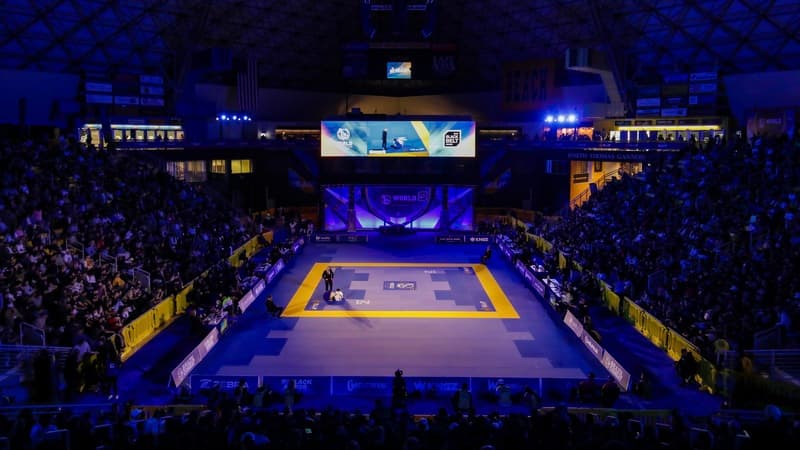
Main photo: BJJ Globetrotters; archive venue photograph.
The takeaway
A reset should make the next exchange clearer. Stop together, identify whether you are restoring the position or returning to the exercise's start, and wait until both partners are ready. A pause should not secretly improve anyone's position.
Keep competition procedures separate from gym convenience. The referee directs an event restart; the instructor sets the training format. In both settings, clarity about the next action is more valuable than saving a few seconds through assumption.
Find a class with a clear practice format
Use the gym directory to explore training options and ask how the academy organizes drilling, positional rounds, and open practice.
FAQ
Should we restart from the exact position after reaching the wall? Follow the instructor's format. In an informal round, agree on the position before resuming; if exact reconstruction is unclear or unnecessary, ask for a sensible reset.
Can I stop a round because another pair is too close? Yes. Communicate clearly, pause, and move according to the academy's space rules. Do not keep advancing while the partner has stopped to address the problem.
Who decides a competition restart? The referee directs it under the event's rules. Do not assume that your gym's informal habit determines how a tournament position will be restored.
Should a positional drill continue after the target is achieved? Only if that is the agreed exercise. Establish the ending condition and role-switching arrangement before beginning so both partners know when to reset.

Nina Okada
Nina Okada explains positions the way a good training partner does: one problem at a time, with the limits of the explanation said out loud. She is careful about the difference between what footage shows and what it only suggests.
Related Posts

Mikey Musumeci gives up the belt to make room for MMA
Musumeci is vacating his UFC BJJ title to focus on MMA training. What he is leaving, what continues, and why the transition matters.
IBJJF membership: finish the paperwork before the deadline
IBJJF membership and tournament entry are separate steps. Plan documents, professor approval, renewals, and junior accounts before registration closes.
Choosing a BJJ seminar worth your time and travel
Choose a BJJ seminar by the subject, teaching format, access, and total cost. Know what to ask the host before buying a ticket.
Comments (0)
Loading comments...