
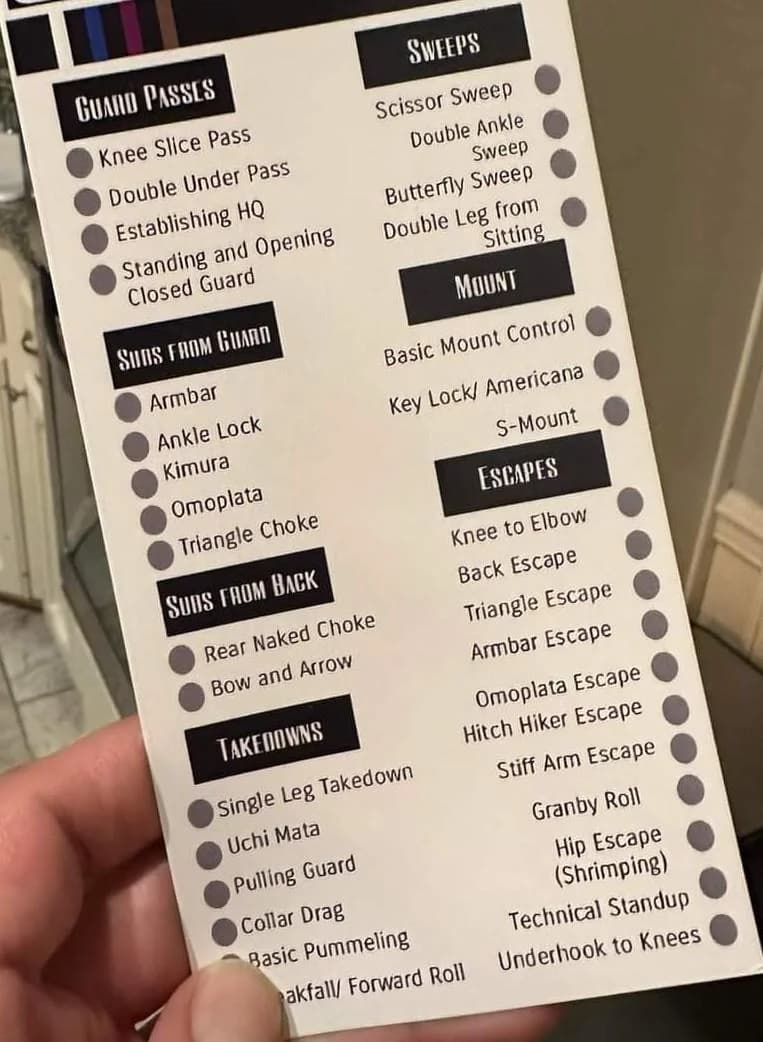
BJJ Terminology: A Plain-English Glossary for New Grapplers
Quick answer: BJJ has its own vocabulary — a mix of Portuguese, Japanese, wrestling slang, and gym-invented shorthand — and nobody expects you to know it on day one. This glossary covers the words you'll actually hear in your first few months, in plain English: the positions, the movements, the submissions, the gear, and the culture words like "oss" and "roll" that nobody ever stops to explain.
Your first BJJ class is partly a language immersion course. The coach says "pull half, get the underhook, don't let them cross-face you," and everyone nods while you wonder if you've joined a cult. You've just joined a sport with a century of borrowed vocabulary. Here's the decoder.
Positions
Guard — you're on your back or hips with your legs between you and your opponent. In most sports that's losing; in BJJ it's a legitimate attacking position, and the sport's defining idea.
Closed guard — guard with your ankles locked behind their back. The beginner's home base.
Half guard — you've trapped one of their legs between yours. You'll live here constantly.
Open guard — any guard where your legs are working but not locked: butterfly, De La Riva, spider, and more.
Mount — sitting on their torso, knees on the mat. One of the most dominant positions in the sport.
Side control — chest-on-chest, past their legs, perpendicular to them. Heavy and miserable to be under.
Back control (back mount) — behind them with your legs hooked in and an arm around their chest. The best position in grappling.
Turtle — on hands and knees, elbows tight. A defensive shell with a real game of its own.
Knee on belly — exactly what it sounds like. Legal, dominant, deeply unpopular underneath.
If you want these organized into a hierarchy — which positions beat which — we've mapped that in the BJJ positions guide.
Movements and actions
Shrimping (hip escape) — the sideways hip-scoot you drill in every warmup. It looks silly and it powers half the escapes in the sport.
Framing — using your forearms and shins as braces to keep someone's weight off you. Bones, not muscles.
Sweep — reversing from underneath: you're in guard, then you're on top, and you score for it.
Guard pass — getting past someone's legs into side control or better. The top player's core job.
Underhook — your arm under theirs, hand toward their back. Tiny word, wins entire positions.
Cross-face — driving your shoulder or arm across their jaw to turn their head. Where their head points, their body follows.
Grip fighting — the hand battle that decides everything before anything visible happens.
Scramble — the chaotic transition when neither person has control and both are racing for position.
Tap — the universal "I give up," delivered by tapping your partner or the mat. Respected instantly, everywhere.
Submissions
Submission — any hold that ends the match: a choke or a joint lock. The tap is the honest surrender before it does damage.
Rear naked choke (RNC) — the arm-around-the-neck strangle from back control. Grappling's highest-percentage finish.
Guillotine — a front headlock choke, snapped on when someone leads with their head.
Triangle — strangling them with your legs and their own shoulder, usually from guard.
Armbar — hyperextending the elbow over your hips. Usually the first joint lock you learn.
Kimura / americana — shoulder locks, named (in the kimura's case) after the judoka who beat Helio Gracie with it in 1951.
Straight ankle lock — the beginner-legal footlock, extending the ankle.
Heel hook — the twisting knee attack that reshaped no-gi. Advanced-only in most rooms.
Gi, gear, and ranks
Gi (kimono) — the jacket, pants, and belt uniform. Grabbing it is legal and central to gi jiu-jitsu.
No-gi — training in shorts and a rash guard, where cloth grips don't exist and everything's slipperier.
Rash guard — the tight athletic shirt worn no-gi, and under the gi in many gyms.
Belt ranks — adults go white, blue, purple, brown, black, with four stripes at each along the way. Expect roughly a decade to black belt.
Spats — grappling leggings. Normal here.
Gym culture words
Roll — spar. Live grappling against a resisting partner is called rolling, and it's the heart of every class.
Flow roll — rolling at low intensity, giving and taking positions to practice movement. Harder to actually do than it sounds.
Drilling — repeating a technique on a cooperative partner.
Oss — an all-purpose grunt of respect, acknowledgment, and enthusiasm, inherited from Japanese martial arts. Meaning debated, usage universal.
Open mat — an unstructured session, usually weekends, where you just show up and roll. Often open to visitors from other gyms — here's how open mats work.
Spazzing — flailing with strength and speed instead of technique. Every white belt does it; the goal is to stop quickly.
Professor / coach — what many gyms call a black belt instructor. Follow the local custom.
Lineage — the teacher-to-student chain tracing your black belt back through history. Old-school gyms care a lot.
The takeaway
Nobody learns this list from reading it — you learn it by hearing "underhook" shouted at you forty times until your arm does it on its own. Skim it now, come back when a class leaves you confused, and within a couple of months you'll be the one translating for visiting friends.
The vocabulary makes sense on the mat
Every term in this list clicks the first time it happens to you in person. That part requires a gym. Find a BJJ gym near you on Let's Roll →
FAQ
What does "oss" actually mean? It's a term of respect and acknowledgment borrowed from Japanese martial arts culture — used as a greeting, a thank-you, and a general "understood." Its exact origin is debated and usage varies by gym. When in doubt, follow the room.
What does "rolling" mean in BJJ? Rolling is live sparring — grappling a fully resisting partner, usually in five- to six-minute rounds. It's the part of class where techniques get pressure-tested, and it's what separates BJJ training from choreographed martial arts.
Do I need to know Portuguese or Japanese terms to start BJJ? No. Most gyms teach in plain English, and the borrowed terms you'll pick up naturally within weeks. Nobody expects a new student to know what a kimura is — they expect you to ask.
What's the difference between drilling and rolling? Drilling is repeating a technique on a cooperative partner to build the movement; rolling is live sparring against full resistance. You need both — drilling builds the technique, rolling proves it.
Related Posts
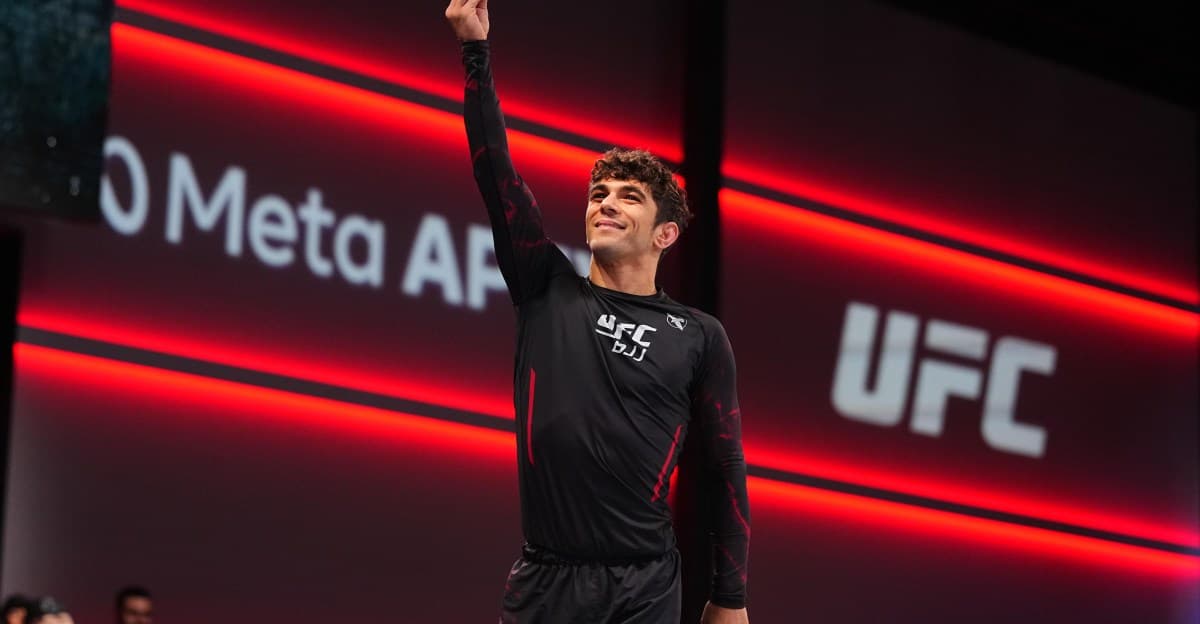
Mikey Musumeci gives up the belt to make room for MMA
Musumeci is vacating his UFC BJJ title to focus on MMA training. What he is leaving, what continues, and why the transition matters.
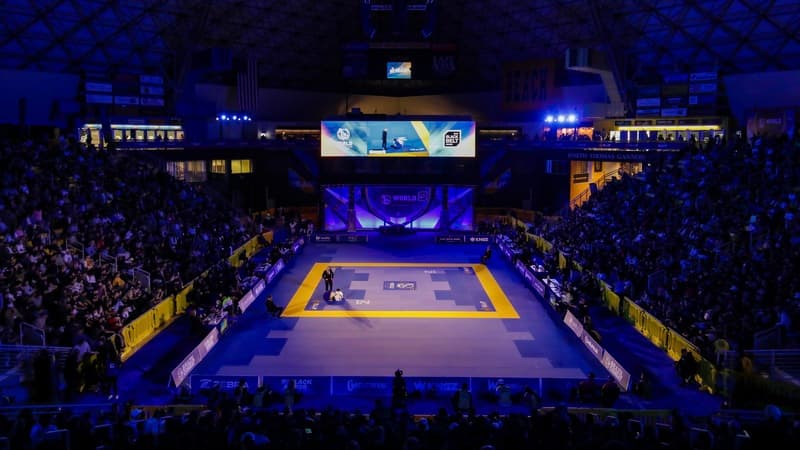
IBJJF membership: finish the paperwork before the deadline
IBJJF membership and tournament entry are separate steps. Plan documents, professor approval, renewals, and junior accounts before registration closes.
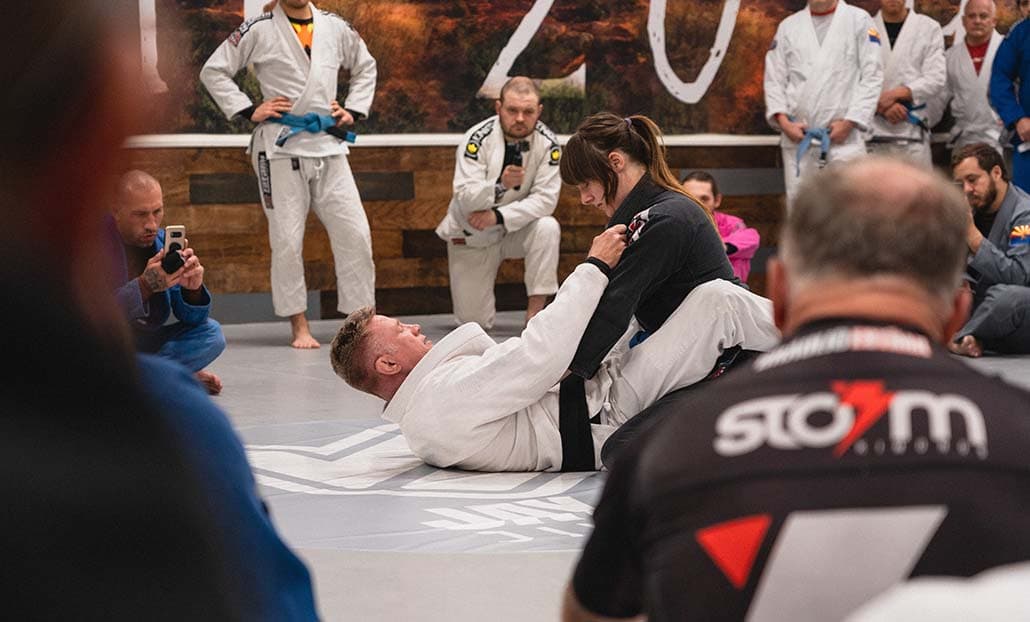
Choosing a BJJ seminar worth your time and travel
Choose a BJJ seminar by the subject, teaching format, access, and total cost. Know what to ask the host before buying a ticket.
Comments (0)
Loading comments...