

QUINTET changes what a draw can do for your team
Quick answer: QUINTET is a team grappling format in which a winner stays on to face the next opponent and a draw removes both athletes. Five-person teams compete under a combined weight limit, with the applicable division and event rules determining the details. The format changes the value of a finish, a draw, and an unused teammate.
Dan Strauss beat two opponents and then drew with Kazushi Sakuraba in the final of the first QUINTET. All three appearances contributed to the same team contest. The draw ended his own run and removed Sakuraba from the opposing lineup.
Later, Craig Jones submitted Marcos Souza to secure Team Polaris’s victory. The official April 2018 results preserve the sequence. It is a useful introduction to a format in which the opponent after this opponent is already part of the story.
A viewer can understand a particular exchange and still lose track of the team contest. Keep the remaining lineups beside the mat. The next athlete waiting to enter changes the meaning of the result that has just happened.
A successful athlete stays in the contest
QUINTET’s own format introduction describes five-person teams and a winner who continues against the next member of the opposing team. The athlete remains until a loss or draw removes them. A particularly successful opener can therefore meet several opponents in succession.
That gives the event a different shape from five unrelated superfights added into a team total. The order of encounters develops through the results. A single competitor’s run can change who is left to face the other team’s later athletes.
Consider a hypothetical opener who submits two opponents and then loses. Their own appearance has ended, while the team has removed two people from the other lineup before bringing in its next member. The contribution survives beyond the athlete’s last match.
For a spectator, that makes the remaining roster useful information throughout the contest. The current pair is one problem. The people still waiting to enter describe the next possible problems, depending on how this exchange finishes.
A draw removes two people rather than preserving the lineup
The winner-stays-on system also removes both athletes after a draw. That is why Strauss’s meeting with Sakuraba matters to the inaugural final even though neither recorded a submission in that encounter. Both teams had to move to the next available grappler.
The arithmetic creates interesting hypothetical situations. If a team has one athlete remaining and the other has three, a draw with the current opponent cannot produce the same outcome as clearing the opposing roster. The number of people left has become part of the competitive task.
That does not tell us what a named athlete intended. It tells the viewer what the possible outcomes would do to the teams. A defensive exchange may be technically interesting, while the event’s rules still require activity and penalize stalling.
I would keep those two ideas together when watching. Understand the team consequence without declaring that any competitor who defends successfully must have been trying to force a draw. The result can be observed; the private plan needs an actual account from the athlete or coach.
The first final contains several different kinds of contribution
QUINTET.1 took place on April 11, 2018, at Ryōgoku Kokugikan in Tokyo. Its final began with a draw between Josh Barnett and Gregor Gracie. Strauss then defeated Daisuke Nakamura by rear-naked choke and Hideo Tokoro by guillotine before drawing with Sakuraba.
The official sequence continued with Souza submitting Caol Uno, followed by Jones submitting Souza with a straight kneelock. Polaris won. The organizer’s following-day report records the title and the team setting around the result.
The finish is the moment a short clip will favor. The earlier encounters explain why those two people were meeting and which teammates had already completed their work. Strauss’s two wins and draw changed the final before Jones entered it.
That is a useful reason to watch a complete team contest at least once. A single submission can be appreciated alone. The roster sequence gives its competitive significance a larger shape without requiring a viewer to invent a story about momentum or team spirit.
An unused finalist can still have helped the title run
Marcin Held appeared in Polaris’s semifinal against Team Sambo, where the official event page records two submission victories and a later draw. He did not need to enter the final for those earlier encounters to have contributed to the championship.
The distinction matters in a one-day team event. An athlete’s visible role can differ between rounds. The final lineup alone does not describe all the work that put the team there.
For a hypothetical five-person squad, imagine that the first two grapplers clear one opponent team, leaving later members unused in that contest. The absence of a mat appearance is information about the sequence, not evidence that those teammates were unnecessary to the event plan.
I like the way the format makes spectators retain several measures at once. A successful appearance, a useful removal of an opponent, and remaining available for a later round are different forms of contribution. The official result should still determine the outcome; the surrounding roster helps explain how the team reached it.
Combined weight changes the roster question
The published rules, revised October 10, 2025, give combined five-person limits of 430 kg for Regular, 360 kg for Light, and 280 kg for Female Regular. These are current published category limits, rather than a claim that every historical event used an identical arrangement.
A combined limit makes composition part of the team’s task. Five equal-sized athletes and a lineup with a greater size spread may fit the same total while producing different potential pairings. The event then lets the actual sequence determine which encounters occur.
For an explicitly hypothetical Regular team, four athletes totaling 340 kg leave 90 kg within a 430 kg ceiling for the fifth. That arithmetic does not identify the best team. It describes the constraint a roster has to satisfy before questions of style and order can be considered.
A spectator can therefore look at the whole group instead of treating each athlete as if they had entered a conventional weight-class bracket. The relevant limit belongs to the team total, while particular pairings may still have a substantial size difference.
The clock can change when the weight gap is large
The same rules page sets a standard eight-minute bout and provides shorter four-minute arrangements at specified size gaps. In Regular, the threshold is at least 20 kg; the published thresholds differ for Light and Female Regular. The lighter athlete can choose the longer bout.
The practical consequence is that the pairing and agreed bout length belong together. Before judging the pace, identify the clock the athletes are actually working with. A short encounter does not simply represent the first half of a longer one that somebody forgot to complete.
For a hypothetical viewer’s note, write the two athletes, the remaining teammates, and the bout length before following the opening exchange. That makes the time left interpretable once the contest develops.
Our match-length guide explains the broader habit of checking the actual event and category. QUINTET adds a particularly clear example: even within a team format, the pairing can affect the duration the viewer needs to follow.
The last pairing has a defined route to a team decision
When both teams are down to their last athlete, the published rules provide a decision process using those athletes’ warnings first, then team warning totals, and finally a judges’ flag decision if needed. That provision prevents a simplified description of submission-only from explaining every possible ending.
Read the applicable event document before predicting how a tied team contest will be settled. QUINTET’s single matches also have their own decision provision, so the name on a broadcast is a starting point for identifying the format rather than a substitute for it.
The same care belongs in a training-room imitation. A club can run a supervised team exercise with a chosen objective, but the participants need to know its scoring, permitted techniques, and reset rules. The professional brand does not automatically supply an appropriate class plan for every experience level.
For wider comparison, the tournament-format guide shows why a familiar word such as elimination can hide different structures. In QUINTET, a draw and the order of remaining athletes deserve particular attention.
Keep a roster note instead of only a submission count
A viewing note can stay small. It needs to preserve the people still available and the effect of the result that just occurred. The information becomes particularly useful after several short bouts, when a broadcast has moved on before a newer viewer has reconstructed the lineup.
Track:
Who remains available for each team before the current pairing.
Whether the result removes one athlete or both.
Which person enters next and the duration of that bout.
Keep interpretations separate from the list. A team may have chosen an order for a reason, but the viewer should not claim to know the private plan solely because the eventual matchup looks favorable. The observable sequence already contains plenty to discuss.
The final can then be watched as a developing team contest. Jones’s finish remains a decisive result at QUINTET.1, while the earlier work by Strauss, Held, and the rest of the lineup stays visible around it.
The takeaway
QUINTET makes the next opponent part of the current match. A winner stays available, a draw removes both grapplers, and the remaining roster changes what the next result can do. The first event’s final shows why a title-winning submission belongs beside the sequence that made it decisive.
Watch one complete team contest with the lineup and actual bout clock in view. Check the applicable rules for the category and event, then let the encounters explain the story. Five separate finishing clips cannot show the same structure.
Find the event and check its format
Browse Let’s Roll’s tournament directory and read the organizer’s rules and category information before planning to attend or enter an event.
FAQ
How many people are on a QUINTET team? The core format uses five-person teams under a combined weight limit. Check the event and division for the applicable limit and other conditions.
What happens after a draw? In the winner-stays-on team system, both athletes leave that pairing. When both teams are on their last athlete, a specified decision process applies if needed. Read the complete event rules.
Did Team Polaris win the first QUINTET? Yes. The official April 11, 2018 results show Polaris beating Team Haleo in Tokyo, with Craig Jones submitting Marcos Souza in the decisive encounter.
Are all QUINTET bouts eight minutes? No. The published rules include shorter bouts for specified weight differences and separate provisions by category. Confirm the duration for the particular pairing and event.

Miles Serrano
Miles Serrano writes about competitors and the decisions that shaped their careers. He is more interested in the adjustment someone made in the third minute than in the medal count afterward.
Related Posts
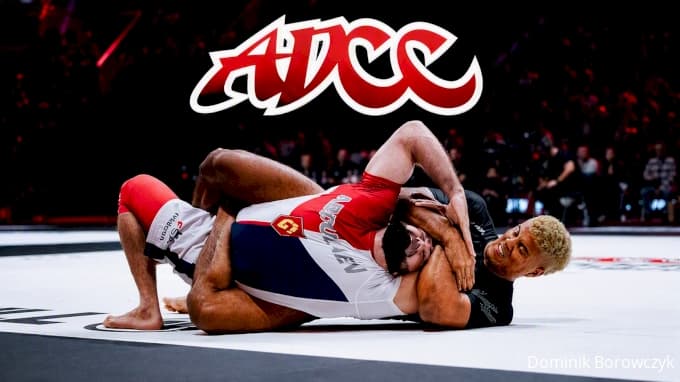
ADCC 2026 results: the stories that survived the predictions
ADCC 2026 results from Krakow: Jaworski, Maciel, Crevar, Pena, the women's champions, and the superfight outcome, with official podiums and match context.
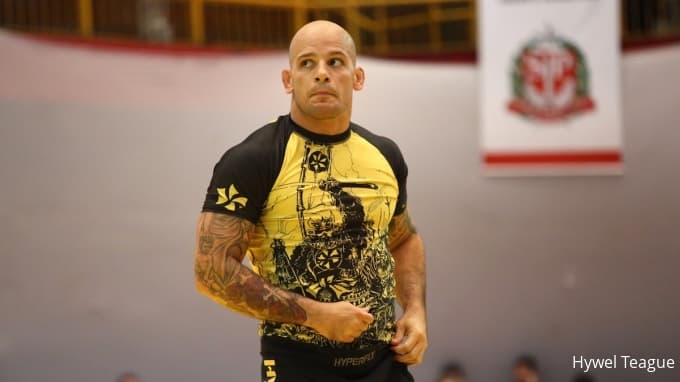
Xande Ribeiro: from absolute titles to the masters mat
Explore Xande Ribeiro's absolute Worlds victories, two ADCC titles, Six Blades, and the distinction between his 2022 Worlds farewell and later masters gold.
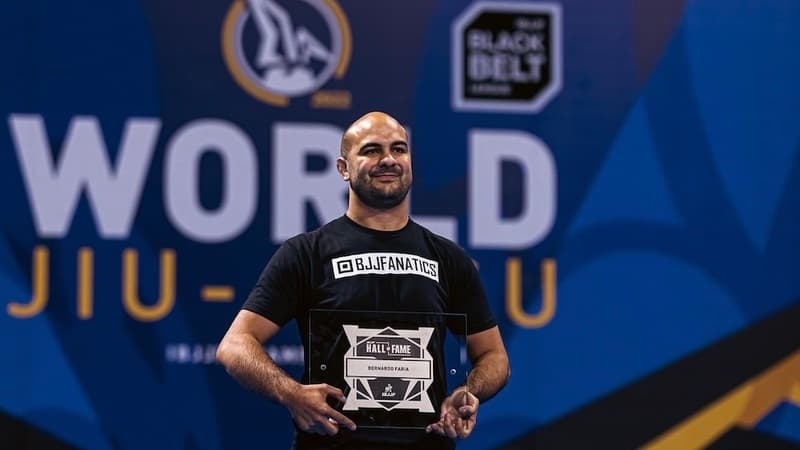
Bernardo Faria: the champion who kept asking questions
Follow Bernardo Faria from Juiz de Fora and Alliance to the 2015 Worlds and BJJ Fanatics, with context on his competition game and move into teaching.
Comments (0)
Loading comments...