
Paulo Miyao deserves more than half a shared surname
Quick answer: Paulo Miyao’s individual record includes adult black-belt gold at the 2015 Pans and Worlds, a 2019 Worlds silver, and Master 1 No-Gi Worlds gold in 2022. His shared academy with João Miyao, Studio 1908 in Jersey City, adds another role to a career too often compressed into a famous surname.
In the 2015 World Championship results, Paulo Miyao appears at the top of adult black-belt light-featherweight. Daniel Beleza is second. At roosterweight, João Miyao appears second behind Bruno Malfacine. The brothers were already a famous pairing, but their names belonged to separate competitive jobs.
That is an appealing place to begin with Paulo. His career shares a great deal with João’s, including podiums, team affiliations, and an academy. It also contains achievements that remain specifically his, down to the year, division, and color of the medal.
The story reaches from a particularly successful 2015 season to later gi and no-gi podiums and the practical work of operating a school. The connection between those chapters is an athlete continuing to find uses for a deep investment in jiu-jitsu, as the tournament field and his role within the sport changed.
Two major titles in 2015
Paulo won adult black-belt light-featherweight at both the Pans and Worlds in 2015. The Pan results list João second, while the World Championship results place Daniel Beleza second and José Tiago Barros and Kim Terra third.
The two titles established success in separate major brackets. Winning the Pans did not settle Worlds in advance. Another field, another tournament day, and another route to the podium still had to be negotiated.
The World Championship also put Paulo in a different division from João. A shared reputation can make that detail easy to overlook. The athletes were not always trying to solve the same bracket at the same event. Their results can run alongside one another without becoming a single interchangeable record.
For Paulo, the two gold medals made 2015 a substantial adult black-belt season before the calendar had finished supplying opportunities. A later American Nationals result would add a different kind of distinction: the lead in an overall ranking rather than the top place at one major.
The ranking rewarded another completed bracket
After Paulo won featherweight gold at the 2015 American Nationals, Graciemag’s original report recorded him moving ahead of Bernardo Faria in the IBJJF adult male black-belt ranking. The reported total was 699 points.
That result is interesting because the American Nationals title came at featherweight, while the Pan and Worlds titles had come at light-featherweight. His successful season was not confined to one event or one divisional label.
A ranking lead also measures something different from a world title. The championship identifies the winner of its bracket. The ranking adds results across an eligible competition period. The athlete needs enough successful appearances to accumulate the relevant points, rather than relying only on the name of a single trophy.
In Paulo’s 2015 season, those two kinds of achievement reinforced one another. Major championships supplied the strongest individual results. Another national event extended the run. The record describes a competitor willing to keep entering, with enough consistency to turn that activity into an overall lead.
Guard work is a problem of useful contact
Paulo is closely associated with a generation of competitors whose guard exchanges made inversions and routes toward the back familiar viewing. Those positions can look like a flexibility exhibition when the opponent’s role disappears from the explanation. Their competitive value comes from the control established around the movement.
A player turning underneath needs more than the freedom to rotate. The opponent must remain connected in a way that prevents a simple withdrawal or a return to a stable square position. An ankle, hip, or upper-body connection can determine whether the movement leads somewhere useful or merely changes which direction the bottom athlete faces.
That is why an opponent’s base matters so much. If the top player can freely step away and recover posture, an inversion may not create an attack. If a leg remains trapped and the hips have been turned, the same rotation can open a route behind the defender.
Our berimbolo article develops that positional problem. It is a useful way to understand the technical conversation around Paulo’s generation: the movement gets attention, but the connections determine what it accomplishes.
The 2019 Worlds podium brought both names together
At the 2019 Worlds, João and Paulo occupied the top two places in adult black-belt light-featherweight. João was first, Paulo second, with Hiago George and José Tiago Barros sharing bronze in the official results.
That podium gives the shared surname a concrete sporting meaning. Both brothers had reached the highest listed places in the same division. It also supplies a different outcome from the 2015 Pans, where Paulo had been first and João second.
The lasting interest is the sustained presence near the top of difficult adult fields. Four years after Paulo’s 2015 world title, he was again on the final podium. New athletes had entered the ranks, and existing rivals had continued developing. The familiar name was still attached to a consequential result.
For a spectator, those repeated appearances make a division easier to follow across seasons. A championship is a snapshot of one tournament, but returning athletes connect the snapshots. Their games face another field, another set of preparations, and another version of the competitive standard.
A no-gi title in the Master 1 field
The 2022 No-Gi Worlds added another gold, this time in Master 1 black-belt light-featherweight. The championship results put Paulo first, João second, and Carlos Saquic Perez and Samuel Franchi in the bronze positions.
Master 1 is a specific age category with its own field. It gives experienced competitors another championship setting rather than extending an adult result under a different name. The no-gi format also removes the sleeve, collar, and trouser grips available in the earlier gi events.
Those changes affect the controls an athlete can use to preserve an angle or prevent an opponent escaping a position. A familiar guard movement may require a different connection when there is no fabric to hold. The defender can also try to withdraw limbs and change direction without the same jacket-based restrictions.
Paulo’s title therefore adds two developments at once: another age division and another competition format. It belongs alongside the adult gi titles as its own achievement, showing the continued competitive use of skills built over a long career.
Studio 1908 changed the scale of the work
The IBJJF introduced Paulo and João’s Studio 1908 in an official academy tour. The school is in Jersey City, New Jersey. Its own website lists children’s and adult programs alongside information about professional training.
An academy gives an athlete’s knowledge another audience. Tournament preparation is organized around solving a specific opponent or bracket. Teaching has to make useful parts of that knowledge available to people whose experience, schedule, and reasons for training can be very different.
A beginner needs to recognize a position before learning a sophisticated route through it. A more experienced student may already understand the position but need help identifying why one particular reaction keeps stopping the attack. Both tasks require explanation, repetition, and partners who make the problem visible.
That is what makes the academy chapter significant beyond the brothers’ names on the door. The school creates a place where competition experience can become something other people work with every week. The scale changes from one athlete’s next match to the progress of a room.
The ordinary details behind a famous academy
Studio 1908’s published etiquette information includes a white-gi policy, a prohibition on street shoes inside the gym, and footwear requirements for the bathroom. These are ordinary operating details, but they place the school in the world of actual classes rather than a permanent highlight reel.
A recognizable athlete can attract attention to an academy. The repeated experience of training there depends on the room’s daily arrangements: how people arrive, what they bring, how they share the space, and which classes fit their level.
That difference is useful for anyone interested in visiting a prominent competitor’s school:
Check the current schedule and whether visitors need advance arrangements.
Confirm the required uniform before packing.
Choose a class appropriate to your experience rather than assuming every session is a professional training round.
These practical questions do not reduce the appeal of learning around accomplished athletes. They make the visit more likely to work. A successful school needs room for both the serious competitor and the person learning the first reliable escape of their life.
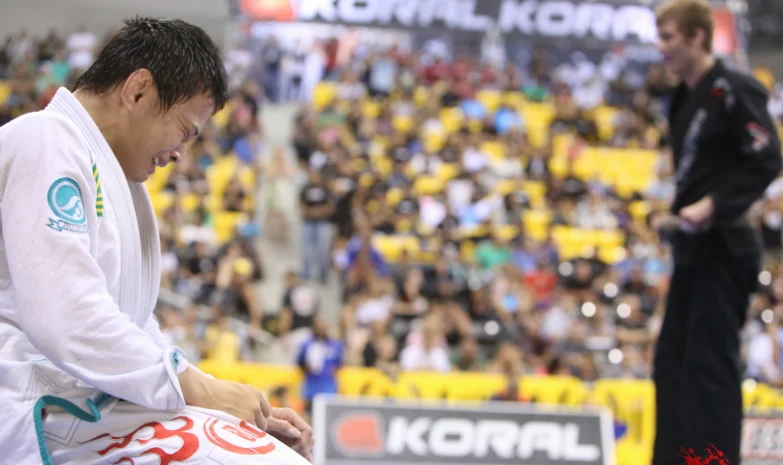
Main photo: bjjfanatics.com.br (source publisher; photographer not identified). Archive photograph published with BJJ Fanatics BR’s account of Miyao’s 2013 brown-belt absolute title. It does not depict a later black-belt event.
The takeaway
Paulo’s career has a clear individual outline: major adult gi titles in 2015, another adult Worlds podium in 2019, and Master 1 No-Gi Worlds gold in 2022. The shared sporting identity with João connects those results, but it does not dissolve them into one record.
Studio 1908 adds a different kind of continuity. The same sport that produced a competitive career now supports a place for other people to train. Following Paulo through both chapters gives the famous surname more substance: specific achievements, changing competitive settings, and a school with its own daily work.
Find a room that fits your training
Use the Let’s Roll gym directory to compare academies, then confirm each school’s current class and visitor arrangements.
FAQ
Did Paulo Miyao win the 2015 gi Worlds? Yes. The official results list him as the adult black-belt light-featherweight champion, with Daniel Beleza second.
What happened at the 2019 Worlds? João Miyao placed first and Paulo second in adult black-belt light-featherweight. Hiago George and José Tiago Barros shared bronze.
Which title did Paulo win at the 2022 No-Gi Worlds? He won Master 1 black-belt light-featherweight. João placed second in the same category.
Where is Studio 1908? Paulo and João’s academy is in Jersey City, New Jersey. Its own website provides the current program, schedule, and etiquette information.

Rafael Moura
Rafael Moura profiles competitors as people with lives outside the bracket. Some of those stories are comebacks. Most are not, and he does not force them.
Related Posts
Gustavo Batista’s passing reputation needs the next move
Batista submitted three opponents from the back at the 2023 Brasileiros. His later Worlds final shows why the passing label never tells the whole story.
A BJJ gym social should be easy to join and easy to leave
Plan BJJ gym socials around clear invitations, cost, timing, access, and optional participation. Give teammates a way to meet beyond the next round.
The hidden hand in your BJJ match video is still hidden
Slow motion cannot reveal a grip the camera never saw. Read BJJ match footage through visible evidence, competing explanations, and the limits of the angle.
Comments (0)
Loading comments...