
The hidden hand in your BJJ match video is still hidden
Quick answer: A match video can show the sequence without showing every grip, angle, or source of pressure. Separate what is visible from what you infer, and keep an unseen detail unresolved until another view or a coach's explanation supports it. Use slow playback to inspect evidence, rather than to make a confident story from missing frames.
A hidden hand stays hidden at quarter speed. The clip becomes longer, the movement becomes easier to pause, and the viewer can feel more certain without receiving any new view of the grip. That is a small trap with a large audience.
I think the best match analysis is willing to stop short of a complete explanation. It can identify the turn that changed an exchange while admitting that the controlling hand disappeared behind a torso. The missing detail does not make the clip useless. It decides which question the clip can answer.
Write the visible sequence before explaining it
Begin with actions the camera shows. A player turns onto a side. The opponent changes a foot position. A hand appears at a collar. Those observations can be assembled into a sequence without deciding what either athlete intended.
Then examine the explanation you want to add. The attacker may have been setting up a back take, but the footage might support only that they followed a turn and reached the back. Intention is a stronger claim than order. Keep the distinction visible in your notes.
Our match-observation guide provides a broader framework for following an exchange. For this exercise, narrow the task to evidence. Record the last visible connection before the bodies overlap and the first visible connection afterward. The interval between them may contain the answer, but a camera obstruction does not let you supply it freely.
A later result cannot identify every earlier mechanism
A tap establishes that the match or practice exchange ended by that signal. It does not reveal every grip that produced the submission. A reversal establishes a change in position. It does not by itself prove which frame failed first.
Consider an illustrative collar-choke clip. The attacker's hands disappear behind the defender's shoulder, the torso turns, and the defender taps. You may recognize the submission family from the visible configuration. You may still be unable to determine the exact grip depth or the pressure direction in that attempt.
Those limits matter when you take the clip into training. The right question for a coach might be which versions fit the visible position. It might not be how to reproduce the exact finish. The latter assumes that the camera has supplied an exact version to reproduce, and sometimes it simply has not.
Pause before the moment everybody shares
The final sweep or submission attracts attention because its consequence is obvious. The controlling change can occur earlier, before a spectacular turn or a defender's sudden loss of balance. Include the lead-in when choosing the sequence to study.
This does not require watching an entire event for every question. Start far enough back to find the last stable position, then follow the change you care about. If the edit begins after the relevant grip is already secured, record that limit rather than pretending that the clip explains its entry.
YouTube's official keyboard-shortcut guide lists frame stepping with the period and comma keys while a desktop video is paused. That can help inspect the visible transition. It cannot reveal a hand behind a body, restore a cut from an edited clip, or measure pressure from the way an athlete's face looks.
Change the question when the view is blocked
An obstructed grip does not always end the analysis. It can make another part of the exchange the useful subject. Perhaps the hand is hidden but the feet clearly show the passer changing sides. You can study that positional timing without claiming the grip did all the work.
For a hypothetical example, the defender's elbow disappears beneath the attacker during a mount transition. The camera still shows the attacker's knee moving above the shoulder line. You can record the changed mount arrangement and ask how several possible arm controls would affect it. The video supports the knee movement. The arm control remains a separate question.
This is more useful than attaching allegedly to an unsupported explanation. A hedge cannot manufacture evidence. State the visible action, identify the missing relationship, and make the unresolved question precise enough for another angle or an instructor to address.
Use a lesson for the geometry and the match for the context
A coaching demonstration can deliberately expose a grip that live footage hides. A match can show resistance and consequences that a slow lesson does not reproduce. Use both without expecting either one to do the entire job.
For example, Rickson Gracie Academy's mount excerpt describes following an upa toward technical mount within a control-and-attack lesson. It gives you a named primary reference for that teaching problem. It does not prove that every similar competition turn used precisely the same controls or the same intention.
When comparing a match with instruction, identify which features actually match. The body orientation may agree while the grips differ. The entry may resemble the lesson while the defender offers another response. Those differences are part of the analysis, rather than inconveniences to remove so the clip becomes a perfect example.
Keep an evidence note with two kinds of sentence
A short review can remain readable without becoming a transcript. Separate the observed sequence from your explanation of it, and let the second retain the uncertainty it deserves.
Here is an editorial note format to try with your coach. It is a practical organization suggestion, not a claim about a scientifically proven review method.
Visible event: identify the body part, grip, or position that changes.
Possible explanation: say what you think made the change useful.
Missing view: name the relationship the camera cannot establish.
The training-journal guide gives you a place to carry one useful question back to class. Avoid filling it with invented certainty just because a blank field looks unfinished. A precise missing-view note can be the most honest and useful part of the entry.
Your own footage needs permission and a workable angle
If a training partner agrees to filming, discuss the purpose and audience before recording. A clip intended for private coaching review is not automatically permission to post a public breakdown. Check the academy's filming arrangements as well as the partner's agreement.
For the technical question, think about what the camera must see. Studying foot placement requires the feet in frame. Examining an upper-body grip may require an angle that avoids the nearest torso blocking it. The appropriate position still has to respect the room, other people, and the host's instructions.
You may not be able to obtain a complete view. That is normal. Keep the footage as one source alongside the partner's account and the coach's observation, with each attached to what they can actually establish. A better recording angle helps a specific question. It does not turn a private training clip into an omniscient account of the round.
A second camera can resolve one uncertainty while introducing another. It may reveal the missing hand and hide the feet that explained the earlier turn. Compare the views over the same interval and attach each claim to the angle that supports it. More footage is helpful when it answers a particular question, rather than merely making the evidence pile larger.
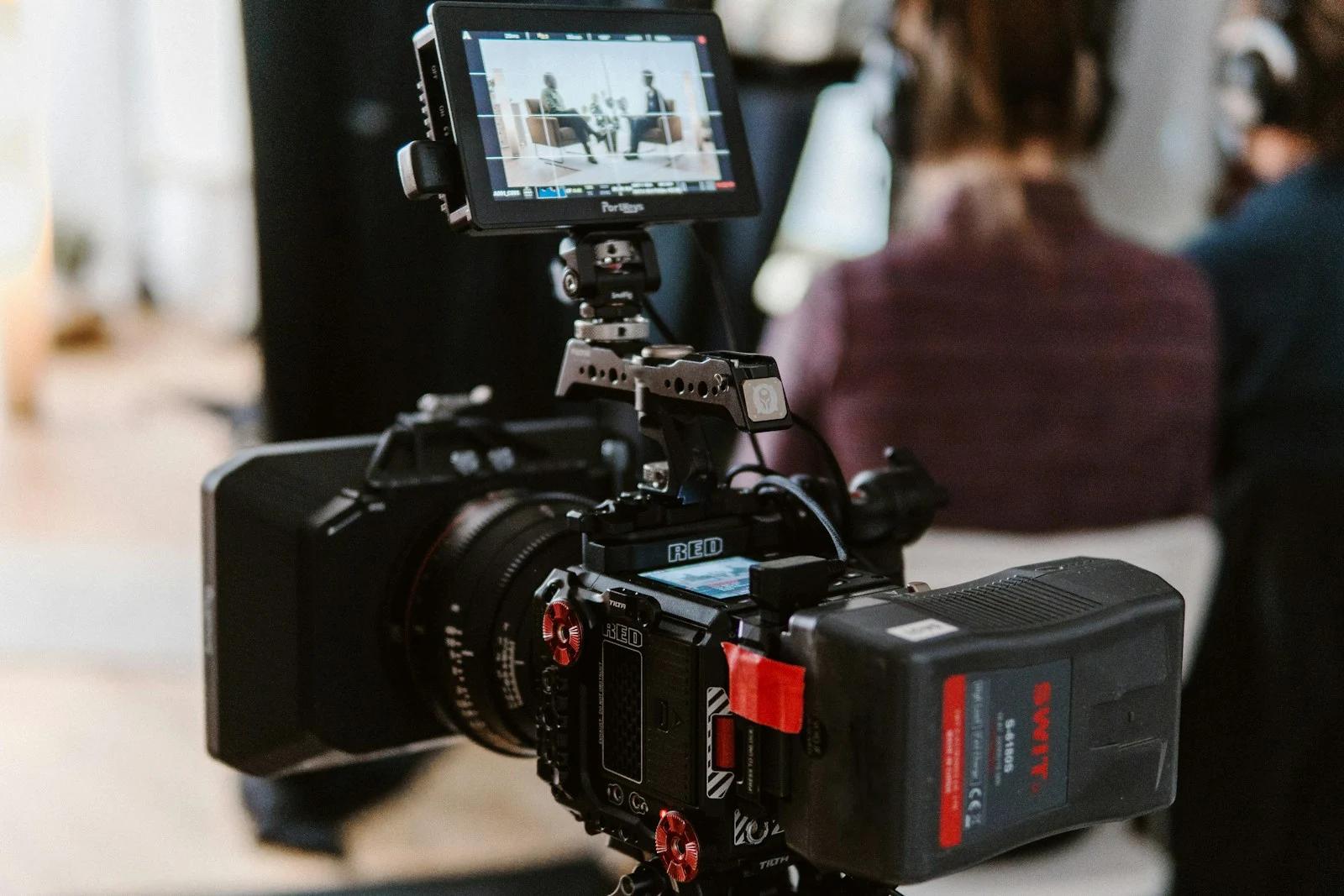
Main photo: Leuchtturm Entertainment. Illustrative filming equipment. This photograph does not depict a BJJ match or Let’s Roll recording session.
The takeaway
Good footage analysis separates sequence from mechanism. Learn what the camera shows, notice what it hides, and resist making the eventual result prove every earlier detail. Slower playback can help inspect a visible movement. It cannot supply a new point of view.
For the next clip, write one observation, one possible explanation, and one missing view before asking a coach about it. The coach may confirm your interpretation, offer another version, or decide that the footage cannot settle the question. Any of those answers is better than practising a detail you inferred so often that it began to feel observed.
Take a focused question to class
Use Find gyms to locate an academy and confirm an appropriate session with the host. Ask the coach when a short footage question would be welcome, rather than assuming that a class booking includes a detailed private video review.
FAQ
Does slow motion make a technical explanation more reliable? It can make visible movement easier to inspect, but it does not remove a blocked camera angle or a missing edit. Reliability depends on what the footage actually shows and how carefully you separate that evidence from an interpretation.
Can I identify a submission from a tap and a rough body shape? You may recognize a likely family, but the exact configuration can remain uncertain. State what is visible and avoid claiming an unseen grip or pressure direction. A coach or another angle may help narrow the possibilities.
Should I copy a competition move that differs from the lesson? First identify the difference with an instructor. The starting control or defensive response may change the technique. A successful result in the clip is context for study, not permission to improvise an unfamiliar submission or transition on a partner.
What if my training video never shows the important hand? Record that limit and bring a narrower question to your coach. You can still study the visible timing, body orientation, or resulting position. Do not turn the eventual outcome into proof of a grip the camera never revealed.

Miles Serrano
Miles Serrano writes about competitors and the decisions that shaped their careers. He is more interested in the adjustment someone made in the third minute than in the medal count afterward.
Related Posts
Gustavo Batista’s passing reputation needs the next move
Batista submitted three opponents from the back at the 2023 Brasileiros. His later Worlds final shows why the passing label never tells the whole story.

A BJJ gym social should be easy to join and easy to leave
Plan BJJ gym socials around clear invitations, cost, timing, access, and optional participation. Give teammates a way to meet beyond the next round.
Paulo Miyao deserves more than half a shared surname
Read Paulo’s competition record separately from João’s, then follow how their shared academy adds another chapter beyond the podium.
Comments (0)
Loading comments...