
No-Gi BJJ for Beginners: A Complete Starter Guide
Quick answer: No-gi BJJ is Brazilian jiu-jitsu trained without the traditional uniform — you wear a rashguard and shorts instead. Without cloth to grip, the pace is faster and more slippery, control comes from body grips (underhooks, wrist control) rather than collars and sleeves, and leg locks are more common. It's a great place to start or to complement your gi training.
No-gi jiu-jitsu has exploded in popularity, driven by events like ADCC and the rise of submission grappling. If you're curious about training without the gi — or deciding where to start — here's a complete beginner's guide.
What no-gi actually is
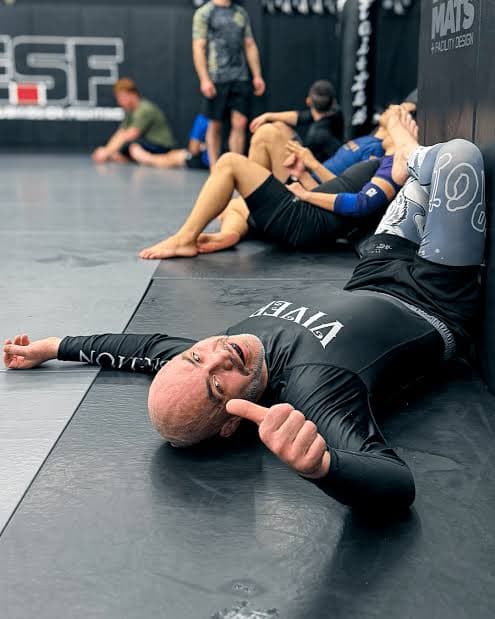
No-gi BJJ is the same art as gi jiu-jitsu — control, position, and submissions on the ground — but trained without the kimono. Instead of a gi, you wear a rashguard and grappling shorts (and often spats). Without the jacket, pants, and belt to grab, the entire game changes feel, even though the underlying principles are identical. (For the full comparison, see our guide to gi vs no-gi.)
How no-gi differs from gi
The biggest differences a beginner will notice:
Faster and more slippery. Sweat plus no cloth to grip means people move and escape more quickly. Scrambles are a bigger part of the game.
Different grips. You can't grab collars or sleeves, so control comes from body grips — underhooks, overhooks, wrist control, two-on-ones, and head control — rather than fabric. (See our guide to grips and grip fighting.)
More leg locks. No-gi rule sets often allow more leg attacks, so heel hooks and other leg locks feature more prominently (learn them carefully and respect the tap).
Pace and conditioning. The quicker, grip-light style tends to be more cardio-intensive.
None of this makes no-gi "harder" or "easier" — just different. The core ideas of position, control, and submission carry over completely.
What to wear for no-gi
No-gi gear is simple and fitted:
A rashguard (short or long sleeve), snug so it can't be grabbed or bunched.
Grappling shorts without pockets or zippers, and/or spats (grappling leggings) for skin protection.
Slides for off the mat, water, and trimmed nails — the universal essentials.
Keep everything fitted and clean; loose clothing is a safety and hygiene problem.
Should beginners start with no-gi or gi?
Either is a fine place to start, and many gyms have you do both. A few considerations:
Gi is often considered more methodical and detail-oriented for beginners, because the grips slow the game down and there's more time to think.
No-gi is faster and more athletic, and appeals to people interested in MMA or modern submission grappling.
The most important factor isn't gi versus no-gi — it's finding a good gym with a real beginners' program. Pick the gym first, and train whichever style (or both) it offers.
Tips for your first no-gi sessions
Expect to be slippery and to gas out — that's normal early on; your conditioning will catch up.
Focus on body control (underhooks, head and arm control) since you can't rely on grips.
Tap early, especially to leg locks you don't understand, and ask your gym's rules about what's allowed at your level.
Drill the fundamentals — escapes, positions, and a couple of submissions — the same as in gi.
The takeaway
No-gi BJJ is jiu-jitsu without the kimono: faster, grip-light, leg-lock-friendly, and trained in a rashguard and shorts. The core principles are identical to gi, so it's a great place to start or to round out your training. Wear fitted gear, focus on body control instead of fabric grips, tap early, and find a good gym — and you'll pick up the modern submission-grappling style quickly.
Why no-gi has exploded in popularity
No-gi's rise isn't an accident. The growth of professional submission grappling — events like ADCC, the rise of star athletes, and the overlap with MMA — has put the style in front of huge audiences. Its faster, more athletic pace makes it exciting to watch and to do, and the gear is cheap and simple compared with buying gis. For many newcomers, especially those drawn in through MMA, no-gi is the first door into jiu-jitsu. Whichever style you start with, the skills cross over, and training both will round out your game.
Find a no-gi class near you
Find a BJJ gym near you on Let's Roll → — filter for gyms that offer no-gi classes and beginner programs, and read what the community says before you visit.
FAQ
What is no-gi BJJ? No-gi Brazilian jiu-jitsu is the same art trained without the traditional uniform — you wear a rashguard and shorts. Control comes from body grips rather than the gi, and the pace is faster.
Is no-gi harder than gi for beginners? Not harder, just different. No-gi is faster and more slippery with grips on the body instead of fabric; gi is more methodical. The core principles are the same.
What do I wear for no-gi BJJ? A fitted rashguard (short or long sleeve) with grappling shorts and/or spats. Keep it snug and clean, and bring slides and water.
Should I start with gi or no-gi? Either works. Gi is often a bit more methodical for learning fundamentals; no-gi is faster and suits MMA-minded people. Most importantly, pick a good gym and train whatever it offers.
Related Posts

Mikey Musumeci gives up the belt to make room for MMA
Musumeci is vacating his UFC BJJ title to focus on MMA training. What he is leaving, what continues, and why the transition matters.
IBJJF membership: finish the paperwork before the deadline
IBJJF membership and tournament entry are separate steps. Plan documents, professor approval, renewals, and junior accounts before registration closes.
Choosing a BJJ seminar worth your time and travel
Choose a BJJ seminar by the subject, teaching format, access, and total cost. Know what to ask the host before buying a ticket.
Comments (0)
Loading comments...