
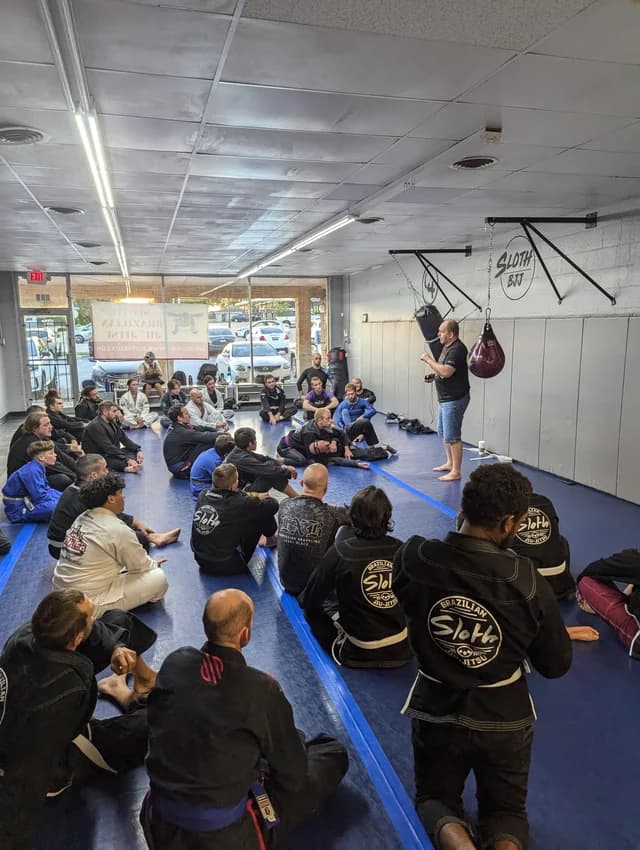
How to Train BJJ While Traveling: The Drop-In Playbook
Quick answer: BJJ might be the most travel-friendly sport on earth — nearly every city has gyms, and almost all of them welcome visiting grapplers for a drop-in fee, typically $20–40 a class. Message the gym ahead, show up early, be a polite guest, and pack at least a rashguard and shorts. Open mats are the traveler's cheat code: casual, social, often free or cheap, and the fastest way to make friends in a city where you know nobody.
One of the strangest perks of jiu-jitsu is that a white belt from Ohio can walk into a gym in Lisbon, get politely strangled by strangers for an hour, and leave with dinner plans.
No other hobby does this. Here's how to actually use it.
Why BJJ travels so well
Grappling is a universal language — you don't need to share a spoken one to roll. The global culture around visiting is remarkably consistent: gyms expect drop-ins, welcome them, and usually pair them with appropriate partners.
There's a practical reason, too. Everyone in that room has traveled or will, so hospitality gets paid forward. The community is small enough that "visitor from out of town" is a familiar, friendly category almost everywhere.
Finding a gym in a new city
The honest process takes about 15 minutes:
Search where you're staying, not the city center. The best-reviewed gym across town loses to a decent gym 10 minutes from your hotel — vacation logistics kill good intentions.
Check the schedule against your actual trip. Look for classes at times you'll realistically be free, and note whether the class you want is gi or no-gi.
Look for drop-in signals. Many gyms list a drop-in policy and fee on their site; a visible one is a good sign they see visitors often.
Message ahead. A two-line note — "traveling through next week, would love to drop in Tuesday, what's your visitor policy?" — answers everything and means you're expected when you arrive.
The same instincts from choosing a home gym apply in miniature: clean mats, a welcoming reply, a real schedule.
Drop-in etiquette, the short version
You're a guest in someone's house. The rules are mostly obvious and worth stating anyway: arrive 15 minutes early, introduce yourself to the coach, mention your rank and home gym, pay the mat fee without being chased, and follow the gym's rules on everything from shoes to rolling intensity.
Two specifics matter more on the road. Don't roll like it's the ADCC trials — nobody remembers the visitor who "won," everybody remembers the one who hurt a local. And bring clean gear; a smelly gi is a memorable souvenir to leave behind, in the bad way. The full breakdown is in our drop-in etiquette guide.
Mat fees, honestly
Expect $20–40 per class in the US, with big-name academies charging more and plenty of gyms waiving the fee entirely — especially if you buy a patch or shirt, which is a classy move anyway. Internationally it varies with local prices.
If a gym waives your fee, buy something or leave a genuine review. Drop-ins are a courtesy the gym extends, not a right, and small gestures keep it that way for the next traveler.
Packing: gi, no-gi, or both
The realistic packing tiers:
Minimum: rashguard, shorts or spats, flip-flops. Covers any no-gi class and weighs nothing.
Better: add a gi if your bag allows. Many gyms are gi-first, and some loan visitors a gi — ask when you message ahead.
Always: a plastic bag for wet gear and something to wash with. Hotel-sink gi laundry is a rite of passage.
Traveling carry-on only? Go no-gi-focused and target gyms with no-gi classes, which most schedules now include several times a week.
Open mats: the traveler's best friend
If you can only train once on a trip, make it an open mat. They're casual, so missing the technique portion of a week-long curriculum doesn't matter. They're social, so you'll actually talk between rounds. They're often free or cheap for visitors. And they're usually on weekends, when travel schedules are loosest.
Rolling at an open mat in a new city is the closest thing BJJ has to a pub crawl. Ask three people where to eat afterward and you'll get a better answer than any review app.
The takeaway
Training while traveling isn't a logistics problem — it's a 15-minute search, a polite message, and a $30 bill. In exchange you keep your momentum, feel new styles your home gym can't show you, and land in a new city with an instant social circle.
The honest catch: the hard part is doing it at all. Vacation inertia is real. Book the class before you leave home and you'll actually go.
Every gym you visit becomes part of your story
Let's Roll was practically built for this. Search thousands of gyms and open mats wherever you're headed, then check in when you train and collect a passport stamp from every gym you visit — proof of everywhere your jiu-jitsu has taken you. Find a gym for your next trip on Let's Roll →
FAQ
How much does it cost to drop in at a BJJ gym? Typically $20–40 per class in the US, though many gyms charge less or waive the fee for polite visitors — some just ask you to buy a patch or shirt. Always ask when you message ahead so there are no surprises at the front desk.
Do I need to bring a gi when traveling? Only if you plan to hit gi classes — a rashguard and shorts cover any no-gi session and pack much lighter. If you want gi training without the luggage, ask the gym whether they loan visitor gis; many do.
Can a white belt drop in at gyms while traveling? Absolutely — gyms host visiting white belts constantly, and a good coach will pair you with sensible partners. Just mention your experience level when you arrive and roll at the intensity the room sets, not above it.
Are open mats good for visitors? They're the best option for travelers: casual, social, usually on weekends, and often free or cheap for guests. You'll get more rounds and more conversation than in a structured class, which is exactly what you want in a new city.
Related Posts

Mikey Musumeci gives up the belt to make room for MMA
Musumeci is vacating his UFC BJJ title to focus on MMA training. What he is leaving, what continues, and why the transition matters.
IBJJF membership: finish the paperwork before the deadline
IBJJF membership and tournament entry are separate steps. Plan documents, professor approval, renewals, and junior accounts before registration closes.
Choosing a BJJ seminar worth your time and travel
Choose a BJJ seminar by the subject, teaching format, access, and total cost. Know what to ask the host before buying a ticket.
Comments (0)
Loading comments...