
IBJJF leg-lock rules: heel hooks, reaping, and your division
Quick answer: IBJJF permits heel hooks and knee reaping in adult brown-and-black-belt no-gi, not across every division. Gi, masters, juvenile, and lower-belt categories have different restrictions. A legal ankle lock also does not mean every grip, turn, or leg configuration is permitted.
A black belt can watch a legal heel hook in an IBJJF match and still enter a category where heel hooks are prohibited. The missing information is often the age group or clothing. Belt color alone does not settle the rule.
The reliable check is the complete category: age, belt, gi or no-gi, and the specific technique or configuration. The official illegal-moves chart supplies that structure. A highlight caption or a gym’s informal rule set cannot replace it at registration or on the mat.
Read the full chart column
The official IBJJF rules and illegal-moves chart separate age and belt groups, with a distinct column for adult brown-and-black-belt no-gi. Other brown-and-black-belt categories are not simply included in that exception.
Identify the age division.
Identify the belt division.
Confirm gi or no-gi.
Check the specific attack and any related positional restriction.
The last step matters because the name of a submission does not describe every possible variation. A grip, direction of pressure, turn, or leg configuration can change the legal question. Calling an action an ankle lock is not enough to establish that the whole sequence is permitted.
This guide explains the category structure and common misunderstandings. It is not a mechanical tutorial for applying leg locks. A coach should help assess the actual position and build an appropriate controlled progression for training.
The adult no-gi heel-hook exception
The chart permits heel hooks and knee reaping for adult brown and black belts in no-gi. All three parts of that phrase matter. Removing adult, removing the belt condition, or removing no-gi changes the group being described.
An adult blue or purple belt does not gain the same heel-hook permission merely by entering no-gi. A brown belt in gi does not gain it from the belt color. A masters black belt does not gain it from having the same rank as an adult black-belt athlete in a televised match.
That distinction explains many apparent contradictions in footage. Two clips can both be authentic IBJJF competition while showing different legal options because the athletes are in different categories. The organization name alone is not the complete rule context.
Before a competition-focused round, state the actual category being simulated. Adult black-belt no-gi and masters black-belt gi are different assignments. A shared agreement is more useful than assuming every partner uses the rule set most recently watched online.
Masters rules do not copy the adult exception
The adult brown-and-black-belt no-gi exception does not automatically extend to masters. The chart places other brown-and-black-belt categories in a separate column, including masters entries that remain subject to the relevant prohibitions.
This is a category distinction, not a judgment about a masters athlete’s technical knowledge. An experienced competitor may understand a technique very well and still be prohibited from using it in a particular bracket. Competitive legality and personal skill are different questions.
The practical check belongs before the event. Read the age-and-belt table, the clothing category, and the current technical rules. Do not wait until a match to discover that a familiar training position has a different competition status.
For replay study, retain the age division in the note. A masters match and an adult match at the same belt are not necessarily examples of the same legal options. Removing the age label can turn a correct observation into bad advice for another competitor.
An ankle lock is not a universal permission
The illegal-moves chart separately lists straight foot locks, heel hooks, toe holds, kneebars, and other actions. It also identifies prohibited directions or variations that cannot be settled by a broad technique nickname.
For example, the chart addresses a straight foot lock with a turn in the direction of the foot not under attack. It separately addresses outward pressure in a toe hold. These entries are reasons to inspect the complete position with a qualified coach rather than rely on a single familiar label.
A lower-belt athlete should not infer that permission for one straight ankle-lock situation permits every rotational leg attack. The relevant category and the specific action remain necessary. Juvenile and children’s groups have additional restrictions that should not be replaced with an adult chart from memory.
A training partner’s tap also does not retroactively settle competition legality. It ends the practice exchange, while the rule question remains about the action and category. Partners should agree on permitted attacks in advance and release promptly rather than testing uncertainty under force.
Reaping is a positional rule as well as a finishing question
The rulebook defines knee reaping through a configuration and pressure relationship, not merely through whether a heel hook is completed. A competitor should therefore check the position itself instead of assuming that avoiding a particular finishing grip removes every issue.
This is one reason short clips are difficult to judge. The camera may hide the trapped foot, leg placement, or direction of pressure. A single frame can omit the sequence that establishes how the configuration developed.
The appropriate response is to review the full position and the actual rule. A coach or rules course can help connect the written definition to a controlled demonstration. A vague instruction to keep legs safe is not precise enough to resolve a competition category.
The adult brown-and-black-belt no-gi permission still needs its full label here. A configuration legal in that group may be prohibited in another. The same visual position should not be described as universally legal or universally illegal without the category attached.
Legal techniques still need controlled training
A permitted attack is not automatically a suitable full-speed exercise for every partner. Rules establish what a competitor may use in a category; they do not establish an individual’s readiness, an appropriate practice intensity, or a partner’s understanding of an unfamiliar position.
Agree on the allowed attacks and stopping conditions before the round. If the position is new, ask a coach for a controlled entry and recognition exercise rather than trying to reproduce a competitive finish from a highlight. The objective can be identifying the position without applying finishing pressure.
This is especially useful in mixed-level rooms. Partners may have trained under different organizations or informal gym rules. A clear agreement avoids assuming that the other person interprets a technique name or release signal in exactly the same way.
The IBJJF rules overview places technique legality beside the wider competition rules. For a specific leg-lock question, the current chart and a clear demonstration of the actual position remain the relevant references.
Check the event rather than the loudest caption
A caption that says heel hooks are legal in IBJJF is incomplete. So is one that says they are always banned. The current chart gives a more specific answer through age, belt, and clothing category.
When researching a match, write down those fields before judging the action. Then check the actual technique or positional restriction. If a clip does not reveal enough, retain the uncertainty rather than inventing the missing angle or movement.
A result report can establish that an adult black-belt no-gi match ended with a heel hook. It cannot transfer that permission to another bracket. The athlete’s achievement and the reader’s eligibility are different facts, even when the reader has the same belt color.
For an event entry, bring unresolved questions to the organizer or a qualified rules instructor before the competition. Describe the exact category and position. A precise question is more likely to produce a useful answer than an argument over a technique nickname that covers several different actions.
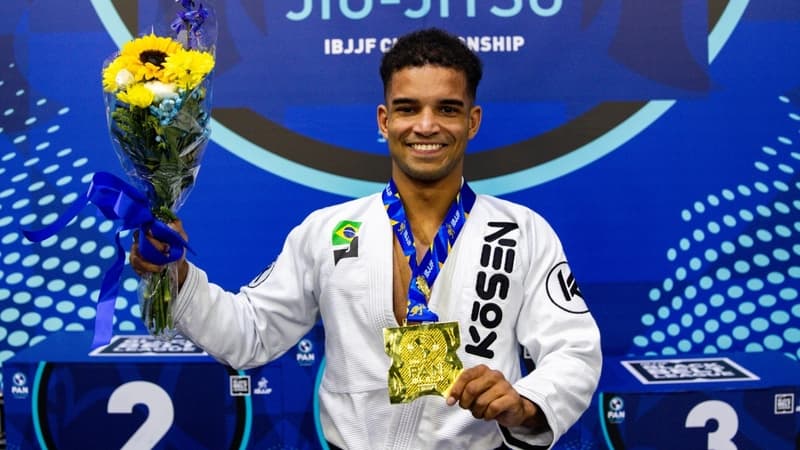
Main photo: Archive: Marcos Gomes at the 2026 Pans — IBJJF; photographer not identified on source page.
The takeaway
IBJJF leg-lock legality depends on the full category and the actual action. The adult brown-and-black-belt no-gi heel-hook and reaping permission is specific, while gi, masters, juvenile, and lower-belt categories need their own chart entries.
Use that chart before registration and before a competition-focused round. A legal technique, a familiar name, and a suitable training exercise are separate questions; keeping them separate makes the rules easier to apply accurately.
Agree on the round before it starts
Find open mats, then confirm the permitted techniques and starting conditions with the coach and training partner before using unfamiliar leg positions.
FAQ
Are heel hooks legal in IBJJF? They are permitted in the specified adult brown-and-black-belt no-gi category. That statement does not apply to every belt, age group, or gi division.
Can masters black belts use the same heel-hook exception? The adult exception should not be extended to masters. Check the chart column for the actual masters category.
Does a legal ankle lock make every leg entanglement legal? No. The specific attack, turning direction, and positional restrictions still matter. A broad technique name is not a complete legality check.
Can a short clip settle a disputed reap? Not always. The relevant foot, leg configuration, or pressure direction may be hidden. Use the full sequence, category, and rule definition rather than guessing the missing detail.

Nina Okada
Nina Okada explains positions the way a good training partner does: one problem at a time, with the limits of the explanation said out loud. She is careful about the difference between what footage shows and what it only suggests.
Related Posts

Lucas “Hulk” Barbosa’s best work is in the details
Lucas Barbosa’s nickname explains the first impression. His gi world title, no-gi record, and 2022 ADCC final give viewers more to study.

João Miyao’s record deserves its own first name
João Miyao’s adult world title and 2026 Master1 results tell a distinct story, even when his brother appears beside him on the podium.

Jena Bishop made time for a second sporting life
Jena Bishop’s 2026 PFL title followed a deliberate move from championship jiu-jitsu into learning a different sport.
Comments (0)
Loading comments...