

Brazilian Nationals 2026: women’s results and double gold
Quick answer: Gabrieli Pessanha won women’s super-heavyweight and open-class gold at the 2026 Brazilian Nationals. The other weight champions included Mayssa Bastos, Ashlee Funegra, Mia Funegra, Sarah Galvão, Elisabeth Clay, Maca Vicentini, and Yara Soares. These are adult black belt gi results.
Three of the lightest titles went to AOJ athletes. The heaviest category and the open went to Pessanha. Between those ends of the women’s draw, Galvão, Clay, Vicentini, and Soares added their own category wins.
The result is more interesting when all those titles keep their proper names. A double gold is not two descriptions of one medal, and the Brazilian Nationals is not another label for the Pans or Worlds. The podiums below preserve those distinctions while making the season easier to compare.
Rooster and light featherweight
The gold-medal list offers a quick reference before the complete podiums below:
Women’s rooster: Mayssa Caldas Pereira Bastos.
Women’s light feather: Ashlee Funegra.
Women’s feather: Mia Funegra.
Women’s light: Sarah C. Firme Galvao.
Women’s middle: Elisabeth Ann Clay.
Women’s medium heavy: Maria Carolina Barón Vicentini.
Women’s heavy: Yara Soares do Nascimento.
Women’s super heavy: Gabrieli Pessanha de Souza Marinho.
Women’s open class: Gabrieli Pessanha de Souza Marinho.
The official Brazilian Nationals record supplies these women’s adult black belt podiums. The final event record is dated May 3. Each category is kept separate from its similarly named no-gi counterpart.
Rooster. Mayssa Bastos of AOJ took gold. The silver medal went to Jessica Caroline Coelho Dantas of Pax Jiu-Jitsu Academy. The bronze medalists were Gabrielle Kari Etzel (Upper Twelve Jiu-Jitsu) and Thaís Loureiro Felipe (Mekka Jiu-Jitsu). The 2026 Pans results name Ana Carolina de Andrade Lima Soares da Silva as this category’s champion. The two events therefore have different winners; their podium lists alone do not establish a head-to-head meeting between those winners.
Light Feather. Ashlee Funegra of AOJ took gold. The silver medal went to Maria Luiza Nunes Pinto of JFC Almeida JJ. The bronze medalists were Andressa Nogueira Tolentino Guirau (Barreto) and Vitória Damiana Silva de Assis (Double Five). In the 2026 Pans standings, Ashlee Funegra placed second, while Mayssa Bastos took gold. The order changed between the two recorded podiums.
Featherweight and lightweight
Feather. Mia Funegra of AOJ took gold. The silver medal went to Gabriela Andrelevicius Pereira of Brothers Club. The bronze medalists were Giovanah Oliveira da Silva (JFC Almeida JJ) and Keanna Carolyn Klay (Gracie Barra). The 2026 Pans results name Margot Ciccarelli as this category’s champion. The two events therefore have different winners; their podium lists alone do not establish a head-to-head meeting between those winners.
Light. Sarah Galvão of Atos Jiu-Jitsu took gold. The silver medal went to Vitoria Carolina Araujo Vieira of GF Team. The bronze medalists were Randryely da Silva Souza (Qatar BJJ Brasil) and Stéphanie Caroline Delphine Faure (CheckMat). The 2026 Pans record also lists Sarah Galvão first in this category, giving the two events the same champion here.
Middle and medium heavyweight
Middle. Elisabeth Clay of Six Blades Jiu-Jitsu took gold. The silver medal went to Lillian Marchand of Atos Jiu-Jitsu. The bronze medalists were Gisele Constante Menezes Tavares (GF Team) and Larissa Martins dos Santos (DreamArt). In the 2026 Pans standings, Elisabeth Clay placed second, while Lillian Marchand took gold. The order changed between the two recorded podiums.
Medium Heavy. Maca Vicentini of AOJ took gold. The silver medal went to Ingridd Alves de Sousa of BJJ College. The bronze medalists were Giovanna Xavier Carneiro (GF Team) and Sábatha Laís Francisco dos Santos (Fratres Brazilian Jiu-Jitsu). In the 2026 Pans standings, Maca Vicentini placed second, while Elizabeth Katherine Mitrovic took gold. The order changed between the two recorded podiums.
Heavyweight and super heavyweight
Heavy. Yara Soares do Nascimento of Fratres Brazilian Jiu-Jitsu took gold. The silver medal went to Tamiris Fernanda da Silva of DreamArt. The bronze medalists were Isabely Sanches Ribeiro (Lotus Club) and Natacha Amanda Ribeiro da Silva (Gracie Barra). The 2026 Pans results name Larissa Dias as this category’s champion. The two events therefore have different winners; their podium lists alone do not establish a head-to-head meeting between those winners.
Super Heavy. Gabrieli Pessanha of Infight Jiu-Jitsu took gold. The silver medal went to Mikaela Barros de Lima of GF Team. The bronze medalist was Marina Carraro Penedo (JFC Almeida JJ). The 2026 Pans record also lists Gabrieli Pessanha first in this category, giving the two events the same champion here.
Pessanha’s second gold came in open class
Open Class. Gabrieli Pessanha of Infight Jiu-Jitsu took gold. The silver medal went to Sarah Galvão of Atos Jiu-Jitsu. The bronze medalists were Ana Beatriz Santos da Silva (Esporte Dez / Instituto Calasans Camargo) and Giovanah Oliveira da Silva (JFC Almeida JJ). In the 2026 Pans standings, Gabrieli Pessanha placed second, while Sarah Galvão took gold. The order changed between the two recorded podiums.
The two first places are not duplicate entries. Super heavyweight is Pessanha’s weight category; open class is a separate bracket without that same boundary. Her double gold records success in both assignments.
The result also differs from the Pans open-class record, where Sarah Galvão took first. A season with multiple majors can produce a change in the winner without changing the earlier result. Each title remains attached to its own event.
What the Funegra and Galvão results add
AOJ’s women won the three lightest Brazilian categories through Mayssa Bastos, Ashlee Funegra, and Mia Funegra. That is a specific cluster of category golds in the official record, not a substitute for the event’s complete academy team standings.
Galvão won lightweight in Brazil, while her earlier Pans performance included lightweight and open-class gold. Keeping the two competitions separate allows both achievements to be stated correctly. A Pans open title should not be added to the Brazilian open record, where Pessanha finished first.
The Worlds results later placed Ashlee Funegra first at light featherweight, Janaina Lebre first at lightweight, and Pessanha first at super heavyweight and open class. The changing lightweight winner is one concrete way to follow the season without turning every event into an unsupported overall ranking.
Women’s categories also need their actual labels. A result at featherweight in one event and light featherweight in another can reflect a different entry, not an error. Follow the athlete’s registered category at each championship rather than assigning every result to a permanent weight class.
Give the medalists their own event record
A full podium records more than the champion. Silver and bronze names can point to matches worth finding, academy representation, and athletes whose season is easy to overlook when only winners are listed. Those places should be retained without an invented story about how each final ended.
The official page does not supply a complete method-and-time record. Two listed bronze medalists are podium places, not proof of a contested third-place match. Likewise, two athletes from one academy do not automatically establish a closeout unless the bracket or an official report confirms it.
The gi Worlds guide explains the larger championship structure. The Brazilian women’s results are a distinct part of that calendar, with their own entries, placings, and dates.
For a useful replay session, choose one category and find the actual bracket. Then watch the relevant round with the clock and score visible. That is a stronger basis for understanding a performance than reading a medal as proof of a particular style, private motivation, or inevitable future title.
When checking a medalist’s academy, use the affiliation printed for this event. An athlete’s later move or a familiar team association should not be inserted backward into the result. The official registration is the record being summarized here.
The units beside a weight category also need care. A published kilogram chart and a result page displayed in pounds can describe the same division. Retain the category name and official chart rather than recalculating a registration limit from a rounded conversion in a recap. For an athlete entering a future event, the current event chart remains the relevant entry information.
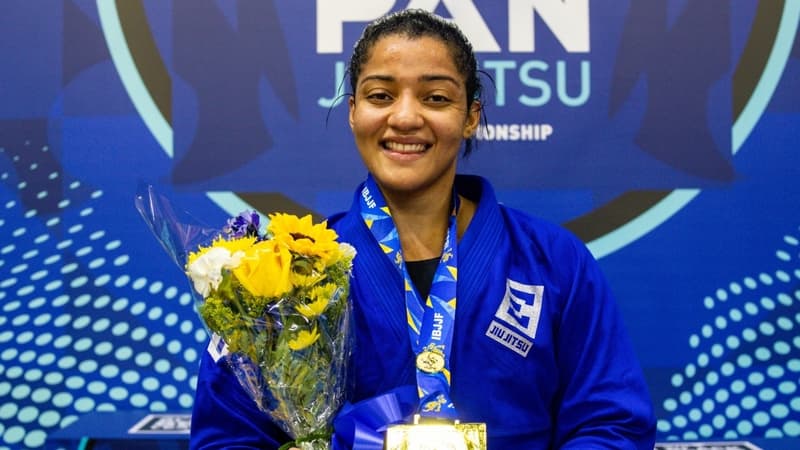
Main photo: Archive: Sarah Galvão at the 2026 Pans — IBJJF; photographer not identified.
The takeaway
Pessanha’s two golds anchor the women’s Brazilian Nationals results, while eight weight categories record their own champions and medalists. The lighter AOJ titles and changes from the Pans are specific features of this event, not a generic claim about the whole season.
Keep those podiums beside the earlier and later majors, with each category intact. The comparison can reveal repeated winners and changed orders without inventing a match route or a final method that the result sheet does not supply.
Find a competition
Browse the tournament directory, then check the organizer’s official page for the current schedule, categories, and registration conditions.
FAQ
Which results does this guide cover? The 2026 Brazilian Nationals women’s competition adult black belt categories identified in the article. Other belts and masters age groups have separate standings in the official event record.
Are these gi or no-gi results? These are gi results. A similarly named no-gi championship is a separate event, with its own divisions and results.
Do two bronze names mean they fought for third? Not necessarily. The listed third places are podium entries; they should not be turned into an invented bronze-match pairing or result.
Does a podium list give every match method? No. It records places and academy affiliations. Use the full bracket, replay, or a match-specific report for opponent routes, scores, and submission methods.

Rafael Moura
Rafael Moura profiles competitors as people with lives outside the bracket. Some of those stories are comebacks. Most are not, and he does not force them.
Related Posts
Your first IBJJF tournament: the day from check-in to results
Your first IBJJF tournament, from membership and correction dates to the bullpen, uniform, weigh-in, match call, and official result.

ADCC prize money in 2026: read the championship payouts
ADCC’s published 2026 prize schedule totals $362,000. Read the weight-class, absolute, superfight, and performance-award amounts correctly.

UFC BJJ 3 results: Musumeci’s first defense and the full card
All UFC BJJ 3 results, including Musumeci’s first defense, Henrique’s scorecards, and Murasaki’s late Kimura.
Comments (0)
Loading comments...