
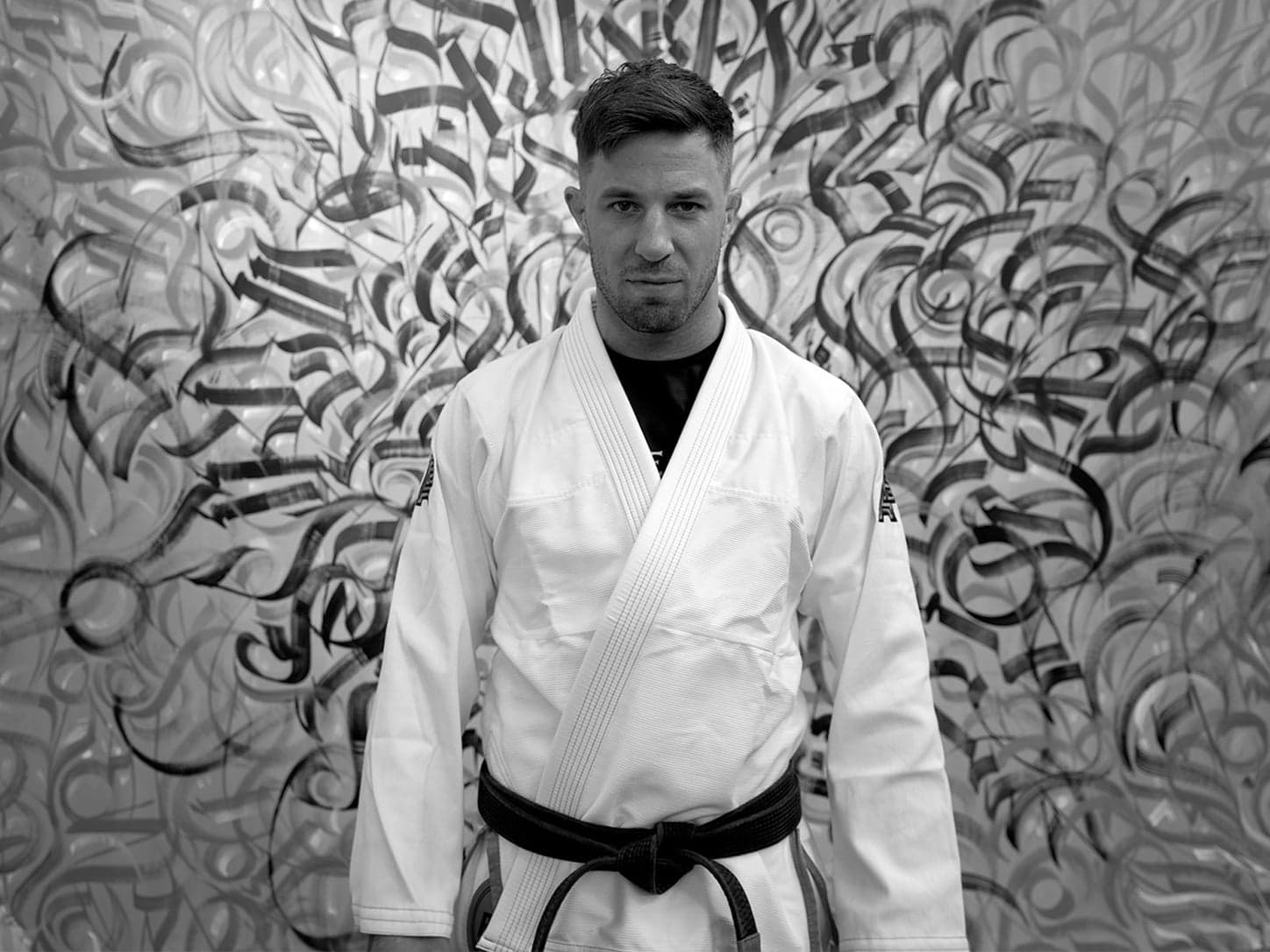
Carpe Diem in Tokyo: a dojo with room for ordinary life
Quick answer: Carpe Diem is a Japanese BJJ organization whose Tokyo roots are tied to founder Yuki Ishikawa and the Aoyama dojo. Its story includes competitive training, deliberate attention to the look of the academy, and the practical work of making teaching a profession. Visitors should choose a specific branch and contact it directly, because a shared name does not make every location's timetable or visitor policy identical.
Yuki Ishikawa's account of building a dojo includes waiting tables, becoming a father, and discovering that his students knew things he did not. There is jiu-jitsu in it, obviously. There is also a recognizable adult problem: how to keep doing something you care about when your life no longer fits around unlimited training.
That makes Carpe Diem an interesting Tokyo gym spotlight. Competition results are one way into an academy's story. Here, the founder's changing relationship with the room offers another. The question is how a place built around grappling can accommodate people whose priorities extend beyond their next match.
Ishikawa's story starts before the Carpe Diem name
In his account on Carpe Diem's website, Ishikawa dates his first BJJ training in the United States to 1998. After returning to Japan, he worked as a waiter while continuing to train. He later spent six years leading Tri-Force's Aoyama branch under Mitsuyoshi Hayakawa.
He describes choosing the Carpe Diem name in the summer of 2013. By then, marriage and the birth of his daughter had changed how much time he could spend teaching and training. Other instructors helped carry the work. His account also credits students with teaching him about life outside BJJ.
That is a more useful origin story than pretending a gym appears fully formed around a logo. A training room needs someone to teach when the founder has family responsibilities. It needs members who want to return after their first burst of enthusiasm. Those are ordinary demands, but they shape the actual experience of belonging to an academy.
For a recreational student, this part of the story deserves attention. The person who can train twice a week after work is not necessarily a less serious member than the person preparing for a tournament. Their calendar is different. A prospective member can reasonably ask where they fit without apologizing for having another life.
Aoyama gives the organization a specific home
The Aoyama dojo's English page identifies it as Carpe Diem's first location and headquarters. Ishikawa writes there that he opened his first dojo in 2007. Its published address is in Minami-Aoyama, in Tokyo's Minato ward.
The distinction between that earlier dojo and the later Carpe Diem name helps keep the history straight. An academy's community can predate the sign on its wall. People, teaching relationships and habits can carry across a change in organization.
Aoyama's description puts considerable weight on how members treat one another. That is the academy describing its own aims, rather than an independent rating from us. Still, it gives a visitor something concrete to pay attention to: how an unfamiliar person gets introduced, how partners settle the pace of a round, and what the instructor does when somebody needs help.
You can learn more from those moments than from guessing at the mood of a room through its photographs. Watch the changeover between rounds. Does a newcomer have someone to work with? Can a white belt ask for an explanation without becoming the afternoon's entertainment? Those questions belong in any gym visit, including a room with an established reputation.
The design was meant to make the first visit easier
In a 2023 interview published by NiEW, Ishikawa explained that the academy's interiors and clothing were deliberate choices. He wanted people who had never considered martial arts to find the presentation approachable. The same interview describes expansion through instructors and students who wanted to establish Carpe Diem schools elsewhere.
That account connects two parts of the academy that might otherwise look separate: the visual identity and the teaching network. Someone has to feel comfortable entering the room before they can decide whether the instruction suits them. Later, an instructor has to be able to imagine building a room of their own.
A well-designed academy does not need to feel like a luxury showroom. The useful details may be modest: somewhere obvious to leave shoes, an entrance where a first-time visitor knows whom to approach, and information that does not require decoding an insider's vocabulary.
A photograph cannot tell you whether those things work in person. Nor does a stylish rashguard prove the quality of a lesson. But dismissing the appearance of a gym as irrelevant misses the experience of the person standing outside with a rental gi and no idea what happens next. The doorway is part of the class experience too.
Teaching becomes a job with several different classrooms
Tokyo Weekender's 2020 interview with Thomas Mietz offers a closer look at the teaching side. It identifies him as head instructor at Carpe Diem Jiyugaoka, which opened in March 2019. Mietz said he had begun training at Aoyama in 2013 and learned about running a dojo through Ishikawa's mentorship.
His description of a busy day moved from private and group lessons to staff training, then to teaching children and training again. That schedule belonged to the interview's 2020 setting; it should not be used as a current class listing.
The interesting part is the switching. Explaining a movement to a child is a different assignment from helping an experienced adult prepare for a match. A private lesson can follow one student's problem closely. A group lesson requires deciding what several people can practice together without leaving half the room behind.
For a visiting student, this suggests a useful way to judge a lesson. Look for whether you understand the task and get a chance to practice it. An instructor's ability to perform a difficult move is impressive. Their ability to help your particular pair make sense of it is what you are buying for that hour.
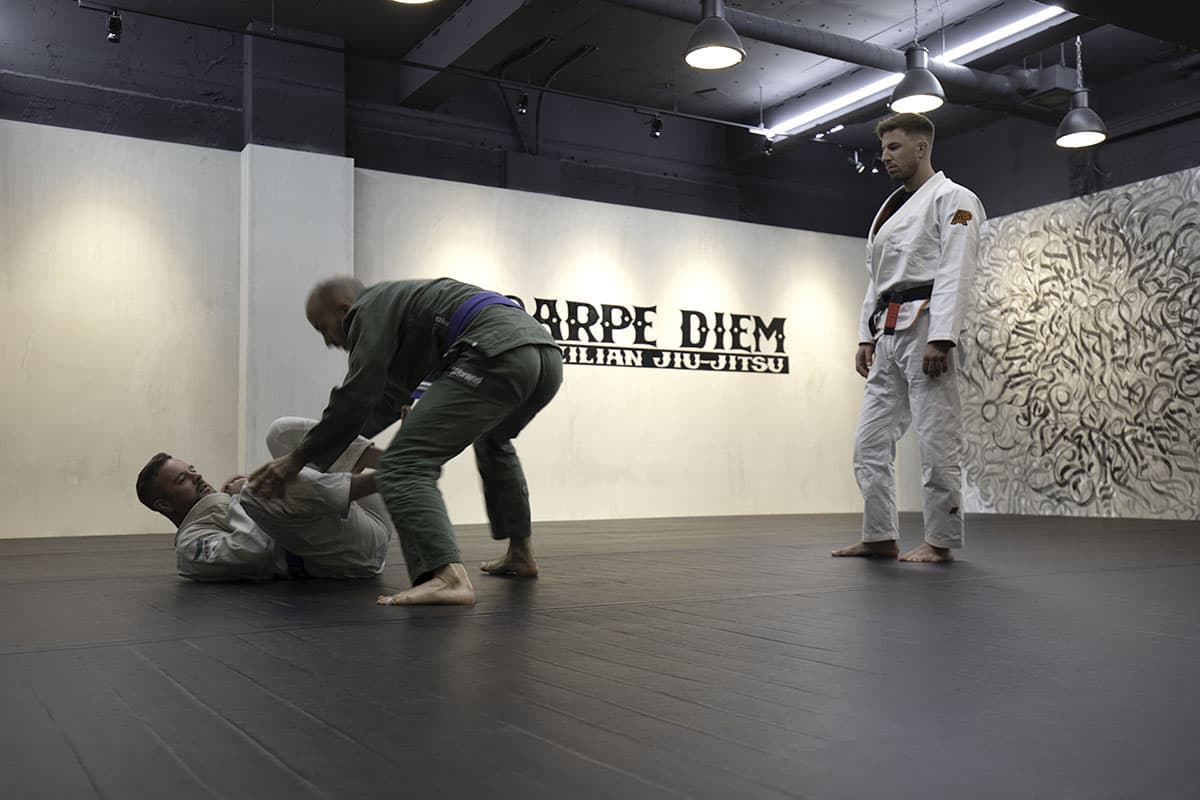
Photo: Jordan Green / Tokyo Weekender, 2020, Carpe Diem Jiyugaoka.
A beginner needs a clear place in the timetable
Aoyama's published class descriptions distinguish white-belt classes, basics, regular classes and no-gi. The page also says sparring is optional and that the instructor responsible for the class supervises rounds. Those are specific features of the published Aoyama program, rather than assumptions about every branch.
A new student can use those distinctions when asking where to begin. Instead of requesting the hardest class or the one with the most advanced belts, explain what you have actually done. Ten trial lessons spread across several years and six months of regular attendance are different starting points, even if both students own white belts.
For an experienced visitor, a basics class can still be worthwhile. You might be learning how this instructor organizes familiar material, or finding a manageable first session after travel. Choose it for that purpose. Do not arrive expecting the teacher to turn it into an advanced competition session because you brought a purple belt.
If the class description leaves something unclear, ask before joining the line. No-gi clothing requirements, whether a particular class accepts visitors, and the amount of experience expected are reasonable questions. The answers help you participate in the lesson that is actually being offered.
Pick a branch before planning your Tokyo training
The organization's English page directs visitors to choose a suitable dojo and contact that location. Follow that order. A message to the organization as a whole is less useful than a request that names the branch and intended class.
Before you go, settle a few particulars:
Give the branch your proposed date, belt and approximate training experience.
Confirm the class, reservation requirement and visitor fee directly.
Ask about rental clothing if you need it, including sizing and availability.
Check the branch's latest notice for closures or schedule changes.
Keep the reply with the address you plan to use. Tokyo is the destination; the individual dojo is where you need to arrive. Leave enough time to find the entrance and introduce yourself before class starts.
Our guide to finding a BJJ gym covers broader questions about choosing a room. For a short Tokyo visit, reduce the problem to one suitable session first. You can decide about a second class after you know how the commute and training fit the rest of your stay.
Use our BJJ travel guide for the packing and drop-in questions to settle with the branch before leaving home.
Be a visitor the regular members can train with
A gym spotlight can make a place feel like a destination attraction. The people attending that Tuesday class are still there to train. Your visit should fit into their lesson rather than turning the room into a backdrop for your trip.
Ask before taking photographs, especially if other students or children would appear. Put the phone away during demonstrations. If you want a picture with an instructor, find an appropriate moment after class and accept that they may have another responsibility waiting.
During rounds, state a limitation plainly and listen when your partner does the same. Do not turn uncertainty about language into a reason to avoid communicating. A pause, a clear gesture and help from the instructor are better than pushing ahead when neither person understands the arrangement.
Leave with a specific observation about the training: a detail you were missing, a useful exercise, or a way the coach organized practice. That gives the visit some value after the photograph has disappeared into your camera roll. It also keeps the academy's actual work at the center of the experience.
Main photo: Jordan Green / Tokyo Weekender, 2020: Thomas Mietz at Carpe Diem Jiyugaoka.
The takeaway
Carpe Diem's Tokyo story combines a founder's changing life with the work of teaching other people. The Aoyama roots, the attention to presentation and the development of instructors give the organization more substance than a recognizable patch alone. They also offer different reasons a visitor might want to learn more.
This is a researched spotlight, not a report from a class we attended. Choose the branch that suits your plans, confirm its arrangements, and pay attention to the lesson once you arrive. A good visit leaves you able to say something about the training beyond how the room looked online.
Find a room that fits your trip
Explore the gym directory for training options, then confirm visitor access with the academy you intend to attend.
FAQ
Who founded Carpe Diem BJJ? Yuki Ishikawa founded the organization. His published story describes adopting the Carpe Diem name in 2013, following earlier years of training and teaching in Japan.
Is Carpe Diem Aoyama the same as every Tokyo branch? Aoyama is identified as the headquarters, but visitors should treat each location's timetable and arrangements separately. Contact the branch you intend to attend.
Can a beginner consider training there? Aoyama publishes white-belt and basics class descriptions. Ask the relevant branch which session suits your experience and whether it accepts visitors or trial students.
Does this article list current drop-in prices? No. Fees, rentals and booking arrangements should be confirmed directly for your dates. The historical interviews explain the academy's development, not the price of a future visit.
Related Posts
Cobrinha's 2017: five major titles at 37
Cobrinha's 2017 season brought five major titles at age 37. Follow his gi and ADCC results, the Mendes rivalry, and the wrestling work behind that run.

Rafael Mendes: six Worlds titles and a life after competing
Rafael Mendes won six featherweight Worlds titles and retired at 27. Explore his ADCC rivalry with Cobrinha and the academy he helped build.

Training with women in BJJ: listen before you roll
Be a better BJJ training partner with women: agree on intensity, provide honest resistance, ask before coaching or filming, and respect a declined round.
Comments (0)
Loading comments...