

Caio Terra: the small division with a long history
Quick answer: Caio Terra's career includes gi world titles in 2008 and 2013, sustained no-gi success, and the development of an academy and association. His own account of the 2013 championship gives the story another dimension: the title arrived with thanks to the people preparing, training, and keeping the school running. A medal records one athlete's result; the work around it involves more people.
Caio Terra won the 2013 roosterweight world title with Bruno Malfacine second. The official IBJJF results preserve that order without supplying the months of work surrounding it.
Terra supplied part of that account himself in a public post after the championship. He thanked teammates and family, named the people helping with preparation, and described plans to focus on the team and association. That is a different view from a podium photograph: a champion talking about the room he would return to.
It provides a useful route through his career. Begin with the documented result, then look at the training and teaching relationships that the result alone cannot describe.
The 2013 podium changed a familiar picture
The roosterweight field had two established names at the top. Terra's association history lists gi world gold in 2008 followed by silver medals in 2009, 2010, 2011, and 2012. In 2013, the official result placed him first again, with Malfacine second and Felipe Costa and Ivaniel Cavalcante sharing bronze.
Keeping the earlier silver medals in the account gives the later gold its context. It avoids pretending that a title arrives only after a straight line of annual wins. A runner-up finish is also a substantial competitive result, even when the athlete wants a different place the following year.
The recurring final can be interesting without becoming a simple story of one person's persistence defeating another person's character. Both competitors have their own work and records. The particular result belongs to the particular event.
For readers following Bruno Malfacine's career, Terra's win is another reason to study the division as a shared competitive history. The rivalry is more informative when each athlete remains a person with a career beyond the other name on the final.
He describes a beginning without instant enthusiasm
The association's history page says Terra began at his mother's urging at sixteen, initially avoided much of the training, and began participating seriously in 2003. It identifies later instruction under Paulo Mauricio Strauch and Reyson Gracie and a black belt promotion in 2006.
These are the association's biographical claims, rather than memories observed by this writer. They establish a beginning that is less tidy than the idea of a future champion knowing exactly what he wanted from the first class.
A reader doesn't need to copy the timeline. A professional's progression took place under circumstances that are not interchangeable with an ordinary adult's work week. Turning the rank dates into a deadline for somebody else's belt would lose the point of the account.
The more modest relevance is that the first response to an activity doesn't always describe the relationship that develops later. Someone can become interested after an uneven beginning. That possibility leaves room for a beginner to assess the next few classes without having to feel certain about an entire future in the sport.
A smaller weight class still contains complicated work
Roosterweight identifies the competitive category. It doesn't mean the positions become simple or the opponents stop creating difficult decisions. Watching a smaller division can reveal grip exchanges, timing, and adjustments that disappear when the discussion stays focused on physical scale.
Choose one position to follow across a complete match. Where does the first connection appear? Which defensive action forces an adjustment? When does the athlete abandon one route and choose another? Those observations give technical substance to a familiar statement about size and skill.
Avoid taking a champion's result as a promise that technique removes every physical difference in your own training. Size remains one part of the exchange, along with experience, position, and the task both partners have agreed to practice.
For a recreational student, the useful step is to ask a coach which detail makes a particular movement manageable from the current position. A broad slogan may make the sport sound welcoming. A precise correction gives the student something they can actually test at the next session.
The no-gi record needs its own attention
Terra's no-gi work belongs beside the gi results. The 2017 IBJJF No-Gi Worlds results list him first in adult black belt roosterweight, with Tomoyuki Hashimoto second. His association's history records earlier no-gi world wins across the preceding years.
Keep the two formats distinct when choosing footage. Removing the gi changes the available grips and the ways those grips limit movement. A familiar positional goal can remain while the connection used to achieve it changes.
The value of a comparison is in the question you bring to it. You might follow how the athlete controls an arm, manages distance from seated guard, or prevents a passing entry. You don't need to decide that one format is more authentic before examining those relationships.
A career with success in both formats offers a wider viewing sample. That still doesn't mean every clip supplies a complete technical lesson. Find the beginning of the exchange and the opponent's response, including the attempts that don't reach the finishing position.
His championship account names the support work
In the June 2013 post after Worlds, Terra credited conditioning coach Itallo Villardo and thanked the teammates involved in his camp. He also acknowledged Flavio for keeping the gym running during his absences and his family for the demands of the preceding months.
Those acknowledgments put visible names beside work that a result sheet doesn't cover. Competition preparation and an operating academy can overlap without being the same task. Someone has to teach, organize, and keep the ordinary school day understandable while an athlete prepares elsewhere.
For a member of a gym led by an active competitor, that is a useful way to value the wider staff. The famous athlete may draw initial interest; the person delivering the class still shapes the student's actual week. Ask about the timetable and teaching team rather than assuming a name on the school promises the same instructor every evening.
An academy can remain worthwhile through those shared responsibilities. Recognizing them doesn't reduce the athlete's achievement. It gives a clearer picture of the environment in which the athlete and other students continue working.
Teaching creates a different kind of public record
The history page dates Terra's San Jose academy to 2011 and the association to 2012. Those institutions extend the career beyond the matches he entered himself. An athlete's competitive record and an association's work are related, but they should be described through different evidence.
For a prospective student, the questions are practical. Which class fits your experience? Who teaches it? What are the visitor and membership terms? A championship biography cannot answer those automatically.
For someone interested in the association, ask how its actual relationship with a school works. Instruction, events, affiliation, and ordinary membership may involve different arrangements. Our guide to BJJ affiliations provides a starting point for those questions without pretending every organization uses the same model.
Keep the distinction visible when evaluating a gym. A medal count can identify the instructor's competitive history. The class format, staffing, and direct answers from the school help you decide whether that history is being delivered in a way that suits your own training.
Study a career without adopting somebody else's calendar
A detailed athlete history can make ordinary progress feel slow if you turn every date into a benchmark for yourself. That is a poor use of the record. The circumstances behind a professional training schedule differ from the circumstances behind two evening classes.
Instead, use the archive to build a limited study task:
Choose one complete match from a documented event.
Follow a position you are already learning with your coach.
Note the opponent's response before the successful adjustment.
Bring one question to class rather than attempting to reproduce the whole game.
The task keeps admiration connected to something observable. It also lets the athlete remain an athlete, rather than becoming an unrealistic schedule template for everyone reading the biography.
Terra's public acknowledgment of other people's work makes that boundary easier to understand. The record was built within a particular network of preparation and teaching. You can appreciate it without pretending that your own week contains the same time, resources, or goals.
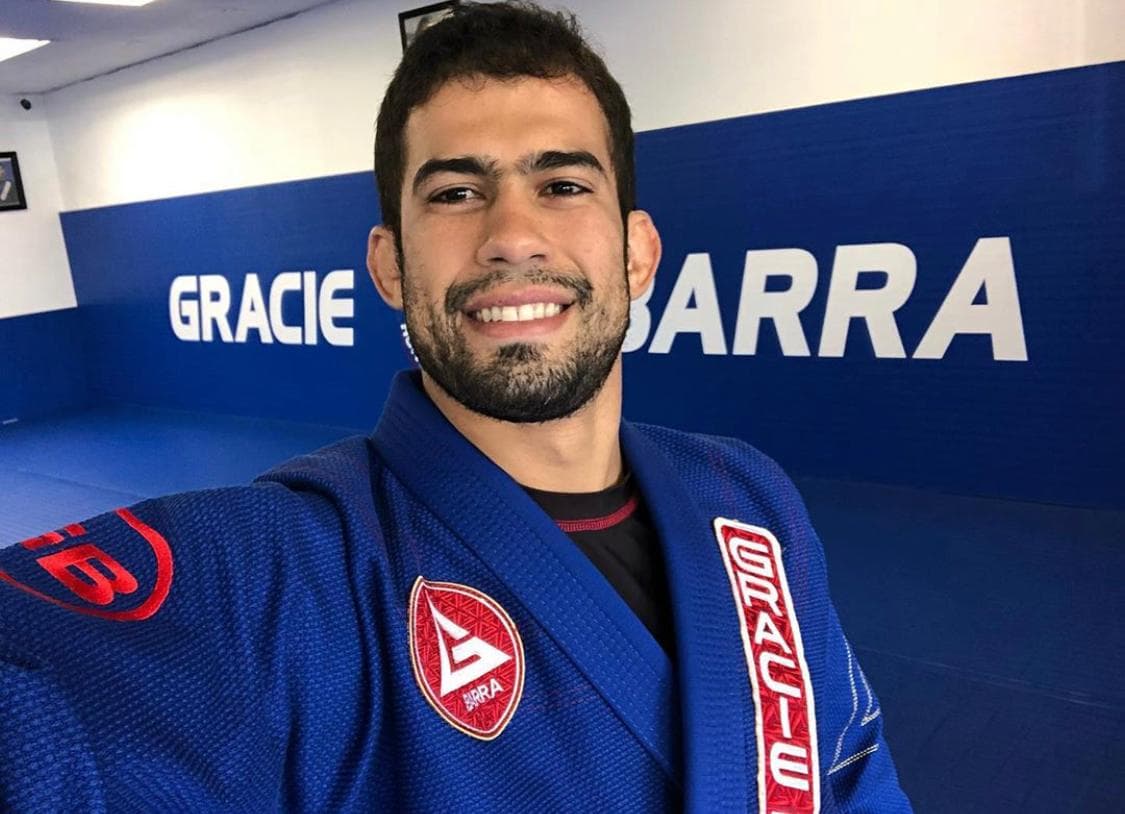
Main photo: Caio Terra Association; archive photo, photographer not identified.
The takeaway
The 2013 world title belongs in Terra's competitive record alongside earlier gi results and sustained no-gi success. His public post after that championship adds the surrounding people and responsibilities to the picture. The career includes winning matches and building places where other people train.
For a reader, keep those strands distinct. Study a position from the footage, check a school through its actual class information, and leave the athlete's timetable with the athlete. The profile becomes more useful when the achievement has context without becoming a demand that everybody follow the same path.
Find the class that fits your week
Explore the Let's Roll gym directory, then confirm the schedule, teaching team, and visitor process directly with the school you want to try.
FAQ
Did Caio Terra win the 2013 gi Worlds? Yes. The official IBJJF results list him first in adult black belt roosterweight, ahead of Bruno Malfacine. That is the championship at the center of this retrospective.
Was 2013 his first gi world title? No. His association's documented history also records a 2008 gi world title. The earlier result is part of the context for the later championship.
Does his career include no-gi world success? Yes. The official 2017 No-Gi Worlds record lists roosterweight gold, and the association history records earlier no-gi titles. Gi and no-gi results should be kept separate when comparing performances.
Should I use his promotion timeline as my own target? A professional athlete's rank dates don't establish a timetable for another student. Use the technical questions that fit your class and discuss your own progress with the coach who knows your training.

Rafael Moura
Rafael Moura profiles competitors as people with lives outside the bracket. Some of those stories are comebacks. Most are not, and he does not force them.
Related Posts

Training BJJ with your parent changes the conversation
Adult children and parents can share BJJ without sharing every goal, partner, or opinion. Make room for both people to be students.

Helping at your BJJ gym without taking on a second job
How to offer useful help at your BJJ gym, agree on the role, and protect the training time you came for.
Otávio Sousa: three world titles in the hardest kind of company
Otávio Sousa’s 2012, 2013, and 2016 world titles tell a richer story when the other names on the middleweight podium stay in view.
Comments (0)
Loading comments...