
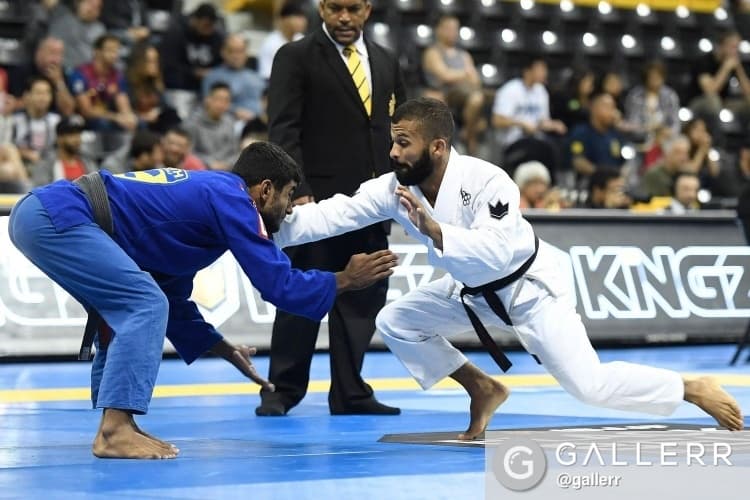
Bruno Malfacine's ten titles were only one part of the job
Quick answer: Bruno Malfacine won ten adult black belt world titles at roosterweight between 2007 and 2018. During that run, he also moved into teaching in Orlando and began a professional MMA career. Following those overlapping roles gives a fuller picture of him than treating the tenth medal as the whole story.
The tenth title arrived by armbar. Rodnei Barbosa was the opponent in the 2018 Worlds final, and Bruno Malfacine finished a championship campaign in which none of his four matches required the judges to compare a final score.
It was an extraordinary number to attach to one division. It was also only part of his working life. By then, Malfacine had students, had moved countries, and had begun preparing for fights in which an opponent could punch him. Ten-time world champion was a correct introduction. It wasn't a complete job description.
Ten seasons of winning, with gaps that matter
FloGrappling's report from the 2018 Worlds placed Malfacine's ten titles between 2007 and 2018. Caio Terra interrupted that run in 2008 and 2013. The record was not ten consecutive championships, and describing it that way would erase part of what made the division compelling.
A long rivalry gives spectators a reason to return. It also makes repeated success harder to dismiss as a temporary lack of competition. The next season arrives with somebody who already knows what winning against the champion looks like. The familiar name in the bracket remains a person with plans of his own.
Ten gold medals compress many separate tournaments into a convenient phrase. Spread them back across the calendar and the scale becomes easier to appreciate. Each year required another preparation and another performance. A previous medal could establish reputation; it could not advance him through the next bracket.
The move to Alliance involved learning to teach
Malfacine's academy biography traces his black belt promotion to Vinicius Amaral and his 2008 move to São Paulo to train with Fabio Gurgel at Alliance. The account describes that period as education in instruction as well as competition. In 2012, he moved to Orlando to teach.
That is a useful detail to keep beside the titles. Competing and explaining are connected skills, but they are not identical. An athlete may recognize a position immediately while a beginner still needs help finding the right side to face. Teaching requires making some of that recognition visible.
A room of students also asks different questions from a competition camp. One person wants to enter a tournament; another needs to understand the movement shown five minutes earlier. A champion's experience can inform both answers, but the answer still has to fit the person receiving it. The medal doesn't do the explaining.
Orlando was part of the competitive years
Before the 2012 Worlds, Malfacine described living in Orlando and training with his students, then spending the final month of preparation in California with Cobrinha. The interview published by BJJEE places teaching inside the period of major competitive ambitions, rather than after it.
That overlap changes the picture. It is easy to imagine a neat progression from athlete to coach: first collect the titles, then retire to a room where other people chase theirs. His account shows a less orderly schedule. Students and preparation occupied the same stage of his career.
For a visitor considering a champion's academy, that history is interesting without being a promise about today's class. Confirm the current schedule and the instructor for the session you plan to attend. A famous name on the front of a school tells you who helped build it; a booking inquiry tells you what will happen on Tuesday.
The tenth title had four different appointments
The 2018 results page records the closing stages: a quarterfinal win over Juan Lopes da Silva, a semifinal win over Tomoyuki Hashimoto, and the final against Barbosa. Those names belong in the account. They were the competitors Malfacine had to get past, not anonymous scenery around a milestone.
The result against Barbosa is a sensible starting point for a new viewer. Then move backward through the event. Doing so interrupts the familiar habit of watching only the celebration and assuming the whole day looked equally straightforward.
A match study can remain manageable:
Watch one complete match before choosing a sequence to replay.
Track how the top athlete prevents the guard player from recovering space.
Look for the moment a defensive reaction creates a new attack.
Note anything the finishing clip leaves unexplained.
Those questions are useful at any weight. They let you appreciate speed without allowing the word fast to stand in for an explanation. A movement may happen quickly and still depend on a grip, angle, or trapped limb that can be identified on a second viewing.
He began MMA before the gi chapter was finished
Malfacine did not wait until the tenth world title to enter professional MMA. MMA Fighting's August 2018 report described his 2017 move into the sport, two first-round submission wins, and a return to the gi to win another Worlds. Two types of preparation overlapped.
The distinction is more interesting than the usual question of whether jiu-jitsu works in MMA. A champion already possesses useful skills. The new work concerns when those skills are available and what can happen while trying to reach them. Distance changes when punches are part of the exchange. So do the costs of remaining in a position.
For recreational grapplers, this is a reason to respect context. A position can serve one purpose under gi rules and require different choices elsewhere. You don't need an MMA ambition to understand that. Even moving between the training room and a tournament introduces constraints that deserve attention before a familiar habit is treated as universal.
Three quick wins did not mean preparation was solved
After his third MMA victory, Malfacine told MMA Fighting's Guilherme Cruz that he was still learning how to prepare for the sport. The September 2018 win over Christian Rodriguez at Brave CF 16 had moved him to 3–0, all by first-round submission. His assessment still included things to change in camp.
That is a more revealing detail than the unbeaten record alone. A result can be excellent while the athlete sees weaknesses in the process that produced it. The scoreboard answers who won. It does not certify that every decision before the event was correct.
The same distinction is available on a much smaller scale after a local tournament. A win doesn't prevent a useful conversation about preparation, and a loss doesn't prove that every part of training was wrong. Ask what was repeatable, what was accidental, and what deserves another look. The purpose is to arrive at the next event with better information, not to rewrite the result.
A later answer put the friendships first
In a 2020 interview with Chase Smith for FloGrappling, Malfacine was asked what he loved most about jiu-jitsu. He contrasted an earlier answer about world titles with the friendships he had made. His moves to São Paulo and then the United States had each brought a new circle of people.
That answer doesn't make the competitive record less serious. It gives the record company. The athlete who cared enough to pursue ten championships could also identify something else as the part of the sport that mattered most to him by then.
There is no need to turn that into a rule that everyone should feel the same. Some people first find their place through competition. Others remember the teammate who made the room less intimidating. A long involvement in the sport can contain both, and the balance can change without making the earlier years a mistake.
The academy gives the record a present address
The official academy site lists Alliance Jiu Jitsu Orlando in College Park, with classes serving different schedules and goals. The competitive record is part of the school's identity, but a prospective student's practical questions remain ordinary: which class to attend, what to bring, and how to begin.
If you are planning a visit, contact the school directly. Explain your experience and whether you want a regular class or another form of instruction. Check visitor arrangements before building a holiday around a presumed drop-in. The gym directory can help with the wider search, while the academy should confirm its own details.
A visitor does not need to reproduce the champion's style to have a worthwhile session. A clear explanation of one familiar position may be more useful than a spectacular new move. That is part of the appeal of seeing a competitor's knowledge in a teaching setting: the question becomes what another person can understand and use.
Main photo: Gallerr / Graciemag; archive competition photograph, original watermark retained.
The takeaway
Malfacine's ten roosterweight world titles deserve their place at the top of any introduction. The rest of the profile becomes more interesting when teaching, relocation, and MMA remain in the frame. Those roles overlapped; they weren't simply jobs that began after the trophies stopped arriving.
Watch the matches for the competitive details, and read the interviews for what he chose to say about the work around them. Together they describe a career with more going on than a number, however exceptional that number happens to be.
Find a session worth planning around
Explore nearby open mats, and confirm the host's visitor policy before adding one to your training week.
FAQ
How many adult black belt world titles did Bruno Malfacine win? He won ten at roosterweight between 2007 and 2018. They were not ten consecutive titles; Caio Terra won the division in 2008 and 2013.
Who did he beat for his tenth world title? Malfacine defeated Rodnei Barbosa by armbar in the 2018 Worlds final. FloGrappling's event coverage recorded submissions in all four of his matches that year.
Did he compete in MMA while still competing in jiu-jitsu? Yes. He began his professional MMA career in 2017 and won another gi world title in 2018. By September 2018, he had three professional MMA wins, all first-round submissions.
Where is his academy? His official website lists Alliance Jiu Jitsu Orlando in the College Park neighborhood of Orlando, Florida. Contact the academy for current class times, visitor arrangements, and instructor availability.

Miles Serrano
Miles Serrano writes about competitors and the decisions that shaped their careers. He is more interested in the adjustment someone made in the third minute than in the medal count afterward.
Related Posts
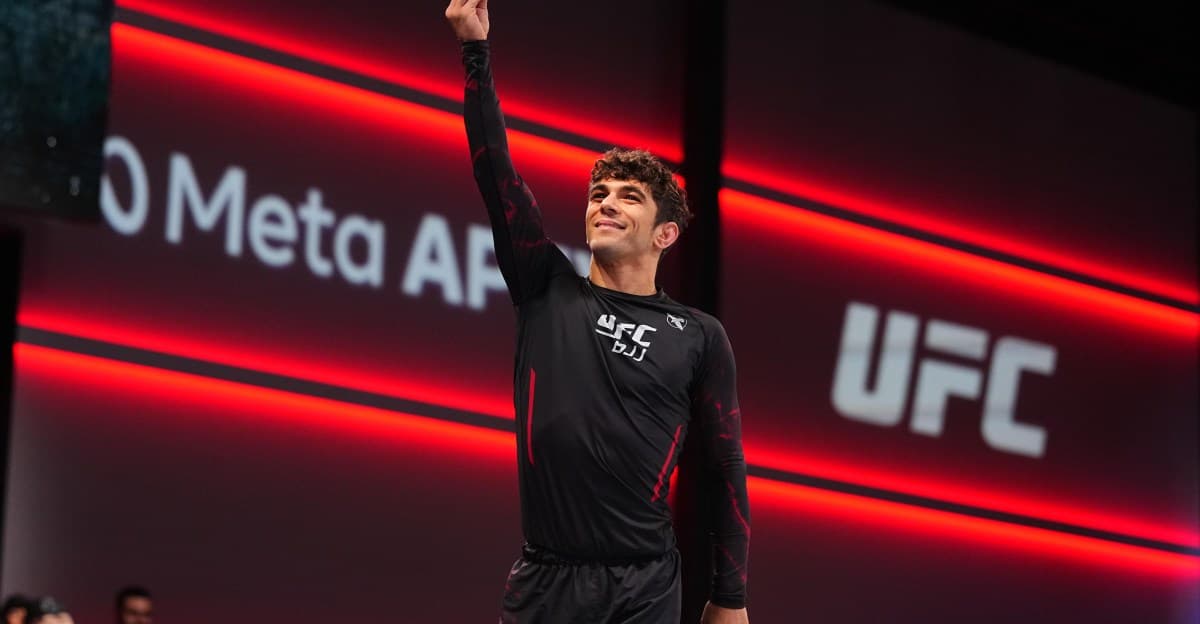
Mikey Musumeci gives up the belt to make room for MMA
Musumeci is vacating his UFC BJJ title to focus on MMA training. What he is leaving, what continues, and why the transition matters.
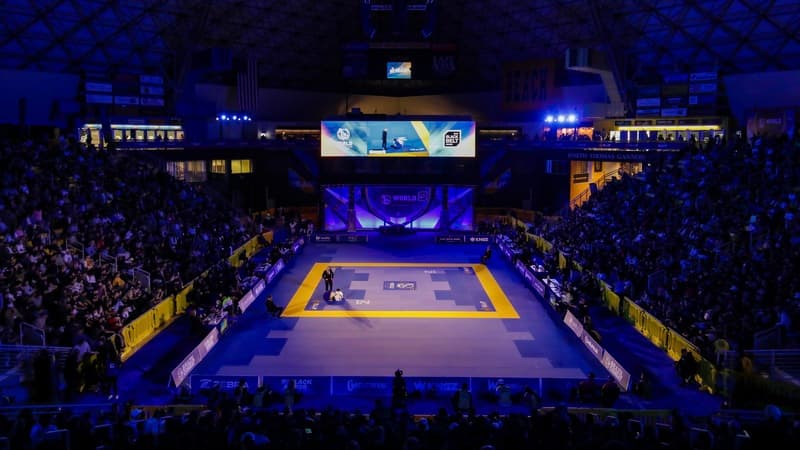
IBJJF membership: finish the paperwork before the deadline
IBJJF membership and tournament entry are separate steps. Plan documents, professor approval, renewals, and junior accounts before registration closes.
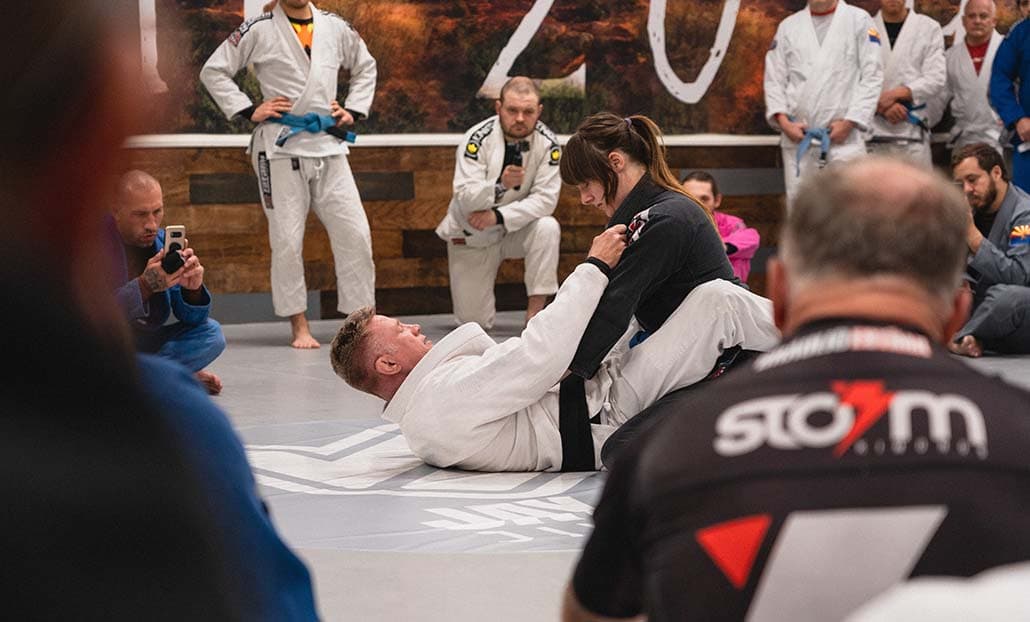
Choosing a BJJ seminar worth your time and travel
Choose a BJJ seminar by the subject, teaching format, access, and total cost. Know what to ask the host before buying a ticket.
Comments (0)
Loading comments...