
The winter BJJ commute has to work after class, too
Quick answer: Check current local weather, transport information, and the academy's notices before a winter training trip. Plan the return journey and changing time as carefully as arrival. If conditions or services make the trip unsuitable, adjust the session rather than treating attendance as a test of commitment.
The bus that gets you to class is only half the plan. The return happens later, with a used kit in the bag and whatever conditions have developed while you were indoors. A winter timetable needs both journeys on it.
This is not an argument for making every wet evening complicated. It is a reason to check the information that can change the trip, especially when training already sits between work and the rest of the household's evening. The mat does not need to win an argument with the forecast.
Use current information from the right source
Check your local weather service and the operator responsible for the journey you intend to take. A teammate's message can be helpful, but it may describe another route or an earlier part of the day. The useful information concerns your own departure and return.
For readers in the United States, the National Weather Service's winter resources connect to alerts, forecasts, and winter-hazard information. Use the relevant official service where you live and follow local instructions. This article is a training-planning discussion, rather than weather or driving guidance.
Keep the academy's notice channel alongside those sources. A class cancellation changes the destination. A transport disruption changes the route. Either can make the evening unsuitable, with neither waiting for the other to occur first.
If information is uncertain, leave that uncertainty visible. An app showing the normal schedule is not proof that a disrupted service will run normally. Ask the operator or host the question it can answer, and avoid turning a hopeful assumption into a confirmed plan.
The gym being open does not decide your journey
An academy can reasonably remain open for members nearby while the trip from your home is unsuitable. Its operating decision covers the room and staffing it controls. It cannot assess every student's route, weather exposure, or later commitments.
Do not ask a coach's attendance message to do that extra work. Read what the host actually says, then make the travel decision using the relevant local information. You can value the class without treating every open session as an instruction to leave the house.
The same fairness applies in the other direction. If the academy cancels, do not pressure it to run an informal session because your own journey seems straightforward. Staff, building access, and other members' circumstances may differ from yours.
Our article on a repeatable training week treats adjustments as part of an ordinary routine. A week can remain a useful training week after one evening changes. There is no need to recover the missing class by making the next journey less sensible.
Plan the return before choosing the session
Check when you expect to be ready to leave, including changing and repacking. Then look at the actual return service or arrangement. The published lesson finish does not put you at the stop with your coat on at the same minute.
If the return depends on a last service, understand the margin and the fallback. A plan that leaves no time for an ordinary delay can fail without anything dramatic happening. Choose another class or travel arrangement if that makes the evening more workable.
A hypothetical example helps. A visitor can arrive by an early bus but would leave class close to the final return departure. Ending the lesson early might be possible with the instructor's agreement, but it is a different visit. Decide that beforehand rather than walking out while a partner is waiting.
If somebody is collecting you, agree where and when, and keep the update practical if the plan changes. The driver should not have to guess whether you are still rolling, changing, or walking to another entrance.
Keep outdoor clothing separate from the kit
Pack the clothing you need for the journey home before adding optional training items. Used no-gi kit and an outer layer serve different jobs. If the same compartment receives everything, the clothing needed afterward can become part of the wet-gear problem.
Use a separation method that suits the bag and follow the garments' care instructions. A separate bag helps transport used equipment, with proper washing and drying still required afterward. Do not mistake storage during the journey for a cleaning method.
Ask the academy where wet footwear, coats, and umbrellas belong. Shared entrances can become crowded, and the usual summer spot for a bag may not suit a wet item. Follow the host's arrangement rather than expanding your own gear across the changing bench.
Our gym-bag reset article covers what happens on arriving home. In winter, give the outer clothing a place in that process too. Packing works better when the things needed before and after class remain easy to identify.
A longer change can alter the whole booking
Include the time needed to change out of training clothing and put on the items required for the return. If shower access matters, confirm it for the session rather than relying on an old facilities description. Shared space can add ordinary waiting time.
This can decide which class fits around work. A short lesson farther away may take more total time than a slightly longer one nearby. Compare complete visits rather than assuming class duration determines the evening's length.
Keep family and household commitments in the same calculation. If one person covers dinner or childcare while you train, a longer winter return changes the agreed interval. Discuss that change instead of treating it as a transport detail that only affects you.
You do not need to solve the whole season at once. Try the workable arrangement for the next week, then review what happened. A different class time or one fewer journey may be a practical seasonal adjustment without becoming a permanent statement about your training ambitions.
Make the cancellation routine easy to use
Know how to cancel a reserved class or tell the host you cannot attend. A message sent early can release a place and reduce uncertainty for the person arranging the session. Use the academy's actual process if one exists.
Do not assume that a weather-related absence automatically changes membership billing or cancels another booking. Those are separate account questions governed by the applicable terms. Ask the academy directly if a longer disruption affects the arrangement you pay for.
Check local weather and transport updates for both journeys.
Read the academy's current class notices.
Allow changing and packing time before departure.
Cancel or adjust the booking through the host's intended route.
If the academy changes its plan late, update the people affected by yours. A carpool, family schedule, or dinner arrangement can remain unsettled after the class question has been answered. Finish that small administrative task before searching for another session.
Keep the replacement proportionate
A cancelled trip does not demand an improvised hard workout. You can use the time for ordinary life, watch a short approved lesson, or leave training alone that evening. Choose the activity for its actual purpose rather than as a punishment for staying home.
If you do study, keep the question narrow. One position or rule can be enough. Avoid filling the missing hour with a long queue of videos that creates more material to sort through than a normal class would have introduced.
You can also ask about another appropriate session later in the week. Check that it fits your commitments and equipment rotation instead of booking it reflexively. A replacement that causes a different problem is not automatically a successful recovery.
The useful end point is a routine you can maintain through the conditions where you live. It may differ from the summer plan. That is an adjustment to the route and calendar, with no need to turn the weather into a judgment about the person doing the training.
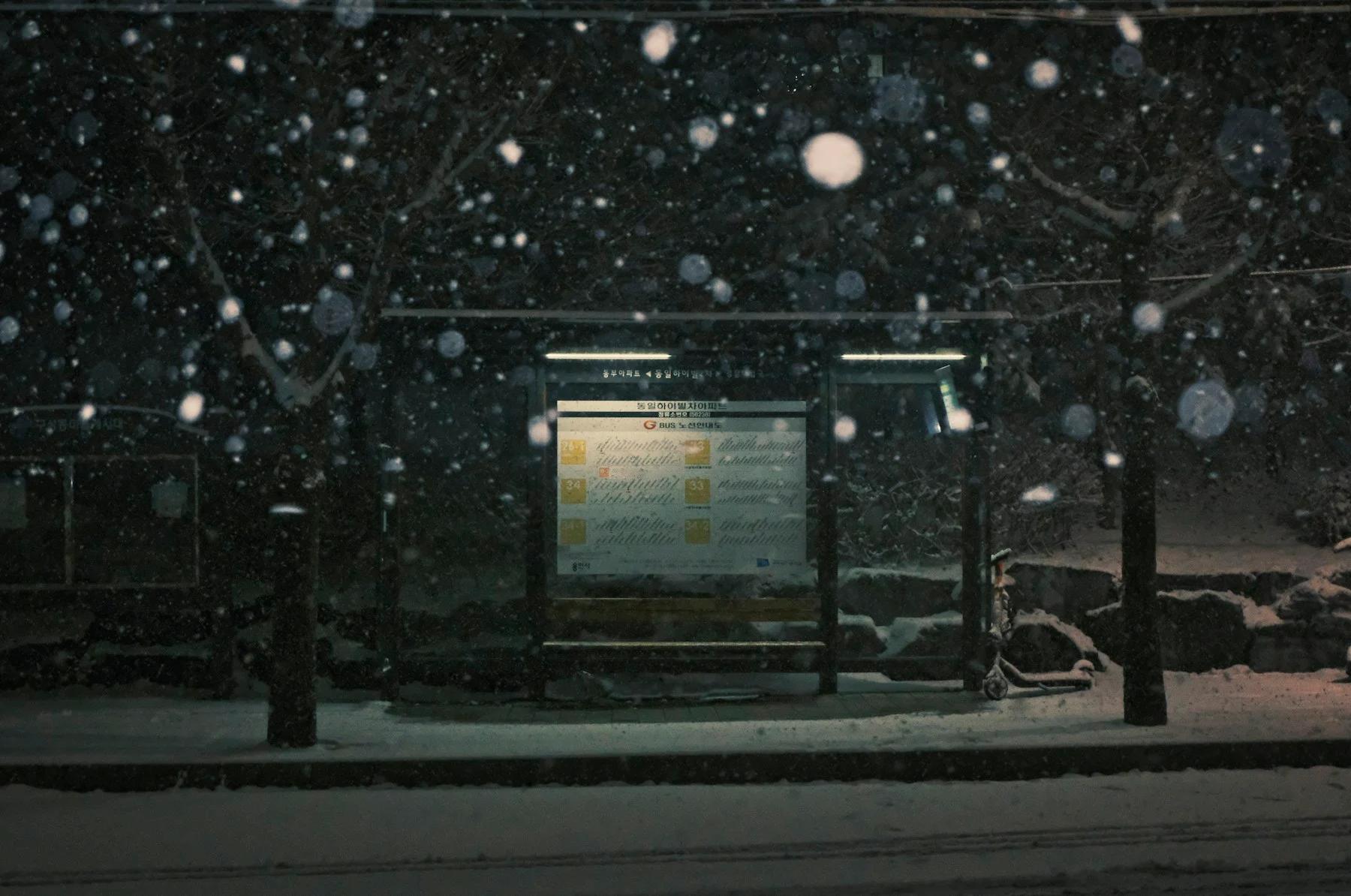
Main photo: Minku Kang. A bus stop in snow at night. Illustrative photograph; does not depict a cited academy, product, or Let’s Roll writer.
The takeaway
Plan the whole winter visit, with current local information and a clear return journey. The academy's operating decision is one part of that picture. Your route, changing time, and other commitments complete it.
Prepare the clothing, know the cancellation process, and change the session when the trip does not work. A reliable training routine includes the ability to make that decision without converting one missed class into a crisis.
Find a class that fits the season
Use the gym directory to compare locations and class options, then confirm the current timetable with the host.
FAQ
Should I travel to BJJ whenever the academy is open? Make the journey decision using current local weather, transport information, and official instructions. A gym remaining open does not assess the route or circumstances of every member.
What should I check about the return trip? Confirm services or pickup after you expect to finish changing and packing. Include a realistic margin and understand the fallback before relying on a final departure.
Does a weather absence automatically pause membership charges? Do not assume it does. Class attendance, reserved bookings, and membership billing can use different procedures. Ask the academy about the specific arrangement if needed.
Do I need to replace a cancelled class with a workout? No. Choose a replacement only if it serves a useful purpose and fits the week. An ordinary evening away from training does not require a compensating session.

Owen Bellamy
Owen Bellamy writes for the person training twice a week around a job. Nothing he suggests requires quitting the job.
Related Posts
BJJ changing rooms: ask about the part after class
Check BJJ changing and shower arrangements before planning work, travel, or a first visit around them. Keep privacy and the full visit in view.

A BJJ gift card should leave the recipient a real choice
Check the store, currency, delivery, restrictions, and likely extra spending before choosing a BJJ gift card. Avoid turning a present into another bill.

How many BJJ gis do you need? Ask the laundry calendar.
Choose a BJJ gi rotation around class spacing, washing, drying, and accepted kit. Two people training equally often can need different setups.
Comments (0)
Loading comments...