
BJJ changing rooms: ask about the part after class
Quick answer: Ask an academy what changing and shower facilities are available for your session, what you need to bring, and how late they remain accessible. Allow time to use them before the next commitment. Keep phones and cameras out of other people's private changing space.
A class finishing at eight does not make you ready for dinner at eight. There is still a person in training clothes, a bag to repack, and possibly a shower queue. The timetable has finished one job without completing the evening.
I would check that part of a visit as carefully as the lesson. It can decide whether training before work, during travel, or between family commitments is practical. A photograph of a beautiful mat cannot tell you where to change afterward.
Ask for the facilities you actually need
Use specific questions. Ask whether there is a changing area, whether it is available before and after your session, and what shower access means in practice. A general answer that the academy has facilities may leave the relevant details unresolved.
A visitor may also need to know about privacy, step-free access, or a place to store a bag. Describe the arrangement you need without supplying unnecessary personal information. The academy can explain its space more accurately from a practical question than from a vague request about comfort.
Do not infer the layout from somebody else's account. A building can change, a room can be shared, and a particular class can use another area. Ask about the location and session in your booking.
Our article on watching a class before joining encourages looking at the whole visit. Include the spaces before and after the mat in that assessment. They are part of whether a training routine can fit your life.
Published examples differ in useful ways
Versus in Hong Kong describes individual shower cabins and supplied toiletries and towels. Body & Seoul's FAQ confirms showers and changing rooms without giving the same level of detail. Each statement answers a different amount of the question.
Keep the information with the academy that supplied it. A towel service in one school is not a reason to leave yours at home for another. A shower mentioned on a website is not necessarily confirmation that it remains available after the last evening class.
Ask the follow-up that matters to your plan. You may need only somewhere private to change. You may be going directly to work and need a shower. Naming the requirement lets the host explain whether its arrangement fits.
This is a fair question for a school to answer plainly. Not every academy has the same premises or can offer the same facilities. A clear limitation is more useful than an attractive assumption that fails once the lesson ends.
Add changing time to the route
Work through the whole sequence from arriving at the building to leaving it. Include check-in, putting belongings away, changing before the lesson, and the time needed afterward. The class duration is one part of that sequence.
A hypothetical lunchtime booking illustrates the difference. A sixty-minute lesson may fit a break on paper, but the route and changing can make the actual absence longer. Compare that complete interval with the time you have permission to take.
Do not make other people's schedules absorb an invisible gap. If a colleague, family member, or driver expects you at a particular time, use the whole visit in the estimate. It is easier to adjust the plan beforehand than explain a delay after everybody is waiting.
Leave some margin for a shared room. You cannot know exactly who will need a shower after class. A plan that works only if every facility is empty immediately is a fragile one, even when the academy's equipment and communication are perfectly good.
Treat privacy as a room arrangement
Keep cameras and recording out of changing areas. A phone used innocently can still point toward someone who has not agreed to appear. Finish the message outside or put the device away until you are back in a suitable public space.
If you need to answer an urgent call, step out where the academy allows it. Explain any exception to the host rather than expecting other members to judge what the phone is doing. A quick practical adjustment can remove the uncertainty.
Ask where visitors should change and respect the answer. Do not use an office, storage space, or empty-looking room simply because the usual area seems busy. A door being open does not establish that the space is available.
If the published arrangement does not meet a privacy need, contact the academy before attending and ask what is possible. You can decide whether the option works without turning that inquiry into a public assessment of other members' preferences or identities.
Separate storage from security
Ask where bags and valuables belong. A shelf, cubby, and lockable locker are different arrangements. The presence of somewhere to put a bag does not establish supervision, insurance, or a guarantee that an item cannot go missing.
Bring only what you reasonably need. If you are carrying work equipment, travel documents, or expensive items, ask about storage before making the class part of a larger journey. A visitor should not discover halfway through changing that the plan depends on leaving a laptop somewhere unsuitable.
Keep your own items together and avoid spreading across a shared bench. A small unpacking routine helps the next person use the space and makes it easier to notice what is missing before departure. You do not need a branded organizer to know where your keys are.
If something is lost, use the academy's contact and give an accurate description. Our lost-property article explains how a small collection of abandoned items becomes a community job. Labelling appropriate belongings can prevent yours from joining it.
Pack for the confirmed service
A supplied towel can reduce the bag, but only if the host confirms it is included for your visit. Ask about any charge or collection process. The same care applies to toiletries, hairdryers, and other items that matter to your next commitment.
Do not borrow another person's belongings because the shelf looks communal. Ask the staff which items are provided and which are stored personal equipment. A spare-looking bottle or pair of sandals may belong to somebody who will return for it.
Confirm changing and shower access for the actual session.
Ask what you must bring and what the academy provides.
Check storage, access needs, and the facilities' closing time.
Add changing and packing to the complete visit estimate.
Plan a separate place for used clothing on the return journey. A shower solves one part of the evening, with the kit still needing proper washing and drying. Keep that next task in view rather than leaving the bag closed until the following class.
Leave the space ready for another person
Follow the academy's instructions for towels, water, and rubbish. Put borrowed items where the host asks and leave the floor and bench as you would want to find them. Small shared spaces work better when each visit ends with its belongings accounted for.
Avoid using the changing room as the place for an extended post-class conversation if others are waiting. You can continue outside where the host allows it. The lesson may have ended, but the people finishing the building still have work to do.
If something is broken or the supplied items have run out, tell the designated person. A clear report about the specific issue is more useful than a general complaint that the facilities are bad. It also gives the academy a chance to correct a problem it may not have seen.
The final check is yours. Take the bag, collect the keys, and make sure the wet clothing is accounted for. The best changing routine is not impressive. It simply lets you leave with your belongings and keeps the room usable for whoever follows.
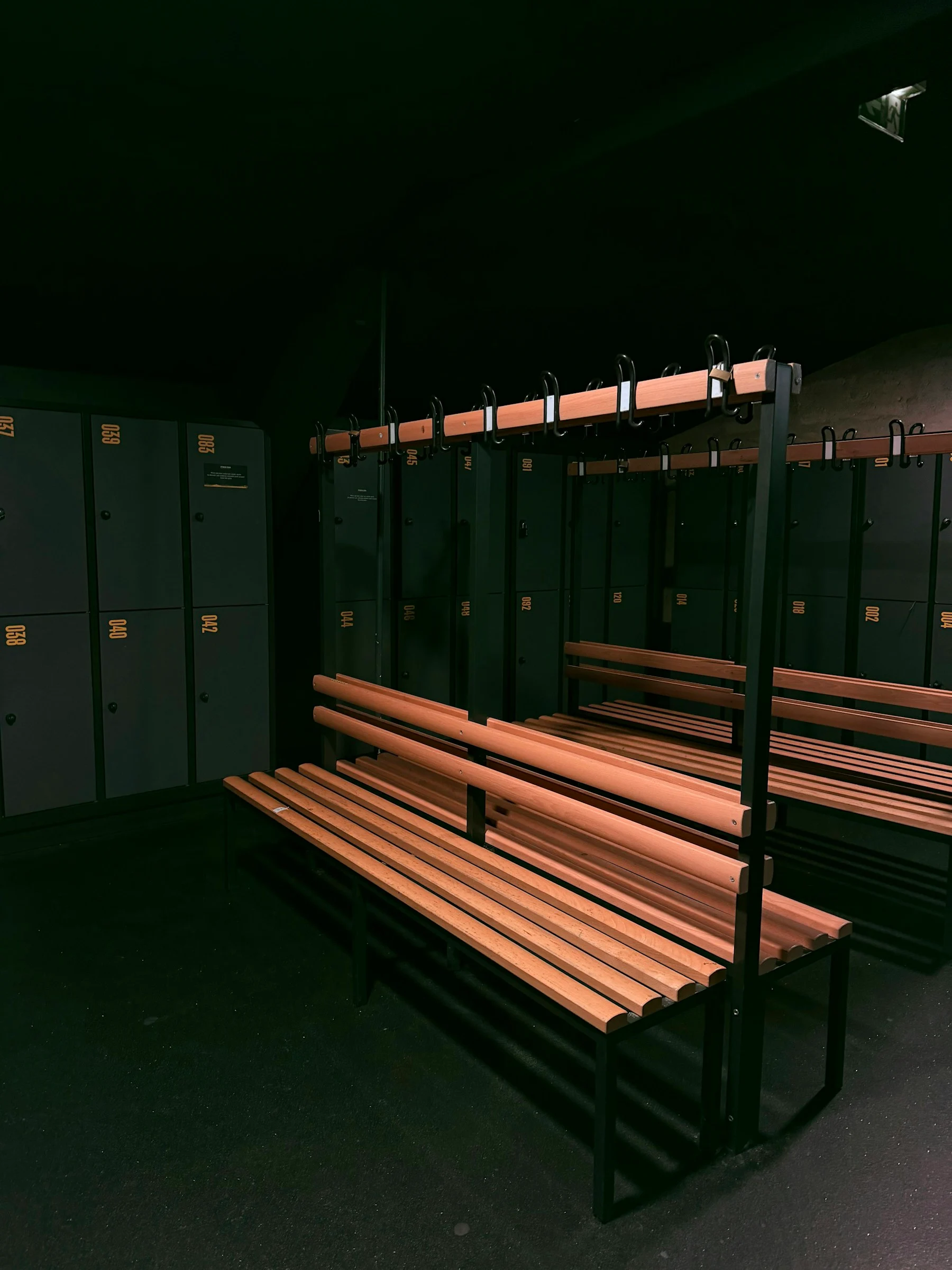
Main photo: Alex Lion. Empty changing room with benches and lockers. Illustrative photograph; does not depict a cited academy, product, or Let’s Roll writer.
The takeaway
Ask about the part after class before planning the rest of the day around it. Changing, shower access, privacy, and storage are concrete arrangements, with different answers at different academies. Keep the host's actual information attached to your session.
Then pack for that answer and allow enough time to use the space. A workable routine respects your next commitment and the people sharing the facilities. It can make an ordinary class much easier to keep attending.
Compare the whole gym visit
Use the gym directory to build a shortlist, then ask each academy about the facilities your schedule needs.
FAQ
Do all BJJ academies have showers? No universal facility arrangement applies. Ask the specific school whether showers are available for your session, what is supplied, and how long the space remains open afterward.
How much time should I leave after class? Base the margin on changing, showering if needed, repacking, and any shared facilities. Do not treat the published lesson finish as the time you will already be outside and ready to travel.
Can I use my phone in the changing room? Keep cameras and recording away from private changing areas. If a message or call is necessary, step into an appropriate space and follow the host's policy.
Does a locker mean my belongings are guaranteed secure? Do not assume that. Ask what storage is available and follow the academy's instructions. Bring only what you need and plan separately for valuable work or travel items.

Maya Corbett
Maya Corbett answers the questions you have before walking into an unfamiliar academy — what to book, what to bring, who to ask. Every detail in her guides traces back to something the gym published itself.
Related Posts

A BJJ gift card should leave the recipient a real choice
Check the store, currency, delivery, restrictions, and likely extra spending before choosing a BJJ gift card. Avoid turning a present into another bill.

How many BJJ gis do you need? Ask the laundry calendar.
Choose a BJJ gi rotation around class spacing, washing, drying, and accepted kit. Two people training equally often can need different setups.

Keep the BJJ gear receipt before you need the warranty
Save the model, order, care instructions, and product photos for BJJ gear. Returns, defects, exchanges, and warranties can use different processes.
Comments (0)
Loading comments...