
An underhook needs a job, not just an arm position
Quick answer: An underhook places your arm beneath an opponent's upper arm, but its value depends on the surrounding position. Ask what it lets you control or change, and what the opponent can still do. Learn its use in one position with a coach before treating it as a universal answer.
You can have an underhook and still be losing the exchange. The arm has reached its destination, but your head may be poorly placed, your body may be flat, or the opponent may already be organizing a counter.
That is why “get the underhook” can be a useful instruction and an incomplete explanation at the same time. The next question is what the connection is supposed to accomplish. A grip becomes easier to understand when you can name the movement it supports and recognize when that movement is no longer available.
Describe the whole position first
An underhook is a relationship between arms. It does not tell a reader whether the athletes are standing, lying on their sides, or coming up from half guard. Those starting arrangements change what the same-looking connection can do.
Before asking for a correction, describe which person is on top, which arm is inside, where the heads are, and whether either person can move their hips freely. You do not need perfect terminology. A clear physical description is more useful than saying the underhook failed without identifying the position.
The scope of the subject is visible in Zack Esposito's underhook instructional, which treats the tie across multiple situations. That listing is a useful reminder that the word names a family of applications rather than one finished technique.
For your own learning, choose one setting. If your class is working from bottom half guard, stay there long enough to understand the purpose of the arm connection. Adding a standing application immediately can create more vocabulary without resolving the original problem.
Name the movement you want next
A useful underhook should support a specific task. Depending on the position and instruction, that might involve changing your angle, following the opponent's upper body, or creating a route toward a stronger base. Ask your coach to identify the intended next action in the version you are learning.
Avoid defining success solely as reaching the arm underneath. You could achieve that small goal while leaving the rest of your body in a position that prevents the next movement. The practice then rewards the appearance of the technique rather than its function.
Suppose, as a training example, the lesson aims to help the bottom player come onto a knee. Judge the connection by whether it helps create that opportunity against controlled resistance. If the athlete remains pinned flat, investigate what else is missing instead of simply demanding a deeper grip.
The question can be phrased very plainly: “What should this arm let me do that I could not do before?” A coach's answer gives you something to look for during the next repetition.
Keep the head and hips in the explanation
Arms are easy to notice because they make visible grips. Head position, body angle, and hip movement can be less obvious in a fast demonstration. Yet copying the arm while ignoring those relationships may leave you with a different position from the one being taught.
Ask to see the demonstration from the side that reveals the instructor's posture. Notice whether their torso is flat or turned, where their head sits relative to the opponent, and which part of their body provides support. These are observations to confirm, not instructions to force your own body into an uncomfortable shape.
When something feels stuck, stop and reconstruct the starting position. Having a partner increase resistance while you repeatedly pull harder can hide the detail you need to find. A slower repetition can show whether the obstacle appeared before the underhook or after it.
Our half-guard guide provides the broader positional context. Use the underhook within that context rather than treating the rest of half guard as background scenery around the important arm.
Remember that the other arm has a response
An underhook does not remove the opponent's ability to connect to you. They may use an overhook, change their angle, or address the connection in another way. The relevant response depends on the exact position and rules being practiced.
The existence of a counter is not evidence that the original idea is wrong. James Clingerman's modified-overhook instructional explicitly organizes attacks around an opponent seeking an underhook. That is a useful limit on any claim that obtaining the inside arm automatically settles the exchange.
Ask your coach which response the current lesson expects and what signal tells you to adjust. Learn that response at controlled intensity with a partner who understands the exercise. Do not try to discover every counter simultaneously in a full round.
This distinction also improves video study. A clip showing someone with an underhook who then gets swept does not prove that underhooks are bad. It shows a sequence worth examining. Identify the setup and response before turning one outcome into a rule.
Test one change at a time
A simple positional exercise can make the idea easier to evaluate. Agree on the starting position, the intended outcome, and a clear stopping point with your coach and partner. The exercise should fit the class and the experience of both people.
A possible observation checklist is:
Did the arm connection remain available when the partner moved?
Could the athlete perform the intended next action?
What changed immediately before that action became difficult?
Was the response appropriate to the agreed pace and rules?
These are questions for reviewing practice, not a validated scoring system. Their value is that they direct attention to something observable. “My underhook is terrible” does not tell you which part to adjust next.
Change only one agreed detail between repetitions when possible. If you alter the grip, starting angle, resistance, and goal at once, a better outcome will be difficult to interpret. You may have improved the position, but you will not know which change mattered.
Know when the connection has stopped helping
A grip can remain physically attached after its original purpose has disappeared. If you keep holding it because the lesson said to obtain it, you may miss the moment when a different action would serve you better.
Ask your coach for a release or reset condition. That might be a particular loss of posture, a change in the opponent's position, or a point where the exercise should restart. The answer should come from the technique being taught, rather than a universal instruction to hold or abandon every underhook.
During controlled practice, pause at that point and compare it with the successful starting arrangement. The difference can be easier to understand before the athletes complete another scramble and end up somewhere unrelated.
This is especially useful when coming toward the half-guard dogfight position. Reaching a more upright position changes the problem. It does not mean every connection that helped you arrive will remain the best connection for what happens next.
Separate gi grips from the underlying task
A jacket can offer additional places to hold, while no-gi practice removes those cloth connections. That difference can change a particular version of a position. It does not eliminate the need to understand what your arm, posture, and base are accomplishing.
If you train both formats, ask the instructor which details transfer and which need a different solution. Avoid assuming that removing a sleeve grip leaves the rest of a sequence intact. Equally, do not conclude that a familiar positional idea becomes useless because its preferred grip is unavailable.
Use paired examples during review. In the gi version, identify the connection that controls the relevant movement. In the no-gi version, ask how that same problem is addressed, if the instructor considers the comparison appropriate. The shared question can be more memorable than two disconnected lists of steps.
Keep the examples within your experience and the academy's rules. An article can help organize the questions, but it cannot see the pressure, posture, or discomfort present in your particular repetition.
Ask for feedback on a specific failure
Bring the coach one manageable question. Explain the starting position and the action you were trying to perform. If possible, demonstrate the moment before the connection stopped helping, using a cooperative partner and the instructor's direction.
This gives the coach a clearer problem than reenacting an entire round from memory. They can inspect whether the issue lies in obtaining the underhook, preserving posture, timing the next movement, or misunderstanding the lesson's intended outcome.
If recording is permitted and everyone involved agrees, a short clip can also help. Use it to show the sequence rather than to prove that a partner did something wrong. The camera may reveal an angle you missed, but it does not explain intention or replace instruction.
Leave the exchange with one adjustment to test. You do not need a complete underhook system after a single question. You need a more accurate understanding of the position you are currently encountering, and a way to recognize whether the next attempt is different.
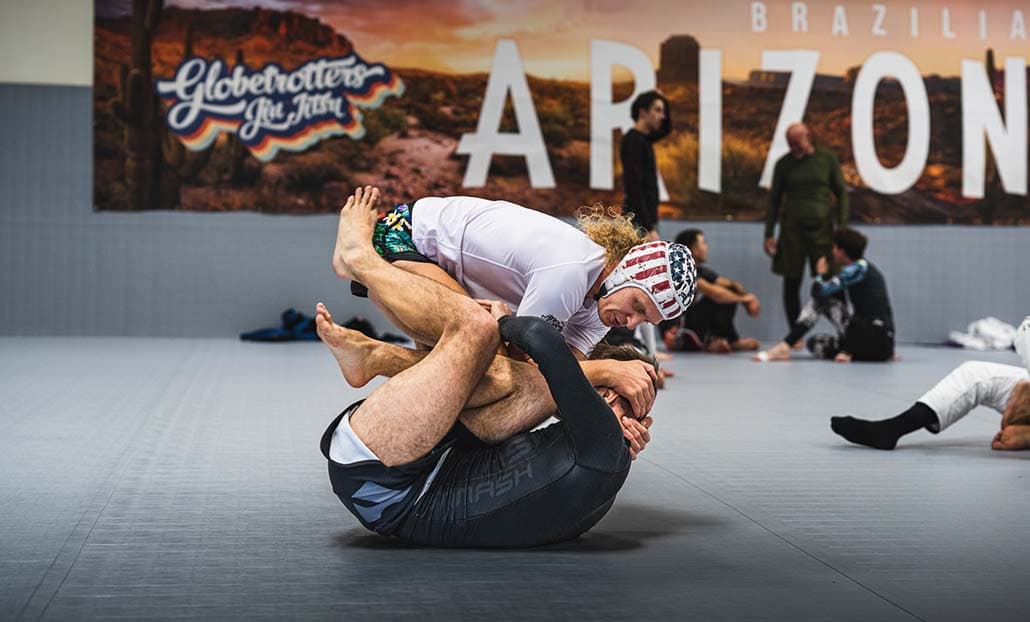
Main photo: BJJ Globetrotters; archive training photograph, illustrative.
The takeaway
An underhook is worth judging by the action it supports. Describe the starting position, identify the next task, and include the head, hips, and opponent's response in the explanation. The arm alone does not account for the exchange.
Use controlled practice to test one change and ask for feedback at a specific failure point. That gives the instruction “get the underhook” a practical meaning you can recognize, rather than a grip you keep collecting without knowing what to do with it.
Work through the position with a coach
Find a local academy through Let’s Roll and bring one specific positional question to an appropriate supervised class.
FAQ
What is an underhook in BJJ? It is an arm position in which your arm passes beneath the opponent's upper arm. Its use depends on the rest of the position, including posture, angle, and the movement you want to make next.
Does having an underhook mean I control the position? No. The opponent may still control other useful connections or have an effective response. Evaluate what your underhook allows you to do rather than treating the arm placement as a complete result.
Should beginners learn standing or half-guard underhooks first? Follow the progression your coach is teaching. Concentrating on one setting can make the purpose easier to understand before comparing the same connection in a different position.
How can I tell why my underhook is not working? Recreate the moment before the intended action became unavailable and ask your coach to inspect it. A clear starting position and a specific goal provide better information than a general complaint about the grip.

Nina Okada
Nina Okada explains positions the way a good training partner does: one problem at a time, with the limits of the explanation said out loud. She is careful about the difference between what footage shows and what it only suggests.
Related Posts
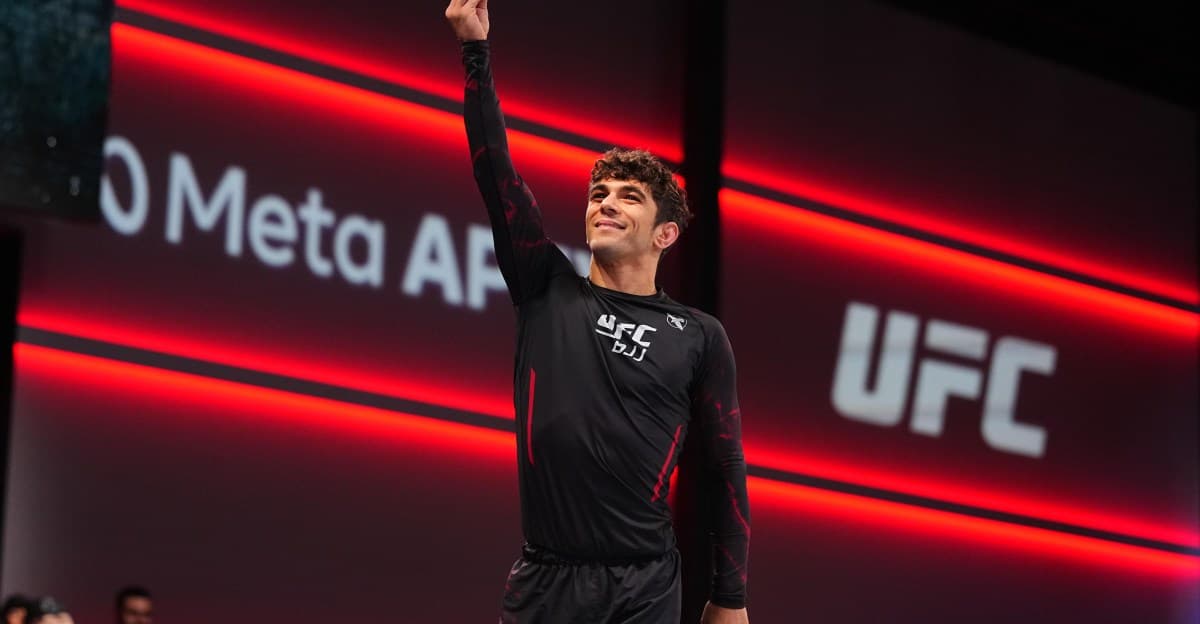
Mikey Musumeci gives up the belt to make room for MMA
Musumeci is vacating his UFC BJJ title to focus on MMA training. What he is leaving, what continues, and why the transition matters.
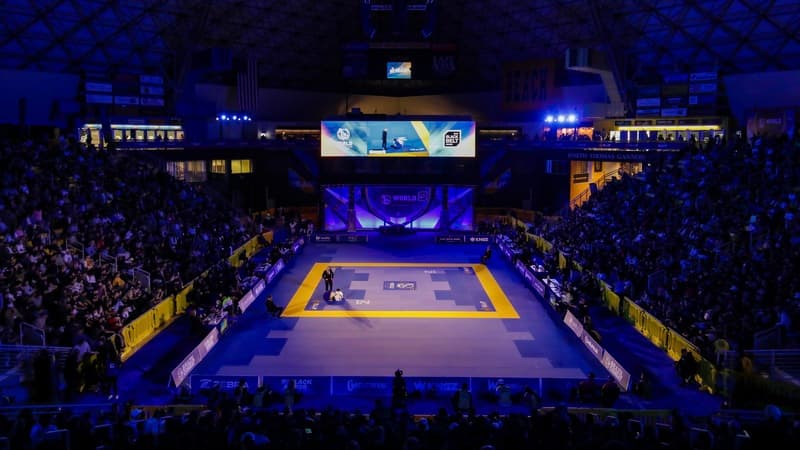
IBJJF membership: finish the paperwork before the deadline
IBJJF membership and tournament entry are separate steps. Plan documents, professor approval, renewals, and junior accounts before registration closes.
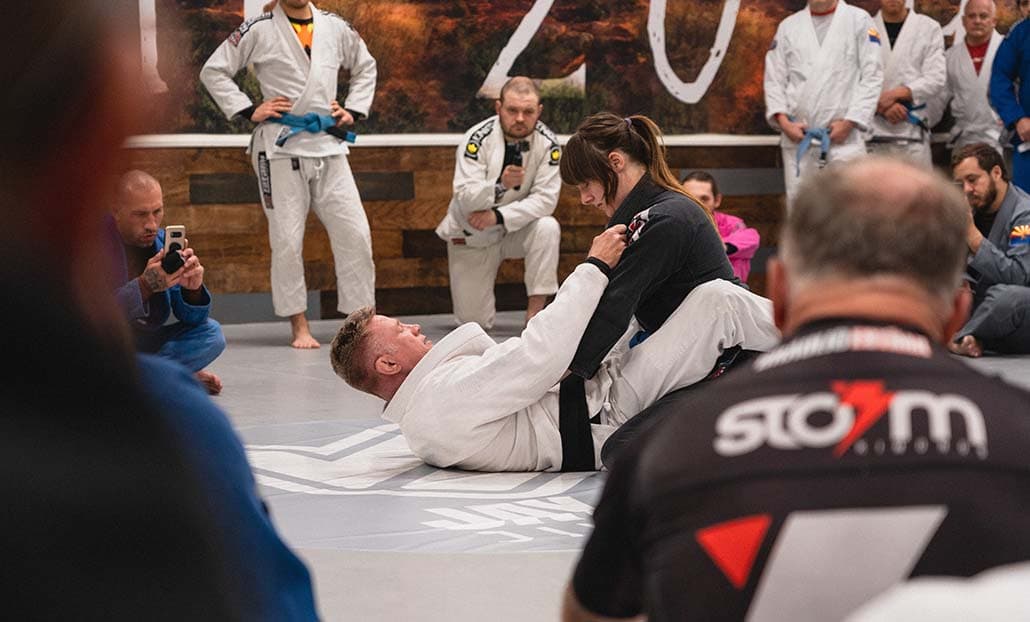
Choosing a BJJ seminar worth your time and travel
Choose a BJJ seminar by the subject, teaching format, access, and total cost. Know what to ask the host before buying a ticket.
Comments (0)
Loading comments...