
The people behind a BJJ tournament, and how to help
Quick answer: Helping at a BJJ tournament starts with accepting a defined role and learning the organizer's procedures. Event work may be paid or voluntary, and it is not automatically compatible with competing that day. If you are attending as an athlete or parent, accurate registration details, attention to announcements and respectful questions make the staff's job easier without requiring you to join the crew.
A match ends with a raised hand. Before the next one begins, somebody has to record the result, identify the next competitors and make sure the correct match is on the screen. None of that appears in the winner's submission highlight.
The people doing it deserve more than a vague thank-you after a long day. They need clear assignments, enough information to carry them out, and room to concentrate. That applies to a volunteer helping at a small event and a paid worker at a traveling promotion. It also gives everyone else in the building a few practical ways to help.
Find out what the organizer actually needs
Offering to help is a beginning, not a job description. Contact the organizer before the event and ask which positions are available. Give the dates and hours you can commit, along with any relevant experience. A person comfortable with event software may fit a different assignment from someone who can only assist with setup.
NAGA's published staffing guidance describes recruiting local workers, including scorekeepers using Smoothcomp. Its FAQ lists paid roles such as ring coordinators, awards assistants and weigh-in staff. Calling everybody a volunteer would misdescribe those positions.
Clarify compensation or volunteer terms directly. Ask about the expected finish, breaks, and what happens if the event runs longer than anticipated. Do not assume that helping for an hour earns free registration or access to a restricted area.
The IBJJF help desk directs people interested in working a championship to the staff section of the relevant event page. That is a useful reminder to use the organizer's own process. A friend at your academy may know the tournament director, but a casual conversation is not necessarily a confirmed assignment.
Learn the job before the first athlete needs you
A first shift is a poor time to discover that you do not know whom to ask for help. Arrive for the briefing, find your supervisor, and make sure you understand the boundaries of your role. If the instructions are unclear, ask while there is still time to explain them calmly.
Before taking a station, establish:
The specific task you are responsible for and the person supervising it.
The procedure for correcting a mistake or reporting a technical problem.
Who covers the station when you need a break.
Where to send questions that fall outside your role.
A worker handing out medals should not have to improvise an answer about a disputed weigh-in. Knowing where a question belongs is part of knowing the job.
If training is offered, take it seriously even if you have watched hundreds of matches. Familiarity with grappling is useful, but operating a particular event's system is a separate skill. Let the organizer explain the workflow before deciding that your gym's informal practice is close enough.
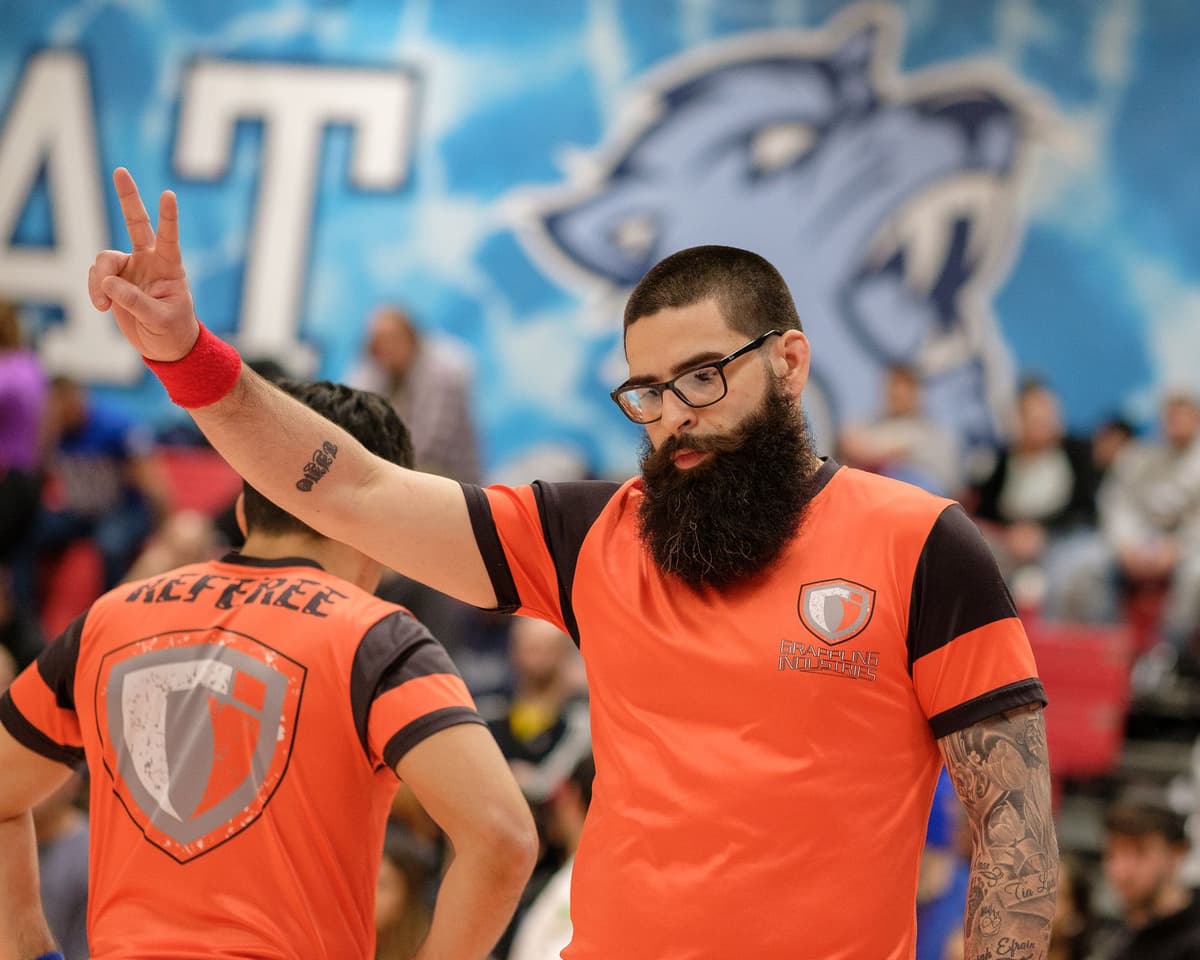
Photo: Greg Baugues / Grapplings (@grapplingsdotcom), Grappling Industries Manhattan, January 2020.
The scoring table needs attention more than commentary
Smoothcomp's scoreboard instructions recommend letting staff practice in a demo environment before an event. They also tell operators to confirm the winner with the referee before saving a result. Those small checks concern the official record, not just the number displayed on a television.
If you are working the table, follow the procedure you were taught. Keep your attention on the assigned match. A conversation about the previous final can wait until somebody else has taken over or you have an appropriate break.
If you are a spectator, do not treat the scorekeeper as a second commentator. Standing beside the laptop and asking for a technical opinion may feel harmless, but it competes with the work being done there. Give the operator enough space to see and hear the referee.
When something appears wrong, raise a clear question through the event's procedure. Identify the match and the issue you noticed. Demanding that the nearest person immediately change a score is unlikely to establish what happened or who has authority to correct it.
Registration problems are easier to raise before mat call
Competitors can help long before entering the venue. Check the information in your registration and read the event's correction deadlines. If a name or division is wrong, contact the organizer while its process allows the issue to be addressed.
At an IBJJF event, the championship help page distinguishes the athlete correction deadline from the later registration checkday. It describes the checkday as a chance to identify errors in changes already requested, rather than a general extension for making new changes. Follow the instructions for your actual event.
Other promotions may use different procedures. Your previous tournament is not a reliable substitute for reading this one's page. Keep the relevant confirmation accessible so you can explain a problem without searching through an entire inbox at the front of a queue.
Our tournament guide covers the competitor's broader preparation. The staff-facing version is simple: arrive with the details you were responsible for checking already checked. If something still goes wrong, explain the discrepancy calmly and let the appropriate person investigate it.
A worker cannot disappear whenever a teammate is called
Before agreeing to a shift, be honest about competing or supporting someone else. NAGA's published guidance says workers cannot compete at the same event because their station cannot be covered while they warm up and compete. That is NAGA's stated arrangement; ask another organizer about its own rules.
Even if you are not competing, you may want to watch your child, coach a teammate, or photograph a final. Explain that before accepting a role that requires continuous attention. The organizer can then tell you whether the assignment is compatible with those plans.
A parent responsible for a young competitor should be particularly careful about taking on a second job in the building. Consider who will stay with the child if your station needs you. Do not assume a nearby coach has accepted that responsibility simply because they know your family.
If a conflict develops during the day, ask for coverage. Wait until the arrangement is clear before leaving. A useful worker is someone the crew can account for, not someone who was enthusiastic at the briefing and difficult to find after lunch.
Parents can reduce confusion without taking over
A tournament can be a lot for a child to follow: unfamiliar adults, different mat numbers, and long periods of waiting. A parent's useful job is to help the child understand the next step while respecting the event's instructions.
Keep the child's name and division information available. Listen for the relevant call and ask where you should wait if you are unsure. Avoid crowding the table with several family members asking the same question separately. One clear conversation is easier for everyone to follow.
Let the coach handle technical advice during the match if that is the arrangement you have agreed. Your child should not have to choose between conflicting instructions from the sideline while an official is also speaking.
Afterward, there may be a legitimate question about a result or procedure. Ask it without making the child stand through an adult confrontation. You can advocate for accurate information and respectful treatment while also showing the child how to handle a disappointing outcome without turning the event staff into opponents.
Families attending their first event can use the first BJJ competition checklist to separate their own preparation from the staff's responsibilities.
Report a problem without inventing the cause
A delayed mat, a name entered incorrectly, or an unclear announcement can be frustrating. Start with what you know. State where you are, which match or athlete is involved, and what information you need. That gives the worker something they can act on.
Avoid guessing that a problem proves favoritism or laziness. You may not know whether a delay comes from a medical issue, a bracket correction, or a technical fault. A useful question does not require a theory about somebody else's motives.
That does not mean accepting every answer without scrutiny. If the first person cannot resolve the issue, ask who can. Keep the relevant documents or match information ready. Follow the organizer's appeal or complaint process when one applies.
In a public review afterward, describe the specific experience and how the organizer responded. A factual account of an unresolved problem can be useful to other competitors.
Finish the shift and leave the next crew useful information
The end of your agreed work is another point where details matter. Hand over the station properly. Tell the replacement or supervisor about anything still unresolved, and check whether the equipment or paperwork needs to go somewhere specific.
If you made a mistake, report it promptly and accurately. Quietly hoping nobody notices gives the organizer less chance to correct it. Explain what happened, what you entered or changed, and who has already been informed. Keep the account limited to what you actually did and saw.
For volunteers helping with setup or breakdown, follow the person coordinating that work. Moving a table or rolling up mats can be helpful, but only when it fits the event's plan. Do not disconnect equipment or clear an area that someone is still using because your own division has finished.
A short follow-up to the organizer can be useful after the event: the role you worked, one recurring difficulty, and a practical suggestion. Send it through the channel they provide. A specific observation is easier to use than a general verdict that the entire day was good or bad.
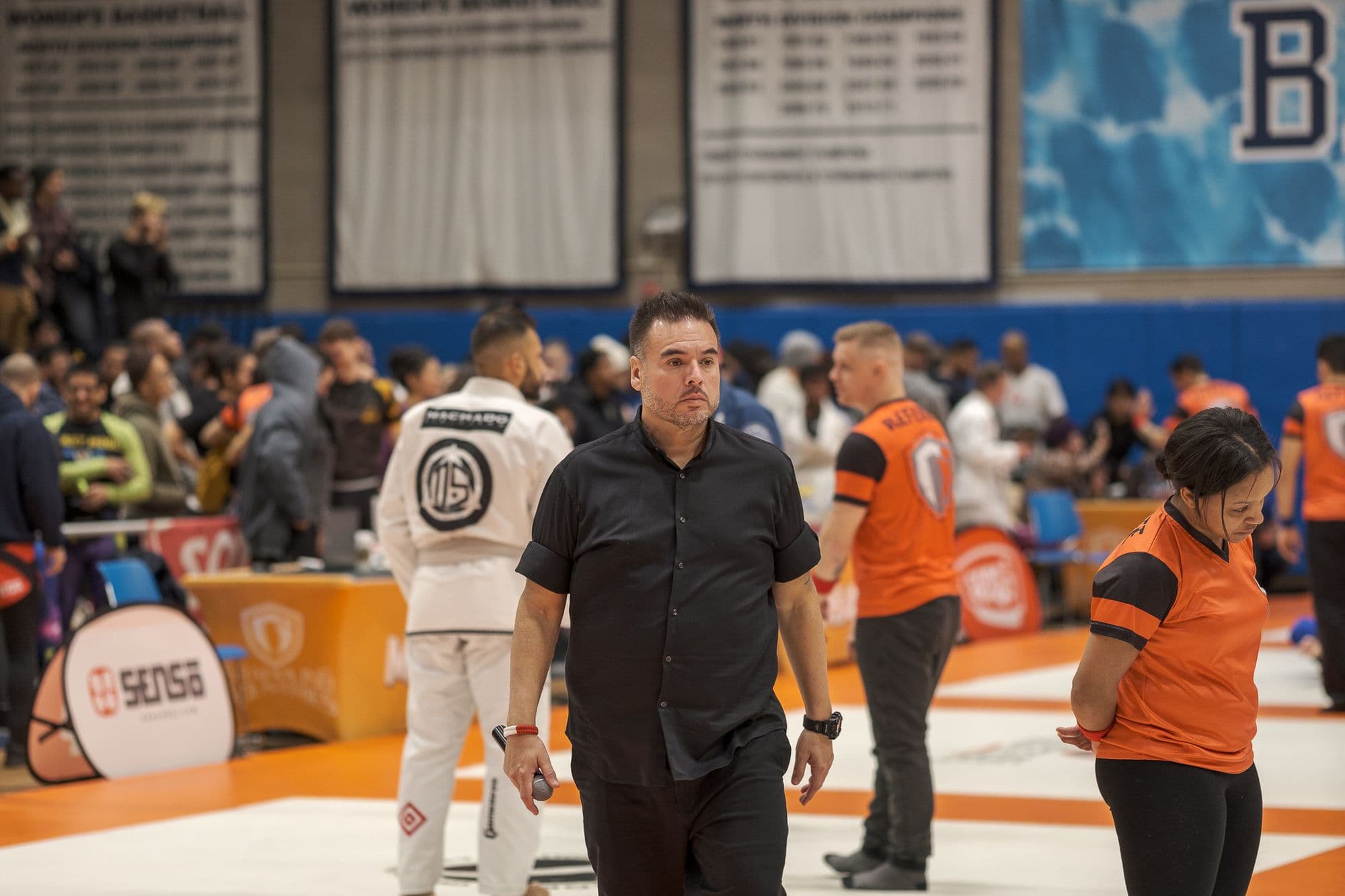
Main photo: Greg Baugues / Grapplings (@grapplingsdotcom), Grappling Industries Manhattan, January 2020.
The takeaway
Tournament work includes jobs with different skills, responsibilities and terms. Find out what the organizer needs, accept a role you can actually fulfill, and learn how to ask for help before the busiest part of the day. Paid staff and volunteers both benefit from that clarity.
Competitors and parents have a part in the same process. Check your details, follow announcements, and bring specific questions to the right person. A match deserves an accurate result, and the people recording it need enough room to do their work.
Choose an event and read its own instructions
Browse the tournament listings, then use the organizer's official event page to confirm registration details or ask about staffing opportunities.
FAQ
Are BJJ tournament workers always volunteers? No. Some events use volunteers, while organizers such as NAGA describe paid support positions. Ask about the terms of the particular role before accepting it.
Can I work an event and compete on the same day? Do not assume so. NAGA's published guidance says its workers cannot also compete at that event. Other organizers may have different arrangements, which you should confirm directly.
Do I need to be a referee to help? No. Organizers may need help with scoring, athlete coordination, awards or other tasks. A support role does not automatically authorize you to make refereeing decisions.
What should I do if I think the scoreboard is wrong? Identify the match and raise the specific issue through the organizer's procedure. Give the responsible officials a chance to check it rather than demanding an unsupported change from the nearest worker.
Related Posts
Cobrinha's 2017: five major titles at 37
Cobrinha's 2017 season brought five major titles at age 37. Follow his gi and ADCC results, the Mendes rivalry, and the wrestling work behind that run.
Rafael Mendes: six Worlds titles and a life after competing
Rafael Mendes won six featherweight Worlds titles and retired at 27. Explore his ADCC rivalry with Cobrinha and the academy he helped build.

Training with women in BJJ: listen before you roll
Be a better BJJ training partner with women: agree on intensity, provide honest resistance, ask before coaching or filming, and respect a declined round.
Comments (0)
Loading comments...