
Your favorite BJJ technique stopped working. Now what?
Quick answer: When a familiar BJJ technique stops working, identify the first point where the exchange differs from your successful attempts. Check the starting position, opponent's response, and your continuation with a coach. Use controlled positional practice before deciding whether to adjust the technique or replace it in that situation.
The sweep still has the same name. Your partner still ends up on top. Somewhere between those two facts, the explanation that it used to work stops being useful.
A reliable movement can become difficult for several reasons worth investigating. You may be entering from a different position, missing a prerequisite, or meeting a response you did not previously have to solve. None of those possibilities can be identified from the final result alone. Before collecting a replacement technique, reconstruct the exchange that is actually failing.
Define the attempt precisely
Name the starting position and the contact you had. Saying half-guard sweep is less useful than explaining where the partner's weight was, which grips were established, and whether you had reached the position your coach taught. The label covers too much to diagnose on its own.
Compare a successful attempt with an unsuccessful one if you have appropriate footage or can safely reproduce the setup in class. Do not film partners without permission. If footage is unavailable, ask the coach to watch a controlled attempt from the relevant position rather than relying on a long verbal reconstruction afterward.
Look for the earliest visible difference. A missing grip at the beginning can make the later motion look weak or mistimed. Fixing the final motion would not address the earlier change. Work forward through the sequence instead of starting with the point where you lost top position.
Be careful with the word same. Two rounds can feel similar while beginning with different contact, distance, or pressure. The purpose of the review is to find out whether the technique is being attempted under comparable conditions.
Check whether you reached the position first
A technique demonstrated from an established position should not be judged only by attempts made before that position exists. Ask your coach which features of the setup are necessary and which can vary. The answer should be specific enough that you can recognize them during practice.
For a passing sequence, for example, identify the control that prevents the guard player from immediately recovering the space you need. For a sweep, identify the connection and direction the movement relies on. These are questions for the particular technique, not universal instructions that fit every pass or sweep.
Practice arriving at the setup without requiring the full finish each time. Your partner can give the agreed response while you learn to recognize whether the position is available. Stop the drill where the coach sets the boundary, then repeat with the same conditions.
This separates two problems that are easy to combine: establishing the position and executing from it. You may understand the second reasonably well while rarely reaching the first against a resisting partner. That calls for different practice than simply repeating the finish more forcefully.
Identify the partner's actual answer
Watch what the other person does that changes the exchange. A retreat, a grip change, or a shift of weight may close the route you expected. Name the action rather than describing the partner as too strong, too fast, or impossible to sweep.
Those broad descriptions may capture how the round felt, but they do not tell you what to practice. A concrete response gives the coach a problem to address. It also lets the partner reproduce the relevant situation without needing to imitate the entire round.
Do not assume the partner consciously developed a special defense just for you. They may be responding to the position in a way they normally use. Ask what they noticed if the conversation is useful, but keep their answer separate from your own guess about their intention.
The teammate familiarity article explores why repeated partners can make a familiar game feel different. Here, the practical task is narrower: establish which response you need an answer to, then study that response under controlled conditions.
Change one condition while the others stay recognizable
Choose a small practice test with your coach. If the missing grip appears to be the problem, begin with that grip established and see what happens next. If the partner's reaction is the issue, ask them to use that reaction consistently for the exercise.
This is a suggested way to organize investigation, not a claim that one drill format is always best. The instructor should set the appropriate resistance and decide when to add more choices. Keep both partners clear about what they are doing and when the exercise ends.
A useful note after the test can answer:
Where did the attempt begin, and which contact was established?
What response did the partner use?
At what point did the intended route close?
What adjustment did the coach suggest?
What remains uncertain after trying it?
Avoid changing the starting position, partner response, and finish all at once and then announcing that the problem is solved. You may have found a workable exchange, but you will not know which change mattered. Keep the comparison understandable enough to discuss at the next class.
Add the continuation that the original attempt now needs
Sometimes the first movement is doing useful work even when it no longer finishes the exchange. It may produce a predictable response that opens a second option. Ask the coach whether that is happening before deciding that the original technique has become useless.
The next option should arise from the actual response. Collecting an unrelated move because it looks different does not create a connected sequence. You need to understand what changed in the partner's position and why that change makes another route available.
Practice the choice slowly enough to recognize it. One response may let you continue the original movement; another may call for the alternative. If you cannot tell them apart until the round is over, spend more time identifying the cue rather than trying to accelerate the finish.
There may also be a legitimate stopping point. An entry can fail, and returning to a sound position can be the appropriate answer. A continuation does not have to mean another attack at any cost. Your coach can help distinguish a useful branch from an attempt you should abandon.
Test the adjustment beyond one cooperative repetition
A clean demonstration tells you the movement can be performed under those conditions. It does not establish that you will recognize and complete it in an unrestricted round. Increase the test gradually as the coach recommends, keeping the starting situation relevant.
Try appropriate variation in partners and responses. If the adjustment works only when one partner gives one exact reaction, describe that honestly. It may still be a useful beginning. The next task is learning what happens when the response changes, not pretending the narrow success already covers everything.
Check the outcome you originally wanted. A sweep that briefly gets you on top before an immediate reversal may need work on stabilization. A pass that reaches the side but loses control immediately may have a different missing detail from the entry that failed earlier.
The round-reset guide can help organize repeated attempts without losing agreement about the starting position. A clear reset lets both people return to the same question rather than spending the practice negotiating what just happened.
Keep, adapt, or set aside the technique for a reason
After working through the problem, choose what to do with the technique. You might keep it for the circumstances where its prerequisites are available, adapt the entry, or focus on a different option for the position you encounter most often. Each is a reasonable outcome of an actual review.
Avoid turning the decision into a universal verdict. A movement that does not currently fit your situation is not therefore useless for everyone. Equally, a technique's reputation does not require you to force it into every round. Your practice should connect to the positions you can establish and the instruction you can obtain.
Keep a concise record of why you changed course. If the problem was reaching a particular grip, write that down. You may revisit the technique later with a better entry. A specific note is more useful than a permanent label saying the move does not work.
Return to your coach if the evidence remains unclear. Another set of eyes may identify a detail you are repeatedly skipping. The point of the investigation is to replace a vague frustration with a tractable training question, even if the first answer is incomplete.
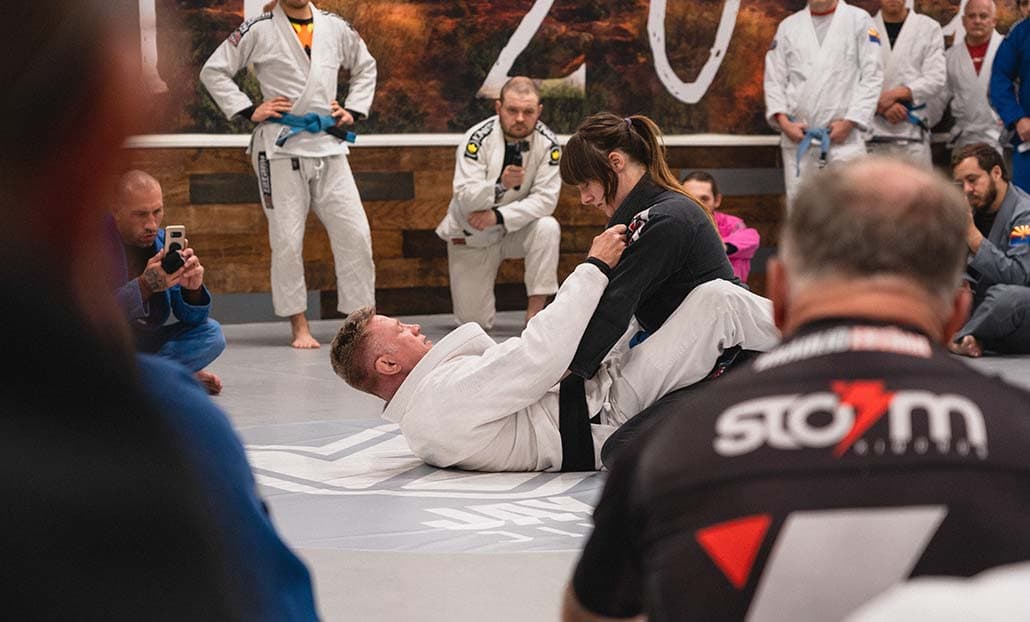
Main photo: BJJ Globetrotters; archive training-camp photograph.
The takeaway
Start before the failure. Identify the setup, the partner's response, and the first point where the exchange changes. A familiar name does not guarantee you are attempting the same movement from the same position.
Use a small, coached test to decide what needs adjusting. Keep the technique, connect it to a continuation, or set it aside for that situation based on what the practice shows. You do not need to replace your entire game because one sweep has become difficult.
Find time for focused practice
Explore open mats on Let’s Roll, then ask the host whether the session allows the positional drilling you want to do with a willing partner.
FAQ
Why has my favorite BJJ technique stopped working? The result alone cannot tell you. Compare the starting position, necessary grips, opponent's response, and your continuation. Ask a coach to watch the exchange and help identify the earliest difference.
Should I use more strength when a technique fails? Do not make that your first explanation or adjustment. Check whether the setup and direction are appropriate, then follow your coach's guidance. Forcing an unclear attempt can obscure the problem you need to understand.
How many attempts should I make before changing techniques? There is no useful universal count. The quality and conditions of the attempts matter. Use specific feedback and controlled comparisons rather than accumulating repetitions without knowing what changed.
Does a technique need to work on everyone? No single attempt can answer every response or starting condition. Learn when the technique is available, what closes that route, and what your coached alternative should be.

Nina Okada
Nina Okada explains positions the way a good training partner does: one problem at a time, with the limits of the explanation said out loud. She is careful about the difference between what footage shows and what it only suggests.
Related Posts

Mikey Musumeci gives up the belt to make room for MMA
Musumeci is vacating his UFC BJJ title to focus on MMA training. What he is leaving, what continues, and why the transition matters.
IBJJF membership: finish the paperwork before the deadline
IBJJF membership and tournament entry are separate steps. Plan documents, professor approval, renewals, and junior accounts before registration closes.
Choosing a BJJ seminar worth your time and travel
Choose a BJJ seminar by the subject, teaching format, access, and total cost. Know what to ask the host before buying a ticket.
Comments (0)
Loading comments...